
J.A.F.E.
Well-known member
Usually I post photos against a a lime green/pink or lime green/purple bakground. These were were shot against red shop rags because I was taking the pics while working. Sorry for the less glamorous scenery.
I just aquired this J.H. Williams S-52 1/2 Superratchet. It's in great shape but there was some grit in the mechanism and it made me nutso. I usually soak something like this in ATF or ATF/acetone but it wasn't working fast enough and I got impatient. Besides, I've never disassembled a round head drive mechanism before. I only have pics of the reassembly.
To give away the punch line the ratchet is back together and working. Here it is reassembled and ready to turn some nuts and bolts.

This ratchet is unique in my limited experience with round head ratchets. All the other ones I've taken apart are single pawl. This is a dual pawl setup with three tooth engagement on each pawl. No wonder they call it a superratchet. This is the drive assembly put back together. The secret to taking this apart (and successful reassembly) is the ball bearing seen right in the center against the pawl. There are more detailed images of how it works but in order to get it apart this ball bearing and the one on the other pawl both must be pressed in simultaneously while the selector switch is pulled up. Since I only have two hands it was a bit hit and miss. WARNING!!! EXTREME CAUTION must be followed or you will be tracking down ball bearings and springs. As soon as the selector switch clears the carrier the two ball bearings and spring are free to fly across the universe or use quantum tunnelling to travel to a parallel dimension.

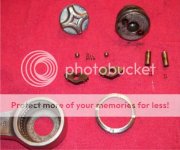
This is all the pieces. They have already been cleaned and I think this was one of the first photos taken. Of interest are two ball bearings and three springs, two of which are impossibly small. The tiny springs are below the two pawl pivots (cylindrical shapes) at about the 2:00 position.
Here is the how the whole thing works and the key to disasembly. The selector switch is rotated 90* relative to the other parts in it's assembled state. The selector switch hole holds the spring and two bearings. The bearings ride against the pawls which keeps them contained and the spring/bearing works like on a typical ratchet. The hole in the carrier for the selector switch is too narrow for the bearings to pass when extended and must be held in against the spring pressure in order to lift the selector. Very clever design.

Two closeups of the carrier.
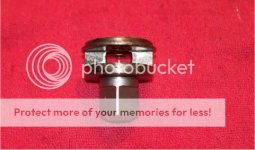

A pawl held in place by the pivot pin. The pivot is partially extended for the photo. It sits just slightly proud of the carrier when assembled. That pin is pretty massive this ratchet is built to work hard.

The pins don't bottom directly on the carrier they sit on those two tiny springs. The dental tool is just to highlight the pivot pin hole.
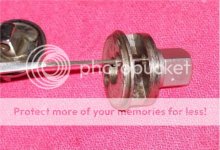
The bottom of the selector switch. Those two grooves are where the pivot pins ride. Again some clever engineering. The grooves limit the rotational travel of the switch relative to the carrier and the tiny springs produce the pressure.
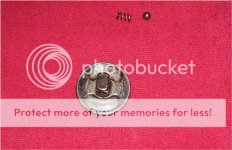
Standard round head setup inside except it can only be asembled one way.

Just the easiest way to show the retaining nut.

Reassembled and posed with most of the tools - mostly just dental tools. I used Superlube instead of RLL because I really don't want to take this apart again just to clean it. The vise is just sitting there not bolted down but it was helpful to hold the carrier. One trick was used on the tiny springs - they kept sticking to the hemostats and the dental tools. A blob of the Superlube had enough stick to keep them in place while removing the hemostats. I used a flat end of a dental tool to squash them while the pawls were slid in place. In order to get the two ball bearings to compress the spring I used a pair of needlenose pliers. I got lucky and got it on the first try.

This ratchet seems to be amazing. I'm anxious to put it through its paces but from what I've seen so far I'm going to like it.
I just aquired this J.H. Williams S-52 1/2 Superratchet. It's in great shape but there was some grit in the mechanism and it made me nutso. I usually soak something like this in ATF or ATF/acetone but it wasn't working fast enough and I got impatient. Besides, I've never disassembled a round head drive mechanism before. I only have pics of the reassembly.
To give away the punch line the ratchet is back together and working. Here it is reassembled and ready to turn some nuts and bolts.
This ratchet is unique in my limited experience with round head ratchets. All the other ones I've taken apart are single pawl. This is a dual pawl setup with three tooth engagement on each pawl. No wonder they call it a superratchet. This is the drive assembly put back together. The secret to taking this apart (and successful reassembly) is the ball bearing seen right in the center against the pawl. There are more detailed images of how it works but in order to get it apart this ball bearing and the one on the other pawl both must be pressed in simultaneously while the selector switch is pulled up. Since I only have two hands it was a bit hit and miss. WARNING!!! EXTREME CAUTION must be followed or you will be tracking down ball bearings and springs. As soon as the selector switch clears the carrier the two ball bearings and spring are free to fly across the universe or use quantum tunnelling to travel to a parallel dimension.
This is all the pieces. They have already been cleaned and I think this was one of the first photos taken. Of interest are two ball bearings and three springs, two of which are impossibly small. The tiny springs are below the two pawl pivots (cylindrical shapes) at about the 2:00 position.
Here is the how the whole thing works and the key to disasembly. The selector switch is rotated 90* relative to the other parts in it's assembled state. The selector switch hole holds the spring and two bearings. The bearings ride against the pawls which keeps them contained and the spring/bearing works like on a typical ratchet. The hole in the carrier for the selector switch is too narrow for the bearings to pass when extended and must be held in against the spring pressure in order to lift the selector. Very clever design.
Two closeups of the carrier.
A pawl held in place by the pivot pin. The pivot is partially extended for the photo. It sits just slightly proud of the carrier when assembled. That pin is pretty massive this ratchet is built to work hard.
The pins don't bottom directly on the carrier they sit on those two tiny springs. The dental tool is just to highlight the pivot pin hole.
The bottom of the selector switch. Those two grooves are where the pivot pins ride. Again some clever engineering. The grooves limit the rotational travel of the switch relative to the carrier and the tiny springs produce the pressure.
Standard round head setup inside except it can only be asembled one way.
Just the easiest way to show the retaining nut.
Reassembled and posed with most of the tools - mostly just dental tools. I used Superlube instead of RLL because I really don't want to take this apart again just to clean it. The vise is just sitting there not bolted down but it was helpful to hold the carrier. One trick was used on the tiny springs - they kept sticking to the hemostats and the dental tools. A blob of the Superlube had enough stick to keep them in place while removing the hemostats. I used a flat end of a dental tool to squash them while the pawls were slid in place. In order to get the two ball bearings to compress the spring I used a pair of needlenose pliers. I got lucky and got it on the first try.
This ratchet seems to be amazing. I'm anxious to put it through its paces but from what I've seen so far I'm going to like it.


 I have one in 1/2 drive and it is a smooth beast. My fave 1/2 ratchet by far. Hopefully I never need to rebuild it