
You are using an out of date browser. It may not display this or other websites correctly.
You should upgrade or use an alternative browser.
You should upgrade or use an alternative browser.
Underground Lair of the Squankum
- Thread starter Squankum
- Start date
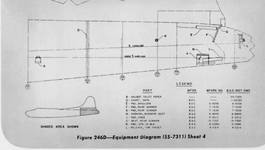
More on the U.S.A.F. Heavy Press Program! This is an excellent video for you GJ folks! Forging, pressing, stamping, extruding, WWII, aero-planes, the Cold War jet age, water table? Water table, industrial policy.

MAN caravan!
It has come to my attention that there are giant monster off-road RV's being made on German commercial? military? truck chassis, and once the luxury box on the back is finished, they may cost $1M US.
Here's some footage of some rich Europeans getting some training in the outback of Morocco of how to drive and tend to these monsters. After the 14 minute mark you can see the fancy lads learn to change very large tires, and towards the end are great pictures from the bazaar in the big city:
ACTION MOBIL Morocco challenge 2019 - YouTube
It has come to my attention that there are giant monster off-road RV's being made on German commercial? military? truck chassis, and once the luxury box on the back is finished, they may cost $1M US.
Here's some footage of some rich Europeans getting some training in the outback of Morocco of how to drive and tend to these monsters. After the 14 minute mark you can see the fancy lads learn to change very large tires, and towards the end are great pictures from the bazaar in the big city:
ACTION MOBIL Morocco challenge 2019 - YouTube
Last edited:
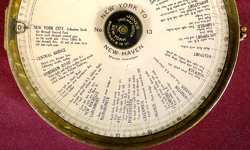
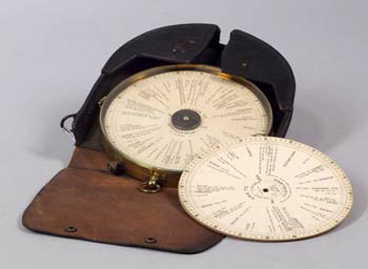
Vintage auto navigation! The Jones Live Map, attached to the car's odometer cable:
 www.sealcoveautomuseum.org
 www.saturdayeveningpost.com
Jones Live Map | Seal Cove Auto Museum
www.sealcoveautomuseum.org
The First GPS: High-Tech Navigation in 1909 | The Saturday Evening Post
A century before Garmin, the Jones Live Map was helping drivers navigate a countryside without roadsigns, and often without roads.
www.saturdayeveningpost.com
A very special episode of Jay Leno's Garage: a visit to Union Pacific's steam locomotive No. 4014, recently restored and occasionally touring the U.S.

 en.wikipedia.org
Union Pacific 4014 - Wikipedia
Making a sphere out of metal, one method that is showing up all over the internet is explosive hydroforming. A basic shape is welded up, water is added inside, an explosive charge is set off and the water helps transmit that force in all directions. Boom, you have a round sphere.
Very few , if any, videos say what these big spheres are being used for! Best answer I could find on Reddit is industrial storage tanks for liquid gases:
 en.wikipedia.org
Very few , if any, videos say what these big spheres are being used for! Best answer I could find on Reddit is industrial storage tanks for liquid gases:
Horton sphere - Wikipedia
Last edited:
Quick and simple explanation of explosive hydroforming:
Cold War era explosive hydroforming in the San Diego area! 1950's or 60's:
Ryan Aeronautical Co. later acquired by Teledyne, which was later acquired by Northrup Grumman. Ryan goes back to the mid-1930's, and you might remember them for the PT-22 trainer used in WWII, which in more modern times, Harrison Ford had to land his on a golf course:


Later, if you know your drone history, they made the Firebee drone, a target drone and later a reconnaissance drone.

Ryan explosives video is from the YouTube channel of the San Diego Air and Space Museum Archives, which is a trove of all sorts of neat videos, more than 5,000!

 www.youtube.com
Cold War era explosive hydroforming in the San Diego area! 1950's or 60's:
Ryan Aeronautical Co. later acquired by Teledyne, which was later acquired by Northrup Grumman. Ryan goes back to the mid-1930's, and you might remember them for the PT-22 trainer used in WWII, which in more modern times, Harrison Ford had to land his on a golf course:
Later, if you know your drone history, they made the Firebee drone, a target drone and later a reconnaissance drone.
Ryan explosives video is from the YouTube channel of the San Diego Air and Space Museum Archives, which is a trove of all sorts of neat videos, more than 5,000!
San Diego Air and Space Museum Archives
These are films and videos from the archives of the San Diego Air and Space Museum in San Diego, CA. We are in the process of digitizing our collection which consists of over 10,000 films and videos relating to aerospace history. We have idenfited these films to the best of our knowledge and...
www.youtube.com
Bob Heine
ALLIANCE MEMBER
You've done it again. I have a fragile link to Ryan Aeronautical Co.. My first airplane ride was with a bush pilot in Fairbanks, Alaska in 1957. He flew a Ryan Navion (https://en.wikipedia.org/wiki/Ryan_Navion). It was a 4-seater but my mother, brother and I sat in the rear bench seat while my father and the pilot sat up front. Pilot had to do some fancy flying to get the plane over a pass in the Brooks Range to reach our destination, Fort Yukon. Because the cabin wasn't pressurized, he had to keep the plane below 10,000 feet and the pass was real close to that height. Pilot aimed for a few hundred feet below the pass and let the updraft on the south side lift us over. Twelve year old me wasn't the least bit scared. OK, maybe just a little scared when he rolled the plane so I could see the moose grazing in the lake a thousand feet below us.

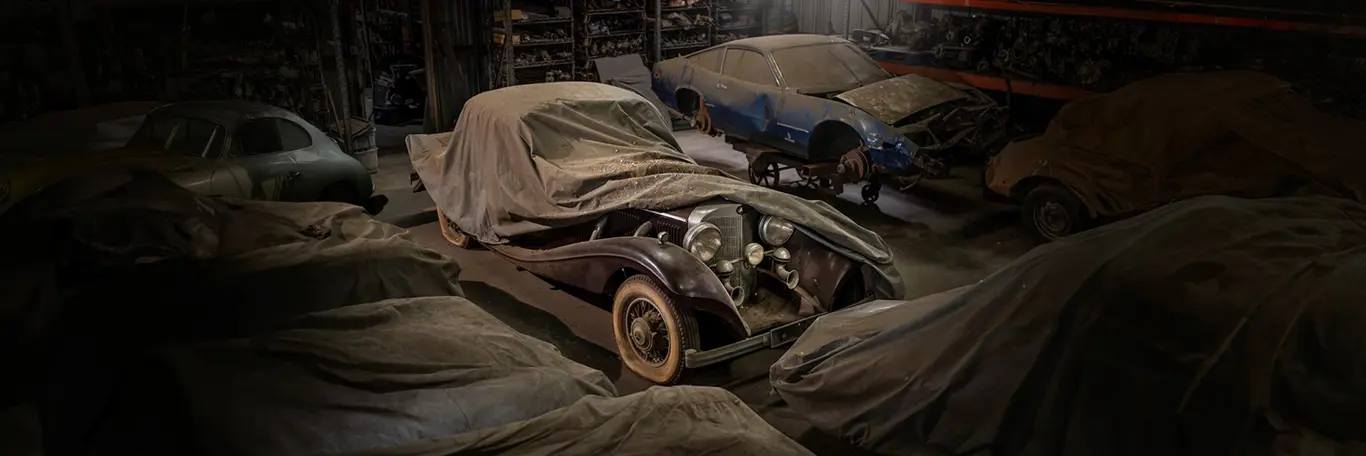
The German-American owner of a southern California junkyard... or was he a hoarder? has passed. He had some neat stuff. And a couple of Lamborghini Miuras nobody knew about. And some prewar German classics. He had all sorts of stuff and I suggest you poke around the Sotheby's auction listing. There's a Mercedes engine in there that doesn't even look like a car motor it's so old. Oh, and an old Mercedes Gullwing. And a twin-cam Porsche 356. And...

 www.dailymail.co.uk
Long-lost Lamborghinis worth $2million are found buried in junkyard
A long-lost variety of luxury cars was dug up after more than four decades of being hidden in an unsuspecting California junkyard.
The Junkyard: The Rudi Klein Collection | View Results | RM Sotheby's
Since 1967, Rudi Klein, a renowned figure in the world of collecting, had quietly amassed a remarkable collection of automotive treasures in a modest...
rmsothebys.com
Twelve year old me wasn't the least bit scared. OK, maybe just a little scared when he rolled the plane so I could see the moose grazing in the lake a thousand feet below us.
Got my own moose story from this summer! There we were one morning, driving out of a large national park for our last day there, and about 75 yards away, standing in a pond, was a moose having breakfast from the bottom of the pond.
I can't say I "invented" the concept, as I had already seen people with brackets holding smartphones up against telescope eyepieces, but I held my smartphone camera up to my binoculars and after a lot of fiddling about, made it work. Two pics I took that way:


This park is full of knowledgeable nature nerds and at our next stop on the road, we bumped into one who, when we mentioned the moose back at that pond, she told us the tragic story of that momma moose from the previous month. Let's just say bears gotta eat.
Here's my light aviation story from childhood. I used to be a well-travelled person! Then I grew up and it wasn't on my dime anymore, and my dimes were in short supply!
The parents took us to Norway, it was the 70's and white people were revisiting their ethnic roots. (Not that we were Norwegian but that's a different story.) Spent a few days at a hotel on a fjord in a remote area. I don't remember if there was a glacier feeding it but I remember there were baby eels in the water, and swimming in the water and it was cold. (Perhaps the second coldest water I've swum in.)
Dad had rented a car to get us to this hotel, which meant a long drive in the mountains on a winding mountain road with my mom gasping and spazzing and freaking out. Sometimes a large bus would be coming around a blind corner. My father found a workaround to solve that for the return trip why, he just hired an air taxi! The morning we left, some Cessna-like plane with pontoons landed on the fjord and taxied up to a dock and we and our luggage got in. Took off, then flew to the big city and landed in the harbor there. All a grand adventure for me! Somehow I suspect my mom was spazzing silently as she wasn't going give the pilot all of the input she would give my dad. Heh heh.
My dad's general attitude: why not?
My mom's: (various spazzing noises here)
Last edited:
Time for more hydroforming! I first learned about it when I read a book about the development of the C5 generation Corvette. (Schefter, James. All Corvettes are Red.) Aluminum tubes were put into a jig, 20,000 psi of water forced inside them, and they came out as rectangular cross-section frame rails in just the shape needed.
I didn't find much about it on YouTube. This is the closest I came to a good video about it:
This promotional video for Ford pickup trucks from 2012 indicates that they are using hydroforming for some, if not all, of their truck frames' components.
One thing I remember reading about but can't confirm on today's intertoobs: a move towards using hydroforming to stamp body sheet metal like door skins and fenders. The way I remember it is that traditionally, such stamping was done with a male and female die for each side of the sheet metal, both of which were built by skilled craftsman who had to do a lot of fine tuning to to the shape get the desired results. The change with hydroforming was that half the labor was needed, only a male die was needed, as on the other side of the sheet metal was just water under pressure.
(Physics reminder, for those of you driving through flood waters this week: with the forces possible in any part of the universe you or I will ever see, water cannot be compressed. Astrophysics reminder: sure, there are other places, and you don't want to go there.)
I forget if that hydroforming also allowed designers to add more creases and curves with greater precision in sheet metal than before. If so, that might account for a lot of the stupid styling in our modern era where designers want to shout, "Bet you weren't expecting THIS! (insert bump/lump/crease/swoop)" Uh, yeah. I was expecting beauty or maybe restrained handsomeness, and you guys have forgotten all about that, so sure, I wasn't expecting that crease there.
Corvette footnote: the aluminum frame rails continued through the C7 generation. As of the mid-engined C-8, it's now a central spine setup.
I didn't find much about it on YouTube. This is the closest I came to a good video about it:
This promotional video for Ford pickup trucks from 2012 indicates that they are using hydroforming for some, if not all, of their truck frames' components.
One thing I remember reading about but can't confirm on today's intertoobs: a move towards using hydroforming to stamp body sheet metal like door skins and fenders. The way I remember it is that traditionally, such stamping was done with a male and female die for each side of the sheet metal, both of which were built by skilled craftsman who had to do a lot of fine tuning to to the shape get the desired results. The change with hydroforming was that half the labor was needed, only a male die was needed, as on the other side of the sheet metal was just water under pressure.
(Physics reminder, for those of you driving through flood waters this week: with the forces possible in any part of the universe you or I will ever see, water cannot be compressed. Astrophysics reminder: sure, there are other places, and you don't want to go there.)
I forget if that hydroforming also allowed designers to add more creases and curves with greater precision in sheet metal than before. If so, that might account for a lot of the stupid styling in our modern era where designers want to shout, "Bet you weren't expecting THIS! (insert bump/lump/crease/swoop)" Uh, yeah. I was expecting beauty or maybe restrained handsomeness, and you guys have forgotten all about that, so sure, I wasn't expecting that crease there.
Corvette footnote: the aluminum frame rails continued through the C7 generation. As of the mid-engined C-8, it's now a central spine setup.
Last edited:
I believe I first heard of hydroforming when HD came out with the V-Rod. They were having issues wrapping the frame around the engine the way they wanted and needed to not have a ton of welds. The story, as I recall, is that someone had recently been to an engineering conference where hydroforming was discussed. Voila! The solution was at hand.
I last mentioned Bruno Sacco, head of Mercedes-Benz styling for many years, in 2016. He has died at the age of 90.

 www.wallpaper.com
 en.wikipedia.org
A few examples of his work. He was proudest of the C126 coupe, the 560SEC, and kept driving one in retirement. Some pics:


Also, the C111 experimental car:


In celebration of Bruno Sacco, the man who brought order and elegance to Mercedes design
The car designer Bruno Sacco has died. Sacco shaped Mercedes-Benz design for nearly a quarter of a century. We look back on his impressive legacy
www.wallpaper.com
Bruno Sacco - Wikipedia
A few examples of his work. He was proudest of the C126 coupe, the 560SEC, and kept driving one in retirement. Some pics:
Also, the C111 experimental car:
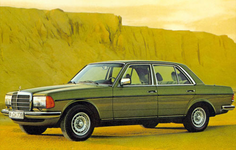
And in the realm of higher volume vehicles, before he was chief of design, he worked on the W123 chassis:
The W201:
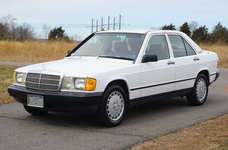
And of course, I have to mention the W124:


And probably my second favorite and in my top three for used Mercedes temptation under a non-lottery-ticket budget: the R129 SL roadster:


The W201:
And of course, I have to mention the W124:
And probably my second favorite and in my top three for used Mercedes temptation under a non-lottery-ticket budget: the R129 SL roadster:
Last edited:
A little bit of technological trivia regarding the disaster in the mountains of North Carolina: in one particular spot in the mountains, there is a rare kind of quartz that the world needs to make computer chips:
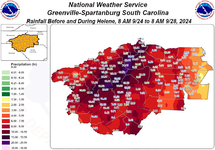
Also, a relative of a friend of The Underground Lair has a rain gauge in that area and at his spot, the reading for the storm was 32" of rain. Somebody else I know has his house still standing, but it was in eighteen feet of water so everything is totaled.
Also, while I'm at it, I've seen multiple references online/in the news about Asehville,along the lines of, "Flooding? But how? It's hundreds of miles from the ocean and at 2,000 feet of elevation!" Well, 2,000 feet isn't the story. It's that 3,000 to 4,000 feet hills in the area are the norm. Also, unlike the Appalachian mountains that many on the east coast may be familiar with, in North Carolina, they can get much bigger than that. There are many in the area that are 5,000 ft. and up, and some above 6,000 feet. The highest point east of the MIssissippi is Mt. Mitchell at 6,684 ft. When water hits this, it goes downhill fast to narrow valleys, where the rivers are. Guess where the people settled long ago and since then.
I went looking at a topo map for a friend I haven't heard from, to see how his address fits in the big world of terrain and water, and I found a good example of what's going on here. The ridge on the left side of this map is above 3,600 feet. You can see all of the creeks coming down that mountainside that maybe trickles at some times of the year. (And maybe not trickles, this is not a dry part of the country at all, and in related news, rains in the days before the big storm hit had already saturated the ground.)

Also, based on other things I'm hearing, stand by for a bigger body count. A lot more than just the city of Asheville got hit.
Also, a relative of a friend of The Underground Lair has a rain gauge in that area and at his spot, the reading for the storm was 32" of rain. Somebody else I know has his house still standing, but it was in eighteen feet of water so everything is totaled.
Also, while I'm at it, I've seen multiple references online/in the news about Asehville,along the lines of, "Flooding? But how? It's hundreds of miles from the ocean and at 2,000 feet of elevation!" Well, 2,000 feet isn't the story. It's that 3,000 to 4,000 feet hills in the area are the norm. Also, unlike the Appalachian mountains that many on the east coast may be familiar with, in North Carolina, they can get much bigger than that. There are many in the area that are 5,000 ft. and up, and some above 6,000 feet. The highest point east of the MIssissippi is Mt. Mitchell at 6,684 ft. When water hits this, it goes downhill fast to narrow valleys, where the rivers are. Guess where the people settled long ago and since then.
I went looking at a topo map for a friend I haven't heard from, to see how his address fits in the big world of terrain and water, and I found a good example of what's going on here. The ridge on the left side of this map is above 3,600 feet. You can see all of the creeks coming down that mountainside that maybe trickles at some times of the year. (And maybe not trickles, this is not a dry part of the country at all, and in related news, rains in the days before the big storm hit had already saturated the ground.)
Also, based on other things I'm hearing, stand by for a bigger body count. A lot more than just the city of Asheville got hit.
Jay Leno's Garage Restoration Blog October 2024!
0:00 1941 American LaFrance fire truck - conversion to electric power steering
21:16 Protective film on his brand new Bentley
25:50 New transmission and clutch in the 1970 Monteverdi sports car
0:00 1941 American LaFrance fire truck - conversion to electric power steering
21:16 Protective film on his brand new Bentley
25:50 New transmission and clutch in the 1970 Monteverdi sports car
Please consider donating to relief organizations helping in the mountains of North Carolina!
The American Red Cross:

 www.redcross.org
In addition to Hurricane Helene, another hurricane recently hit the Pacific coast of Mexico, and Acapulco got flooded. It was better than the horrible hurricane they got a year ago, though, but they need help again.

 apnews.com
World Central Kitchen is helping get cooked meals to people in Acapulco, Florida, Georgia, North Carolina, Tennessee, Gaza, Lebanon, Israel and Ukraine. Wherever people need food! (Alas, they do not allow you to specify where you want your donation to go to.)

 wck.org
 en.wikipedia.org
They have some very large bowls, and paddles to stir them.


The American Red Cross:
I support the American Red Cross
Support the American Red Cross today. Please visit our website to donate now. Financial donations of any size help fund our mission.
In addition to Hurricane Helene, another hurricane recently hit the Pacific coast of Mexico, and Acapulco got flooded. It was better than the horrible hurricane they got a year ago, though, but they need help again.
Along Mexico's Pacific coast, flooding from Hurricane John left devastated towns and 17 dead
Along Mexico’s southern Pacific coast, floodwaters have begun to recede, leaving behind devastated towns and 17 dead, after John struck the coast once as a hurricane and again as tropical storm Desperate residents in the town of Coyuca de Benitez, about 35 miles west of Acapulco, are organizing team
apnews.com
World Central Kitchen is helping get cooked meals to people in Acapulco, Florida, Georgia, North Carolina, Tennessee, Gaza, Lebanon, Israel and Ukraine. Wherever people need food! (Alas, they do not allow you to specify where you want your donation to go to.)
World Central Kitchen | WCK
Founded in 2010 by Chef José Andrés, World Central Kitchen (WCK) is a nonprofit organization that is first to the frontlines providing fresh meals in response to crises. Applying our model of quick action, leveraging local resources, and adapting in real time, WCK has served hundreds of...
wck.org
World Central Kitchen - Wikipedia
They have some very large bowls, and paddles to stir them.
Last edited:
Also, Ms. Squankum drove up to the mountains recently with some relief supplies for people to stay warm in the coming 40F nights, and cat food for a county animal shelter. She says everywhere she went they had stacks of bottled water! And people are busy everywhere cleaning up and the NCDOT is even repairing roads already.
Here's a view I found of a mudslide that shocked me with its speed and surprise. Watauga Co., NC, Sugar Grove, a few miles west of Boone:
And here's a description of something much bigger hitting the village of Chimney Rock:
Here's a view I found of a mudslide that shocked me with its speed and surprise. Watauga Co., NC, Sugar Grove, a few miles west of Boone:
And here's a description of something much bigger hitting the village of Chimney Rock:
Last edited:
I-40 Old Fort area mud slide, captured on dash cam. Also, a tree.
I believe this has been cleared and the interstate is now open to local traffic. This is a few miles east of Asheville.
North west of Asheville, I-40 winds through a mountain valley and has occasional problems with landslides/rockslides covering the road, or in this recent storm, the Pigeon River eating away one side of the interstate. This civil engineer gives a good look into the problems of that stretch of I-40 and how they try to fix and prevent them. Introduction also contains good aerial pics of the Old Fort mud slide.
I-26 goes directly north of Asheville towards the TN border, and across that border in Erwin, TN (where people had to be rescued from the roof of the hospital) the I-26 bridge across the river was only a little bit damaged. Just enough to also cause a long-term closure:

Debris on top of the bridge and on the road near it are hints of how high that river got.
I believe this has been cleared and the interstate is now open to local traffic. This is a few miles east of Asheville.
North west of Asheville, I-40 winds through a mountain valley and has occasional problems with landslides/rockslides covering the road, or in this recent storm, the Pigeon River eating away one side of the interstate. This civil engineer gives a good look into the problems of that stretch of I-40 and how they try to fix and prevent them. Introduction also contains good aerial pics of the Old Fort mud slide.
I-26 goes directly north of Asheville towards the TN border, and across that border in Erwin, TN (where people had to be rescued from the roof of the hospital) the I-26 bridge across the river was only a little bit damaged. Just enough to also cause a long-term closure:
Debris on top of the bridge and on the road near it are hints of how high that river got.
Last edited:
A reminder about how small the original Jeep was. Here's one being loaded into a C-47 cargo plane.

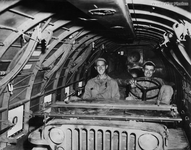
I can't find a good pic right now comparing the WWII Jeep to the Humvee, but here are some of the modern replacements to the Humvee. I detect a trend.

From Wikipedia:
"Bantam car in mid-air. This photo was taken in 1941 at New River, North Carolina during early testing of the Bantam jeep, the forerunner of the Willys MB and Ford GPW jeeps that became the World War II standard. This photo of the Bantam has all four wheels off the ground (six if you count the towed 37mm Antitank gun), the inspiration for the "Flying Jeep" poster and similar depictions."

It was a simpler time, when they still had the WWI-style helmet, and they thought a 37mm antitank gun was going to be sufficient.
The new helmet was coming very soon:
"The TS-3 was given official approval on June 6, 1941 and was designated "Helmet, Steel, M1". Full scale production commenced almost immediately."

Those many millions bounced around for a long, long time in future American wars and in many other nations' miltiaries:
 en.wikipedia.org
I can't find a good pic right now comparing the WWII Jeep to the Humvee, but here are some of the modern replacements to the Humvee. I detect a trend.
From Wikipedia:
"Bantam car in mid-air. This photo was taken in 1941 at New River, North Carolina during early testing of the Bantam jeep, the forerunner of the Willys MB and Ford GPW jeeps that became the World War II standard. This photo of the Bantam has all four wheels off the ground (six if you count the towed 37mm Antitank gun), the inspiration for the "Flying Jeep" poster and similar depictions."
It was a simpler time, when they still had the WWI-style helmet, and they thought a 37mm antitank gun was going to be sufficient.
The new helmet was coming very soon:
"The TS-3 was given official approval on June 6, 1941 and was designated "Helmet, Steel, M1". Full scale production commenced almost immediately."
Those many millions bounced around for a long, long time in future American wars and in many other nations' miltiaries:
M1 helmet - Wikipedia
Last edited:
A friend of The Lair this morning sends me something from the internet, about the Holland Tunnel police catwalk car:

I am now jealous that I never saw one! Maybe it was before my time, or maybe the sightings happened so quickly I wasn't sure what I saw. Looking into this, I realize that the vast majority of family trips into NYC would have been through the Lincoln Tunnel. And they had different police trolleys:
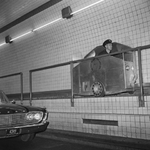
I do remember these little stations for the cars:

I am now jealous that I never saw one! Maybe it was before my time, or maybe the sightings happened so quickly I wasn't sure what I saw. Looking into this, I realize that the vast majority of family trips into NYC would have been through the Lincoln Tunnel. And they had different police trolleys:
I do remember these little stations for the cars:
Last edited:
But that was a brief digression! Where that first goofy little car sent my brain was, "When did mankind first build a tunnel under a river?"
The answer: in London, under the River Thames. Project started in 1825. Was used as a pedestrian tunnel and underground shopping area, but eventually converted to train use. It's still there, trains are still using it.
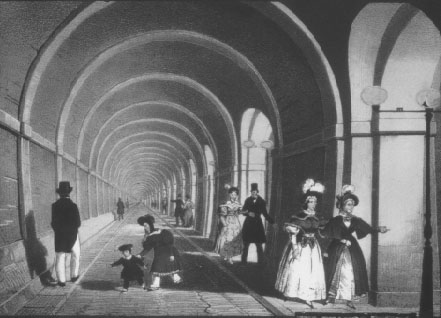 en.wikipedia.org
Notable technological milestones here:
This is much like mining for coal or ore, and miners were employed. Just like with mines, the new technology of steam engines could be used to run pumps to remove water from an underground project. Do read the part about lowering the round shaft with the weight of the steam engine on top of it! Then more bricks.
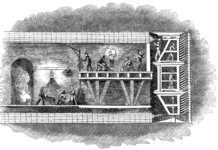
Also, the invention of the tunneling shield, to protect diggers from collapses. Behind them, the masons build the round walls with brick.
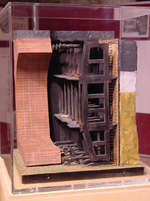
It's only a model. See the figurine at the bottom cranking on a jackscrew to advance the shield a little bit.
There were problems with air quality and methane gas, and, you know, doo doo mud/water from the river sneaking in once in a while. I'm not sure if they also had air pumps and air ducting. This was 125 years before the book The Great Escape, so they didn't know about making ventilation ducts with milk cans and a bellows. (Joke.)
 en.wikipedia.org
The steam engine house is now the Brunel Museum. Brunel Sr., was the engineer for this project, his son also working with him. His son went on to be a very big deal:
 en.wikipedia.org

I mean, what choice did he have? What with the Stevenson family having their iron grip on the lighthouse biz.
The answer: in London, under the River Thames. Project started in 1825. Was used as a pedestrian tunnel and underground shopping area, but eventually converted to train use. It's still there, trains are still using it.
Thames Tunnel - Wikipedia
Notable technological milestones here:
This is much like mining for coal or ore, and miners were employed. Just like with mines, the new technology of steam engines could be used to run pumps to remove water from an underground project. Do read the part about lowering the round shaft with the weight of the steam engine on top of it! Then more bricks.
Also, the invention of the tunneling shield, to protect diggers from collapses. Behind them, the masons build the round walls with brick.
It's only a model. See the figurine at the bottom cranking on a jackscrew to advance the shield a little bit.
There were problems with air quality and methane gas, and, you know, doo doo mud/water from the river sneaking in once in a while. I'm not sure if they also had air pumps and air ducting. This was 125 years before the book The Great Escape, so they didn't know about making ventilation ducts with milk cans and a bellows. (Joke.)
Brunel Museum - Wikipedia
The steam engine house is now the Brunel Museum. Brunel Sr., was the engineer for this project, his son also working with him. His son went on to be a very big deal:
Isambard Kingdom Brunel FRS MInstCE (/ˈɪzəmbɑːrd ˈkɪŋdəm bruːˈnɛl/IZZ-əm-bard KING-dəm broo-NELL; 9 April 1806 – 15 September 1859)[1]was a British civil engineer and mechanical engineer[2] who is considered "one of the most ingenious and prolific figures in engineering history",[3]"one of the 19th-century engineering giants",[4] and "one of the greatest figures of the Industrial Revolution, [who] changed the face of the English landscape with his groundbreaking designs and ingenious constructions".[5] Brunel built dockyards, the Great Western Railway (GWR), a series of steamships including the first purpose-built transatlantic steamship, and numerous important bridges and tunnels. His designs revolutionised public transport and modern engineering.
Isambard Kingdom Brunel - Wikipedia
I mean, what choice did he have? What with the Stevenson family having their iron grip on the lighthouse biz.
More thoughts about that first under-river tunnel:
I don't think anybody was using any power tools! I don't know that they really had hand-held power tools in 1825! Picks, shovels, hammers, chisels.
Once again, historians get too high minded: I saw no mention of a terlit! Somewhere in that tunnel they had to have something, maybe some buckets. I'll need to look into the history of Porta-Potties tomorrow.
Water would have to be delivered to those men, too. Hose? Pipe? Or just pottery jugs on a wagon? With water wine, beer.
(We live in an era of clean water! Can't always assume safe drinking water back then?)
Both toilet buckets and water could have been moved by horse-drawn wagon in that big tunnel.
I don't think anybody was using any power tools! I don't know that they really had hand-held power tools in 1825! Picks, shovels, hammers, chisels.
Once again, historians get too high minded: I saw no mention of a terlit! Somewhere in that tunnel they had to have something, maybe some buckets. I'll need to look into the history of Porta-Potties tomorrow.
Water would have to be delivered to those men, too. Hose? Pipe? Or just pottery jugs on a wagon? With water wine, beer.
(We live in an era of clean water! Can't always assume safe drinking water back then?)
Both toilet buckets and water could have been moved by horse-drawn wagon in that big tunnel.
Last edited:
Turns out I'm not reading up on the history of portable outhouses this morning! I was looking into the history of Mr. Brunel above, and that led me to his father. Wikipedia stated that when Isambard Kingdom Brunel was born in 1806, his father was in Portsmouth working on "block-making machinery." Uh... blocks?
Ah, the pulley kind of blocks, for ships. As in block and tackle.


Why?
He invented and built machine tools for every step of the block-making process -- starting with sawing -- to make these blocks out of wood. Steam power was already being used at this navy yard for emptying dry docks and pumping a fresh water well, now it was used to power machine tools. The workshop had overhead belts and pulleys like would later be ubiquitous during the Industrial Revolution.
Block production went on there until the 1960's.
Lots of photos of the machine tools and descriptions of all of the steps in the process at:
 en.wikipedia.org
Ah, the pulley kind of blocks, for ships. As in block and tackle.
Why?
"
The Royal Navy used large numbers of blocks, which were all hand-made by contractors. Their quality was not consistent, the supply problematic and they were expensive. A typical ship of the line needed about 1000 blocks of different sizes, and in the course of the year the Navy required over 100,000. Bentham had devised some machines for making blocks, but did not develop them and details of how they worked are now obscure. In 1802 Marc Isambard Brunel proposed to the Admiralty a system of making blocks using machinery he had patented. Bentham appreciated the superiority of Brunel's system and in August 1802 he was authorised by the Admiralty to proceed.
There were three series of block-making machines, each designed to make a range of block sizes. They were laid out to allow a production line, so each stage of the work progressed to the next in a natural flow. The yard between the two wood mill buildings was walled-off and roofed to form a new workshop to house the block-making machines.[3] The first set, for medium blocks, was installed in January 1803, the second set for smaller blocks in May 1803, and the third set for large blocks in March 1805. There were numerous changes of layout and some modification of the plant until in September 1807 the plant was felt able to fulfil all the needs of the Navy: 130,000 blocks were produced in 1808."
He invented and built machine tools for every step of the block-making process -- starting with sawing -- to make these blocks out of wood. Steam power was already being used at this navy yard for emptying dry docks and pumping a fresh water well, now it was used to power machine tools. The workshop had overhead belts and pulleys like would later be ubiquitous during the Industrial Revolution.
" With these machines 10 men could produce as many blocks as 110 skilled craftsmen.... The work-flow is perhaps best described as batch production, because of the range of block sizes demanded. But it was basically a production-line system, nevertheless. This method of working did not catch on in general manufacturing in Britain for many decades, and when it did it was imported from America."
Block production went on there until the 1960's.
Lots of photos of the machine tools and descriptions of all of the steps in the process at:
Portsmouth Block Mills - Wikipedia
Last edited:
OK, I'm not finding any real history of portable outhouses. The modern Porta Potty as we know, in plastic form, started in the 1950's. The category those fall under is chemical toilets.
https://en.wikipedia.org/wiki/Chemical_toilet#
I did learn a new word today! Thunderbox.
"Its predecessors include the Victorian thunderbox, the bucket toilet and the pit latrine."
This one here is just about fanciest, high class thunderbox possible:

 en.wikipedia.org
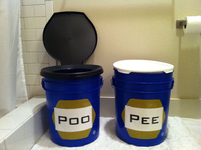
German miners' bucket toilet:
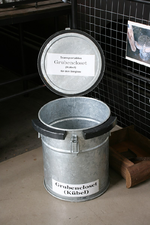
Really going to have to assume that the miners building the first tunnel under the Thames were using a bucket. Hopefully with some kind of lid. Other searching I've done indicates that the galvanized bucket appeared around 1837, so towards the end of the long project. I'm guessing wooden buckets before that.
https://en.wikipedia.org/wiki/Chemical_toilet#
I did learn a new word today! Thunderbox.
"Its predecessors include the Victorian thunderbox, the bucket toilet and the pit latrine."
This one here is just about fanciest, high class thunderbox possible:
Bucket toilet - Wikipedia
German miners' bucket toilet:
Really going to have to assume that the miners building the first tunnel under the Thames were using a bucket. Hopefully with some kind of lid. Other searching I've done indicates that the galvanized bucket appeared around 1837, so towards the end of the long project. I'm guessing wooden buckets before that.
Last edited:
Bob Heine
ALLIANCE MEMBER
@Squankum, not sure when sewage was improved to the point it wasn't a pervasive stench in cities but I am aware that even the fanciest places reeked back then. Versailles was famous for its stench, partly because it was built on marshland but also because thousands of people took care of themselves in chamber pots, which overflowed and soaked into the floors and walls.
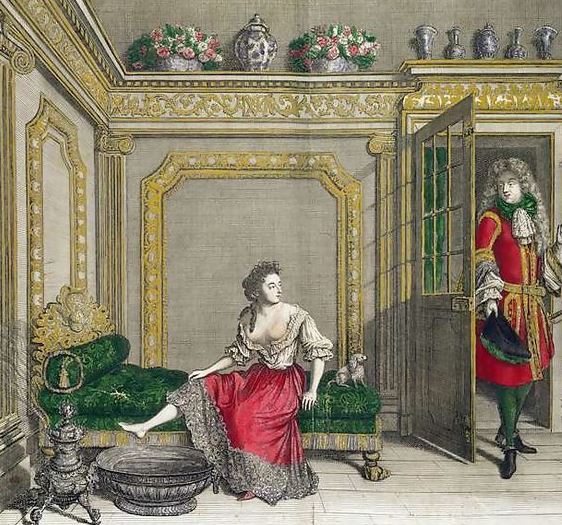
 partylike1660.com
17th Century Hygiene Or The Many Smells Of Versailles…
The definition of cleanliness has changed over the centuries. Today we know about germs and how diseases can spread, we have things like antibacterial soaps and sprays, in some households there is both a shower and a bathtub and we have machines that do our laundry. If you think of the 17th...
partylike1660.com

Okay, back to toilets. Later in the day yesterday, I was listening to an old Rolling Stones song, and heard the lyric:
When the s*** hits the fan
I'll be sitting on the can
When the whip comes down
And having read about bucket toilets and dunny cans and thunderboxes yesterday, and galvanized buckets (hmm.... when were enameled steel items first made?), and that German mine grubencloset I realized, "on the can" as a euphemism for using the toilet has a very literal origin!
Again from the Wikipedia:
Now, about s*** hitting the fan, I looked into that a month or two ago and nobody knows how that one started! Perhaps before widespread electric fans. Possibly a farm implement known as a manure spreader. But nobody has a really clear answer to that phrase's past. And it didn't have to be a literal incident or custom -- everybody can imagine that that happening would be a bad thing.
And don't get me started on whips! People used to whip other people. Crazy, innit? I guess it still goes on, but you have to tip generously first.
When the s*** hits the fan
I'll be sitting on the can
When the whip comes down
And having read about bucket toilets and dunny cans and thunderboxes yesterday, and galvanized buckets (hmm.... when were enameled steel items first made?), and that German mine grubencloset I realized, "on the can" as a euphemism for using the toilet has a very literal origin!
Again from the Wikipedia:
Although bucket toilet systems are now rare in developed countries, particularly where sewers are common, basic forms of sanitation were widely used until the mid 20th century. The pail closet was the term in Victorian England for a bucket (pail) in an outhouse. The municipality employed workers, often known as "nightmen" (from night soil, the euphemism for excreta), to empty and replace the buckets. This system was associated in particular with the English town of Rochdale, to the extent that it was described as the "Rochdale System" of sanitation.[13][14] It persisted in England in some rural schools into the 1960s.[15]
Twentieth-century books report that similar systems were in operation in parts of France and elsewhere in continental Europe.[13] In Germany, bucket toilets were used by workers in some mines up to the 20th century.
Now, about s*** hitting the fan, I looked into that a month or two ago and nobody knows how that one started! Perhaps before widespread electric fans. Possibly a farm implement known as a manure spreader. But nobody has a really clear answer to that phrase's past. And it didn't have to be a literal incident or custom -- everybody can imagine that that happening would be a bad thing.
And don't get me started on whips! People used to whip other people. Crazy, innit? I guess it still goes on, but you have to tip generously first.