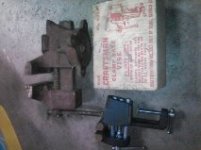
That's not my understanding:
I added some info to my post---Autoprts also said it should read "Guaranteed" along with the date (post #78):
http://www.garagejournal.com/forum/showthread.php?t=86615&page=4
As best as I can tell, there may have been some overlap of dates. My vise has "pat applied for", so it certainly could have been made before 1942, but I also have the older acorn nut holddowns. Your vise has a later date than the one in post #74, so it is
possible it may have had the +5 date stamp---but I have seen 1942 vises with the same "Pat Applied For" casting logo as mine so I still think the date stamp is the true date for your generation of vise.
I've been through that thread. Lots of speculation, and very few hard facts.
As to differences in castings, until someone starts listing specific sizes, with specific casting markings, with specific dates, and correlating them, very little beyond speculation can be made.
Wilton was VERY loosy, goosey about their castings, and claims to patents, patent pending, etc. look at the baby bullets: many (All?) have "Chicago" castings, but dates for Schiller Park.
Mine, whether it is 42 or 47, has NOTHING about any patents. It's only a 3" however, not a lot of space... others in the general era have "Wilton Tool" but the few I've noted are all 4" or larger...
Using one piece of data does not make a case, and that 1945 stamped early vise could easily have been mis-stamped. It was wartime, and any non- critical errors would have been used as is. Guaranteed.
A similar example: Parker has some early examples with 1818 patent dates on it , yet they were passed on. 1918 was WWI, and again, major shortages, and recycling, and scrap NOTHING.
Without any concrete testimony, what WAS the "GAR EXP" supposed to mean? Was it a note to the date? Or for vises sold to the US Government and no guarantee was to be honored? (Plvmb and many other tool companies did this in WWII, and still do today...)
Many many people (Some old enough to have lived through it) have stated unequivocally that Wilton kept the expiration dates for a long time.
Maybe my vise is 1947, maybe it was 1942. I simply don't think Wilton or anyone else was caring about how it looked during the wartime frenzy and the national basis that EVERYTHING made was for the war effort.
Consumer production of ANY non-essentials was near to ZERO from a couple of months after Pearl Harbor, to well after VJ day.
Cars? nada. Trucks? Mostly Army only, very few were made for other than supporting war time manufacturing.
Sewing machines? Only for war time factories (Singer was making M1 carbines and other war gear...)
Younger people generally have NO CLUE what the war years were like for America. I'm deeply interesting in history in general, and for many years really dug into both WWII and its precursor, WWI. Not just the battles, as the battles were decided by much larger efforts than what actually happened on the ground (Not to lesson the efforts of our solders and their sacrifices, but the opposing solders made similar sacrifices, and the deciding factors were superior manufacturing, and not having that mfg. base bombed out...)
Back to the subject of Wilton: Without a LOT more careful analysis, I don't think anyone can make a conclusive statement on this topic. Just opinion, and opinions differ...






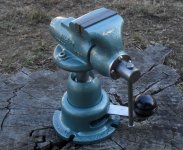





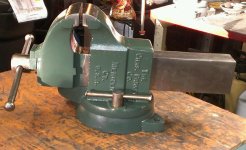

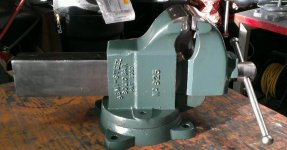
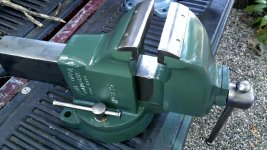


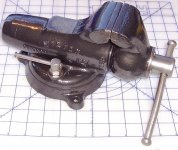
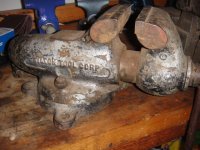

 But seriously, whatever floats your boat... lol.