Private Lugnutz
Well-known member
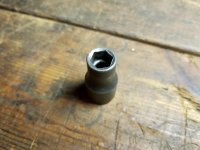
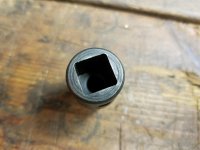
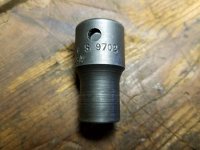
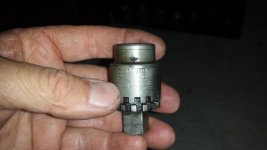
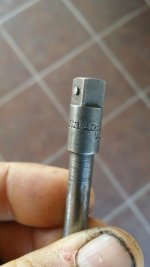
I have a NO GUAR S-9702. No Snap-On logo, no date code. Just the model number, service opening size (7/16), COO, and the 'NO GUAR' marking.
These were used on connecting rod bolts on Cadillac and LaSalle which, per Snap-On Catalogs in 1939 throughout the 1940's, were "drawn down extremely tight" and had "unusually small hex heads" resulting in "frequent socket breakage when standard sockets are used."
Among all Snap-On no guarantee tools, as a category, that's the farthest they go in terms of language in explaining the policy in a catalog description. It's a little strange, since they go out of their way to say they've made the socket more robust than standard sockets, but still won't guarantee it.
As a wartime collector, I am use to crude finishes, and I actually love the machining marks, features that put the tool that much closer to a pair of hands in a factory in my mind.
These were used on connecting rod bolts on Cadillac and LaSalle which, per Snap-On Catalogs in 1939 throughout the 1940's, were "drawn down extremely tight" and had "unusually small hex heads" resulting in "frequent socket breakage when standard sockets are used."
Among all Snap-On no guarantee tools, as a category, that's the farthest they go in terms of language in explaining the policy in a catalog description. It's a little strange, since they go out of their way to say they've made the socket more robust than standard sockets, but still won't guarantee it.
As a wartime collector, I am use to crude finishes, and I actually love the machining marks, features that put the tool that much closer to a pair of hands in a factory in my mind.











 :
: