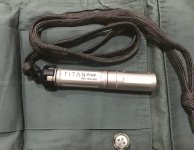
First of all, I'll give you my "credentials" in case it accounts for anyting. I have over 1100 posts on candlepowerforums which is a forum like this one dedicated just to flashlights. I was also a moderator of the flashlight subreddit on Reddit for a time (in its infancy). I mostly listen around these parts because I am by no means a professional mechanic but I do know my flashlights.
I want to start by talking about batteries because that really does shape the whole conversation. You mentioned you're interested in something that takes standard batteries but we need to clarify what that really means. I think most people would say that means alkaline batteries in conventional sizes like AA C, D etc. The problem is alkaline batteries severely limit the performance of a flashlight. With today's high power LEDs you simply need something that will provide more current to get the most out of the emitter and driver circuit. Not to mention, alkaline cells can leak if left in a flashlight for an extended period.
You asked what the military uses these days. I'll get to that in terms of flashlights but as far as batteries, many military and police agencies typically source cr123a primary lithium cells. These batteries operate at 3 volts each compared to 1.5 volts for alkaline cells. The lithium chemistry also makes them very shelf-stable. They can be in storage for 10 years and still be usable. They also do not leak. They are, however, still not capable of providing the amount of energy required by a very high output flashlight. For that, we turn to the same place we turn for our power tools. Lithium ion. Specifically, lithium cobalt oxide, lithium-manganese, or a couple other more exotic variants. If you want to take a short detour to learn more about common flashlight battery chemistries and the advantages of certain cells over others, here's a link to a three-part YouTube series I recorded on the topic. This is several years old now but most of it is still pretty relevant.
In short, there are many lights on the market that will put out 400 lumens on lithium primaries. There are lights the size of a tube of chapstick that will put out 400 lumens on a single lithium ion battery. There are almost no lights on the market that would claim put out 400 lumens on just two alkaline AAs and the ones that do are probably driving those cells harder than they should be.
It sounds like you are in the market for a nice light that will last a long time and perform well. To that end, I'm going to suggest you bite the bullet and step up to rechargeable lithium-ion batteries. I am actually a fan of using non-rechargeable lithium primaries in some applications such as lights that live in my car, go bag, and other places where I may not use them for years. However, if this is a light you plan to use frequently, the cells can get expensive. They run between $1.50 and $2.00 per cell, even purchasing in moderate bulk.
Using rechargeable cells will of course increase your initial cost because you will need a charger and at least one lithium ion battery, but your lifetime cost will actually be reduced. Quality batteries of this type can be recharged thousands of times. If you're not sure you want to take this step I will recommend a couple lights that use primary lithium as well.
With all that out of the way, let's talk about lights. You mentioned wanting something American made. Unfortunately, American-made flashlights are probably more rare than American-made tools. Most of them use electronic circuits that are simply cheaper to manufacture overseas. The machining it's pretty straightforward and could be done anywhere but of course it is still cheaper to do it in China and Taiwan. You were right in assuming that many of these are actually fantastic pieces of equipment. But of course for every decent one there are a hundred that are junk. And since you stated a preference for American-made lights, I'm not going to try to change your mind. Fortunately there are a few really good options that are still made in the USA. Like U.S. made tools, they are going to be more expensive, but I believe you get what you pay for.
If you couldn't tell, I could go on for hours and pages but I'm going to skip all that and jump right to the recommendation I would make for a friend or relative of mine who stated you're same requirements.
First of all is a name you recognize. Surefire. You will find just as many people who will say that Surefire lights are too expensive and all hype as you will die-hard Surefire devotees, but the reality is that in flashlights circles they are still considered the gold standard of reliability. They're not able to stay on the bleeding edge of the performance curve like some of the Asian manufacturers but part of that is that they won't release a light that has been rushed to market or one that exceeds the performance specifications of the batteries they use. I'm not going to tell you the military issues Surefire flashlights because I don't know what they're issuing or even if they issue flashlights. But I do know that Surefire gears many of their products toward police and military personnel.
Surefire has a deep catalog of lights geared towards different uses with different modes, switching mechanisms, battery configurations, pocket clip orientation, and weapon mounting capabilities. The two I will recommend are both two mode lights (which is my preference) and they both use to lithium primary cells in series. They are going to be about the size, or slightly larger, than your mini-mag.
The first is the Surefire 6px Pro. This is the newest evolution the original Surefire 6p which was the benchmark for modular personal illumination. The p60 standard (this refers did the size and shape of a lamp that was used) is still in wide circulation today and is being used by many manufacturers foreign and domestic. The new 6px Pro has two modes, high output of 600 lumens and low output 15 lumens. Mode switching is handled via a forward clicky tell switch. You can Google the light for more details on the operation. High output runtime is advertised at an hour and a half and 52 hours on low. You can find a light on sale for between $75 and $100 making it one of the best bargains out there in my opinion
The second Surefire I will recommend is the E2T maxivision tactician. The E-Series lights are slimmer and more pocketable. It will definitely feel smaller in the pocket than 6px above. Despite being smaller it has a slightly higher maximum output with 800 lumens which Surefire claims it's good for an hour and a half. The low output is lower at five lumens which is just about perfect for my use. Maxivision refers to a specially textured reflector that smooth out the beam at the cost of some throw (range).
Perhaps the best feature about this light in my opinion is the user interface. It uses what I consider to be the best two-mode user interface in existence. Simply tighten the head and pushing the rear clicky switch will produce a high output beam. Loosen the head and clicking the switch produces a low output beam. This provides direct access to either low or high from off without the need to cycle through an unwanted mode. The tactician can be had for between $120 and $150.
The second manufacturer I'm going to recommend is no longer considered a boutique manufacturer since they have been around for so long and their lights a widely known, especially among law enforcement and Military users, however they're much smaller than Surefire. You still get a handwritten thank-you note when you purchase one of their products if that tells you anything.
Malkoff Devices offers several hand-held flashlights that will accept either lithium primary or rechargeable lithium-ion cells. This can be advantageous when you're first getting into high-powered flashlights since you can start out with lithium primaries and upgrade to a rechargeable setup when you're ready spend the money. The lights I'm referring to are the MD series. The MD2 accepts two cells, the MD3 three cells, MD4 four cells. Note that the addition of more cells in series does not increase the output but just the runtime. For purposes of our discussion I will refer to the MD2 series since it is most comprable to the lights discussed above. The MD2 is available with several different light engines that have different features. The original MD2 provides the best balance of output, beam shape, and run time. The MD2T uses a total internal reflectance optic to increase the throw of the beam at the cost of some spill (the secondary portion of the beam outside the hotspot). The MD2 HOT increases both throw and maximum output at the cost of run time.
As an add-on option, you can include the high low switch which allows the MD2 to function like the Surefire tactician discussed above. Rotate the head for high or low. Note that this is achieved using a rather geniously designed physical switching mechanism with a resistor instead of a circuit. The light is activated using a forward clicky rear switch. The M61 MD2 is rated at 450 lumens on high. The M61 MD2 HOT is rated at 740 lumens on high. M61 refers to the light engine that comes in the light. The light engine can be removed and swapped for another such as the m91 series which offers higher output still, but will require at least three lithium primaries or two li-ion cells to achieve full output. You can also swap out the light engine for another 2 cell m61 version that is rated at a lower output or different color temperature (neutral, warm, etc.) The md2 will be approximately the same size as the Surefire 6PX above.
There are not many names in the industry associated with quality and reliability quite like Surefire but Malkoff is definitely one of them. The first Malkoff products in circulation were light engines designed to be drop-in replacements for Surefire and Mag incandescent bulbs. All of their products carry a lifetime warranty but I've never thought of it as a conventional warranty from a large company. Rather, if I have a question or an issue of any kind, I just send an email to Kathy Malkoff and I receive a reply in a day or so with my question or issue addressed. It's honestly a very unique experience these days.
There are several configurations and options that make it difficult to quote an exact price for the md2 series lights but generally they will run you between $100. and $175. They are expensive but it's no different than paying for U.S. made hand tools. You you will know when you hold the light in your hand why it commands such a price.
You will no doubt recieve a lot of recommendations here for imported lights and as I mentioned earlier a lot of them provide phenomenal value. I guarantee I have owned more and different kinds of lights than most who will be posting in this thread and after owning literally hundreds of lights, I have sold or given away almost all of them except a small collection which includes those I have recommended above.
In case you're considering spending your money on a Malkoff light but you're not sure it's worth the price , I'll make this offer here as I have in many other places before. If you purchase a new light from Malkoff and you decide after receiving it that it wasn't worth the money, ship it to me and I will PayPal you the documented purchase price. You'll only be out the cost of shipping.
Good luck!
-G