To avoid these ads, REGISTER NOW!

Air Compressor Pulling Too Many Amps as it Builds Pressure

cpalmer

Member
Joined
Dec 8, 2021
Messages
9
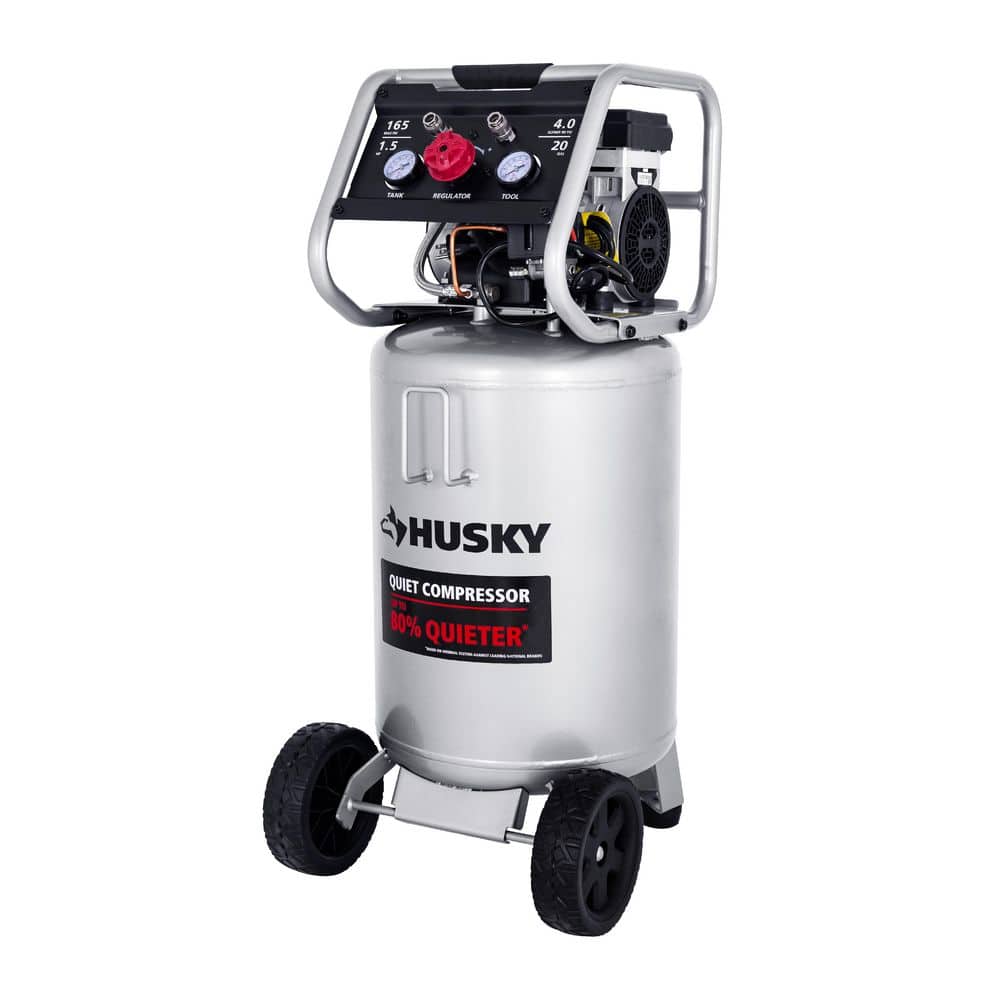
Got a new to me Husky 20 gallon 165 PSI Compressor. Think I'm seeing why I ended up with it:

Motor rated at 11 Amps. Ran it on my 15A garage circuit, once it hits 80-100PSI, the breaker trips. Put a clamp meter on it, and it's pulling about 23 Amps at that PSI. So then, I dumped all the pressure and watched the meter as it ran from 0 PSI . Starts up fine and runs about 7A, and then the amps just climb right along with the pressure. You can definitely hear the motor 'throttling' down a bit as the pressure builds too, like it's working harder. Hits the 11A rating around 50PSI, the breaker is tripping once we hit about 18A or so. The unloader is working from what I can hear, and I can always restart it and run for 30-60 secs at higher pressure before the breaker trips again.

So, I thought maybe check valve issue? Loosened up the line between the motor and check valve a bit with about 50 PSI in the tank. No back pressure from the valve that I could detect, but I did only loosen the nut, maybe the fitting stayed sealed...

And, otherwise at a loss as to where to go next, thanks in advance for any ideas!
 
To avoid these ads, REGISTER NOW!

marinusdees

Well-known member
Joined
Oct 30, 2012
Messages
1,325
Location
Edgewood, Washington
Got a new to me Husky 20 gallon 165 PSI Compressor. Think I'm seeing why I ended up with it:

Motor rated at 11 Amps. Ran it on my 15A garage circuit, once it hits 80-100PSI, the breaker trips. Put a clamp meter on it, and it's pulling about 23 Amps at that PSI. So then, I dumped all the pressure and watched the meter as it ran from 0 PSI . Starts up fine and runs about 7A, and then the amps just climb right along with the pressure. You can definitely hear the motor 'throttling' down a bit as the pressure builds too, like it's working harder. Hits the 11A rating around 50PSI, the breaker is tripping once we hit about 18A or so. The unloader is working from what I can hear, and I can always restart it and run for 30-60 secs at higher pressure before the breaker trips again.

So, I thought maybe check valve issue? Loosened up the line between the motor and check valve a bit with about 50 PSI in the tank. No back pressure from the valve that I could detect, but I did only loosen the nut, maybe the fitting stayed sealed...

And, otherwise at a loss as to where to go next, thanks in advance for any ideas!
Buy a good compressor.
 

seber

Well-known member
Joined
May 31, 2016
Messages
4,207
Location
Deep East Tx.
Photo of the pulley setup would help. I've seen pulleys replaced to get faster pressure build. It does not come out well.
 

FMB4

Well-known member
Joined
Jan 19, 2017
Messages
2,926
Make sure that the compressor electrical connections are clean and tight. Also make sure that the wall outlet is providing the proper voltage. Good luck!
 

mv213

Well-known member
Joined
Sep 29, 2014
Messages
662
Location
Dallas, OR (the OTHER "Big D")
As suggested above you probably need a 20 amp circuit (assuming 110v motor here). An even better alternative would be to see if the motor can be rewired for 220v, or find a 220v motor with the same RPM and at least the same HP.
 

mrjaw14

Well-known member
Joined
May 22, 2012
Messages
1,958
Location
Nashville, TN
What's the voltage drop from no load to full load? Amperage increases as voltage decreases. I have a 33 gallon 120v compressor and I have it on a 20A GFCI fed with 10Awg wire about 20' from the sub panel and haven't had any issues. 15A circuit, maybe with other things on it, probably with 14awg wire, is probably experiencing a fair amount of voltage drop. I think what you'll probably need to do is run a dedicated 20a outlet fed with 10awg wire. 12awg can technically run 20a, but for voltage-drop reasons I'd do 10 awg since we know it's a substantial draw.
 

Stedlin

Well-known member
Joined
May 29, 2019
Messages
318
Location
Duluth, MN
For what it’s worth:
While I was building custom air compressors I did a lot of testing of the effect of flow restrictions between the compressor head and tank on current draw and head/cylinder temperature. In one of my experiments I took the tank check valve and put it on a CNC machine and changed the port angle from 90° to 45°. This reduced the motor load at higher pressures considerably. Getting rid of the check valve and replacing it with a gate valve had an even more significant effect.
 

MatBirch

Well-known member
Joined
Oct 10, 2013
Messages
419
Location
Filer, Idaho
your check valve is likely leaking. As the pressure in the tank builds, the check valve in the pipe from the head to the tank should be sealing the air into the tank, allowing the head to move only the air it's currently compressing. Your head is trying to push that against the tank pressure.
... another byproduct of a lower end machine is cheaper components that don't last as long as they should...
 

MatBirch

Well-known member
Joined
Oct 10, 2013
Messages
419
Location
Filer, Idaho
For what it’s worth:
While I was building custom air compressors I did a lot of testing of the effect of flow restrictions between the compressor head and tank on current draw and head/cylinder temperature. In one of my experiments I took the tank check valve and put it on a CNC machine and changed the port angle from 90° to 45°. This reduced the motor load at higher pressures considerably. Getting rid of the check valve and replacing it with a gate valve had an even more significant effect.
So in your tests, allow the head to push against tank pressure actually LOWERED the amp draw? makes no sense to my pea sized brain...
 

Stedlin

Well-known member
Joined
May 29, 2019
Messages
318
Location
Duluth, MN
So in your tests, allow the head to push against tank pressure actually LOWERED the amp draw? makes no sense to my pea sized brain...
I was having trouble getting my compressor to pump up over 80 PSI without tripping the breaker. I determined that the main cause was the flow restriction of the tank check valve. I bypassed it and the compressor pumped up to over 200 PSI with no problem. That led me to investigate further. The first thing I did was modify the tank check valve by enlarging the ports by changing them to 45 degrees. This helped a lot. I spent quite a bit of time experimenting and wound up making a solenoid operated gate valve to replace the check valve. After doing this I was able to get my 16 CFM compressor to pump up over 200 psi on a 115V 20 amp circuit.
 

seber

Well-known member
Joined
May 31, 2016
Messages
4,207
Location
Deep East Tx.
your check valve is likely leaking. As the pressure in the tank builds, the check valve in the pipe from the head to the tank should be sealing the air into the tank, allowing the head to move only the air it's currently compressing. Your head is trying to push that against the tank pressure.
... another byproduct of a lower end machine is cheaper components that don't last as long as they should...
The pump is always pushing against the tank pressure. As soon as the pump starts pushing air, the check valve opens and it is pushing against the tank pressure.
 

Jswain

Well-known member
Joined
Apr 26, 2013
Messages
2,466
Location
Calgary, AB
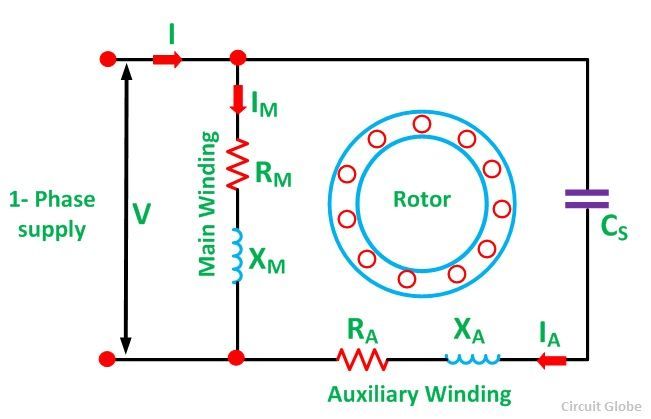
I'd be checking the motor capacitors first.
I would be starting here as well, watch a video and make sure you discharge them with an insulated screwdriver first. Then check the capacitance with a multimeter and make sure it is in the range listed on the side of the capacitor.

 
OP
C

cpalmer

Member
Joined
Dec 8, 2021
Messages
9
Wow, I missed all the good info here after that first non-helpful reply...ooops.
More or less gave up and been running the thing at low pressure for better part of a year, maybe ready to dig back in. To answer some of the questions above: no extension cord. tried various outlets on the circuit. current outlet is 3 feet from electrical panel. So..
Voltage drop - if I find the voltage drops quite a bit as it's running, time for a new circuit with bigger wire? Not hard to do as I'm right next to panel. will test the capacitor, I believe there's just one, the start capacitor and it never trips breaker at startup. will test function of check valve, maybe it's actually obstructing airflow? Thanks
 

mike93lx

ALLIANCE MEMBER
Joined
Dec 9, 2013
Messages
38,000
Location
Richmond, VA
Wow, I missed all the good info here after that first non-helpful reply...ooops.
More or less gave up and been running the thing at low pressure for better part of a year, maybe ready to dig back in. To answer some of the questions above: no extension cord. tried various outlets on the circuit. current outlet is 3 feet from electrical panel. So..
Voltage drop - if I find the voltage drops quite a bit as it's running, time for a new circuit with bigger wire? Not hard to do as I'm right next to panel. will test the capacitor, I believe there's just one, the start capacitor and it never trips breaker at startup. will test function of check valve, maybe it's actually obstructing airflow? Thanks
At three feet, wire gauge effectively doesn't matter. If the voltage is sagging on #14, it won't be different on #12.
 

strutaeng

Well-known member
Joined
Dec 12, 2011
Messages
2,300
Location
Dallas, TX
Um..., folks recommending you return it and check for back-pressure on check valve, when you mentioned it was "new to you" and you had already checked checked check-valve...maybe check for back pressure at higher psi?

I think it is worthwhile to check for voltage drop, to see if you have a wire issue; but you may a motor issue. I've got an older Emglo with a huge, GE older motor. It is a true 2HP motor. I think nameplate amps is like 17 or 18 and it's listed as 8.1 CFM at 100 psi, something like that. Anyways, I can run that one on a 20A circuit with a 50 ft 12 guage extension chord, but I prefer to use a 25ft chord if I can. I've never put a amp clamp to see how much it actually draws at shut-off. I've got 125 psi cut-off pressure. So, don't think you need to go down the rabbit hole of upgrading to a 20A circuit.

I mean, it won't hurt, but you have already confirmed you are exceeding your motor amperage draw.

Is this what you have?: https://www.homedepot.com/p/Husky-2...wered-Silent-Air-Compressor-3332013/311273546
 
To avoid these ads, REGISTER NOW!
OP
C

cpalmer

Member
Joined
Dec 8, 2021
Messages
9
Um..., folks recommending you return it and check for back-pressure on check valve, when you mentioned it was "new to you" and you had already checked checked check-valve...maybe check for back pressure at higher psi?

I think it is worthwhile to check for voltage drop, to see if you have a wire issue; but you may a motor issue. I've got an older Emglo with a huge, GE older motor. It is a true 2HP motor. I think nameplate amps is like 17 or 18 and it's listed as 8.1 CFM at 100 psi, something like that. Anyways, I can run that one on a 20A circuit with a 50 ft 12 guage extension chord, but I prefer to use a 25ft chord if I can. I've never put a amp clamp to see how much it actually draws at shut-off. I've got 125 psi cut-off pressure. So, don't think you need to go down the rabbit hole of upgrading to a 20A circuit.

I mean, it won't hurt, but you have already confirmed you are exceeding your motor amperage draw.

Is this what you have?: https://www.homedepot.com/p/Husky-2...wered-Silent-Air-Compressor-3332013/311273546
Yep, that's the culprit!
 
OP
C

cpalmer

Member
Joined
Dec 8, 2021
Messages
9
Voltage dropped from 123 to 121 when it trips the breaker.
Next dumb question - the only info I can find on testing check valves is to blow through them..!?!?!
I pulled the valve, its pretty hard to blow through in the pump to tank direction. I'd probably pass out if I had to push air through it for a minute.
 

Citation

Well-known member
Joined
Jan 20, 2016
Messages
3,228
Location
Indy
Wow, I missed all the good info here after that first non-helpful reply...ooops.
More or less gave up and been running the thing at low pressure for better part of a year, maybe ready to dig back in. To answer some of the questions above: no extension cord. tried various outlets on the circuit. current outlet is 3 feet from electrical panel. So..
Voltage drop - if I find the voltage drops quite a bit as it's running, time for a new circuit with bigger wire? Not hard to do as I'm right next to panel. will test the capacitor, I believe there's just one, the start capacitor and it never trips breaker at startup. will test function of check valve, maybe it's actually obstructing airflow? Thanks
While it's not 100% clear, I'm going to assume your answer above means you do have this compressor

That compressor shouldn't have an issue with your wiring. Additionally, if the outlet voltage is only down 2V when the circuit trips this doesn't sound like an issue with the wiring or outlet.

I would consider 3 possible issues; the check valve, a capacitor or a mechanical failure in the pump/motor.

I'll start by saying I seriously doubt it's a check valve. I would expect a check valve to fail open, freeze closed or leaking when the pump is off. Working normally at low pressure but having more resistance at high pressure seems odd. It's a relatively cheap part so you could try to part swap it but I don't think that is your problem.

Capacitor failure (or centrifugal switch failure): These are my first guesses. I don't think it would be a centrifugal switch since the motor does start and gets up to speed. That happens in the first moments after starting. However, I could see it being a capacitor issue. If the cap is not up to spec it could make the motor run less efficiently under load. It would be a cheap part to swap.

As for something mechanical, can you pull one of the ends off the pump/motor assembly? Does the pump spin freely or does it feel like there is some obstruction? A failed valve in the head wouldn't be felt when turned by hand but it wouldn't load up the motor either. It would just stop building pressure over a certain point.

So after thinking about it, I would guess the capacitor is the issue.
 
OP
C

cpalmer

Member
Joined
Dec 8, 2021
Messages
9
While it's not 100% clear, I'm going to assume your answer above means you do have this compressor

That compressor shouldn't have an issue with your wiring. Additionally, if the outlet voltage is only down 2V when the circuit trips this doesn't sound like an issue with the wiring or outlet.

I would consider 3 possible issues; the check valve, a capacitor or a mechanical failure in the pump/motor.

I'll start by saying I seriously doubt it's a check valve. I would expect a check valve to fail open, freeze closed or leaking when the pump is off. Working normally at low pressure but having more resistance at high pressure seems odd. It's a relatively cheap part so you could try to part swap it but I don't think that is your problem.

Capacitor failure (or centrifugal switch failure): These are my first guesses. I don't think it would be a centrifugal switch since the motor does start and gets up to speed. That happens in the first moments after starting. However, I could see it being a capacitor issue. If the cap is not up to spec it could make the motor run less efficiently under load. It would be a cheap part to swap.

As for something mechanical, can you pull one of the ends off the pump/motor assembly? Does the pump spin freely or does it feel like there is some obstruction? A failed valve in the head wouldn't be felt when turned by hand but it wouldn't load up the motor either. It would just stop building pressure over a certain point.

So after thinking about it, I would guess the capacitor is the issue.
Since I've tried every other 'easy' option, that's next. And of course the stinkin thing is pretty much hardwired.,
And then, if it's not that, I'd know its the motor, I guess??
Did you ever check the pulleys as recommended above?
Sorry, there's no pulleys, direct drive.
 
OP
C

cpalmer

Member
Joined
Dec 8, 2021
Messages
9
Ok, there's only one capacitor that I can find on the unit, and it's a 250VAC 120mfd, I assume this is the start capacitor?
I only have an OHM meter available at moment, and from what i can tell, resistance was climbing around 10K ohms a second? So likely OK? Am I down to bad motor or pump?
 

Citation

Well-known member
Joined
Jan 20, 2016
Messages
3,228
Location
Indy
Inside the motor
Looking at parts lists for similar pumps I don't see centrifugal switches. (Click link for parts diagram)

I don't know much about induction motors but I'm guessing these are PSC motors. If I'm correct that would explain only one cap and no switch.
 
Last edited:

u3b3rg33k

Well-known member
Joined
Dec 18, 2017
Messages
4,051
The 2.0 HP is 150. Pretty sure its the same pump, more or less. See it on all our home store brands around here...
mine is older, I figured they didn't go that high. nice that they do, 120 PSI factory setting doesn't leave much reserve in the tank for bigger tools.
 

mike93lx

ALLIANCE MEMBER
Joined
Dec 9, 2013
Messages
38,000
Location
Richmond, VA
I couldn't find a 2hp on the car site over 125 when I looked yesterday.

It's definitely a shortfall of my cat (husky rebrand) compressor
 

Citation

Well-known member
Joined
Jan 20, 2016
Messages
3,228
Location
Indy
I couldn't find a 2hp on the car site over 125 when I looked yesterday.

It's definitely a shortfall of my cat (husky rebrand) compressor
I don't think anyone is rebranding CAT compressors. More likely they are going to the same vendors as CAT to get their compressors.
 

mike93lx

ALLIANCE MEMBER
Joined
Dec 9, 2013
Messages
38,000
Location
Richmond, VA
I don't think anyone is rebranding CAT compressors. More likely they are going to the same vendors as CAT to get their compressors.
Potato pohtahto.

If it's the same parts, I'd consider it effectively a rebrand. My compressor is the same as cat except for stickers
 

isb cornbinder

Well-known member
Joined
Nov 3, 2010
Messages
7,073
Location
Pacific South West, BC, Canada
One basic fact is as the tank pressure increases the push back against the compressor pump will increase the loading. Load is amps. If you are not on 220 volts this can be a contributing situation. Extension cords and a bad idea. Google for Ohm's Law.
I am compressing much higher pressures than your report. My compressor is on 220 volts. My compressor can go as high as 165#. I have it set for 150#
 

Attachments

  • Ingersol T30 80.jpg
    Ingersol T30 80.jpg
    52.4 KB · Views: 15
  • Ingersol T30 plumbing.jpg
    Ingersol T30 plumbing.jpg
    94.6 KB · Views: 15

strutaeng

Well-known member
Joined
Dec 12, 2011
Messages
2,300
Location
Dallas, TX
I've got a Husky twin hotdog style similar to this type of unit. It is is very chintzy and all fittings for lines are non-standard. I did remove the head for some reason and was shocked at how little is in there. Very cheap for sure.

I confirmed my suspicion that they are kinda throw-away items. I don't have high hopes of mine, even though I only use it for filling tires and very light duty use. But I do like that it's not deafening!

Either motor or pump would probably not make it worthwhile to repair. Maybe?
 
Last edited:
OP
C

cpalmer

Member
Joined
Dec 8, 2021
Messages
9
So, back at it. No centrifugal switch that I can see. One cap that seems to be functioning. Another buddy recommended re-wiring for 220, that makes lots of these motors 'happier'?
I took apart just about everything looking for issues, motor turns nice and smooth by hand. One thing I did notice is that the check valve gets quite hot as pressure increases. Too hot to touch more than a second. Is this normal?
 
To avoid these ads, REGISTER NOW!
Top Bottom