To avoid these ads, REGISTER NOW!

Learning more about anti seize products

GophersGarage

Well-known member
Joined
Apr 19, 2012
Messages
720
Location
Ontario Canada
So Permatex brand I am convinced is making things super confusing to buy from them. Way to many versions of the same thing.

I currently have 3M Copper and its great stuff but more so for Brakes, Sub frame bolts, Electrical conductivity etc But I am reading more and more how it should not be used into aluminum due to the reaction with copper etc.

I was going to invest in a "Grey" version of Anti Seize to have with the Copper in my tool box.

So it turns out regarding Permatex brand.

If you see the version "Anti Seize Lubricant" or if you see the version called "Silver" or even the version call "Aluminum"

these are all the same thing, which is a mix of Aluminum, Copper, Graphite.

So basically if you have the copper version like I do the ones above are the same idea.

but if you see the version called "Nickel". then this version will not be a mix of items like the ones listed above and the correct product to use when screwing into Aluminum, Titanium, SS due to no copper content.


Am I right or out to lunch? I would like to learn whats the correct item to use.


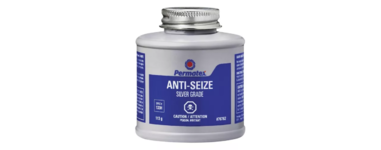
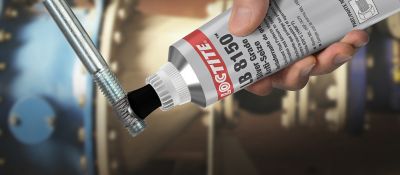
1647202266062.png1647202200210.png1647202163599.png
 
Last edited:
To avoid these ads, REGISTER NOW!

Mooky

Well-known member
Joined
Jul 6, 2014
Messages
257
Location
PA

Application & interactions described in the paragraphs: Copper not recommended for stainless or titanium (nickel recommended).
 

four.cycle

Well-known member
Joined
Oct 19, 2015
Messages
28,902
Location
Tacoma, Washington
Interesting.

When the Permatex Company was still just "Permatex" (prior to the acquisition by Loctite Corp.) they had ONE part number for anti-sieze compound: 133K - there were no "assorted flavors".
Came in a small steel can. I still have half a can of the stuff.

K&W Chemical made a lead based anti-sieze compound. "Not to be used on equipment used to process food."
I still have an unopened can out in the garage somewhere - one of my salesman's samples from the 1980s.
Wonder how it works on aluminum, copper, or titanium? ;)
 

Steve_P

Well-known member
Joined
Sep 15, 2010
Messages
5,185
I have been using the nickel version of NeverSeez for 30+ years. It has the highest temperature rating available and I've never had an issue with it on aluminum, steel, cast iron....
 

unslow1

Well-known member
Joined
Mar 3, 2012
Messages
7,880
Location
Illinois
I've been using the one in the grey bottle at the parts store for as long as I can remember. They have the same confusion with caliper grease.
 

KomatsuTech

Well-known member
Joined
Feb 24, 2018
Messages
129
Location
Pennsylvania
We use all three at work. We only use nickel for high temperature applications, but it would work for general use too. The non nickel is less expensive.
 

vwpieces

Well-known member
Joined
Apr 28, 2020
Messages
5,925
Location
Hills, PA
Not a fan of any Anti-Seize of any type.
I haven't used Anti-Seize for maybe a decade on anything except the occasional exhaust manifold nut.
Bolts I want to remove at some point later in life get light touch of a high moly thick grease.
Brake parts get Sil-Glyde.

Anti-Seize is NOT in any way to be used as a lubricant.
Seen too many people paste it on everything during vehicle and industrial assembly, even internal engine parts.
Scary SHTuff.

It does have its place but that place is maybe only 2% of where it gets used by most people.

My rant, take it for face value
1647216062360.png
 

Bondo

Well-known member
Joined
Dec 22, 2007
Messages
2,549
Location
Greenfield, Maine
Ayuh,..... I used the nickel based stuff for many years,.... Livin' in the rust belt, it went onto wheel studs, spring u-bolts, lotsa boat bolts, motors, outdrives, you name it,.... Any nut or bolt I thought I might wanta take apart someday,.....

As some of you know, I'm a mod over at iboats, where I got to know Don Sindledecker, the smartest boat tech/diagnostition I've ever know,..... One the top 3 Mechanics I've ever met,....
Don was always on me 'bout usin' never-seize, which he called always-seize,...
Considerin' Don was a retired Navy man, who lived his life fixin' saltwater boats, I finally decided to try his method, after years of harassment, 'n a few phone calls from Don,.....
So,..... For the last 15 or 20 years, I've been slatherin' any bolt or nut I might wanta take apart someday, with Form-a-gasket #3, which is the same stuff as Don's preferred Quicksilver Perfect Seal,.....

Since that time, I have several bottles of never-seize somewhere in a tool box that ain't been used, 'n every nut or bolt I needed to take off, has come off, without issue, 'n still coated with #3, outdrive ssteel bolts in aluminum, 'n all,....

Don's explanation was, if water, 'n Ox can't get to it, it can't corrode nor rust,......
Just wish I'd figured that out 30 years sooner,....
 

Mytoolsupply

Well-known member
Joined
Jan 26, 2022
Messages
83
Location
Central Ohio
Not a fan of any Anti-Seize of any type.
I haven't used Anti-Seize for maybe a decade on anything except the occasional exhaust manifold nut.
Bolts I want to remove at some point later in life get light touch of a high moly thick grease.
Brake parts get Sil-Glyde.

Anti-Seize is NOT in any way to be used as a lubricant.
Seen too many people paste it on everything during vehicle and industrial assembly, even internal engine parts.
Scary SHTuff.

It does have its place but that place is maybe only 2% of where it gets used by most people.

My rant, take it for face value
1647216062360.png
you're defiantly not a farmer lol
 

Ole Slewfoot

Well-known member
Joined
Feb 22, 2016
Messages
5,098
Location
Freedom, CA
On my vehicles; if it doesn't specify 'dry' or 'locktite' it gets the nickel. Except I ternal engine parts which get motor oil by default.

The result; subsequent services on my vehicles go smoothly.

Cons; if a can of the stuff opens in your road box, it ends badly.
 

dnschmidt

Well-known member
Joined
Oct 3, 2014
Messages
7,277
Location
Phoenix, AZ
Blue Loctite is probably the best solution. It seals the threads from corrosion and as the name implies locks the bolt until you want it to come out. That's usually a fight but with modern impacts you always win and the bolt doesn't gall up or rust. Anti-Seize does have it's place, like for example between the brake disc and the hub where two metal parts can rust to each other making removal difficult/impossible. I don't use it on fasteners I use Blue Loctite.
 

Tools4Me

Well-known member
Joined
Jun 22, 2021
Messages
546
I originally purchased a bottle of Permatex copper anti-seize and I used it for almost everything without thinking much about it. Over time, I ended up finding the regular and nickel versions at garage sales, so I now have all three. As a result, I did a little research into them a while ago to see which one works best for different circumstances and saved my findings for reference purposes.

This is what I found out-

TheK” factors (for determining bolt torque reduction) were determined by Permatex by applying anti-seize to the threads of the bolt and also to the bottom side of the bolt head or both sides of the washer (if one is used).

Permatex regular anti-seize-


SDS link- https://www.permatex.com/wp-content/uploads/sds/80078.pdf

This is the cheapest stuff, and dark gray in color. It has graphite, and aluminum as the main anti-seize agents according to their 2020 Safety Data Sheet (SDS), but for some reason their website mentions it also having copper in it so maybe it's there in trace amounts? It works up to 1,600 deg F. This is the one that should be used 90% of the time or more. According to Permatex, it is electrically conductive and it can be used with aluminum, or other soft metal threads. It is listed as being safe for use with stainless, but copper or nickel anti-seize are both better options when dealing with stainless steel or high temperatures. Torque needs to be reduced by 10% compared to dry thread torque specs. (K factor 0.18)

Permatex copper grade anti-seize-

SDS link- https://www.permatex.com/wp-content/uploads/sds/09128.pdf

This is the mid-priced stuff, and it's dark gold in color. It has copper and graphite as the main anti-seize agents according to their 2021 SDS. It works up to 1,800 deg F. According to Permatex, it is electrically conductive and it can be used with aluminum, or other soft metal threads. This is the type most recommended for use when installing spark plugs in aluminum heads and for use on exhaust studs that thread into aluminum heads. It is also listed as being safe for use with stainless, but nickel type anti-seize is better for any stainless being threaded into a harder metal like steel or iron, because there is less of a chance for galvanic corrosion over time. Permatex copper is the best option for threading stainless fasteners into soft metals like aluminum (a stainless gun barrel threaded into an aluminum receiver for instance). Regular anti-seize (the cheap stuff) is also rated for stainless to soft metal threads, but that formulation has aluminum as one of the main anti-seize agents. Aluminum is often not very good at preventing seizure of stainless fasteners, so that’s why copper anti-seize is the better option. Torque needs to be reduced by 20% compared to dry thread torque specs. (K factor 0.16).

Permatex nickel grade anti-seize-

SDS link- https://www.permatex.com/wp-content/uploads/sds/09128.pdf

This is the mid/high-priced stuff, and it is medium gray in color. It has nickel and aluminum as the main anti-seize agents according to their 2019 SDS, and the formula is copper-free. It works up to 2,400 deg F. This is the type most often recommended for use on exhaust manifold bolts/studs when they are threaded into iron heads, for oxygen sensors, and for all turbocharger related steel or iron connections, exhaust system or catalytic converter slip fit connections, and exhaust system bolt threads. It is also the one to use when copper contamination must be avoided. Nickel grade anti-seize also has excellent chemical resistance compared to the other two formulations, so nickel is the preferred option for extreme chemical environments (like constant humid chemical laden exhaust system air). According to Permatex, it is electrically conductive and it is often the best choice for use with stainless, but it is not recommended for use when threading into aluminum or other soft metals. This seems to be because nickel is a fair bit harder than metals like aluminum or copper, so if placed between softer threads it might actually gall the softer threads upon fastener installation/removal instead of preventing galling. Nickel anti-seize is the best option for things like stainless-to-stainless or stainless-to-steel threaded parts. If stainless is being threaded into a soft metal like aluminum, use the copper anti-seize instead. Nickel anti-seize is also the best choice for use with titanium and nickel alloys (like Duranickel, Hastelloys, Illium, Monel, etc.). Torque needs to be reduced by 35% compared to dry thread torque specs. (K factor 0.13).
 
Last edited:

dnschmidt

Well-known member
Joined
Oct 3, 2014
Messages
7,277
Location
Phoenix, AZ
Blue Loctite is probably the best solution. It seals the threads from corrosion and as the name implies locks the bolt until you want it to come out. That's usually a fight but with modern impacts you always win and the bolt doesn't gall up or rust. Anti-Seize does have it's place, like for example between the brake disc and the hub where two metal parts can rust to each other making removal difficult/impossible. I don't use it on fasteners I use Blue Loctite.
 
To avoid these ads, REGISTER NOW!

corn chip

Well-known member
Joined
Jul 15, 2021
Messages
672
i didnt realize people used it as lubricant but im not suprised. being a member of many automotive forums i can attest first hand that alot of those guys are not smart in any way.
i use antiseize just as the name implies. any where that two parts could rust, corrode ,seize etc. at the mating faces of a wheel and brake rotor/drum. center section of suspension fasteners. years down the road it can meen the difference between easily getting a shock bolt out vs needing a sawzall and grinder.
 

Alpine4x4

Well-known member
Joined
Nov 11, 2015
Messages
455
Location
Central, WA
I use the stuff with stainless hardware on my boat to keep it from galling up during assembly. Beyond that I have no need for it. Use the standard Permatex anti-sleeze as we call it.
 

M635_Guy

Well-known member
Joined
Dec 5, 2019
Messages
4,334
Location
NC
I had a lot of people tell me I wasn't doing things right (or worse) when I said I wasn't using it on plugs.

After contacting both Bosch and NGK, both requested to reply to me in writing where both stated plus with silver coatings did not require anti-seize and use was not recommended.

I wind up using it on very, very few things...
 

thool

Well-known member
Joined
Jun 23, 2015
Messages
5,307
Location
Rochester, NY
i use antiseize just as the name implies. any where that two parts could rust, corrode ,seize etc. at the mating faces of a wheel and brake rotor/drum. center section of suspension fasteners. years down the road it can meen the difference between easily getting a shock bolt out vs needing a sawzall and grinder.
I use it on parts that will have to be disassembled for service, such as mower spindle threads, snowblower shoes and shave plate (exposed to lots of salt), lug nuts, wheel to hub interface, vehicle battery threaded j-hooks.
 

Al Borland

Well-known member
Joined
Jan 20, 2016
Messages
1,598
I used to like to dip a pencil in the never-seize and then apply a little bit inside a finger of a certain co-worker's work gloves...
Between taking his gloves off to scratch his nose/rub his face, and a couple restroom trips, he provided a LOT of entertainment. He never figured it out.
 

Sumboodie

Well-known member
Joined
Mar 20, 2021
Messages
10,693
Location
AK
Not a fan of any Anti-Seize of any type.
I haven't used Anti-Seize for maybe a decade on anything except the occasional exhaust manifold nut.
Bolts I want to remove at some point later in life get light touch of a high moly thick grease.
Brake parts get Sil-Glyde.

Anti-Seize is NOT in any way to be used as a lubricant.
Seen too many people paste it on everything during vehicle and industrial assembly, even internal engine parts.
Scary SHTuff.

It does have its place but that place is maybe only 2% of where it gets used by most people.

My rant, take it for face value
1647216062360.png
It's a high pressure lube.
 

slowtwitch73

Well-known member
Joined
Apr 18, 2019
Messages
5,876
Location
Hellgate
This is the stuff I use::eyecrazy:

Nuclear Grade Anti-Seize is a premium anti-seize that contains chemically pure nickel and offers superior protection against rust and corrosion. Nuclear Grade is contains no copper, lead, sulfur, halogens, or other ingredients that may poison reactor catalyst beds. Recommended for nuclear fittings, valves and steam mani-folds. Provides maximum protection from high heat up to 2600°F and aggressive chemicals. Nuclear Grade Anti-Seize meets General Electric D50YP12, Westinghouse and Bectel’s nuclear specifications and is tested to MIL-A-907E. It is formulated for use in Class 1, 2, and 3 non-wetted applications for auxiliary equipment in nuclear power plants.
 

BlakeTheCarGuy

ALLIANCE MEMBER
Joined
Oct 10, 2018
Messages
9,367
Location
Roanoke Virginia
I personally keep all of them on hand for different things and because it’s interesting to me lol. I have each one at home but I’m out of the nickel. I typically use copper for exhaust and spark plugs, silver for the wheel to rotor and rotor to hub and lug nuts. Also CV axle shafts going into the hub and other things too. Nickel don’t really have a special use for it just wanted it because I collect it. I use it on plugs for sure. Once you have dealt with seized plugs then you will do it. I also use just a very very light amount on lug studs and I usually coat the hub to rotor surface and occasionally will use a little bit on the wheel to rotor surface too. At work all we have is the Permatex anti seize lubricant that’s all it says on the jar. We do stock the Motorcraft nickel anti seize for the Ford techs to use on those spark plugs that break. I know a bunch of old timers who use anti seize on battery terminals personally that seems like something that would burn the car to the ground since it’s conductive lol. Actually had a guy from Interstate Batteries tell me to use it on terminals too when he delivered a battery to me after I told him I forgot to get a installation kit. After reading online because I had never heard of doing that it appears it’s a lot more common than most people think.
 

VolvoRyan

Well-known member
Joined
Dec 29, 2019
Messages
1,339
Location
Kentuckiana, USA
Pretty sure it doesn't matter. With very few exceptions, wherever you use anti-seize on a vehicle, it won't still be there when you take it apart again. ;)

-Ryan
 

Kscardsfan

Well-known member
Joined
Apr 28, 2020
Messages
1,650
Location
The Little Apple
I used to like to dip a pencil in the never-seize and then apply a little bit inside a finger of a certain co-worker's work gloves...
Between taking his gloves off to scratch his nose/rub his face, and a couple restroom trips, he provided a LOT of entertainment. He never figured it out.
This is mostly how I remember it being used. Except it came to drilling rigs in 5 lbs buckets.
 

anndel

Well-known member
Joined
Oct 28, 2015
Messages
3,270
Location
Hawaii, USA
I’m having flashbacks to my oilfield life and trying like hell to avoid getting a single drop on my person.
Yuck, I remember working at the refinery when pneumatic pumps failed and shot crude all over me. It was hard to come out of my hair and that smell.
 

boom_bap

Well-known member
Joined
Feb 29, 2020
Messages
614
Location
Idaho
What I am reading is that nickel is the best. Only use copper when threading harder material into softer material, otherwise use nickel? Sounds like other than saving a few dollars there are no benefits to using the AL type?
 
Last edited:

Wiz02

Well-known member
Joined
Jul 13, 2007
Messages
2,399
Location
Southeastern PA
If anti-seize doesn't work, why does it manage to get on everything in the general vicinity if I even think about touching the can that I keep as clean as I "can" ? (sorry couldn't resist!)

But seriously, I too have moved to the nickel version for most applications, even though my container of AL based anti-seize would last the rest of my life. I will have to try some of the suggested alternatives though, Tef-Gel, blue loctite or form a gasket #3.

But after taking a ridiculously long time to remove alloy wheels on an 84 Camaro that seemed welded to the hubs only a few months after buying it new, I now put anti-seize on the hub where it contacts the wheel, but it seems like a single application is sufficient.

Thanks guys.
 
To avoid these ads, REGISTER NOW!
Top Bottom