Thanks for the comments guys and thanks for stopping by to check out my various projects.
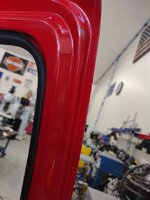
As for the Milwaukee cordless polishers, the small M12 micro polisher did an excellent job of the small pillar areas and will work perfectly for what I purchased it for. However, as much as it pains me to say, I was less than impressed with the full-size polisher. As for feel, balance and maneuverability it was excellent. It is a bit lighter than my corded B&D Buffmaster and is easy to move around and I like the way they tilted the battery at the end of the handle. While polished a roof or hood and the buffer nearly level having that batter tilted keeps plenty of room between the polisher and the painted surface so they were in fact thinking there.
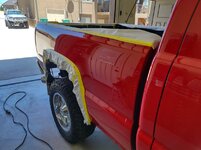
Now for the not so good, and believe me, I really liked using this polisher for the most part and this is hard to report out on, however, it eats through batteries like crazy. I had read reviews about how people could polish an entire car on one battery. I think that is hogwash. I have four good M18 4.0 Redlithium batteries and I went through all four twice and still caught up with the charger and ended up switching back over to my old tried and true Buffmaster for the hood, tailgate and part of the bedsides.
The other thing I noticed is that the torque just isn't there compared to my old Buffmaster. I'm sure this is a battery/cordless thing but with urethane paint you have to create enough heat to get the clear to "flow" and cut but it you create too much heat you can burn through in an instant. Compound is a balancing act, you want to use enough to give the grit to cut through the clear, don't use enough and you will burn it with the pad, use too much and you'll just smear it around, make a mess and "float" the buffing pad over the surface. You want to apply enough to do about a 2' square patch with a thin layer, get it cutting and then slowly remove it with the top layer of clear and then the heat comes in where the clear will begin to "flow" out a bit until the panel is free of compound residue. Then wipe the panel to remove the course grit, change pads to a finer pad and finer polish/compound and lather, rinse, repeat. Always make sure to remove any residue of the courser compound before moving to a finer one or you'll be chasing your tail with swirl marks and scratches.
With my 20-year old clear I was nervous that the OEM clear had become too hard to buff out well but the B&D Buffmaster cut it really well and had enough torque to really get the polisher to bite in as I could feel the difference between the two polishers. When I wanted the Milwaukee to really bite in and I applied some pressure as the compound was thinning out slightly it would nearly stall out, well at least slow down greatly. That didn't happen with the corded Buffmaster. When I wanted it to bite in, it just took it and shouldered the duty. The tone would change slightly as I was demanding more torque from the Buffmaster, but it just took it.
Now had I not used these two polishers side by side, maybe I would not have come to this same conclusion. Overall as I was telling my son, I think the Milwaukee will get used quite a bit but probably as a final step or maybe, possibly the second step but I'll definitely use the the good ole' corded Buffmaster for the first step of compounding as it continues to prove its worth when it comes to digging in and biting into the finish.
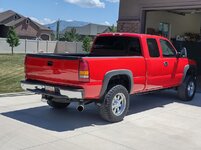
I will post up some pictures to follow of the full paint correction for your viewing pleasure and to confirm just how well it turned out between the three polishers.
I'm sorry if I offended any Milwaukee fanboys, I didn't mean to but wanted to give you my honest opinion. Then again, I don't paint for a living.