To avoid these ads, REGISTER NOW!

Sump Pump Piping and Pit Questions

vibblueser

Well-known member
Joined
Mar 16, 2012
Messages
405
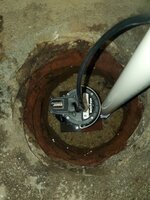
I recently upgraded one of my pedestal sump pumps to a submersible unit and in the process made a couple of modifications.

1. Replaced corrugated cheap plastic piping with solid pvc
2. Installed check valve which was not installed previously
3. I removed old muck/crush paver from bottom of pit
4. I added pea gravel and have pump sitting on bricks placed on top of pea gravel

I am going to be replacing another sump on other side of house and plan to do similar modifications. I do have a couple questions before I tackle this project.

1. Is pea gravel ok as the base for the pit? I have read conflicting information online regarding this. If not any suggestions?
2. This other pump will have a much longer run of piping and needs to make several turns. I plan to use long sweep 90 turns vs the medium sweep shown in the first install. Any benefits or reason to stick with my plan of the long sweep vs making due with the medium sweeps?
3. Any other suggestions would be greatly appreciated.
 

Attachments

  • 20240208_173915.jpg
    20240208_173915.jpg
    605.3 KB · Views: 89
  • 20240208_173923.jpg
    20240208_173923.jpg
    705 KB · Views: 87
  • 20240208_173930.jpg
    20240208_173930.jpg
    746.6 KB · Views: 90
  • 20240208_173936.jpg
    20240208_173936.jpg
    737.4 KB · Views: 88
  • 20240208_173944.jpg
    20240208_173944.jpg
    639.2 KB · Views: 88
To avoid these ads, REGISTER NOW!

clutch47

Well-known member
Joined
Aug 8, 2008
Messages
383
Location
Elysburg, PA
Questions before answers.
Why pea gravel? I might be more inclined to use brick pieces giving sediment a place to go further away from the suction.

What is the sump pit made from?
If its rusted steel, fix it now before it breaks.

What switches the pump on and off?
Sediment could hold a plunger or float up or down.
You don't want the float to be impeded...imagine the consequences.

I built a similar unit years ago.

Whatever water is behind the highest point will come back when the pump shuts off. This could make your pump cycle over and over, and effectively stirring debris up clogging your pump screen.
If the run of discharge pipe after the highest point is long enough, the weight of the water in the pipe pulling on the pump will help it pump a little more effectively.
 
OP
V

vibblueser

Well-known member
Joined
Mar 16, 2012
Messages
405
We set our sump pumps on bricks, pavers. Elevates the pump and creates a settling basin.

Our pumps will pass 1/2” solids.

I would not use pea gravel.
What would you suggest in place of the pea gravel. The pump is set on bricks which are on top of the pea gravel. Probably about two or so inches of space between pump and base of pea gravel. Think my pump will do 3/8 solids but unless this pea gravel defies gravity I dont see it ever being sucked in.
 
OP
V

vibblueser

Well-known member
Joined
Mar 16, 2012
Messages
405
Questions before answers.
Why pea gravel? I might be more inclined to use brick pieces giving sediment a place to go further away from the suction.

What is the sump pit made from?
If its rusted steel, fix it now before it breaks.

What switches the pump on and off?
Sediment could hold a plunger or float up or down.
You don't want the float to be impeded...imagine the consequences.

I built a similar unit years ago.

Whatever water is behind the highest point will come back when the pump shuts off. This could make your pump cycle over and over, and effectively stirring debris up clogging your pump screen.
If the run of discharge pipe after the highest point is long enough, the weight of the water in the pipe pulling on the pump will help it pump a little more effectively.
Pea gravel just as a place for sediment to settle rather than the pump picking it.

Looks like the pit is made of corrugated metal pipe with holes drilled in it. It is rusting and I am looking at solutions in the near future to perhaps pit slightly smaller diameter basin inside of it rather than digging this one out.

Pump is a Liberty 237 which has a magnetic float switch

Not sure what you mean exactly. By installing a check valve that effectively stops the flow backwards you speak of?
 
OP
V

vibblueser

Well-known member
Joined
Mar 16, 2012
Messages
405
Any thoughts or pros/cons of using long vs medium sweep 90 for the turns given that this run will probably be along the lines of 40ft versus the short run you see in the one I already installed. Thanks for any and all advice.
 

The Cobbler

Super Moderator
Staff member
Joined
Oct 24, 2013
Messages
25,854
Location
Niagara Region, Ontario, Canada
I definitely would not use pea gravel. put the pump on some bricks and call it done. when you decide to clean it out the pea gravel will be a major PITA.
for the long run, I would probably upsize the pipe at least to 2"
 

GRN96WS6

Well-known member
Joined
Dec 23, 2012
Messages
2,209
Location
SOMD
I don't use any gravel in mine, I just have it on a couple pieces of cinderblock and just replaced my old pump after 6ish years with a new unit as it was short cycling.
 

mike93lx

ALLIANCE MEMBER
Joined
Dec 9, 2013
Messages
37,464
Location
Richmond, VA
I can't see any benefit to pea gravel and agree on it just being a pain to ever clean the pit. Bricks is all that's needed
 

gizardlizard

Well-known member
Joined
Aug 29, 2019
Messages
726
Location
Madison, WI
The more elbows (long sweep or not) the more friction and less flow. I have 10’ of head working against my pipe and a 92 foot run for it to exit the house before headed outside. What worked for me was using 1 1/2” flexible, schedule 40 pvc hose. It’s commonly used in hot tubs. It glues into normal schedule 40 pvc fittings using the same glue and primer. The beauty of it, is because it’s flexible, you can quickly run it almost anywhere and the best part is that you can make very gradual bends to achieve 90 degrees and drastically cut down on friction. I have massive flow from my setup now. Before with pvc pipe and fittings, the water struggled to exit the house. Be sure your pipe is rated for the head pressure you have plus maybe a little more.
 

gizardlizard

Well-known member
Joined
Aug 29, 2019
Messages
726
Location
Madison, WI
The last sentence should have said “ be sure your PUMP is rated for your head pressure. I didn’t mean the pipe. My bad
 
OP
V

vibblueser

Well-known member
Joined
Mar 16, 2012
Messages
405
The more elbows (long sweep or not) the more friction and less flow. I have 10’ of head working against my pipe and a 92 foot run for it to exit the house before headed outside. What worked for me was using 1 1/2” flexible, schedule 40 pvc hose. It’s commonly used in hot tubs. It glues into normal schedule 40 pvc fittings using the same glue and primer. The beauty of it, is because it’s flexible, you can quickly run it almost anywhere and the best part is that you can make very gradual bends to achieve 90 degrees and drastically cut down on friction. I have massive flow from my setup now. Before with pvc pipe and fittings, the water struggled to exit the house. Be sure your pipe is rated for the head pressure you have plus maybe a little more.

I appreciate the thoughts regarding the long sweep or not argument. I would imagine the long sweep would cause less friction even if it is only a small amount. Hadnt really thought of the flexible pvc route but not sure I would venture to that as I prefer the look and reliability of solid pvc.
 

mike93lx

ALLIANCE MEMBER
Joined
Dec 9, 2013
Messages
37,464
Location
Richmond, VA
Here is an article outlining some of the reasons. I am mostly using it as a booster to raise the sump pump itself up higher without having to stack more brick or pavers on top of each other. The gravel acts as a filter of sorts and a nice bed for the bricks to sit on.

https://onpumping.com/why-is-there-gravel-in-sump-pit/
What is the issue with stacking some more blocks?

Your sump pit will need cleaning at some point and gravel will just make that harder
 

clutch47

Well-known member
Joined
Aug 8, 2008
Messages
383
Location
Elysburg, PA
Pea gravel just as a place for sediment to settle rather than the pump picking it.

Looks like the pit is made of corrugated metal pipe with holes drilled in it. It is rusting and I am looking at solutions in the near future to perhaps pit slightly smaller diameter basin inside of it rather than digging this one out.

Pump is a Liberty 237 which has a magnetic float switch

Not sure what you mean exactly. By installing a check valve that effectively stops the flow backwards you speak of?
What I'm referring to is when the pump shuts off, whatever water that's still in the pipe has to go somewhere. If you're only lifting the water a foot or two, don't sweat it.
I was lifting it 8 feet over a 16 foot run.
It can come back and stir up the sediment in your sump well...and mine definitely did that.

I made a frame out of pvc scraps and put snow fence around it so nothing on my basement floor could float into my sump while I was at work and block my float.

If it was wedged on, it could burn the pump out if there's no water to keep it cool. Then you get flooded.
If it got wedged off.. you know what happens.
I made my sump well out of a 30-ish gallon plastic drum sunk into the floor with the top cut off. Worked great.
 
To avoid these ads, REGISTER NOW!

mike93lx

ALLIANCE MEMBER
Joined
Dec 9, 2013
Messages
37,464
Location
Richmond, VA
What I'm referring to is when the pump shuts off, whatever water that's still in the pipe has to go somewhere. If you're only lifting the water a foot or two, don't sweat it.
I was lifting it 8 feet over a 16 foot run.
It can come back and stir up the sediment in your sump well...and mine definitely did that.

I made a frame out of pvc scraps and put snow fence around it so nothing on my basement floor could float into my sump while I was at work and block my float.

If it was wedged on, it could burn the pump out if there's no water to keep it cool. Then you get flooded.
If it got wedged off.. you know what happens.
I made my sump well out of a 30-ish gallon plastic drum sunk into the floor with the top cut off. Worked great.
That's why you use a check valve at the pump. Nothing should be rushing back into the pit
 

75gmck25

Well-known member
Joined
Jul 21, 2014
Messages
1,318
Location
Alexandria, VA
First - mine is raised up on a couple of bricks. I have crushed stone surrounding the pit to allow water infiltration (clay soil), but no stone or gravel in the pit.

My water pipe is 2" until it goes through the house wall, and there it turns 90 degrees and dumps into a 3" PVC pipe, and then 90 degrees again into a buried horizontal 4" drain pipe. I wanted make sure there would be no backup that prevented the 2" pipe from clearing all the water.

You need to ensure the pump has enough lift to get the water up to the highest elbow, and then slope the long horizontal pipe down from that elbow. You will still have water remaining in the vertical pipe because of the backflow preventer near the pump, but the horizontal pipe should self drain.
 

rmanrman

Well-known member
Joined
Nov 2, 2012
Messages
383
What I'm referring to is when the pump shuts off, whatever water that's still in the pipe has to go somewhere. If you're only lifting the water a foot or two, don't sweat it.
I was lifting it 8 feet over a 16 foot run.
It can come back and stir up the sediment in your sump well...and mine definitely did that.

I made a frame out of pvc scraps and put snow fence around it so nothing on my basement floor could float into my sump while I was at work and block my float.

If it was wedged on, it could burn the pump out if there's no water to keep it cool. Then you get flooded.
If it got wedged off.. you know what happens.
I made my sump well out of a 30-ish gallon plastic drum sunk into the floor with the top cut off. Worked great.
If you have a check valve within 12 inches of the pump any water that is expelled to the outside of the home can not return to the sump pump
The 1/3 hp pump I have easily lifts the water up to 8 feet. When it’s shot will replace with 1/2 hp
 

BombShelter

Well-known member
Joined
Nov 16, 2015
Messages
543
Location
State of Hockey
You don't need rock, you want to pump out the muck. Most systems are clean water, if your getting a lot of sand and dirt there might be a big hole in your foundation that should be fixed. Eventually the sand and dirt will fill the block cores and the drain tile system will stop working. Famous last works, "that will never get sucked up into my pump," small rocks will kill a pump quickly and it's during the torrential rain, flooding the basement.

Sweep elbows (DWV - drain, waste, vent) are for helping drainage more, **** doesn't get caught in the corner, they tend to be lighter duty plastic and don't have as high of a pressure rating as normal schedule 40 PVC pipe. It should work fine, if it doesn't, cut it out and replace with sch 40 pressure pipe. I think Spears may have pressure sweep fittings if you want to go that route.

I'm wondering if that drain field pipe is most of your problem, it also looks like there's an older opening next to it. All that drain field water could be working it's way back to the foundation by travelling next to the discharge pipe. If the outside seal has broken down, lots of water could be recirculating back into the home. This is pretty common, I've seen it on buildings that are brand new or even a few years old, not so common on homes since most builders don't go through the wall but it does pop up.
 

RPH

Well-known member
Joined
Dec 17, 2006
Messages
4,190
Location
Michigan Thumb
At my place I drilled a small hole in the check valve. It allows the pipe to drain back. Why? In the winter the pipe going outside could and has frozen up. Drain that water back and no freeze problems since.
 

TonyG109

Well-known member
Joined
Aug 22, 2016
Messages
94
Location
Maryland's Eastern Shore
It sound like to me your setup will work just fine. Gravel in the pit really isn't a problem since you have the pump up on bricks. My setup is basically the same as yours. It's been in place for about 10 years or so with no issues with the gravel causing a problem or sediment building up, but the sediment issue depends on individual conditions.

I would, however, suggest that the diameter of the sump be made as large as possible. This will increase the volume of water the sump can hold for any given height of the water column. Most importantly, this will reduce short cycling which will increase pump life.

My original sump was a length of chimney pipe that was so small it barely fit the pump! That thing sometimes cycled 4 or 5 time a minute. It killed the pump in no time.

And on another related subject...how about a battery backup pump setup!
 
OP
V

vibblueser

Well-known member
Joined
Mar 16, 2012
Messages
405
It sound like to me your setup will work just fine. Gravel in the pit really isn't a problem since you have the pump up on bricks. My setup is basically the same as yours. It's been in place for about 10 years or so with no issues with the gravel causing a problem or sediment building up, but the sediment issue depends on individual conditions.

I would, however, suggest that the diameter of the sump be made as large as possible. This will increase the volume of water the sump can hold for any given height of the water column. Most importantly, this will reduce short cycling which will increase pump life.

My original sump was a length of chimney pipe that was so small it barely fit the pump! That thing sometimes cycled 4 or 5 time a minute. It killed the pump in no time.

And on another related subject...how about a battery backup pump setup!

Came here for some opinions and advice and got more than I even anticipated. Didnt think a discussion about sump pumps and pits would spur such feverish conversation. All jokes aside. I appreciate all advice given. Battery back up is on my horizon just not sure what unit I will be going with at this point. May do a large power bank to buy me about a day worth of run time. Couple of things I want to clear up.

1. The water in my sump pit is clear.
2. Any suggestions for stone/gravel to line exterior of pump basin when the time comes. (size, shape, clean, etc.)
3. Any advice for how close the water should come to the floor level before having the pump come on (think I read somewhere like 6 inches or so).
4. I know some people wrap the pit in landscape fabric when installed. Is this something anyone would advise. I see it as getting clogged eventually leading to bigger issues.
5. Now all of you have me questioning the pea gravel base entirely.

Once again thanks for all the chatter.
 

engineer2

Well-known member
Joined
Dec 13, 2009
Messages
11,797
Location
Chicago burbs
I grew up around sump pumps. It's a normal Chicago thing. I'll go back later and read all the posts.
"Is pea gravel ok as the base for the pit?"
What's under the pea gravel? Older sump pit bottoms could be concrete, plastic or dirt. Setting it up on bricks is a good idea. In my old house the crawl space flooded because one piece of pea gravel jammed the pump impeller even though the pump was on bricks. Lesson learned: every few years clean out the sump pit.

Handy gadgets
Add an air chamber to prevent water hammer. Make your own or buy one. It'll stop the annoying "thump" when the check valve slams shut. It's also OK not to have it. Some people like the thump to assure them that the pump is working.

A high water warning system. I found one on Amazon and it sends me a text message if high water is detected.

Common system failures and their fixes
Power outage
Battery powered backup pump. Battery maintenance is a headache. You can also add a large computer UPS and plug your whole system into that. If the power goes out, the main pump will run until the UPS is out of juice, then the battery backup can take over if the water continues to rise.
Main pump failure
Your battery powered backup pump is your savior for a few hours at least. Nothing wrong with a second 120 VAC pump above your first pump.
Heavy rain overwhelms the system
Prevention: slope soil away from the foundation, but usually a difficult project.
Make sure your main pump is big enough to handle torrential rain storms. Consider 2" piping.
Your battery powered backup pump will eventually turn on but since most are 12 VDC marine bilge pumps, it won't help much since it will be fighting your main pump. Best solution is to add a second 120 VAC pump above your first pump and use 2" piping.
Pump discharge freezing
Make sure your pump discharge is self draining over its entire length.
I put in a PVC tee where it exits the house. It has an inverted check valve to admit air to help drain the line. It works fine.
 
Last edited:

RPH

Well-known member
Joined
Dec 17, 2006
Messages
4,190
Location
Michigan Thumb
We just had a power outage that lasted 23 hours. No power, no pumps. For the sump pump I’ve decided to use a drill spun pump, $15 at Menards. I do have a jackery system to run lights and recharge other batteries. The jackery 1000 easily handles the load. Plus no noise.
 

65ranchero

Well-known member
Joined
Dec 16, 2020
Messages
5,075
Location
Danville, VT left NJ forever
Keep a spare pump 120VAC on the shelf, and 12 volt sump back ups. If you loose power frequently and a high water table.
Date: October 22, 2012 Hurricane Sandy
I had 2 pits in the other house and a back up generator ( which failed) and switched over to the 12v pumps.
Brought my garden tractor close to the pit near a window ran jumper cables to the 12v pump on one side and on the other pit got my F150 close to the pit which also was by a basement window and ran another set of cables to the 2nd pump and monitored them for 3 days ( Hurricane Sandy Date: October 22, 2012)
 

DGersic

Well-known member
Joined
Mar 12, 2017
Messages
6,288
Location
DeKalb, IL
Am I stupid for thinking most put gravel in their pits?

I’ve never heard of gravel in the pit. Cleaning the pit out is already a pain in the ***. I see no reason to make it more of a pain by having to deal with gravel. A couple of bricks is all you need, and even that may be overkill.

I have a basement sump pump here, all it ever sees is water. Pot stays clean. Even so, there’s a couple of bricks under the pump.

I have an outdoor “sump” pump in a pit in the yard of my beach house. This is fed ground water from surface drains, and being at the beach, it inevitably gets fed some sand too. Mostly the pump just sends the suspended sand on its way out the eject pipe. Some settles in the pit and needs to be scooped out occasionally. A couple of bricks are under that one too.
 

DGersic

Well-known member
Joined
Mar 12, 2017
Messages
6,288
Location
DeKalb, IL
Here is an article outlining some of the reasons. I am mostly using it as a booster to raise the sump pump itself up higher without having to stack more brick or pavers on top of each other. The gravel acts as a filter of sorts and a nice bed for the bricks to sit on.

https://onpumping.com/why-is-there-gravel-in-sump-pit/

I read some of this, then gave up. Weirdly stilted language that seems to mix terms and recommend things that make no sense. Maybe I’m missing something, and somebody here with more knowledge and experience will chime in, but my initial reaction is to discard this advice page.

I see no value in raising the pump any more than an inch or two. You’ll just reduce the effective depth of your pit, so it holds less water, and your pump will empty it more often.

Gravel in a solid bottom pit isn’t filtering anything. Maybe gravel make sense in an open bottom pit, where water flow can come up from the bottom. The pits I have are solid bottom plastic, basically like a 30 gallon garbage can, but thicker plastic.
 

CraigStu

Well-known member
Joined
May 22, 2014
Messages
4,023
Location
Blacksburg, Va
I am a little concerned by the solid pvc. Does the pump move on start and shut down? Is there any vibration? I'd like to see a rubber connector somewhere above the pump so the pvc has an easier life.
 

Skyman

Well-known member
Joined
Nov 9, 2021
Messages
1,165
Location
Central Maryland
If you have public water supply, consider a water-powered backup: https://basepump.com/basepump/

Basepump is a simple venturi extractor that works beautifully. I installed one at my old house, and it saved me from a flooded basement on several occasions -- failed electric pumps and power outages.
 
OP
V

vibblueser

Well-known member
Joined
Mar 16, 2012
Messages
405
I am a little concerned by the solid pvc. Does the pump move on start and shut down? Is there any vibration? I'd like to see a rubber connector somewhere above the pump so the pvc has an easier life.
No discernible movement of the pipe that I have witnessed during the pumps operation. The check valve has rubber clamps which might assist in that but the sump pump and pipe seem solid to me.
 

jollygreengiant

Well-known member
Joined
Nov 10, 2013
Messages
2,354
Location
Ontario, Canada
And on another related subject...how about a battery backup pump setup!

Come now, this is the Garage Journal. While a battery backup would do the job it is the smallest and cheapest backup option available and hence not the right call, the OP must install a whole house backup generator! :lol_hitti


Seriously though, I prefer a generator and backup sump pumps as my backup equipment over batteries. I have two pumps in one pit with a third new in box pump on a shelf just in case. I've dealt with pump failures before during big water events, I don't want to do it again.
 
To avoid these ads, REGISTER NOW!
Top Bottom