To avoid these ads, REGISTER NOW!

Warning: Woodpeckers Semble Clamps can Ruin Woodwork

tarbellb

Well-known member
Joined
Apr 17, 2011
Messages
5,737
Location
Oregon
Some of the most **** tradesmen out there- the Fine Woodworker

I wouldnt want to cater to these folks:LOL:


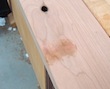
I understand the OPs stance, it would be very frustrating to correct for a oil stain like that. Woodpeckers fully understands whats happening here, they outsourced some cheap clamps and likely got screwed by a bad batch.


Now the OP will play a fun game for the rest of his life, wiping down everything that touches the wood.

Good luck with the social warfare game, hopefully the product improves.
 
To avoid these ads, REGISTER NOW!

gatewaysysop

Well-known member
Joined
Nov 11, 2008
Messages
3,288
Location
Arizona
Playing Devil's advocate for just a moment, where is all the outrage by other users of these products whose projects have been ruined by this defective product? I sympathize with OP and get that he's trying to help others but I suspect by Company's response the problem might not be as widespread or severe as what is being claimed by one user. There doesn't seem to be many other cases being made about it. I'm not saying I don't believe OP just maybe others have experienced same problem and have dealt with it.

the_sake_of_argument.png

Couldn't resist. ;)
 

zendriver

Well-known member
Joined
Dec 10, 2014
Messages
29,752
Location
Indiana
Since they are a company in business to make money, they have outsourced their previously USA made tools, that are experiencing an issue, maybe a wide-spread one.

Sounds like they are merely doing "damage control", knowing full well customers will want replacements/refunds, even if they did not experience (or notice, this problem).

As far as doing the "right thing" they are - for themselves. They are surely looking into the problem - quietly.

IMO, we'd all do the same.
 

JKinAK

Well-known member
Joined
Dec 30, 2017
Messages
66
If you owned the kind of company who’s target customers take the time and energy to consider design, select wood, consider grain, consider future wood movement in each axis, measure to the 1/32nd of an inch(or better), carefully machine that wood into furniture pieces (using tools that the customer has set up, sharpened and maintained), test fit, fine tune the joints, determine a glue up sequence, figure out (and acquire) the required clamps, execute said process while ensuring that everything is fitting properly, is square and has minimal squeeze-out, etc. then you should know that a clamp pad that can damage (temporarily or permanently) said furniture would be entirely UNACCEPTABLE.

The target customer isn’t looking for products that make life harder. The whole premise of their business is to improve the woodworking process. A X% failure rate is inevitable but every failure of this type is totally against the core mission (to make money by selling stuff to people who are not interested in mediocre). So when learning about this well documented (but perhaps not pervasive) problem your target customer base would expect you to proactively warn them of the potential problem and make a remedy available… posting a notice on the company website asking purchasers to check their clamp pads and offering to resolve the problem (it’s an inexpensive part and the cost would be minimal if it’s not a widespread problem).
I suspect that a proactive, empathetic response would be more in line with their target customer’s psyche than the response outlined by the OP.
If their customers didn’t care about the details then they wouldn’t be buying the products they are selling.
Sounds like an organizational response doing damage instead of taking the opportunity to show their customer base that they care about their customers projects as much as their customers do.
 

zendriver

Well-known member
Joined
Dec 10, 2014
Messages
29,752
Location
Indiana
If you owned the kind of company who’s target customers take the time and energy to consider design, select wood, consider grain, consider future wood movement in each axis, measure to the 1/32nd of an inch(or better), carefully machine that wood into furniture pieces (using tools that the customer has set up, sharpened and maintained), test fit, fine tune the joints, determine a glue up sequence, figure out (and acquire) the required clamps, execute said process while ensuring that everything is fitting properly, is square and has minimal squeeze-out, etc. then you should know that a clamp pad that can damage (temporarily or permanently) said furniture would be entirely UNACCEPTABLE.

The target customer isn’t looking for products that make life harder. The whole premise of their business is to improve the woodworking process. A X% failure rate is inevitable but every failure of this type is totally against the core mission (to make money by selling stuff to people who are not interested in mediocre). So when learning about this well documented (but perhaps not pervasive) problem your target customer base would expect you to proactively warn them of the potential problem and make a remedy available… posting a notice on the company website asking purchasers to check their clamp pads and offering to resolve the problem (it’s an inexpensive part and the cost would be minimal if it’s not a widespread problem).
I suspect that a proactive, empathetic response would be more in line with their target customer’s psyche than the response outlined by the OP.
If their customers didn’t care about the details then they wouldn’t be buying the products they are selling.
Sounds like an organizational response doing damage instead of taking the opportunity to show their customer base that they care about their customers projects as much as their customers do.
A mechanic doesn't want wrenches so sloppy, they just round off fasteners. A Carpenter doesn't want a power saw with a crooked blade shaft.

Woodworkers are no more special than anyone else.

It's obviously the Company makes it about the bottom line, when they started outsourcing. One should not be a bit surprised, if loyal customers purposely shopped around for the lowest prices, when their clamps were USA made.
 

American Locomotive

Well-known member
Joined
Jan 8, 2017
Messages
10,934
Location
Rhode Island
IMO, we'd all do the same.
Here's what Woodpeckers says about their clamps
Semble Woodworking Clamps just give you more. Anyone who says, “A clamp is a clamp, they’re all the same” doesn’t spend enough time in their shop. It doesn’t take long for the cost-cutting differences found in many clamps to turn into aggravations. When you’re ready for clamps where the subtle differences are actually improvements that make your life easier, you’re ready for our new Semble clamps.
 

zendriver

Well-known member
Joined
Dec 10, 2014
Messages
29,752
Location
Indiana
Here's what Woodpeckers says about their clamps
Ford Motor used to say "Quality is job One!"

Were we supposed to buy that was the belief with that Corporation? :headscrat

Holy ****, these are "oily pads" on an otherwise fully functional clamp. My guess they will be making some emails to the "pad factory" to find out WTF they are making them out of (maybe recycled baby diapers? :dunno: ) then figure out where/how to get them that just work like they should.

Maybe many have used the defective pads without problems, so the Company see nothing it (for them) to make a big deal out of it.

Now I'm obsessed with this so I'm going to test the small Irwins and the other WGAF brand similar clamps I own, to see if they stain paper.
di
 

Zewnten

Well-known member
Joined
Jun 11, 2017
Messages
1,793
A mechanic doesn't want wrenches so sloppy, they just round off fasteners. A Carpenter doesn't want a power saw with a crooked blade shaft.

Woodworkers are no more special than anyone else.
Wrong analogy. A fine wood worker is more akin to a machinist than a mechanic or a framer. If a machinists tools damaged a finished surface they'd also be pretty pissed.
 

Jayman17

Well-known member
Joined
Feb 6, 2017
Messages
3,795
Location
Seattle, Wa
I will say that I have experienced the same problem as the OP. They were not a Woodpecker product but were orange pipe clamp pads that are on my Pony pipe clamps. I can't remember if they came with the clamps or if I bought them as an aftermarket item. I did check and there is no brand listed on the pads but they are made in the US and are orange like the Pony clamps.
I used them on a panel glue up and they left an oily mark on the edge of the panel. Lucky for me they were removed after sanding.
 

Firebrick43

Well-known member
Joined
May 12, 2015
Messages
13,992
Location
West central Indiana
If you owned the kind of company who’s target customers take the time and energy to consider design, select wood, consider grain, consider future wood movement in each axis, measure to the 1/32nd of an inch(or better), carefully machine that wood into furniture pieces (using tools that the customer has set up, sharpened and maintained), test fit, fine tune the joints, determine a glue up sequence, figure out (and acquire) the required clamps, execute said process while ensuring that everything is fitting properly, is square and has minimal squeeze-out, etc. then you should know that a clamp pad that can damage (temporarily or permanently) said furniture would be entirely UNACCEPTABLE.
i don't know a single woodworker that does all of that, and finish sands completely before assembly like the OP did. Many do a pretty good job sanding before assembly but still do a final sanding afterwards.

A cabinet scraper or sanding removes small amounts of squeeze out and probably issues like oil staining, or wax transfer from the table saw. A swipe or two of a sharp plane and or a card scraper definitely would.

And sanding to 4000 grit on anything wood shows the OP has no idea really what he is doing.

4000 grit paper is for polishing fiberglass gel coat in molds and polycarbonate/acrylic to remove scratches to restore clear vision thru.

Even hard dense woods like ebony don't require more than 1500 grit before buffing. And red oak is one of the most porous domestic woods, going above 320-400 is useless.

I have not seen one rubber clamp pad that doesn't leave a light oil marks for quite some time? Not a single one, and its a non issue as you finish sand or use a cabinet scraper after assembly. News flash, woods like white oak and red oak will show staining from your hands if you handle it any amount without any finish. which is common in handling tradtional furniture when chopping and test fitting mortice and tenon joints.

And last, No woodworker in the world with any experience wouldn't put some kind of finish on the wood of a piece that is anything more than a shop jig or crude temp framing type piece like the OP did. They add some finish even if its simple like a couple of coats of BLO or tung oil, or a coat of wax. Finishes that would make the staining completely disappear. Clear /WB poly finish you might see the staining but again as listed above, anyone worth their salt is going to sand or scrape, vacuum, and wipe down with a tack cloth before applying finish
 

zendriver

Well-known member
Joined
Dec 10, 2014
Messages
29,752
Location
Indiana
Wrong analogy. A fine wood worker is more akin to a machinist than a mechanic or a framer. If a machinists tools damaged a finished surface they'd also be pretty pissed.
No it isn't.

Everybody (worth one's salt), wants to do their job right.

Even Truck drivers don't want new rigs, that spend most of their time waiting in the repair shop, because they are poorly designed and built.
 

Ohio Andy

Well-known member
Joined
Jul 31, 2024
Messages
2,247
Location
Columbus, Ohio
If the stain is on the wood, it's probably oily of some sort. So then if I use the water-based stain it probably would not soak into the wood and it might not adhere to the top of the wood.

I have some things I could try to put on it to draw the oil out but it would probably show. What's the thing that makes a good woodworker a good woodworker is usually understanding how to fix it when you screw up.

A. Woodworker left some stuff at my house and it's been sitting here a long time so I figured maybe I would do a wee bit of joinery which is when I realized that most of the wood was not flat in the ends were not perpendicular. When I do woodworking, I cannot even begin to approximate the level of precision done by a machinist, but if you don't have a pretty square edge and then you try to make a box you don't end up with a box.

Oh, and depending on what that oily residue is, it might also prevent the glue from working correctly.
 

Firebrick43

Well-known member
Joined
May 12, 2015
Messages
13,992
Location
West central Indiana
If the stain is on the wood, it's probably oily of some sort. So then if I use the water-based stain it probably would not soak into the wood and it might not adhere to the top of the wood.
It might be visible but the amount we are talking about isn't going to cause adhesion problems with the finish.
Oh, and depending on what that oily residue is, it might also prevent the glue from working correctly.
🤦‍♂️
He isn't throwing it in a catch pan of motor oil!
 

Ohio Andy

Well-known member
Joined
Jul 31, 2024
Messages
2,247
Location
Columbus, Ohio
It might be visible but the amount we are talking about isn't going to cause adhesion problems with the finish.

🤦‍♂️
He isn't throwing it in a catch pan of motor oil!
Don't need a ton of oil for certain adhesives to fail to work. Some woods I work with I have to wipe down before I glue because of the of oil in the wood.

I usually try not to use those particular exotics but sometimes I do.... I have no idea if that particular oil stain would cause a problem or not, but I would certainly treat it before I would glue it wipe down beforehand is easy, fast and inexpensive. Fixing it after it fails to work is way more difficult. Had to deal with it in the past
 

PCustoms

Well-known member
Joined
Jul 23, 2011
Messages
22,354
Location
VT
Had to clean chicken fat off an unfinished cabinet (don't ever reno a whole how while living it!) a few years back.

Couple rounds of oil eater pulled the stain out of the hickory. Waterborne clear finished has been fine and can't see anything in that spot.
 

Zewnten

Well-known member
Joined
Jun 11, 2017
Messages
1,793
No it isn't.

Everybody (worth one's salt), wants to do their job right.

Even Truck drivers don't want new rigs, that spend most of their time waiting in the repair shop, because they are poorly designed and built.
Truck drivers don't worry about precision to the degree of either trade nor are they craftsman. You made a poor analogy and now you're getting even more into left field trying to broaden it so somehow you're not wrong.
 

dnschmidt

Well-known member
Joined
Oct 3, 2014
Messages
7,265
Location
Phoenix, AZ
Woodworking companies by and large target rich people. Felder, Festool, Woodpeckers as well as many others follow this model. Build it for $5 and sell it for $50. Only downside is that rich people want quality and when they don't get it the scream (a lot). You would think that Woodpeckers would understand this but greed always gets in the way. **** that Ferrari I want a Bugatti so let's offshore some of our stuff.
 

zendriver

Well-known member
Joined
Dec 10, 2014
Messages
29,752
Location
Indiana
Truck drivers don't worry about precision to the degree of either trade nor are they craftsman. You made a poor analogy and now you're getting even more into left field trying to broaden it so somehow you're not wrong.
Truck drivers don't have to worry about doing their job with precision? :lol:

Interestingly, woodworking craftsman in the past did beautiful, precise woodwork, with the most rudimentary of tools, machinists did as well.

Now days, if the wood clamp leaves a slight stain, the world comes to a standstill.
 
To avoid these ads, REGISTER NOW!

neophyte

Well-known member
Joined
Apr 23, 2012
Messages
9,558
Location
Pennsylvannia
i don't know a single woodworker that does all of that, and finish sands completely before assembly like the OP did. Many do a pretty good job sanding before assembly but still do a final sanding afterwards.

A cabinet scraper or sanding removes small amounts of squeeze out and probably issues like oil staining, or wax transfer from the table saw. A swipe or two of a sharp plane and or a card scraper definitely would.

And sanding to 4000 grit on anything wood shows the OP has no idea really what he is doing.

4000 grit paper is for polishing fiberglass gel coat in molds and polycarbonate/acrylic to remove scratches to restore clear vision thru.

Even hard dense woods like ebony don't require more than 1500 grit before buffing. And red oak is one of the most porous domestic woods, going above 320-400 is useless.

I have not seen one rubber clamp pad that doesn't leave a light oil marks for quite some time? Not a single one, and its a non issue as you finish sand or use a cabinet scraper after assembly. News flash, woods like white oak and red oak will show staining from your hands if you handle it any amount without any finish. which is common in handling tradtional furniture when chopping and test fitting mortice and tenon joints.

And last, No woodworker in the world with any experience wouldn't put some kind of finish on the wood of a piece that is anything more than a shop jig or crude temp framing type piece like the OP did. They add some finish even if its simple like a couple of coats of BLO or tung oil, or a coat of wax. Finishes that would make the staining completely disappear. Clear /WB poly finish you might see the staining but again as listed above, anyone worth their salt is going to sand or scrape, vacuum, and wipe down with a tack cloth before applying finish
Traditional Japanese woodworking and carpentry is in many cases just finish planed and left unfinished afterwards.
Red and White Oak may be porous, but both are also relatively hard, do sanding to an ultra fine grit will show those pores, sort of like looking at a fine shaving of material under a microscope.
A thin transparent or translucent coating applied over that finely shaved or sanded surface will then show those fine pores in the surface design.
The fine sanding will likely also burnish the surface, which is, and was, a standard finishing technique going back a thousand years.
The fact that some people can’t see the difference, doesn’t mean that all people can’t see the difference.
Simply sanding or scraping a surface is not always a correction option, since it can make a surface non-level, and non-flat, which can show, especially if the surface is next to something that is flat.
 

fatfillup

Well-known member
Joined
Jan 17, 2009
Messages
10,273
Location
Finksburg, Md
OP, I as a business owner would appreciate the heads up with a product your not happy with but when you start telling me how to handle the problem such as suspending sales and notifying customers, and are disappointed I don't follow your wishes, sorry but we are done. Run your business anyway you see fit and allow me to do the same
 

cgrutt

Well-known member
Joined
Mar 4, 2016
Messages
8,181
Sorry if I missed it but at one point manufacturer suggested cleaning the pads with IPA have you tried that? Is it possible the pads are picking up, or absorbing, oil used on the rails during shipping? In your own video, several of the other branded clamps left some residual oil, albeit not as much, on your tested paper is it possible they just need to be cleaned? I have had similar staining on projects where they were clamped before sometimes it's caused by just moisture and/or glue from glue up process. As stated before I use wood pads to protect projects from damaged caused by clamping in addition to any pads included on clamps themselves.
 

Ohio Andy

Well-known member
Joined
Jul 31, 2024
Messages
2,247
Location
Columbus, Ohio
Sorry if I missed it but at one point manufacturer suggested cleaning the pads with IPA have you tried that? Is it possible the pads are picking up, or absorbing, oil used on the rails during shipping? In your own video, several of the other branded clamps left some residual oil, albeit not as much, on your tested paper is it possible they just need to be cleaned? I have had similar staining on projects where they were clamped before sometimes it's caused by just moisture and/or glue from glue up process. As stated before I use wood pads to protect projects from damaged caused by clamping in addition to any pads included on clamps themselves.
Wood pads, painters tape, wax paper...
 

Firebrick43

Well-known member
Joined
May 12, 2015
Messages
13,992
Location
West central Indiana
Traditional Japanese woodworking and carpentry is in many cases just finish planed and left unfinished afterwards.
During my year in Japan I didn’t witness one traditional pieces that wasn’t wipe lacquered made from urushi tree sap or waxed

Tool handles/bodies were many times left unfinished by the owner if the made them but again the would be darkened by the oils from your hand, they didn’t consider them fine pieces but tools to be used.
Red and White Oak may be porous, but both are also relatively hard, do sanding to an ultra fine grit will show those pores, sort of like looking at a fine shaving of material under a microscope.
A thin transparent or translucent coating applied over that finely shaved or sanded surface will then show those fine pores in the surface design.
The fine sanding will likely also burnish the surface, which is, and was, a standard finishing technique going back a thousand years.
The Japanese did not sand wood it until after it was lacquered. I am baffled where you found that? Pull plane with small white oak bodies akin with a small high angle blade gave similar results to an English scraping plane.

The final coats (up to 30) were sanded/polished with pumice powder and then charcoal dust, but still not 4000 grit equivalent. Seen several places it was about 1200 grit equivalent.

The bare wood itself if sanded with pumice powder would fill the pores and cause immense issues with repair and refinishing for the next generation which they wouldn’t do.

Simply sanding or scraping a surface is not always a correction option, since it can make a surface non-level, and non-flat, which can show, especially if the surface is next to something that is flat.
This part I am really baffled by.

It is correct that sanding and scraping "CAN" make a surface non level if piss poor technique is used. But if they have a piss poor technique on the final scraping or sanding why would they have any better technique on the initial sanding???? The statement in relation to the OP is illogical.

And the last part about showing if something next to it is flat, is the main reason you finish sand or scrape after assembly.

The human hand can easily perceive a difference in height between two surfaces as small as .001". There are few wood workers than can complete the machine work to the wood at that level of accuracy and then assemble it as well. Finish sanding/scraping makes sure that those steps are not perceived by the end owner.

The other thing is that the human hand and even the eye (by itself) cannot perceive a surface flat at even 10 fold what it can feel a step. We need tools like straight edges and light to perceive something being out of flatness by 0.10 or less.. Many cant even perceive that.

When scraping machine tools in its always humorous to see people come up and feel the surface and say flat it is. Only to blue it against a master and show how unflat it is.
 
Last edited:

neophyte

Well-known member
Joined
Apr 23, 2012
Messages
9,558
Location
Pennsylvannia
OP, I as a business owner would appreciate the heads up with a product your not happy with but when you start telling me how to handle the problem such as suspending sales and notifying customers, and are disappointed I don't follow your wishes, sorry but we are done. Run your business anyway you see fit and allow me to do the same
A point about customers I once read in a newspaper article, mentioned that there are various types of customers.
One type will take whatever **** they get, even if they feel a retailer is bring dishonest.
Other customers will get annoyed, but keep it to themselves, and maybe stop shopping at that retailer.
There is however another type of customer, I forget what term was used, maybe something like “super complainer”, and these types of customers will complain to everyone they know, or nowadays, post of internet forums.
The argument of the article, was that type of customer is partially necessary in the business environment, because businesses are scared of this type of customer, so this helps keep businesses somewhat more honest, by not running pricing scams, or selling shoddy merchandise, or etc.

Telling the customers about a potential leaching issue with the current clamp pads should not be some major effort for a properly set up distribution and shipping business.
Custom Sticky notes can be purchased in bulk for $0.07 or less.
Have an employee in the warehouse open the box of clamps, and slap a printed warning sticky note or other sticker on the outside as a warning, and maybe add a note on the website.
The cost would probably be less than $0.25 per package as an initial fix, which is almost certainly cheaper than refunding a couple clamp purchases, or a business getting dinged for return shipping costs.
A future fix would be to have the clamp heads made by a different manufacturer, not necessarily the whole clamp, and either nail out replacements to customers who complain, or sell “spare” “improved” clamp heads, to help offset the cost, if you want to look at the bottom line, or a business wants to stick with marketing ****.
 

whateg01

Well-known member
Joined
Mar 13, 2006
Messages
11,205
Location
doo dah, kansas, usa
...
The cost would probably be less than $0.25 per package as an initial fix, which is almost certainly cheaper than refunding a couple clamp purchases, or a business getting dinged for return shipping costs.
Let's say they have 10000 in stock. That's $2500 to label each. If each took 2 seconds to unpack, relabel, and repack, that's still over 5.5 man-hours. That's not insignificant.
 

neophyte

Well-known member
Joined
Apr 23, 2012
Messages
9,558
Location
Pennsylvannia
During my year in Japan I didn’t witness one traditional pieces that wasn’t wipe lacquered made from urushi tree sap or waxed

Tool handles/bodies were many times left unfinished by the owner if the made them but again the would be darkened by the oils from your hand, they didn’t consider them fine pieces but tools to be used.

The Japanese did not sand wood it until after it was lacquered. I am baffled where you found that? Pull plane with small white oak bodies akin with a small high angle blade gave similar results to an English scraping plane.

The final coats (up to 30) were sanded/polished with pumice powder and then charcoal dust, but still not 4000 grit equivalent. Seen several places it was about 1200 grit equivalent.

The bare wood itself if sanded with pumice powder would fill the pores and cause immense issues with repair and refinishing for the next generation which they wouldn’t do.


This part I am really baffled by.

It is correct that sanding and scraping "CAN" make a surface non level if piss poor technique is used. But if they have a piss poor technique on the final scraping or sanding why would they have any better technique on the initial sanding???? The statement in relation to the OP is illogical.

And the last part about showing if something next to it is flat, is the main reason you finish sand or scrape after assembly.

The human hand can easily perceive a difference in height between two surfaces as small as .001". There are few wood workers than can complete the machine work to the wood at that level of accuracy and then assemble it as well. Finish sanding/scraping makes sure that those steps are not perceived by the end owner.

The other thing is that the human hand and even the eye (by itself) cannot perceive a surface flat at even 10 fold what it can feel a step. We need tools like straight edges and light to perceive something being out of flatness by 0.10 or less.. Many cant even perceive that.

When scraping machine tools in its always humorous to see people come up and feel the surface and say flat it is. Only to blue it against a master and show how unflat it is.
Are you kidding ?
Traditional Japanese architectural wood is routinely finished with hand planes, and then left unfinished.
It’s a standard technique mentioned in numerous books on Japanese architecture and woodworking.
Tool handles are tool handles, and it doesn’t matter if they’re finished, although all Japanese tool handles I’ve come across with imported Japanese tools have bern finished with some sort of lacquer (no clue if actually Urushi or nitrocellulose), except saw handles.

Traditional fine carpentry work is only finished with a scraper plane if absolutely necessary.
Traditional angled plane blades are usually used, and there are one or more Japanese stationary power tool manufacturers who even manufacture powered versions for finishing large pieces of lumber.

The widest Japanese scraper hand planes I can find are 54mm, or about 2”.
Japanese planes with angle set blades can be found in significantly wider widths.

Bare wood would not be finish sanded with pumice or charcoal in Japan, but the lacquer once applied is, at least on the highest level work.
Pumice “grit equivalent” doesn’t matter as much, and the same goes for charcoal grit, since both will break down and become finer as they are used as an abrasive, similar to how Japanese waterstone sharpening stones have the grit become finer as a tool is rubbed against the surface.
Incidentally, mixing a fine powder like calcium carbonate or plaster into linseed oil, creating a fine translucent paste, is a grain filing method used in Western Woodworking for woods with coarse grain like oak.
I don’t know if there is a similar technique used for Urushi, but it wouldn’t surprise me.

As far as flatness goes, the eye in a decently sighted person can easily discern non-flat surfaces, since light will not reflect of a non-flat surface evenly, and knowledge of this likely goes back millennia.
Highly polished surfaces exaggerate the effect.
Finishing wood surfaces so fit is less than .0001 of an inch isn’t some new skill, it also likely goes back 1000 plus years, and was likely needed in certain situations, or used to show skill, although plenty of items likely weren’t finished to that precision unless made for a discerning client, or absolutely necessary.

Finish scraping and sanding only really works well if planned for, and sanding out a single spot either leaves a divot, which us usually noticeable,
or requires surfacing an entire piece, which can also screw up dimensions.
On fine furniture or specialty work, such as with veneer, and luthier work, sanding or scraping out a bad spot because of leaching from a clamp pad would simply not be possible, due to the thickness of the veneer, or the fact that changing the dimensions can screw with the tone.
Using solvents may also not be possible, since the solvents can leach thru the veneer and screw up the underlying glue.
Replacing the veneer, or removing and regluing is likely going to take hours, with a huge chance of screw ups.
I can fully believe a soft padded clamp of this sort is going yo get used for veneer or luthier work.
 

neophyte

Well-known member
Joined
Apr 23, 2012
Messages
9,558
Location
Pennsylvannia
Let's say they have 10000 in stock. That's $2500 to label each. If each took 2 seconds to unpack, relabel, and repack, that's still over 5.5 man-hours. That's not insignificant.
10,000 custom made stickers or labels is going to be significantly less cost.
5.5 man hours is nothing compared to having to talk to and respond to a few pissed off customers, especially if a manager has to do it.
I used to work in customer service.
The shear number of employees needed to fix an issue from a customer with a problem like this can easily take an 8 hour shift if you combine various employees time.
Add in potential credit card chargebacks, complaints to the BBB, going on forums to try to dispel potential negative publicity, maybe even having to talk retailers the manufacturer supplies the clamps to, and having someone slap a label on the clamps is usually worth it.
A warehouse worker’s time is significantly less costly.
Imagine getting sued by a woodworker like a luthier because the clamp screwed up a large piece of Brazilian Rosewood veneer, and a piece of work needed to get redone.
 

Firebrick43

Well-known member
Joined
May 12, 2015
Messages
13,992
Location
West central Indiana
Are you kidding ?
Traditional Japanese architectural wood is routinely finished with hand planes, and then left unfinished.
This thread is about furniture/cabinetry, not timber framing/carpentry.
Bare wood would not be finish sanded with pumice or charcoal in Japan, but the lacquer once applied is, at least on the highest level work.
Pumice “grit equivalent” doesn’t matter as much, and the same goes for charcoal grit, since both will break down and become finer as they are used as an abrasive, similar to how Japanese waterstone sharpening stones have the grit become finer as a tool is rubbed against the surface.
Yes but its not sandpaper on bare wood, that was the point. They didn't have sand paper.
Incidentally, mixing a fine powder like calcium carbonate or plaster into linseed oil, creating a fine translucent paste, is a grain filing method used in Western Woodworking for woods with coarse grain like oak.
I don’t know if there is a similar technique used for Urushi, but it wouldn’t surprise me.
They use clay mixed in the initial layers.
Finishing wood surfaces so fit is less than .0001 of an inch isn’t some new skill, it also likely goes back 1000 plus years, and was likely needed in certain situations, or used to show skill, although plenty of items likely weren’t finished to that precision unless made for a discerning client, or absolutely necessary.
I am out, there is no point in discussing tolerance in woodworking if you believe that 0.0001" fit in any form of wood working is achievable. The daily changes in relative humidity makes that impossible, a truly Augean stable like task. 0.0001" is hard to hold tolerance for machining metal with the best machine tools. One doesn't see wood workers with Venier micrometers measuring wood very often
Finish scraping and sanding only really works well if planned for, and sanding out a single spot either leaves a divot, which us usually noticeable,
or requires surfacing an entire piece, which can also screw up dimensions.
Yes the whole surface, after assembly, that is the purpose. I never said spot sand.

Who measures a table top or cabinet door and says, well, you messed that up, its 0.497" in thickness instead of 0.500" thickness in woodworking???
On fine furniture or specialty work, such as with veneer, and luthier work, sanding or scraping out a bad spot because of leaching from a clamp pad would simply not be possible, due to the thickness of the veneer, or the fact that changing the dimensions can screw with the tone.
Using solvents may also not be possible, since the solvents can leach thru the veneer and screw up the underlying glue.
Replacing the veneer, or removing and regluing is likely going to take hours, with a huge chance of screw ups.
I can fully believe a soft padded clamp of this sort is going yo get used for veneer or luthier work.
Now you are bringing veneer work and musical instruments into the fray. 🤦‍♂️

Cauls or lots of instrument makers (cam) clamps with leather pads are used, not quick clamps.
instrument makers.jpg
 
Last edited:

neophyte

Well-known member
Joined
Apr 23, 2012
Messages
9,558
Location
Pennsylvannia
This thread is about furniture/cabinetry, not timber framing/carpentry.

Yes but its not sandpaper on bare wood, that was the point. They didn't have sand paper.

They use clay mixed in the initial layers.

I am out, there is no point in discussing tolerance in woodworking if you believe that 0.0001" fit in any form of wood working is achievable. The daily changes in relative humidity makes that impossible, a truly Augean stable like task. 0.0001" is an insane tolerance for machining metal with the best machine tools.

Yes the whole surface, after assembly, that is the purpose. Who measures a table top or cabinet door and says, well, you messed that up, its 0.497" in thickness instead of 0.500" thickness in woodworking???

Now you are bringing veneer work and musical instruments into the fray. 🤦‍♂️

Cauls or lots of instrument makers (cam) clamps with leather pads are used, not quick clamps.
instrument makers.jpg
Unfinished wood is also used for furniture in japan.
There’s even a term for it.

Veneer and musical instruments are integral to woodworking, and woodworking clamp use, and finishing.
If you cannot understand or accept this, while also referring to cabinet scrapers, then you just seem to want to be argumentative, than accept the fact that the clamps OP is referring to can damage woodworking, and f@ck up a project.

The fact that traditional luthier clamps have wood jaws does not mean that other clamp types might not be used, especially if those clamps seem fit for purpose.
This would be like presuming Japanese carpenters never use an Estwing hammer, and dome US writer and publisher of books on traditional woodworking techniques, only uses milk paint and linseed oil finishes, rather than acrylic paint, and that he would never try using glue made from something like gummy bears.
 

Attachments

  • IMG_6703.png
    IMG_6703.png
    2.1 MB · Views: 6
  • IMG_6704.png
    IMG_6704.png
    2.1 MB · Views: 8

Firebrick43

Well-known member
Joined
May 12, 2015
Messages
13,992
Location
West central Indiana
Unfinished wood is also used for furniture in japan.
There’s even a term for it.

Veneer and musical instruments are integral to woodworking, and woodworking clamp use, and finishing.
If you cannot understand or accept this, while also referring to cabinet scrapers, then you just seem to want to be argumentative, than accept the fact that the clamps OP is referring to can damage woodworking, and f@ck up a project.

The fact that traditional luthier clamps have wood jaws does not mean that other clamp types might not be used, especially if those clamps seem fit for purpose.
This would be like presuming Japanese carpenters never use an Estwing hammer, and dome US writer and publisher of books on traditional woodworking techniques, only uses milk paint and linseed oil finishes, rather than acrylic paint, and that he would never try using glue made from something like gummy bears.
(y). Post a video of your 0.0001" woodworking tolerances. You will be a celebrity
 

pcmeiners

Well-known member
Joined
Aug 13, 2009
Messages
7,847
Location
In the only town in Pennsylvania, Bloomsburg.
Wow, this was an absolutely baffling result. How could all 6 clamps have displayed the exact same behavior, but none of the clamps in their warehouse did the same thing?
Likely they thoroughly tested the clamps originally and found they did leave marks. Just as likely it would be costly to remedy the situation, so they blow you off as they know you will likely do nothing legally due to cost, and few people are affected by this.
Just as writing a letter to a politician is equal to 500 other people's feelings, leaving posts on forums is damaging to the companies sales. Personally if I get screwed I leave posts on multiple forums to insure the issue comes up on searches. After reading about the issue, I will pass on considering Semble's products

he idea of using wax paper on anything I'm going to paint seems like the last thing in the world that I, as a car painter, would ever think of doing.
Agree, wax paper is the last thing I would use on bare wood, even more difficult to remove paraffin wax than oil.
 

Firebrick43

Well-known member
Joined
May 12, 2015
Messages
13,992
Location
West central Indiana
I'd wonder why it came out at .497" it wouldn't matter but I'd be irritated.

.003" under would matter on some things. This is a +0.005"-0.000”
Once again we are talking about post assembly sanding of faces.

Of course .003” can have an effect on widths and glue ups but most have rip blades on their tablesaws, power jointers and jointer planes that don’t need hand sanding to correct edges for glue up, not really sure how your pic/example has any bearing on the conversation. It apples to oranges.

And then is the question. Can you hit .0001” tolerances in wood?
 

Ohio Andy

Well-known member
Joined
Jul 31, 2024
Messages
2,247
Location
Columbus, Ohio
Likely they thoroughly tested the clamps originally and found they did leave marks. Just as likely it would be costly to remedy the situation, so they blow you off as they know you will likely do nothing legally due to cost, and few people are affected by this.
Just as writing a letter to a politician is equal to 500 other people's feelings, leaving posts on forums is damaging to the companies sales. Personally if I get screwed I leave posts on multiple forums to insure the issue comes up on searches. After reading about the issue, I will pass on considering Semble's products


Agree, wax paper is the last thing I would use on bare wood, even more difficult to remove paraffin wax than oil.
I usually use it when I need to keep paint for an adhering to something.... Providing I haven't doused the service entirely in packing tape
 
To avoid these ads, REGISTER NOW!
Top Bottom