Benzlover
Well-known member
Hi,
after a long time of beeing just a lurker again, I wanted to share the build of my welding table. I was given the table top with the holes by my boss, it's something I contemplated buying for a long, just never pulled the trigger. So, with the top plate standing in my garage, I needed to get going with the table itself. Having thougt about it for as long as I thougt geting the plate, I had quite a few ideas. I wanted to close off the top of the cabinet as well as the sides to avoid welding spatter or grinding dust in the contents of the cabinet. Also, I wanted the plate sitting on some spacers to be able to get it absolutely level with some shims if necessary. When you only have the plate without support, beeing flat and straight is not a given.
A few specs beforehand, sorry, all metric here
top plate 1200 x 800 mm, 12 mm thick
table structure square tube 60x60x4mm
sheet metal closing top and sides 2mm
dividing floors is trailer plywood 9mm (needed to be slim due to spaceing for the organizing bins)
The structure holds 6 big E2-bins 600x400x200mm or 12 smaller ones half the size with a little spac to spare.
So after designing the table in draftsight and getting all the materials cut to size, holes drilled and partly tapered, the fabrication began...
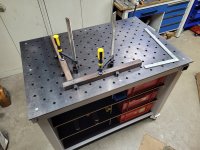
The fabrication of the table structure was done on the welding plate laying loose on a cart. First I tacked the frame that went direcktly under the welding top. Then I welded the plates for the wheels to the uprights. After that, the uprights were tacked on and the bottom frame was added. With this steps completed, the table structure was ready to be welded solid. So some quality time with my Rehm welder was coming up .
.

Quite the opportunity to get my welding trained again a little bit after beeing working in the office for over 2 decades now and therefore only beeing a hobbyist, rather than the pro metalworker I used to be before the change of career.
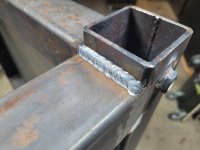
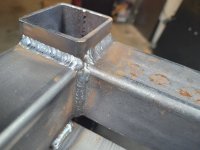


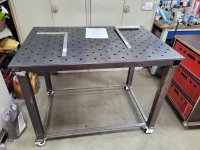
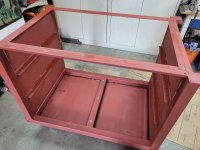
After all the welding, the plate was test fitted and removed again to get the top and side sheetmetal welded in.

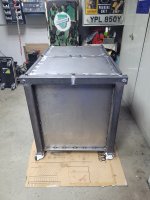
Next step was primer and waiting on the missing flat bar and angle iron for the dividing floors.

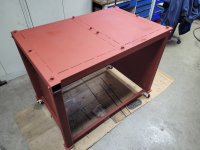
to be continued
after a long time of beeing just a lurker again, I wanted to share the build of my welding table. I was given the table top with the holes by my boss, it's something I contemplated buying for a long, just never pulled the trigger. So, with the top plate standing in my garage, I needed to get going with the table itself. Having thougt about it for as long as I thougt geting the plate, I had quite a few ideas. I wanted to close off the top of the cabinet as well as the sides to avoid welding spatter or grinding dust in the contents of the cabinet. Also, I wanted the plate sitting on some spacers to be able to get it absolutely level with some shims if necessary. When you only have the plate without support, beeing flat and straight is not a given.
A few specs beforehand, sorry, all metric here
top plate 1200 x 800 mm, 12 mm thick
table structure square tube 60x60x4mm
sheet metal closing top and sides 2mm
dividing floors is trailer plywood 9mm (needed to be slim due to spaceing for the organizing bins)
The structure holds 6 big E2-bins 600x400x200mm or 12 smaller ones half the size with a little spac to spare.
So after designing the table in draftsight and getting all the materials cut to size, holes drilled and partly tapered, the fabrication began...
The fabrication of the table structure was done on the welding plate laying loose on a cart. First I tacked the frame that went direcktly under the welding top. Then I welded the plates for the wheels to the uprights. After that, the uprights were tacked on and the bottom frame was added. With this steps completed, the table structure was ready to be welded solid. So some quality time with my Rehm welder was coming up
.Quite the opportunity to get my welding trained again a little bit after beeing working in the office for over 2 decades now and therefore only beeing a hobbyist, rather than the pro metalworker I used to be before the change of career.
After all the welding, the plate was test fitted and removed again to get the top and side sheetmetal welded in.
Next step was primer and waiting on the missing flat bar and angle iron for the dividing floors.
to be continued