To avoid these ads, REGISTER NOW!

Best base to buy (magnetic or clamping) for dial indicator to check rotor runout during brake jobs?

bubinga

Well-known member
Joined
Jul 26, 2014
Messages
12,744
Location
Bridgeport Ohio. (Across River From Wheeling WV)
It's really up to how you want to work but I use a mag base and just find a heavy piece of steel to attach it to. A heavy piece of steel (old brake drum, rotor, etc.) that won't tip or move around is fine. Set the indicator up properly, it gives a comparative not a quantitative reading.

On another note, cheaply made rotors can/will warp as heat cycling releases any residual stress in the steel, turning it into a potato chip. I've also had moderately priced calipers collapse after short use, seizing the piston in the bore. Nothing is stress relieved any more and sometimes new parts will change after a short use. If your rotors are warping that quickly I'd buy good ones and check the piston movement in the bore of the caliper. Sticking pistons can be remedied (sometimes) with a brake caliper hone and careful measurement of the bore for size and to ensure the bore is truly round. Don't go wild with the hone either. Also, as previously suggested, check all sliding pin movements for drag. Hope this helped someone.
Interesting.
I knew metal not being stress relieved, or allowed to season long enough before machining could cause warpage/ movement.
But I never put it together or heard tell, about calibers moving and seizing a caliber piston!
So as an example I have a 2001 Grand Prix, and it only has about 105,000 on it original miles, so if I was to have a caliber sieze and I ascertained that it wasn't the brake hose causing issues, but indicated a stuck caliper, then I would be better off probably rebuilding my old caliber then wouldn't you say?

Used to be you could get caliber so inexpensively, it did not pay to rebuild them but maybe it's a different game today.
 
Last edited:
To avoid these ads, REGISTER NOW!

bubinga

Well-known member
Joined
Jul 26, 2014
Messages
12,744
Location
Bridgeport Ohio. (Across River From Wheeling WV)
Are you by chance a two-foot driver? I only ask because it's common for two-foot drivers to ride the brake ever-so-slightly which will warp rotors prematurely.

If you're not I'd look for other reasons than just the rotors if this keeps happening. Do you live in the rust-belt where your calipers get rusty/crusty?

Bad calipers (sticking pins, pistons, etc), damaged hardware or rust build up on the calipers under the hardware, and even kinks in your hoses, etc can cause issues that get worse and cause sticking at a certain point of piston travel (ie: a certain level of pad wear).

Next time if it were me I'd replace everything with a good brand of pads, rotors and calipers. If you are in the rust-belt or anywhere prone to rust make sure to use new stainless hardware (usually comes with good pads), apply a film of brake grease under hardware and silicone grease to slide pins, and make sure that the pads slide back and forth freely. And if course do a full flush of fluid while I'm at it.
Funny you mentioned that, one time years ago we had a customer at the garage and was always coming in complaining how are brake jobs were not lasting, brake pads always wearing out prematurely and we had to be doing something wrong.
Well after about the second or third time of him coming back,
I finally said to the Head mechanic I said wait a minute let me see something here. I went in his car and looked at the brake pedal and it was all wore out on the left side I said see here guys, this guy's driving with two feet.
Well the head mechanic told me good job, and we explained it to the customer and he admitted it yes, he breaks with his left foot.
I don't think the customer had any more problems after changing his braking habit.
On another note regarding lubricating pins and metal to metal contact areas between the brake pad and the pad holder, THANK YOU!
I had a boss that was a mechanic also and he said all that grease does is attract dust and dirt, and hang things up.
That's why when he told me to put pads and rotors on his truck one day I had to beat the pads out of the pad holders with a 24 oz hammer......lol.
I always was a believer in lubing everything up.
 
Last edited:

jpaw

Well-known member
Joined
Dec 23, 2018
Messages
524
Location
Michigan
I can't believe that no one has mentioned the pad compound yet!
If you are running a high metallic compound or a ceramic compound it could cause your issue. With aftermarket parts I always try to stick with an organic pad if I can find them. Yes they will wear quicker but they won't eat the rotors.
 

ultgar

Well-known member
Joined
Jan 11, 2005
Messages
1,118
Location
New Jersey
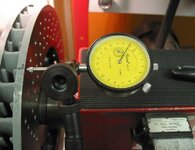
I've been using an old Central Tools base for years.
 

Attachments

  • Rotortrue3.jpg
    Rotortrue3.jpg
    59.5 KB · Views: 19
  • Rotortrue7.jpg
    Rotortrue7.jpg
    47.5 KB · Views: 12
  • Rotortrue6.jpg
    Rotortrue6.jpg
    60.4 KB · Views: 11

rdenney

Well-known member
Joined
Mar 30, 2022
Messages
142
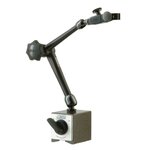
I use a magnet base with adjustable arm. The Nogas are really nice but really expensive and we are not chasing tenths here. I have a magnet base from McMaster-Carr that they call "Economy Jointed-Arm Magnetic Base Indicator Holder" for $36 (even including McM's usual markup), and I'm quite happy with it. It's Chinese but mine was marked with a well-known budget brand (I just can't remember now which brand that was; maybe General or Federal). It's more than good enough for measuring brake runout.

2214a5p1-a01b-digital@2x_637009626868100290.png

Rick "agreeing that many modern rotors from online sources have too much runout out of the box" Denney
 

NFH2740

Well-known member
Joined
Apr 16, 2012
Messages
476
Location
NE Indiana
Rotors rarely warp; you are dealing with friction material deposition. Some have mentioned a sticking piston or caliper bolt; it is this or your driving habits. Coming to a quick stop, then holding the brake as the pads cool can result in a thin layer of friction material being left behind.

Anecdotally, some pads are more susceptible than others.
 

c39er

Well-known member
Joined
Mar 23, 2008
Messages
1,662
Location
Seattle, Washington
Replace install all parts as necessary. Make sure slide pins are cleaned and properly lubed.
Clean hub spotless.
Clean rotors absolutely spotless with brake cleaner and Wash completely with soap and water..dry rotors. No oily finger.prints on new rotors either.
Assemble ..torque wheels.
Drive car and thoroughly and properly "Bed in Rotors".
Do not sit at a stop light with the brakes on while doing the bedding in process with the hot rotors.
This bedding in process done right is what heats the pad resins and promotes even lining/resins transfer to the rotor surface for a smooth trouble free long lasting disc brake job.🙂
 

RoninB4

Well-known member
Joined
Jul 22, 2020
Messages
3,488
Location
Under My House
Interesting.
I knew metal not being stress relieved, or allowed to season long enough before machining could cause warpage/ movement.
But I never put it together or heard tell, about calibers moving and seizing a caliber piston!
So as an example I have a 2001 Grand Prix, and it only has about 105,000 on it original miles, so if I was to have a caliber sieze and I ascertained that it wasn't the brake hose causing issues, but indicated a stuck caliper, then I would be better off probably rebuilding my old caliber then wouldn't you say?

Used to be you could get caliber so inexpensively, it did not pay to rebuild them but maybe it's a different game today.

Fairly common for metal to change shapes after machining and/or heat cycling. Castings are less prone to do so than plate/bar stock but it happens with some. I bought new rotors, calipers, and pads for a BMW and didn't shop for cheap. Bedded the pads per instructions and thought all was well until I noticed the "pull". Touched the hub and found it way too hot. I went over and over everything until I checked the piston, stuck in the new caliper. Pulled the piston, removed the seals and found it still dragging in the bore. Careful measurement with inside micrometer found the bore was "egg shaped" by a few thou. Honed it and had no trouble with it after. Conversation with a long time wrench spinner and he said it was relatively common on newer aluminum castings, less so with heavier iron castings. When things start behaving oddly start checking EVERYTHING, nothing is above suspicion any more. What is being made lately is only as good as the last inspection.
 
To avoid these ads, REGISTER NOW!

signcrafter

Well-known member
Joined
May 9, 2012
Messages
12,318
I use a central 6485. I don't know if they're standard across lines so, you may want to check with Mitutoyo first. There are a bunch on ebay that might be cheaper to experiment with. :dunno:
Thank you for the part number. I have the central dial indicator vise grips and was using it a couple weeks ago to rebuild a rear end and knocked the case over and my roller went missing. Looks like about a 40 dollar mistake. Lol.
 

CallumRD1

Well-known member
Joined
Jul 7, 2017
Messages
339
Location
Colorado
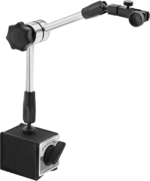
That style of noga blows. A base adjust is so much nicerbig_DG10503_prd_img.jpg
I actually quite prefer the model with adjustment on the indicator clamp rather than the model with adjustment on the base. This is because the adjustment on the base requires the indicator to be lined up with the direction of adjustment of the base, limiting the versatility. I like to be able to put the indicator in any orientation I want and know that the adjustment will always be inline with the indicator. My Noga base and arm are more than rigid enough for an adjustment on the indicator clamp to be a complete non issue even with my tenths test indicators.
 

Treeman

Well-known member
Joined
Jan 4, 2008
Messages
545
Location
Michigan
I have the Harbor Freight model and it works just fine. I only maintain one vehicle, so if I have to fiddle with a cheap unit a bit every few years, no big deal. My intent is to i.d. a bad rotor (maybe hub) out of the box and/or to index the rotor to the hub to achieve the runout below the suggested maximum. In MY case, it's similar to the results I get changing my 4 spark plugs every 5 years with a Craftsman socket vs. Snap on socket. This is an EBC rotor on my Jeep Patriot.
1652484590910.png
 
Last edited:
  • Like
Reactions: MM8

Wrench97

Well-known member
Joined
Jun 23, 2018
Messages
12,051
Location
Southeastern Pa
Clamp base, too many cars around today with no steel on them for a magnetic base and using a separate piece of steel is a time waster.

If they are not pulsing when first installed your hubs are probably fine look at the pads to make sure they are free moving in the brackets and the slide pins move freely and not over packed with grease.
 

ecotec

Well-known member
Joined
Oct 5, 2010
Messages
5,414
I have seen a lot of brake rotors that were warped because of over torquing (like 50lbs over spec) of the lugnuts. I have also seen it where people pull the rotors off their car or truck… and just put the new ones right on, without even wire brushing the hub.

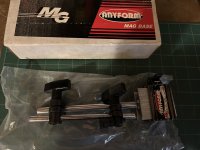
For a magnetic base, I use an Anyform MB-1. It looks just like the Fowler Anyform, but it is not branded Fowler.IMG_5737.jpeg
 
Last edited:

Schurkey

Well-known member
Joined
Oct 27, 2011
Messages
2,366
Location
The Seasonally Frozen Wastelands
Rotors rarely warp; you are dealing with friction material deposition.
I've cut hundreds of rotors. I can WATCH the metal of warped rotors get sliced-off by the lathe bit. As a rule, if you cut half the warpage out, you'll see that the inside and outside braking surfaces are "opposite"--where the inside braking surface is cut, the outside braking surface isn't, and vice-versa. Of course, scoring, rust pitting, etc., gets carved-out also.

I have heard of this "friction material deposition" theory, and from a man that--in almost any other area he discusses--I would consider him an expert. I have multiple books by Carroll Smith; he's a wonderful writer with extensive background in RACE CARS.

His "... To Win" series (Engineer to Win, Drive to Win, Prepare to Win, Tune to Win...) is excellent. As far as I'm concerned, his book about plumbing and fasteners should be in every "car guy's" library--it's THAT good.

But what happens on the track, may not be what happens on the street. I have never seen "friction material deposition" cause long-term problems on a rotor. I've seen hundreds of warped rotors that became pulse-free after cutting, all the evidence becomes iron dust in the collector tray. "Friction material deposition" may be real on race cars, it's a myth on street-driven vehicles subject to speed limits. The abrasive nature of the pads can wear grooves into iron rotors; that same abrasive nature is going to wear-off any deposition as the miles pile up. If deposition were a problem, it'd be self-correcting.

AND...most all "new" rotors are Communist Chinese--or worse, Vietnamese. NOBODY goes to China to improve quality. They go to China to improve profit margins. I've seen fairly new rotors that warped from heat cycling, then cut straight and true, become problem-free. The manufacturing stresses are relieved from use, prior to the re-machining.

Some have mentioned a sticking piston or caliper bolt; it is this or your driving habits. Coming to a quick stop, then holding the brake as the pads cool can result in a thin layer of friction material being left behind.

Anecdotally, some pads are more susceptible than others.
I am a firm believer in NOT holding excessive pressure on the brake pedal when stopped. Not because this permanently transfers friction material to the iron (rotor, drum) but because it leads to overheating the pad...and if held long enough, overheating the caliper piston and then the brake fluid. I use the brakes HARDER than most folks at the beginning of a stop--when the rotor/drum RPM is still relatively high, and therefore pumping cooling air through or around the cooling fins of the rotor or drum. I ease-off as the speed--and RPM, therefore airflow--reduces.

Rotors are DESIGNED and INTENDED to get HOT. If you look at old racing movies, you'll find video of early Jaguar disc brakes glowing at racetracks. That is not a problem (once the residual stresses in the iron are excised.) The problem is when the friction material (which is something of an insulator) has been hot enough, long enough to transfer heat to the piston and then to the brake fluid. The rubber seals in the caliper are not designed for extreme heat, and most folks run their brake fluid years beyond it's expected service life--the MOST contaminated brake fluid in a brake system tends to be at the wheel cylinders/calipers. Excessive heat in the caliper/wheel cylinder leads to the water in contaminated brake fluid boiling, and then rumpled fenders at the next brake application.

Brake HARD at the beginning of a stop, the rotors absorb a lot of heat...and dissipate it via airflow. The pads act as an insulator--the surface at the rotor is hot, but not so much at the pad backing-plate. Ease-off at the end of a stop to keep the residual rotor heat from transferring through the pad, into the caliper.


For the record, here's how I checked the potential warpage on a new rotor; 3/4 ton pickup truck brake system where the rotor is mounted to the back-side of the hub flange, then "riveted" to the hub via the lug-studs. The lug studs pressed in HARD (I used a 20-ton hydraulic press) and I was concerned that the force needed may have caused problems. As it turned-out, the rotor was true within 0.001, which is plenty good enough for me.

2022_Nov_K2500_Hub_LG_16.jpg
This genuine MOOG dial indicator set is so ancient that all the protective foam in the metal box has turned to dust.
 
Last edited:
To avoid these ads, REGISTER NOW!
Top Bottom