To avoid these ads, REGISTER NOW!

How to best splice into an auto coil harness wire?

bradleydavidgood

Well-known member
Joined
Nov 19, 2024
Messages
94
Hi

I will be replacing a coil harness with one that is premade, and connects to the original harness wires by a 12-point connector.

So I'll be cutting the original harness (composed of 11 wires).

That is only important to this discussion because now you know that the wire that I want to splice into will already be cut.

In the final install, all 11 wires in the original harness will be connected to the 12-point connector.

Upstream from the new coil harness and the 12-point connector, in the original harness, I need to splice into one ground wire, so that I have a wire coming off of that to use for the ignition suppressor ground.

I have experience soldering wires together for car stereos, And I've done a splice before, but it wasn't for anything this critical, and I want to do it the best possible way.

I'd like to preserve the integrity of the original wire going thru to the coils, so I don't think I want to cut it. Just tap another wire into it properly.

This other wire coming off of it, I'd like it to be sealed as best as possible and also have some stress relief somehow built into it, because it's removed sometimes for maintenance and is known for getting broken off.

These are probably all common things and there are probably videos out there explaining them, but I keep seeing so many different videos saying "best way to splice" and it's all different kinds of ways.

I'm looking for the best way to splice, seal, and build in stress relief for the extra wire, while keeping the integrity of the original wire to the coils.

I'm visual so I'm really looking for videos showing how to do it.

Thanks!
 
To avoid these ads, REGISTER NOW!

Hohn

Well-known member
Joined
Aug 25, 2016
Messages
2,628
Location
Diesel Central, Indiana
I'm a huge fan of soldering where it's appropriate. In a vehicle application, it is not appropriate. All wiring in a transportation application should be crimped due to vibration and fatigue considerations.

If you are having to cut the original harness, then there's no connector present there already. I think it's as simple as you need to install the correct 12 pin connector on your OEM harness stub so that it mates with the connector on your replacement harness.
The best connectors would be the Deutsch DT series, IMO, they are sort of an industry standard, but Molex (M150) and others have some high quality units.

Some of these connectors require special tools to either correctly crimp the pins to the wires or to installed the pinned wire ends into the connector.

Sounds like you have some YT homework to do.
 
OP
B

bradleydavidgood

Well-known member
Joined
Nov 19, 2024
Messages
94
I'm a huge fan of soldering where it's appropriate. In a vehicle application, it is not appropriate. All wiring in a transportation application should be crimped due to vibration and fatigue considerations.

If you are having to cut the original harness, then there's no connector present there already. I think it's as simple as you need to install the correct 12 pin connector on your OEM harness stub so that it mates with the connector on your replacement harness.
The best connectors would be the Deutsch DT series, IMO, they are sort of an industry standard, but Molex (M150) and others have some high quality units.

Some of these connectors require special tools to either correctly crimp the pins to the wires or to installed the pinned wire ends into the connector.

Sounds like you have some YT homework to do.
Thanks! That's an excellent point about the vibration and crimping.

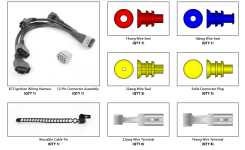
The original coil harness does not have a connector. The kit comes with a 12-point connector and all the pins and great instructions, and there are 2 great videos for installing it. And they show you what crimper you need.

1775615706804.png
1775616027515.png

So that takes care of most of the wiring.

The extra step I need to do is tapping into one of the ground wires in the harness before the new connector.

This is for the ignition suppressor capacitor that gets grounded to the valve cover.

That's the one I'm talking about needing the splice. I need to preserve the integrity of the original harness wire and tap a new wire into it for that suppressor ground.

So, going with your crimp idea instead of soldering, what connector do I use to tap into that wire and what technique do I search youtube for?

Thanks!
 

Hohn

Well-known member
Joined
Aug 25, 2016
Messages
2,628
Location
Diesel Central, Indiana
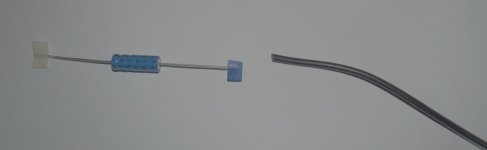
You will be well advised to put some strain relief on the capacitor leads or wrap the junction tightly in some Super 88..or a couple layers of progressively larger heat shrink...or both.

There are several good ways to attach that capacitor to the wire. Do you want it to be in series? I assume so.
Strip the wire back the correct amount for a heat shrink **** splice crimp connector. Crimp the wire into the connector using the proper tool in the proper die location.

Insert the capacitor lead into the **** splice connector and crimp it also. I like to put a tiny glob of solder on the end of the bare lead to give the crimp a bit more surface to grab onto.
As you assemble it, keep in mind that wires fail under vibration at the point where the stiffness changes the fastest. SO if you have a very stiff part of the run transitioning to a limp part immediately at a joint, it will fail there unless you use some strain relief to distribute the stress and ease the transition.

Thus, the need for some strain relief on the capacitor itself where the leads enter the body.

As this is apparently going under the hood, you might be well advised to put some heat shielding like the mylar fire sleeve over it as well. Electrolytic capacitors and heat do not get along well.
 

toolenthusiast

Well-known member
Joined
Jan 21, 2017
Messages
723
Hi

I will be replacing a coil harness with one that is premade, and connects to the original harness wires by a 12-point connector.

So I'll be cutting the original harness (composed of 11 wires).

That is only important to this discussion because now you know that the wire that I want to splice into will already be cut.

In the final install, all 11 wires in the original harness will be connected to the 12-point connector.

Upstream from the new coil harness and the 12-point connector, in the original harness, I need to splice into one ground wire, so that I have a wire coming off of that to use for the ignition suppressor ground.

I have experience soldering wires together for car stereos, And I've done a splice before, but it wasn't for anything this critical, and I want to do it the best possible way.

I'd like to preserve the integrity of the original wire going thru to the coils, so I don't think I want to cut it. Just tap another wire into it properly.

This other wire coming off of it, I'd like it to be sealed as best as possible and also have some stress relief somehow built into it, because it's removed sometimes for maintenance and is known for getting broken off.

These are probably all common things and there are probably videos out there explaining them, but I keep seeing so many different videos saying "best way to splice" and it's all different kinds of ways.

I'm looking for the best way to splice, seal, and build in stress relief for the extra wire, while keeping the integrity of the original wire to the coils.

I'm visual so I'm really looking for videos showing how to do it.

Thanks!
Your description is good, but this thread would still benefit from pictures
 

Leaflessshadetree

Well-known member
Joined
Aug 1, 2013
Messages
7,146
Location
Don't ask.
If it happens to use modern universal pins/sockets. Caterpillar sells factory made sealed splice with pigtails terminated at pins or sockets.

Here is one example
CM20210210-e0136-e3bbd


To avoid these ads, REGISTER NOW!

toolenthusiast

Well-known member
Joined
Jan 21, 2017
Messages
723
I don't think there's anything that's a universal pin. Molex/Deutch/DuPont,/JST/Framatome/etc all have slightly different pins.
Correct. There are open standards, so 2 brands of connector might be interoperable. But there are a lot of standards.
 

308guru

Well-known member
Joined
Jun 17, 2017
Messages
459
I'm a huge fan of soldering where it's appropriate. In a vehicle application, it is not appropriate. All wiring in a transportation application should be crimped due to vibration and fatigue considerations.

I disagree 100%. I solder anywhere/everywhere possible. No comparison between the integrity of a properly soldered joint and a crimped connector.
 

dcg9381

Well-known member
Joined
Jun 20, 2018
Messages
11,627
Location
Austin, TX
I disagree 100%. I solder anywhere/everywhere possible. No comparison between the integrity of a properly soldered joint and a crimped connector.
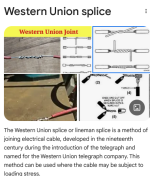
I solder everything in an auto harness. A super-detailed aircraft builder aircraft taught me that he uses the "Western Union" splice and then solder. Good enough for NASA and aircraft, good enough for me.


1776885135859.png1776885083761.png
 

Hohn

Well-known member
Joined
Aug 25, 2016
Messages
2,628
Location
Diesel Central, Indiana
I disagree 100%. I solder anywhere/everywhere possible. No comparison between the integrity of a properly soldered joint and a crimped connector.
Disagree all you want.

I'm a big fan of soldering, and reasonably skilled at it.

Here's a castellated install I did of a Raspberry Pico recently. I cleaned up the minor voids on the lower left pins later. That's 0.1" pitch strip board.

1776945444424.png

1776945637719.png

1776946701861.png1776946986992.png


Why am I posting these pictures and mentioning that I have two high end soldering stations and two irons? That I have 11 different rolls of solder on my bench? The I was the OP of the thread here about all things soldering?

Because I'm hoping it establishes some credibility when I say soldering is often not the better choice. As the saying goes, horses for courses.

~~~

Here's why:

  • Soldering requires skill to do properly. Most people are using poor technique and end up with heavily oxidized, grey tarnished joints instead of the shiny wet joints you see in the photos above. Soldering properly IN SITU in a transportation environment is all but impossible to do, even for those of us who have melted many pounds of the stuff. The skill premium for solder often carries a reliability penalty. It's never done in production because it's slow and expensive for basically no benefit.
  • Soldered wire leads can be unreliable in vibration when solder wicks up the strands and produces essentially a solid wire. This creates a near-instant transition from stranded to solid wire that will concentrate strain and lead to failure.
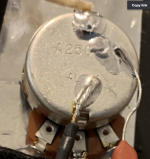
    • Solder, when used in a transportation application is always applied to joints that are rigidly mounted (PCBs) or contained within a connector that has mechanical support for the leads. In other words, strain relief. The kind of solder-wire-to-something joint like you see in the guitar potentiometer pictured is completely unacceptable for any transportation application. Under vibration, it is a certain failure.
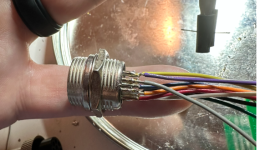
    • This is why the "good enough for NASA" logic is entirely fallacious. You will never see anything like a Western Union splice in any NASA or aviation joint. EVER. When NASA solders, it was always to PCBs or wires-to-connectors. ZERO exceptions. The GX-style 10-pin connector shown above is an example of this; wires soldered to pins inside a connector that provides sealing and strain relief.
  • A properly crimped joint is a cold weld. If you try to cut apart a crimped connector, you will not be able to separate the strands of copper wire; they are fused solid. If this hasn't occurred, it's not crimped correctly in most wire sizes.
    • Crimped connectors almost always have strain relief with them. This buffers the strain concentration that would normally occur in a crimped joint when strands instantly transition to solid at the crimp point.
    • Consider industry standard connectors known for high reliability: Deutsch, Molex, etc. They all use crimped pins inserted into a connector body that provides strain relief and environmental sealing for the actual joint.

I have enough experience and skill now that I can make a highly reliable joint with soldering or with crimping. There's no difference in reliability between them whatsoever. The difference for me is that crimping allows high reliability in far more adverse conditions. Ever need to replace a connection when it's buried behind something and you can barely get a second hand in there? I assure you, it's hard to do with crimping and IMPOSSIBLE with soldering.
~~~~~
Just as soldering requires a good amount of skill, crimping does also. I would even go so far as to say crimping might even need MORE skill at times. A lot of people are using the wrong tools. They are crimping with a pair of standard slip joint pliers or such and then blaming the connector when it fails. A properly crimped joint will fail the wire outside the crimp before the wire pulls out of the crimp.

But because of the huge variety of crimp joints, you will have to proliferate heavily in tooling if you want to do it right. The tool that crimps DuPonts and JSTs probably won't work for much else. Battery cables need different tools. Insulated and non insulated terminals use different tools. As so **** splices with heat shrink. Ferrules use yet another different tool.

The main downfall of crimping is that it's designed for industry-- high volumes of the same joint over and over with utmost reliability at low cost. If you want to do crimping properly as a home gamer, you're going to have a good bit of money ******* in tooling-- at least as much as a reasonably good soldering station with the array of tips you'll need.

All told, someone into wiring like I am might have 8-10 different crimping tools to cover the bases. That's expensive and a hassle. I've been able to get buy with a swappable-jaw ratcheting crimper and a couple specialty crimping pliers (Engineer PA-21: strong recommendation for the little stuff)

If you want to *really* shine on a chef's kiss, put one tiny dot of solder on the crimp joint where the strands protrude. This will seal the strands where they transition from strands outside crimp to cold welded solid within it.

And, as always, heat shrink and strain relief.

High reliability connections with solder OR with crimping aren't that hard to do. But they do require some thought and dedication to good workmanship (i.e. tools and technique) that most people simply don't have. You should see some of the wiring crimes I've seen on trailers and ag equipment. Scotch-loks, etc.
 

Hohn

Well-known member
Joined
Aug 25, 2016
Messages
2,628
Location
Diesel Central, Indiana
I solder everything in an auto harness. A super-detailed aircraft builder aircraft taught me that he uses the "Western Union" splice and then solder. Good enough for NASA and aircraft, good enough for me.


1776885135859.png1776885083761.png
Remind me never to fly in anything built by your wiring mentor.


AC 43.13-1B:

1776950959740.png
  • Splices in general are discouraged in aircraft wiring and should be avoided where possible
  • Where splices are permitted, they must be in accessible locations for inspection
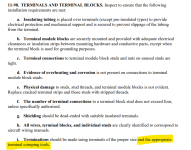
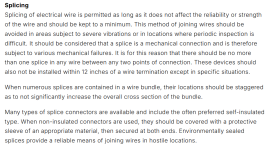
  • Splices are prohibited in certain locations: within 12 inches of a terminal, in areas of repeated flexing, through bulkheads or grommets, or where the splice would be hidden/inaccessible
  • The Western Union splice is allowed, but only for repairs, and only with some considerable strings attached on inspectability and vibration isolation.

1776951333252.png
 

dcg9381

Well-known member
Joined
Jun 20, 2018
Messages
11,627
Location
Austin, TX
Remind me never to fly in anything built by your wiring mentor.

AC 43.13-1B:
Fair point of discussion. This reference applies to acceptable methods for inspection/repair.

It also allows you do to it the way the "manufacturer" directs:
"....shall use the methods, techniques, and practices prescribed in the current manufacturer’s maintenance manual or instructions for continued airworthiness (ICA) prepared by its manufacturer"

Van's aircraft specifies crimps and allows solder (if supported). And specifies the use of solder OR crimp on things like Sub-D pins.
 
To avoid these ads, REGISTER NOW!
Top Bottom