hewey
Well-known member
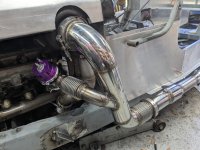
That pipe looks amazing. Will you need to run some kind of shield or protector for rego?

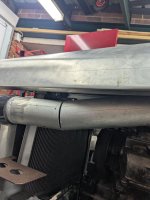
Thanks Hewey, the engineer definitely wants some sort of heat shield covering all exposed pipe down the side. I was hoping to get away with just the portion inline with where the passenger gets in, but it really has to all be covered. I have a plan for the horizontal section but I'm still not 100% sure on how I'll cover the downpipe and still have it look OK. Maybe some 4" tube cut in half? But that sounds like a lot of work to get it spot-on.That pipe looks amazing. Will you need to run some kind of shield or protector for rego?









Great work as usual. I like the see through heat shield idea.
Thanks! I tried the heat shield idea with 2.4mm welding rods and I think it looks good but it feels too flimsy. I might try again with 3.2mm rods, though I am very tempted to just buy some perforated heat shielding and be done with it.Great progress. Heat shield sounds good too.
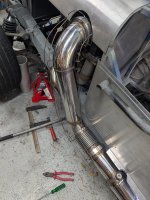
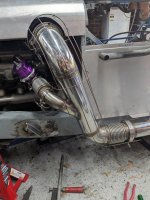

I guess it needs to be robust enough not only for a casual leg brush against it but someone actually tripping or falling against it and crushing it enough to make contact with the pipe itself.Thanks! I tried the heat shield idea with 2.4mm welding rods and I think it looks good but it feels too flimsy. I might try again with 3.2mm rods, though I am very tempted to just buy some perforated heat shielding and be done with it.
The 2.4 rods are also very hard to weld, I blasted through one of the rings just before I stopped
Absolutely, the last thing I want is for someone to get seriously injured from the car.I guess it needs to be robust enough not only for a casual leg brush against it but someone actually tripping or falling against it and crushing it enough to make contact with the pipe itself.




I think 5mm would definitely do the job, though I'm not sure how hard it would be to bend it.Yeh I agree that heat shield is far too thin. I think the concept is good, but maybe it needs something more like 5mm rod?




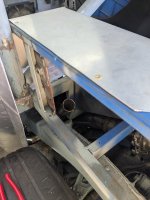


Looking at your fantastic welds reminds me , no matter how much I am tempted , not to post mine !!!!Well I'm waiting on a couple of counterbore drill bits so it's back on to the hot rod!
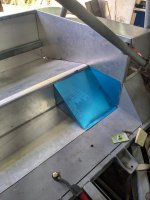
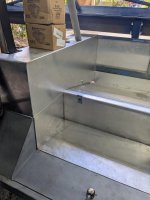
I had this morning out in the garage as compensation for having the kids alone all tomorrow afternoon/evening. First I made a cover which will be hinged off the floor to provide access to change/charge/install the battery.
Then I checked the parts I've ordered for the fuel filler will work together.
They connect to this stub so I'm thinking I'll run it basically straight up through that panel above.
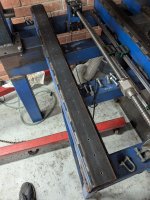
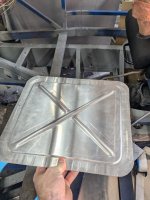
Next up I continued work on the fuel tank straps
This rectangular slot fits over this 6mm tab that I welded to the chassis
Last thing was I finished off the windscreen latches
Thanks Geoff, could some of that be because of how flat the filler tube is on those Mustangs? I'm hoping with this one having a big drop to the tank it won't be as much of an issue... But in terms of vents I'll be running two from the top of the tank to near the top of the filler neck, then another from the neck to the engine through a charcoal cannister and solenoid, similar to the OEM Toyota Soarer setup.Those tank straps look plenty beefy.
Re the fuel filler - vent tube? little flap doohickey where the pump nozzle goes in? Reason i ask is early Mustangs come with neither and no matter what you do they spit fuel over your shoes when you fully fill it before the pump shuts off. A guy in the States makes a replacement neck for them that includes the above and solves this problem. I had one in my previous Mustang and now have one in the current one.
Thanks mate, the secret is to only take close ups of the welds that come out looking goodLooking at your fantastic welds reminds me , no matter how much I am tempted , not to post mine !!!!
Great progress and enjoying your build - I would bet almost as much as you !!


Thanks Geoff, could some of that be because of how flat the filler tube is on those Mustangs? I'm hoping with this one having a big drop to the tank it won't be as much of an issue... But in terms of vents I'll be running two from the top of the tank to near the top of the filler neck, then another from the neck to the engine through a charcoal cannister and solenoid, similar to the OEM Toyota Soarer setup.Re the fuel filler - vent tube? little flap doohickey where the pump nozzle goes in? Reason i ask is early Mustangs come with neither and no matter what you do they spit fuel over your shoes when you fully fill it before the pump shuts off. A guy in the States makes a replacement neck for them that includes the above and solves this problem. I had one in my previous Mustang and now have one in the current one.
Thanks Geoff, I might see if I can laser cut a small disc to go into the top of the filler. It won't have the flap, but when you're filling up I can't imagine the flap actually does anything.Could be but really the geometry of the fuel filling arrangements isn't much different to any modern car. You insert the pump into an opening that is sitting in a more or less vertical panel, and the path into the tank takes a more or less 90 degree turn to enter the tank at the top. The issue is more the width of the opening in the absence of a flap and the fact that modern bowsers for unleaded and ethanol blends, not that I'd ever put the latter in my car, operate at higher pressures than was the case back in the '60's.
One thing that is great about filling my old girl is that the filler is centrally located in the back taillight panel above the number plate, so you don't have to remember what side of the car it's on or wait for a free pump on the correct side. Like an HQ Holden was. Why isn't this a feature of modern cars?
Not that it's of any relevance to your car, but I'll include this link anyway.
https://onemanandhismustang.com/fuel-filler-pipe-replacement-upgrade/
I can see how your vertical entry point will present less of a risk of it spitting fuel at you.


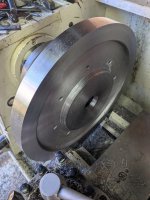
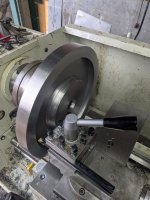
 The central bore of the bellhousing is 215.2mm so that will work perfectly.


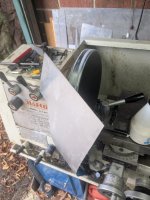
*attempting to*Am I the only one blown away that he's making his own flywheel?
Gobsmacking!
Thanks mate, we'll see how it comes out in the end!


I have faith in you.*attempting to*
I have faith in you.
Is the crank in that Toyota donk internally or neutrally balanced, i.e. you don't need to counterweight the flywheel to match a weighted harmonic balancer on the other end?
As far as I'm aware the engine is all balanced internally, the flywheels don't have any sort of key to make sure they're installed in a particular orientation, but that's a good thing to check.


This one is definitely not externally balanced then, the bolt holes are equally spaced and identical.The flywheels I'm familiar with, on old dinosaur Ford Windsors, are externally balanced at either 28 or 50 ounces. Orientation is dictated not by a key but by the bolt holes to the crank not being evenly spaced around the circumference of the circle they create. They will only go on one way.
How have you determined the optimum overall weight for the one you're making? I'm not sure if those engines were ever in front of a manual trans in any Toyota but if they were it was likely to be a Landcruiser or something that is way heavier than your car is going to be. As I'm sure you know, flywheel weight will impact on how the car performs. I reckon you'll need something quite a bit lighter than something like a Landcruiser would run.
Back when I was involved in Super Stock drag racing racers would typically use different weight flywheels for different engine combos in the same car and carry a few different ones in the trailer and swap them in the pits to optimise the set up in different track conditions such as weather, available traction etc.
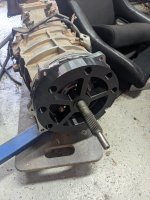
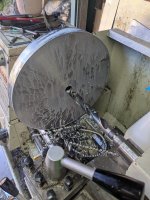

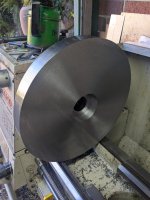


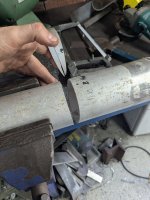

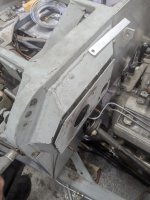
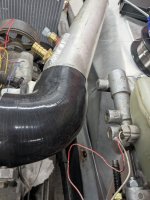


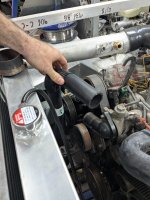


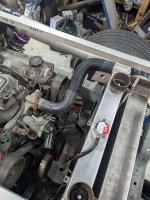
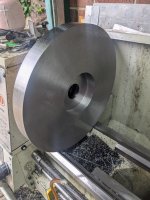
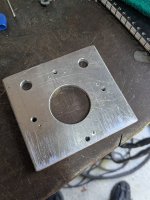
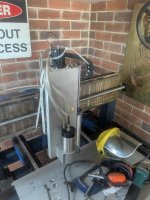
So back to my earlier question about the weight of this flywheel - how thick is that? Presumably it won't be that chunky when finished? Are you going to make the ring gear yourself too?
Pictured is before I finished the 3mm internal radius with a form tool
Hi Geoff, the piece is currently 36mm thick and will have a final overall width of 35mm but that really doesn't tell the whole story.So back to my earlier question about the weight of this flywheel - how thick is that? Presumably it won't be that chunky when finished? Are you going to make the ring gear yourself too?
I have no idea about what you're doing with that lathe or mill or whatever it is, but nice work I'm sure. It reminded me of when I was fitting the T5 trans to my previous Mustang. Those trans are very sensitive to concentricity with the crank and parallelism to the engine block, the acceptable tolerances are 5 and 2 thou respectively. I stuffed around for about 3 weeks with eccentric bellhousing dowels and shims to get it within these specs. Fortunately, I was doing this with the engine out of the car which made it a bit easier.

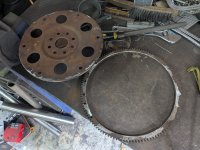 I'm hoping that as the bellhousing has precision dowels to locate it to the engine, and I used my 3D printed jig to align the bellhousing to the gearbox, that it all just works... wishful thinking
I can see you lighting a fire in your back yard, heating up the ring gear on the coals, slipping it on the flywheel and pouring a bucket of cold water over it like they made old cartwheels. A few spot welds won't upset the balance?
It will hopefully be a shrink fit over the flywheel, but I'll also put a few TIG welds around the outside to make sure it stays put. While 1045 steel is suitable for making a ring gear it would need to be hardened, and cutting gears is not something I've tried before, so I'm taking the easy way out.
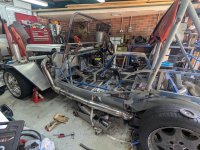
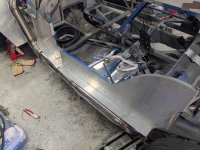
Ha- I ask you , who would have known that all those hours spent as kids making cubbies, fortresses and racecars out of old cardboard boxes would come so much in handy now ?I did some further CAD (Cardboard Aided Design) finished off the infill panels in the rear.

One day I'd love to be able to do thatI can see you lighting a fire in your back yard, heating up the ring gear on the coals, slipping it on the flywheel and pouring a bucket of cold water over it like they made old cartwheels. A few spot welds won't upset the balance?
 for the moment it's more likely to be in the oven haha
I think I'll need to get it balanced once it's all finished, better safe than sorry.I’m guessing fusion tig welds on the ring gear so as not to upset balance?
Exactly right!Ha- I ask you , who would have known that all those hours spent as kids making cubbies, fortresses and racecars out of old cardboard boxes would come so much in handy now ?
Looking great , love the progress !!
I wish! Haha, I do have a small supercharger under the house I was considering using, but nothing as awesome as that!Your engine will be just like this, right?