
You are using an out of date browser. It may not display this or other websites correctly.
You should upgrade or use an alternative browser.
You should upgrade or use an alternative browser.
FIRE! What was supposed to protect me from this?
- Thread starter DGersic
- Start date

dave*99
Well-known member
Any evidence the fault current got onto the cable tv coax?Piece of melted wire and insulation. Can’t tell where it fell from.
Sure hope the coax wasn't in the meter can where that chunk came out ofAny evidence the fault current got onto the cable tv coax?
dave*99
Well-known member
Sure hope the coax wasn't in the meter can where that chunk came out of
Of course not. But fault current often finds its way onto the coax. Particularly when there is an open neutral. And the neutral/ground system was certainly part of the fault current path.
You can see what may be a ground rod connection to the cable system in this photo.

Last edited:
Codyboy
Well-known member
Line side wire. It fell off and across the bottom jaws when meter was removed.Piece of melted wire and insulation. Can’t tell where it fell from.
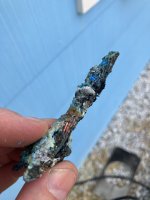
Thats my guess.
And as I previously mentioned thay line wire and line side jaw started the whole mess.
Codyboy
Well-known member
Ive seen thousands of these. Literally.It seems to fit there, but I didn’t want to speculate.
Of course looking at pics is not like seeing it in person though.
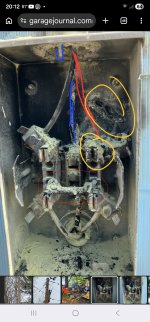
That piece of wire (red) is the line side wire .
It's about the only thing of that size thats gone .
The blue neutral is mostlu.still there and appears burnt off below the entrance ****** into the can.
The yellow is where the initial hot spot was at on that top right jaw. It is spread , no longer had any spring tension and disclolored. It got hot and failed. The arcing transferred to the back of the can and burned holes.
All the while the line wire burned up and took the lineside neutral with it.
Thars why the ground wire inside is burned up. It took most of the fault current.
How do firefighters handle homes with generators that automatically start during power interruptions? My generator is located inside the last bay of my garage and is connected to the house service by an ASCO 185 Series 200 Amp Automatic Transfer Switch and a Lister Petter 4-cylinder 18 KW generator. Power goes out, and 15 seconds later, the generator starts up, restoring service to the home. When the power company restores power, the switch switches back to line power, then a 2-minute cooldown for the generator starts, and the generator shuts down.
I am many many years dated on my civilian fire service, but if power could not be secured it was make sure the people are out, set a perimeter, and contain. For residential pulling the meter was step one. Pretty sure that is forbidden these days, but I worked with people who though SCBAs were for girls and wusses so a long time ago. If the lights stayed on, we were going to investigate it and would have found and secured the generator. I don't remember it every being an issue in a residential setting. Now a factory or hospital with 3 or 4 separate feeds of 440v or higher and massive generators it was a pain in the rear.
The attack water is not the real issue. While theoretically possible, electricity is not going to come up a solid stream or a fog at least not a 220v. All the standing water you create is dangerous especially after the wiring is damaged.
wyliesdiesels
Well-known member
That's not what you stated when I responded:
If you meant on the secondary side you should have said that
I did. i said INDIVIDUAL SERVICE DROP, which refers to the secondary. i cant help if you dont understand the terminology....
That comes off the line and feeds the transformer that feeds only my house. So it's there for the individual service drop

incorrect. that line side HV cutout protects the transformer and is rated for many more equivalent amps (since its high voltage) than an individual service drops rating or the main service panel rating. this is because transformers often feed multiple services and oil cooled transformers are typically ok to run @ 125% or more of their nameplate rating.
again, youre not understanding the terminology or the infrastructure....
Last edited:
wyliesdiesels
Well-known member
I'm not expecting it to protect my house
We're going in circles, I'm done
umm the whole discussion and your claim was that there is individual protectors on the line side of your service drop. I had stated there was no breaker on the line side of service drops because the breakers would take up too much room on the cross bar on the pole.
you then proceeded to post a pic of a HV cutout which has absolutely NOTHING to do with protecting individual service drops. it can possibly do so since its on the HV line side of the transformer and is rated far higher than the equivalent low voltage amp rating of your service drop
wyliesdiesels
Well-known member
Not sure what you meant by cutouts, but the current version of the national electric code calls for a main disconnect switch at the meter on the house exterior for new installations. If there's a fire inside the house, the firemen can disconnect power before entering. Not all states are using the current NEC, so this may or may not apply depending on where a person lives
a cutout is a line side HV fuse that is between the HV line tap and the transformer. it is a called a cutout instead of a breaker.
The NEC has no jurisdiction on electrical distribution systems that are not part of a building aka the grid.
a main disconnect does not protect anything on the line side... would help to learn the infrastructure before making false implications
wyliesdiesels
Well-known member
The POCO does not always protect the secondary side of the distribution transformer, and your service drop is connected to the secondary.
I have never seen protection on the secondary side of a PoCo distro transformer.... they dont exist. that would be a nightmare for service dept...
wyliesdiesels
Well-known member
How do firefighters handle homes with generators that automatically start during power interruptions? My generator is located inside the last bay of my garage and is connected to the house service by an ASCO 185 Series 200 Amp Automatic Transfer Switch and a Lister Petter 4-cylinder 18 KW generator.
is the ATS located on the outside of the building? if so, they can go in there and shutoff the genset and disconnect the power
wyliesdiesels
Well-known member
It probably exists and I just don't know but I am surprised nobody has thought up some kind of thermal disconnect where once it gets to a specified temp it shuts off supply. There must be a reason nobody has done it because if my layman **** can think it up, actual smart people have surely already thought of it.
that would require sensors all over the building and an ATS to disconnect it. talk about increasing the cost of a building by a huge factor
wyliesdiesels
Well-known member
Some utility transformers have secondary breakers;
A Completely Self-Protected (CSP) transformer is a distribution transformer with integrated protective devices—including internal high-voltage fuses, secondary circuit breakers, and lightning arresters. These units, often pole-mounted or pad-mounted, prevent transformer failure from overloads and surges, minimize fire risks, and reduce maintenance costs.
Key Features and Benefits:
- Integrated Protection: Combines lightning arresters for surge protection and internal breakers/fuses to protect against overloads and short circuits.
- Improved Safety & Reliability: Automatically disconnects during faults, enhancing safety and reducing the risk of explosions, while isolating the transformer from the surrounding grid.
- Reduced Maintenance: Internal breakers allow for quicker, safer maintenance compared to conventional transformers that require external cutout switches.
- Performance: Available in both mineral oil and FR3 fire-resistant fluids, with some designs using amorphous metal for higher efficiency.
CSP vs. Conventional Transformer:
- Protection: CSP uses internal breakers and weak links, whereas conventional transformers rely on external, separately mounted devices.
- Installation: CSP has simpler installation because it eliminates the need for external fuse cutouts.
- Cost: While CSP often has a higher upfront cost, it typically offers lower long-term maintenance and fewer replacement costs.
none of the PoCos in cali use those. and i havent heard of any PoCos in the rest of the US using them either....
it would be a nightmare for a service dept...and would have lots of pissed off customers...
mike93lx
ALLIANCE MEMBER
Also, the generator should have a shutoff switch right on it, as well as a way to shutoff the flow of fuelis the ATS located on the outside of the building? if so, they can go in there and shutoff the genset and disconnect the power
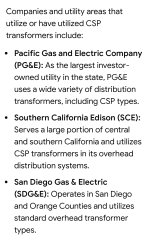
Come to New England, they are quite common. The utility i spent 34 years at uses them on most every single phase transformer, both over head and pad mounted. Not a nightmare for anybody, just another option. Here's a pic of the transformer that feeds my home (different utility from where i worked), 15kVA 7200-240/120 CSP. No cutout, primary fuse is in the tank under the bushing and secondary breaker handle is visible on the side of the tank.none of the PoCos in cali use those. and i havent heard of any PoCos in the rest of the US using them either....
it would be a nightmare for a service dept...and would have lots of pissed off customers...
Attachments

Last edited:
dave*99
Well-known member
I have never seen protection on the secondary side of a PoCo distro transformer.... they dont exist. that would be a nightmare for service dept..
I have a lineman friend who recently retired from a large utility company (not the OPs POCO) in New Jersey. He said they install CSP transformers and they went through a large changeover program in the 1980s to remove the conventional transformers. I showed him the burned meter pan in this thread and he claims the secondary protection in the CSP‘s would likely have opened.
Last edited:
Firebrick43
Well-known member
Utilities here don’t use fuses here. Protection would be mounting the meter base on a pole or steel free standing pedestal.
without a cutout, how do they disconnect rom the ground?Come to New England, they are quite common. The utility i spent 34 years at uses them on most every single phase transformer, both over head and pad mounted. Not a nightmare for anybody, just another option. Here's a pic of the transformer that feeds my home (different utility from where i worked), 15kVA 7200-240/120 CSP. No cutout, primary fuse is in the tank under the bushing and secondary breaker handle is visible on the side of the tank.
wyliesdiesels
Well-known member
Come to New England, they are quite common. The utility i spent 34 years at uses them on most every single phase transformer, both over head and pad mounted. Not a nightmare for anybody, just another option. Here's a pic of the transformer that feeds my home (different utility from where i worked), 15kVA 7200-240/120 CSP. No cutout, primary fuse is in the tank under the bushing and
ummm how does the lineman disconnect the can without opening up the can? having no cutout is very dangerous for anyone servicing it and i highly doubt the cutout is inside the can. that just doesnt make sense
secondary breaker handle is visible on the side of the tank.
that handle looks like a tap changer to me.
wyliesdiesels
Well-known member
Utilities here don’t use fuses here. Protection would be mounting the meter base on a pole or steel free standing pedestal.
how do they protect the transformer? how do they disconnect the transformer on the pole for servicing or changeout? you cant just remove a tap off the HV line with a load on it. that will cause a massive arc. very dangerous....
wyliesdiesels
Well-known member
bingo.....without a cutout, how do they disconnect rom the ground?
dave*99
Well-known member
The handle is a secondary disconnect.ummm how does the lineman disconnect the can without opening up the can? having no cutout is very dangerous for anyone servicing it and i highly doubt the cutout is inside the can. that just doesnt make sense
that handle looks like a tap changer to me.

Conventional vs. CSP Pole Mount Transformers: Key Differences
Learn the key differences between conventional and CSP pole mount transformers. Discover how CSP transformers provide built-in protection against surges, overloading, and overheating.
 utbtransformers.com
William Payne
Well-known member
that would require sensors all over the building and an ATS to disconnect it. talk about increasing the cost of a building by a huge factor
I wasn’t thinking that extreme. Just on the supply side.
dave*99
Well-known member
Are you in San Diego?none of the PoCos in cali use those. and i havent heard of any PoCos in the rest of the US using them either....
it would be a nightmare for a service dept...and would have lots of pissed off customers...
rlitman
Well-known member
They sure as hell do. There are a number of options. In my neck of the woods, transformers are fed from fused cutouts, but every residential pole transformer also has a circuit breaker on the secondary, with a "hammer head" hot stick attachment ring on the can. Yes, it looks like a tap changer, but it most certainly is not. I can't say I've seen integrated lightning arrestors on everything, so I can't say they're all CSP here.I have never seen protection on the secondary side of a PoCo distro transformer.... they dont exist. that would be a nightmare for service dept...
I am well aware that NEC has no jurisdiction with the PoCo, but that's not to say that both worlds don't resonate with each other. On the NEC side, ground fault protection (not talking about GFCI) is becoming required for a number of situations, and I wouldn't be surprised to see CT based high current ground fault protection integrated with pole mount transformers in the future.
Clearly you're not a lineman. As i said primary fuse is in the can. To take the can off line you open the csp switch and then the tap gets lifted with a hot stick. Been there, done that.how do they protect the transformer? how do they disconnect the transformer on the pole for servicing or changeout? you cant just remove a tap off the HV line with a load on it. that will cause a massive arc. very dangerous....
Firebrick43
Well-known member
I am talking about on the secondary side fuses. There is a primary link inside the newer transformers but you can’t disconnect that if the output wires are still hot.how do they protect the transformer? how do they disconnect the transformer on the pole for servicing or changeout? you cant just remove a tap off the HV line with a load on it. that will cause a massive arc. very dangerous....
They require a service disconnect box/main breaker next to the meter base, which will dump the load unless it a feed line short then they pull the closest pole top switch
wyliesdiesels
Well-known member
none of any of that is used anywhere i do work. and we do have Profit Gouge and Execute here...
wyliesdiesels
Well-known member
ACE? I've never seen any with JCPL or PSEG. Can't say I've been looking too hard either.I have a lineman friend who recently retired from a large utility company (not the OPs POCO) in New Jersey. He said they install CSP transformers and they went through a large changeover program in the 1980s to remove the conventional transformers. I showed him the burned meter pan in this thread and he claims the secondary protection in the CSP‘s would likely have opened.
Most newer work is underground w/ pad mount xformers. Any open pad mounts were all direct bolt-on to the low side terms.
dave*99
Well-known member
PSEG. And that lineman is under the impression most utilities use CSP transformers. Probably not the case. Some practices are regional.ACE? I've never seen any with JCPL or PSEG. Can't say I've been looking too hard either.
Most newer work is underground w/ pad mount xformers. Any open pad mounts were all direct bolt-on to the low side terms.
Last edited:
Codyboy
Well-known member
Years ago before 1985 some of our older urd transformers had inline fuses on the secondaries.I have never seen protection on the secondary side of a PoCo distro transformer.... they dont exist. that would be a nightmare for service dept...
Thar was all phased out. No pun intended.
A cutout above/ feeding a transformer or other device does NOT protect that device. No.I did. i said INDIVIDUAL SERVICE DROP, which refers to the secondary. i cant help if you dont understand the terminology....
incorrect. that line side HV cutout protects the transformer and is rated for many more equivalent amps (since its high voltage) than an individual service drops rating or the main service panel rating. this is because transformers often feed multiple services and oil cooled transformers are typically ok to run @ 125% or more of their nameplate rating.
again, youre not understanding the terminology or the infrastructure....
That cutout is solely to protect the system which isolates a fault.
Bad transformer is isolated. Bad capacitor bank isolated. Primary fault behind a fused cutout, isolated.
Cutouts DO NOT "protect" what is on the load side of it.
It is only there to isolate a fauly from the system.
wyliesdiesels
Well-known member
Years ago before 1985 some of our older urd transformers had inline fuses on the secondaries.
Thar was all phased out. No pun intended.
A cutout above/ feeding a transformer or other device does NOT protect that device. No.
That cutout is solely to protect the system which isolates a fault.
Bad transformer is isolated. Bad capacitor bank isolated. Primary fault behind a fused cutout, isolated.
Cutouts DO NOT "protect" what is on the load side of it.
It is only there to isolate a fauly from the system.
so an overloaded ****** is considered a fault? Lineman ive talked to tell me its a fuse to protect the transformer
Codyboy
Well-known member
Actually, yes you can remove it. Depending g on load of course.how do they protect the transformer? how do they disconnect the transformer on the pole for servicing or changeout? you cant just remove a tap off the HV line with a load on it. that will cause a massive arc. very dangerous....
A typical transformer , not a huge deal.
Due to our aging CSP type transformers that were still on line , this was typical.
We didnt flip the switch to relieve the secondary load. Doing so , might mean the switch will not turn back on. Ug. Now we have to replace a transformer.
So , although against the rules, we would just lift the high side tap with a hotstick. And yes sometimes iy would draw a nice beautiful arc.
No issues , as long as you swung it away from the pole and any grounds near by.
Ive drawn some really nice arcs on 12470Y/7200 of 2 or 3 ft. With a loaded up 167 kva pole mounyed transformer. With a Again load dependent. Most were a couple inches at most.
Codyboy
Well-known member
Meh. Retired lineman after 40 years in the hooks.Clearly you're not a lineman. As i said primary fuse is in the can. To take the can off line you open the csp switch and then the tap gets lifted with a hot stick. Been there, done that.
It may be in the rules but not adhered to.
Codyboy
Well-known member
A fused cutout is not really fused according to the load. It is but its not.so an overloaded ****** is considered a fault? Lineman ive talked to tell me its a fuse to protect the transformer
The fuse rating on a cutout feeding a transformer is based on the amount of "fault" current a particular device can generate.
I have never in 40 years seen a overloaded transformer clear a fuse.
A burned up transformer will clear a fuse. Burned up (bad windings etc).
Load? No. At least from what I've experienced.
I could probably do the math. But its Monday, and I've been drinking . (Because im retired)
The smallest fuse we ever used was a 3T . 3 amp fuse, 7200 primary.
That was for a 25kva and lower on 12470/7200
A 25kva is good for ( 125 amps per line) 100 amps, nominal per leg, was 100% but overloaded is 125%.
A 50 kva is good for 200 amps per leg continuous. So overload would be 250 amps.
The primary fuse is rated much higher.
Codyboy
Well-known member
Nm