Easy. There are two motors, two sets of pumps and, therefore, two outlets. Remove original lines from these outlets and replace joining together in a Y fitting. I used braided lines but it could be done in copper tube. A hose attached to this then attaches to the copper tube array

Cooling tube array. Each vertical is about 1.8m long and you can see the series of taps along the bottom. Water condenses as it cools at flows into the extensions where it sits, out of the airflow, until drained. Where I live is not humid so what I have is more than sufficient. In a more humid climate those legs could be longer or larger diameter tube used. I drain daily - it's easy to just flick the handle to open the valve. Much easier than draining the tank, which I never have to do, although I do check occasionally. It could also be set up to all drain into a single receptacle fitted with an auto drain.
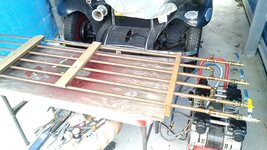
The cooling array sits behind the compressor, in this picture in a temporary position but later attached to a wall.
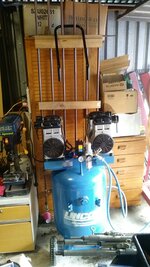
One other major advantage of drying your air before it goes into the tank (apart from the fact that no water sits in the tank to cause rust) is that there is a valve where the air comes into the tank. This is connected to the switchbox but if the air coming through is wet then these valves can play up and leak back up to the switch unit. Dry air means that this valve never causes a problem.

