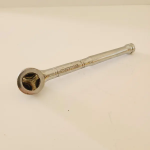
Again- its really important to understand the reason why grease is used in ratchets. Its not for the teeth or to prevent tooth wear. Grease in gear teeth actually accelerates wear by reducing the contact area, increasing stress. So everyone who has "quieted" their ratchet really did the wrong thing. They made the tool weaker and reduced its life span.
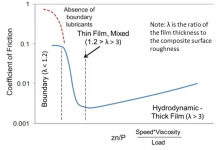
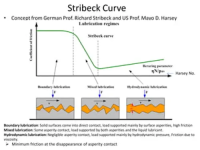
Grease is used in ratchets to reduce friction between the back of the gear and the inside of the body. The relative motion here occurs only during the ratcheting action. Many of us hold our ratchet heads in our palms and quickly twist our wrists to ratchet. During this action, we may be applying down pressure to keep the socket engaged. Its not tons of load, but with no lubricant or with a thin lubricant like ATF, it would be metal on metal.
With nothing at all on the gear, my guess is, within a week's use, you'd start to wear the finish off the back of the gear. Depending on your environment, that could lead to corrosion, followed by accelerated wear. For those of you who have rebuilt ratchets, you have probably seen wear or even scoring under the top plate. This is where we want grease. It must be thick enough to generally stay there, but not so thick it reduces back drag (which a thick grease with decent shear properties absolutely would do).

I just found this picture on the internet. Here you can clearly see the score marks on the bottom side of the top plate at left. You can also see the loss of finish on the outer edge of the gear. While this wear was taking place, this ratchet was performing more poorly than it could have been.
There are other scuff marks under the top plate from the pawls. You would similarly want grease between the pawls and the body. This is the interface that should have the least wear. Under the gear will be worse.
If I'm not mistaken this is a "sealed" Dual 80 ratchet. I see a decent amount of dirt inside the body. From where it is, it looks to be dirt that got in past the top plate. But it also could be the finish that was removed from use.
BTW, anyone else notice it looks like there was no grease in this ratchet. Was it washed out with ATF soaks? Of did the rebuilder just wipe away the old SuperLube?

Perfect world, you'd disassemble and clean all this. Then decide if you need to replace any components or just regrease and carry on. If you could dunk all these parts in a light oil and make sure every tooth is clean, that would be best. Then you would grease only the areas I marked in red.
For those of you who have seen Snap On reps rebuild these ratchets, they basically squeeze half the tube of grease under the gear, then the rest on the back of the top plate, which is consistent with my recommendations here. A little around the pawls is the only detail that I'm not sure they address, but wear there is probably both minor and insigificant to the function of the tool.
We get the point. Your ratchets have functioned well enough for you all these years. But lets not take this too far, like its a good idea. If you want performance, and people pay extra for high performing ratchets, they probably tend to maintain them. You could probably drive a car for a really long time without changing the motor oil. But is that a good idea? I change the oil in my cars, grease my heavy equipment, and occassionally rebuild ratchets I use frequently.

 . Never lubed my ratchets. Some Ive had for 50 yrs.