I had to think what you were saying and I realized you like tool **** as well... Sorry... I love nice tools as well, do I need 50 adjustable wrenches no.... And my wife is out of work so I hope this doesn't cause a divorce...I did a second order to simply buy the Wilde scraper I missed and somehow this order hit 300 and change for a $15 scraper.
I tap out

You are using an out of date browser. It may not display this or other websites correctly.
You should upgrade or use an alternative browser.
You should upgrade or use an alternative browser.
Harry J Epstein Day 2026
- Thread starter NUTTSGT
- Start date
M.Jay
Well-known member
This thread is really dangerous. Thankfully, living on the other side of the pond is protecting me from shedding my hard earned money.
Is no one ordering the biggest Channellocks made? BIGAZZ pliers! Really, that's what Channellock calls 'em.

Channellock 20" Groove Joint Pliers #480
Channellock 20" Groove Joint Pliers #480
www.harryepstein.com
Ohio Andy
Well-known member
I already have them ... When I need them, I really need them...Is no one ordering the biggest Channellocks made? BIGAZZ pliers! Really, that's what Channellock calls 'em.
Channellock 20" Groove Joint Pliers #480
Channellock 20" Groove Joint Pliers #480www.harryepstein.com
Hmmmm. A tease....
Is that something purple in Heavy Duty Wheel Cleaner bottles?
ogorir
Member
Order placed #35651
I'll be by Thursday morning to pick it up,
Thanks Jori and happy Epstein's day!
I'll be by Thursday morning to pick it up,
Thanks Jori and happy Epstein's day!
I hate to say it but I needed a pair, as in two, of those in the past year and bought the 16" Doyles from everyone's favorite Chinese emporium.Is no one ordering the biggest Channellocks made? BIGAZZ pliers! Really, that's what Channellock calls 'em.
Channellock 20" Groove Joint Pliers #480
Channellock 20" Groove Joint Pliers #480www.harryepstein.com
I was using them in a sewage pit and I would need them so infrequently I couldn't justify the cost.
I'll pay money for tools I use on a regular basis but not for one time use to literally get me out of a ****** situation. They have sat on a shelf in my garage since.
I do own two pair of the "wideazz" adjustables.
Like this....Is no one ordering the biggest Channellocks made? BIGAZZ pliers! Really, that's what Channellock calls 'em.
Channellock 20" Groove Joint Pliers #480
Channellock 20" Groove Joint Pliers #480www.harryepstein.com
Attachments

brglasp
Active member
Mike Rowe would agree with these statements. Excellently put.A bulletin from on high!
Like this....
I guess? Now I'm frightened by that crescent wrench.
RTM
Well-known member
I've had my Channellock 480s almost 50 years now. Back before they had a trendy name. Don't need them often, but irreplaceable when you do.Is no one ordering the biggest Channellocks made? BIGAZZ pliers! Really, that's what Channellock calls 'em.
Channellock 20" Groove Joint Pliers #480
Channellock 20" Groove Joint Pliers #480www.harryepstein.com
Mail ordered them from either Harbor Freight or Northern Tool before that internet thing existed and you had to call up on the phone or mail in an order form.
Got those last year. Made my kid laugh when I told him to get the biggest pliers in the drawer to open the sewer clean out.Is no one ordering the biggest Channellocks made? BIGAZZ pliers! Really, that's what Channellock calls 'em.
Channellock 20" Groove Joint Pliers #480
Channellock 20" Groove Joint Pliers #480www.harryepstein.com

I am a sucker for channel lock, but I was mostly looking to fill my fourth toolbox up my new Home box. I feel like I would never use then but this box is really empty.Is no one ordering the biggest Channellocks made? BIGAZZ pliers! Really, that's what Channellock calls 'em.
Channellock 20" Groove Joint Pliers #480
Channellock 20" Groove Joint Pliers #480www.harryepstein.com
Attachments

David-Eight
New member
- Joined
- Jun 21, 2023
- Messages
- 3
Historically relavent Independence Day purchase. Thanks for the help France lolI have not bought or used them -- but if it says "FACOM" and "Made in France", I can recommend it. FACOM does not screw around.
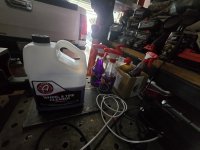
Reused the bottles, wife's x5 has the dirtiest brakes I have ever seen.... Trying this....Is that something purple in Heavy Duty Wheel Cleaner bottles?

Attachments
Haha... FYI those side adjustable wrenches are the bomb... Bacho and I think this is Irega.... look at the little ones on my laptop to compare. Sorry this a while back before I was thinking about harrys.. look at the price... Between large and smallI guess? Now I'm frightened by that crescent wrench.

Attachments

Last edited:
all of it. Or ask in the comment box when u place the order.This is my first time participating in Epstein day. How much do I have to purchase to get the Box Art ??
Out of both orders this speed handle is the thing I'm most excited about haven't met a fastener yet, I can't really get out with a good bit valve grinding compound and a good half inch speed handle.Well why not placed a second order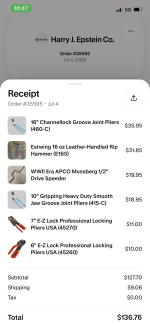
Last edited:
OP
Already have one pair of them. . . maybe two.Is no one ordering the biggest Channellocks made? BIGAZZ pliers! Really, that's what Channellock calls 'em.
Channellock 20" Groove Joint Pliers #480
Channellock 20" Groove Joint Pliers #480www.harryepstein.com
OP
I think Jori being interviewed by Mike Rowe would be kind of awesome.Mike Rowe would agree with these statements. Excellently put.
Reused the bottles, wife's x5 has the dirtiest brakes I have ever seen.... Trying this....
First German car? I don't know when the German tradition of dusty brakes ended, if at all. The missus bought an E70 X5 and it's not bad for brake dust, but she bought it used and I believe all brake pads got changed in its first 100K mi, so it's an unknown.
Last edited:
tjpavlov
Well-known member
Darn! Went to place my order and both the Channellock pliers that I had my eye on sold out!
Most German vehicles use metallic pads which is the brake dust. You see it's metal the metal not a composite or ceramic type of pad.First German car? I don't know when the German tradition of dusty brakes ended, if at all. The missus bought an E70 X5 and they're not bad for brake dust, but she bought it used and I believe all brake pads got changed in its first 100K mi, so it's an unknown.
Last edited:
Most German vehicles in metallic pads

Depending on engine I have some good recommendations on brand of oil along with DOT4 brake fluid to use. Don't use ATE the squeak will annoy you. This is my personal 2024 atlas with EA888 gen 4 engine jp4 tune.
I think the brembos are the issue. My 2012 GMC with a 6.6 looks mint and 14 years old with 28xxx on it, I do use pentosin fluid in that and on all my vehicles. BMW is a 2025 x5 x50e so 483hp and 516tq with the 3.0 pretty quick. I love the zf8hp70 in our ecodiesel jeep... the zf in the bmw is nice as well. My allison in the truck has been bullet proof...
Depending on engine I have some good recommendations on brand of oil along with DOT4 brake fluid to use. Don't use ATE the squeak will annoy you. This is my personal 2024 atlas with EA888 gen 4 engine jp4 tune.
I have them already. It comes in handy once in a blue moon and doubles as an oil filter wrench.Is no one ordering the biggest Channellocks made? BIGAZZ pliers! Really, that's what Channellock calls 'em.
Channellock 20" Groove Joint Pliers #480
Channellock 20" Groove Joint Pliers #480www.harryepstein.com

I'm in for my virgin year!
Order #35725. Can't wait to see what the artists do with the box art!
I'm in for a T-shirt, and a bunch of other stuff inspired by this thread... All USA, except for 2 Japanese items that don't appear to be available from USA manufacturers.
Looking back at my order, I had to stop myself from going bananas, but in so doing, nothing was actually discounted (at least, not with the code). Now the danger is to not be tempted to be swayed even further by other guys' purchases here, and double my order...
Thanks again to Jori and the team for doing this!!!
Mike
Order #35725. Can't wait to see what the artists do with the box art!
I'm in for a T-shirt, and a bunch of other stuff inspired by this thread... All USA, except for 2 Japanese items that don't appear to be available from USA manufacturers.
Looking back at my order, I had to stop myself from going bananas, but in so doing, nothing was actually discounted (at least, not with the code). Now the danger is to not be tempted to be swayed even further by other guys' purchases here, and double my order...
Thanks again to Jori and the team for doing this!!!
Mike
Last edited:
Historically relavent Independence Day purchase. Thanks for the help France lol
The A in FACOM stands for "Americaine." I used to think the company used to operate on both sides of the Atlantic at first, but nah.
Quick bit of history:
World War I had devastated much of northern France, but had also pointed the way to a new emphasis on machinery and precision engineering. Rebuilding the country's industrial and manufacturing infrastructure gave rise to new opportunities. Among those seeking his fortune was young engineering graduate Louis Mosès. With funding from his family, Mosès opened a small forge and workshop near Paris's Gare de Lyon in 1918. Calling his company 'Franco-Américaine de Construction d'Outillage Mécanique,' from which the acronym FACOM was later drawn, Mosès and a staff of ten workers began crafting precision tools for the booming mechanical and manufacturing markets. The 'Américaine' in the company's name was a shrewd marketing ploy, conjuring up the technical sophistication and diversity of the U.S. military equipment brought over during the war.
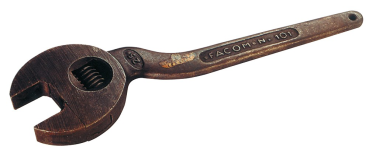
Facom's original products were based on Mosès' own designs; Mosès also acted as the company's salesman. Initial production centered on a single product, which remained the company's only product during its first year of business. Later known as 'Madame 101,' this product was an adjustable wrench, one of the first of its kind, with a distinctive round head and curved cast-iron handle. The product, which remained in the company's catolog into the 1960s, was quickly adopted by the French railroad industry, which was rebuilding after the war.
Facom S.A. -- Company History
Madame 101:
ARAMP1
Well-known member
Got my purchase in just in the nick of time! Order #35776 Happy 250th to the USA!!!

A bulletin from on high!
P.S. Yes, America produced an amazing amount of tools during WWII... and some of those tools are still available at HJE! Yayyyy!
I love my older plomb pebbles... Good tools for the money. I wish they would have kept making them, but at least proto is still around.P.S. Yes, America produced an amazing amount of tools during WWII... and some of those tools are still available at HJE! Yayyyy!
Stuart in MN
Well-known member
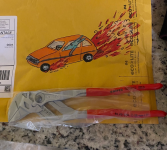
They have some official HJE 250th anniversary pliers for sale:
OP
For those that have never been there, that's what the basement looks like and just damn awesome that you can go throughout the building.
