d42jeep
Well-known member
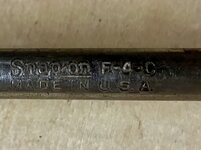
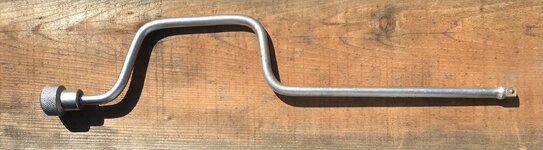
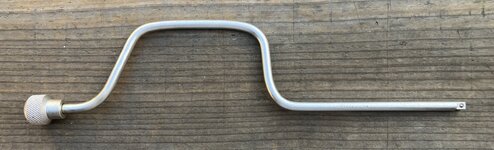
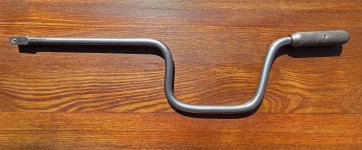
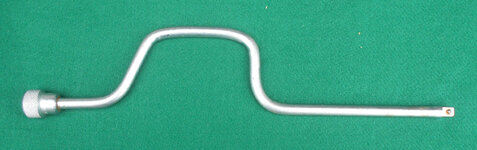
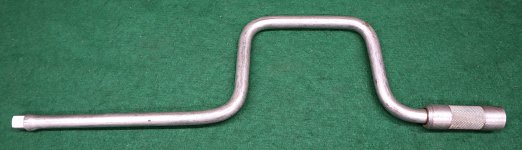
Looks wartime to me. Here are a couple from 1945.Based on the date code pages I've seen, this one is a 1963 Snap-on K-4
-Don


Looks wartime to me. Here are a couple from 1945.Based on the date code pages I've seen, this one is a 1963 Snap-on K-4
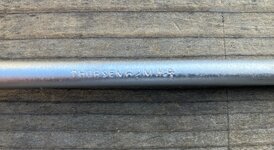
The script is different on mine and the date code says 1963, based on the charts I've seen.Looks wartime to me. Here are a couple from 1945.
-Don
J,The script is different on mine and the date code says 1963, based on the charts I've seen.
Thanks Lugz. That all makes complete sense and I did not realize that all of those details were what was being looked at. I apologize to OTG and Don as I am new to this and didn't completely understand what you just pointed out.J,
Some thoughts, without arguing with you, or saying who's right and who's wrong...
In situations like this one, where the "tells" for identifying the production year of a tool don't all agree with each other, it's difficult to give the markings more credence than other features, such as the construction and finish. I think that's what OTG and Don have been trying to tell you.
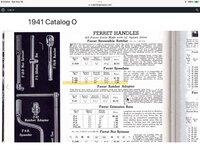
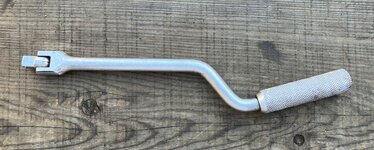
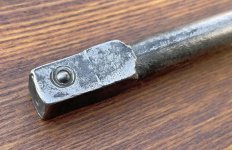
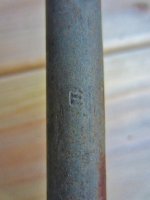
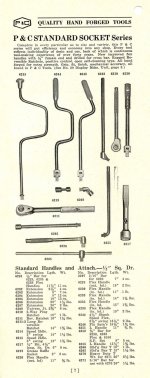
Catalogs indicate that Snap-on started putting the fancier, shapely handle they were using on flex heads and ratchets on the back of the speeder in 1950. The prospects of them making a speeder with that plain cylindrical knurled handle in 1963 are very small. Your speeder also appears to be natural steel finish. The prospects of Snap-on making a speeder that wasn't plated in 1963 are also very small. In style and finish, irrespective of the logo and any date code, it looks like a 1940's era K-4. Without any glimpse of a logo or date code, it would be identified as a 1940's era K-4. Which all points to it being much more likely that the date code you're reading as a squarish 1963-style "3" is probably a 1943-1944 "E".
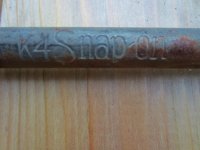
Granted, the all-caps plain SNAP-ON branding is odd. But an odd post-forged stamp-applied marking can't mitigate the appearance of the construction and finish as wartime production. The feasibility of explaining how and why Snap-on would make a speeder with an obsolete handle and no plating in 1963 is much more problematic than explaining why a speeder exhibiting all the characteristics of wartime production, including an "E" date code, has an alternative brand stamp.
Anything is possible. Maybe it is some weird retro product with an explanation. In the absence of that, though, FWIW to you, I tend to agree with Don on this one.
Maybe @snapmom has seen the all-caps brand before.
Here is Mintgrun’s 1944 example with yet another logo. A lot of odd tools were made during WW2I picked this K4 Snap-on speeder up last weekend (for a dollar).
I believe the 'stylized E' denotes 1944.
It is a little rusty, but I am hesitant to put it in the E-bucket, for fear of removing what is left of the plating. It can just stay the way it is, for now.
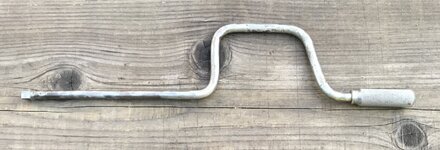


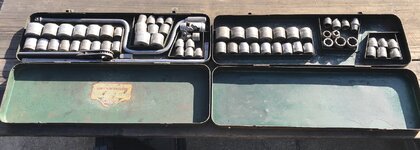
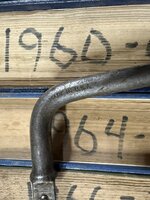
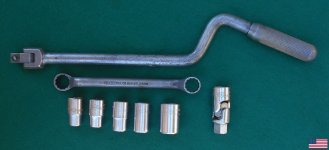
An additional speed wrench 1/2” drive… all I can find on it is Made in USA…Two Speed Wrenches: #6018 & 6028. Both by Walden Worchester. The Handles look different as well the shaft on the 6028 is thicker. My guess these are around 1920’s