To avoid these ads, REGISTER NOW!

Gedore India tools. Opinions?

n8n

Well-known member
Joined
Mar 11, 2014
Messages
3,608
Location
Curtis Bay, MD
Possibly unsurprisingly, I always look at tools whenever I'm at a thrift store, ReStore, pawn shop, etc.

When buying wrenches and such like, I tend to only buy from USA brands and even pass over Craftsman if it's not something I think I'll use, also I'll pick up Taiwan (if it looks good, not all does) and German made tools.

I see a lot of Gedore wrenches that are made in India however. Any opinions on those? They look very German (possibly unsurprisingly) and I have very positive impressions of Heyco after abusing them in a factory decades ago. Am I sleeping on these Indian made Gedore tools or am I right to leave them be? I do like to pick stuff up for the "blue box" which is where the extras go, then if someone needs tools I just reach in there and give whoever's asking some thrift store stuff that I thought was worth taking home for just this purpose.
 
To avoid these ads, REGISTER NOW!

CGarage

Well-known member
Joined
Nov 23, 2018
Messages
3,106
Location
United States/Switzerland
Indian made tools of that era usually had very poor plating, bad finishing/media blasting, improper broaching, poor heat treating and lots of flashing left over from the forge. I have a few Gedore India wrenches and they are worse than Pittsburgh.
 

Etchase

Well-known member
Joined
Nov 10, 2017
Messages
2,038
Location
Hawaii
These were the first metric wrenches I purchased some time in the late 70’s, so toward the end of Gedores involvement in India. I found the steel and broaching and heat treating to be fine. India is known to have some of the finest iron ore. The surface finish is rough and not all the forge marks are ground off. Gedore is famous for this function over cosmetics approach, which I like. I have a couple sets and the plating has held up very well 50 plus years later. Something I can’t say about all tools of that era. This was Gedores first foreign plant i believe, and established them as a major multinational tool manufacturer, and catapulted them past their German competitors. Gedore is about 50% bigger than Hazet and Stahlwille. Initially, the purpose of this plant was for Indian domestic production, but the products found surprisingly high demand worldwide, including the US, and can be found used all over the world. Bahco also had an operation in India in the same period. Both companies had to withdraw from their Indian operations as a result of the Union Carbide Bhopal disaster aftermath in the mid ‘80’s. Gedore’s facility was getting toward its end of life and shut down. The Bahco joint venture continues to this day as Taparia Tools, without the involvement of Bahco. Gedore has setup and maintained manufacturing all over the world. As I recall, Centech replaced Gedore as the high volume brand in the US. I still have a few sets of those kicking around too. Now we are back to buying wrenches from India again, and COO is still a talking point.
 

woody 73

Well-known member
Joined
Apr 14, 2009
Messages
11,554
Location
The Great State Up North
Op great question, hope I can answer it for you today.

Back two thousand years ago, well maybe early 1970's we had tool tent sales with their famous guarantee of why yes, it's called the good car warranty, sounds good to me right. What they left off was the moment you drove away in your car NO MORE WARRANTY, period. Back then to a poor kid the tools made in India cost pennies on the dollar, as a matter of fact compared to craftsman it was like the craftsman were the snap-on prices and the tools from India were like for a few dollars you could buy massive tool sets.

So, wrenching on them all you heard was pop,bam,boom,crack,snap, and kaboom with failure after failure and you were left with just plain junk. Now keep in mind that leaves a bad taste in one's mouth to NEVER AGAIN buy that junk. so, when guys my age see anything stamped with made in India it's a no brainer to avoid them.

There are some exceptions and yes Gedore are very good tools and I'm sure the ones made outside of Germany are very good tools, but from my past learning I tend to avoid any tools made from there. Not a day goes by that I see tons of Gedore from India and I get PTSD, from all my busted knuckles and screaming about broken tools coming from all that tool tent garbage.

Hope that gives you a bird's eye view from my old days.

Woody
 

gregs

Well-known member
Joined
Mar 16, 2007
Messages
1,622
I always sorta wondered about quality tools from other countries. So if you are a manufacturer (not a guy on a youtube video) in one of these countries with known low quality tools what do they use? Do they just have boxes of 10mm wrenches and sockets because every 3rd use it fails? Or is there companies that build quality tools in there countries? Or do they import tools to use? Just a thought.
 

woody 73

Well-known member
Joined
Apr 14, 2009
Messages
11,554
Location
The Great State Up North
Ok,

Every country in this world can "ALL" make fantastic quality tools, the best of the best as good as the likes of even snap-on, but do people want to lay out top dollars for that quality, when say, they can buy brand b,c,d or e, for a much cheaper price and hands down quality goes out the door. An old story as long as time itself.
 

CGarage

Well-known member
Joined
Nov 23, 2018
Messages
3,106
Location
United States/Switzerland
I like Gedore Germany tools.

There are some members here whom have vast knowledge about tool manufacturing who have less than positive opinions on Gedore Germany quality, but I particularly like the satin finish on their wrenches.

Gedore has a manufacturing plant in South Africa, and the tools made there look great and are well regarded by South African mechanics whom I know.

I think India is a developing country, and they are rapidly developing, but in a less organized and structured way compared to China.

A German car company just moved oil filter production to India, and I was disappointed to see this when my oil filter boxes came to the parts counter with “made in India” labels.
 

neophyte

Well-known member
Joined
Apr 23, 2012
Messages
9,837
Location
Pennsylvannia
Ok,

Every country in this world can "ALL" make fantastic quality tools, the best of the best as good as the likes of even snap-on, but do people want to lay out top dollars for that quality, when say, they can buy brand b,c,d or e, for a much cheaper price and hands down quality goes out the door. An old story as long as time itself.
This is not usually true.
Making top of the line tools requires access to top of the line materials, which are not available in all countries.
A toolmaker could technically “make their own steel” but that still requires access to the right raw alloying elements, which are in many cases less available than better finished steel.
(Some Sheffield Tool makers supposedly made their own steel and other materials for tooling like cutting instruments).
A toolmaker also needs access to proper infrastructure, like electricity, to consistently manufacture goods, and that is lacking in certain countries, and areas.
Being able to get raw materials into the manufacturing site, and finished goods out, is also a potential issue.
Lastly, local or country specific regulations can come into play, which certain techniques or materials being heavily restricted or banned, thereby making those manufacturing techniques expensive to use, or not legally possibly.
 

neophyte

Well-known member
Joined
Apr 23, 2012
Messages
9,837
Location
Pennsylvannia
I like Gedore Germany tools.

There are some members here whom have vast knowledge about tool manufacturing who have less than positive opinions on Gedore Germany quality, but I particularly like the satin finish on their wrenches.

Gedore has a manufacturing plant in South Africa, and the tools made there look great and are well regarded by South African mechanics whom I know.

I think India is a developing country, and they are rapidly developing, but in a less organized and structured way compared to China.

A German car company just moved oil filter production to India, and I was disappointed to see this when my oil filter boxes came to the parts counter with “made in India” labels.
South Africa basically had European tier manufacturing capabilities when the South African manufacturing was set up.
South Africa also had industrial reasons for needing high quality tools, for industries that involved deep mining, that could also pay well for the tools.
 

Etchase

Well-known member
Joined
Nov 10, 2017
Messages
2,038
Location
Hawaii
Tool manufacturing has few barriers to entry. Semiconductor manufacturing is pretty complex, and a facility was constructed on Borneo, which lacked really any infrastructure. No problem for world class manufactures. Access to steel, just isn’t the problem it was 150 years ago.
 
Last edited:

CGarage

Well-known member
Joined
Nov 23, 2018
Messages
3,106
Location
United States/Switzerland
South Africa basically had European tier manufacturing capabilities when the South African manufacturing was set up.
South Africa also had industrial reasons for needing high quality tools, for industries that involved deep mining, that could also pay well for the tools.


And automobile manufacturing.

Mercedes has plants in S Africa.

Also, a large defense manufacturing industry.
 

Matt XYZ

Well-known member
Joined
Apr 11, 2017
Messages
486
Location
Germany
I've seen them in person at big box stores here in Germany. Mainly wrenches. They look to be of average to poor quality, more suited for a bargain bin compared to the standard Tawain wrenches. I'm not sure if they are at the level of Pittsburgh basic wrenches.
 

neophyte

Well-known member
Joined
Apr 23, 2012
Messages
9,837
Location
Pennsylvannia
Tool manufacturing has few barriers to entry. Semiconductor manufacturing is pretty complex, and a facility. Was constructed on Borneo, which lacked really any infrastructure. No problem for world class manufactures. Access to steel, just isn’t the problem it was 150 years ago.
Access to decent steel was an issue in Brazil just a few decades ago, or maybe less.
Brazil wanted to build up their industrial manufacturing infrastructure, which caused Brazil to implement very high tariffs, which resulted in decent tooling and steel to be hard to get, and locally available tools sometimes being ****.
Precision Twist/Dormer, eventually set ip industrial drill bit manufacturing in Brazil, so I presume decent drill bits can now be acquired, but there were numerous decades within the 2900s, even the late 1900s, when that was not the case.
Technically, three phase power is available in many parts of the USA, but a small tool manufacturer might still have issues setting up for three phase equipment due to the cost of installing the system in a building.
I remember one quote from a government building from a few decades ago where running power lines for some piece of equipment that needed to move around a facility would have cost $250,000 or more.
The facility was never upgraded.

Currently, data centers are getting complaints about power usage, and water usage, in the USA.

Liquid lead alloy hardening for metal hardening and tempering used to be common.
It can still be used, but routinely isn’t, at least in the USA, because of all the extra safety requirement and equipment necessary.
The same goes for certain types of chrome plating.

Japan for years was shipping out steel that lacked proper alloy content, with the tacit knowledge and permission of the US government, because they were having issues getting the alloying elements necessary.
 

CGarage

Well-known member
Joined
Nov 23, 2018
Messages
3,106
Location
United States/Switzerland
I've seen them in person at big box stores here in Germany. Mainly wrenches. They look to be of average to poor quality, more suited for a bargain bin compared to the standard Tawain wrenches. I'm not sure if they are at the level of Pittsburgh basic wrenches.


Gedore wrenches sold in Germany are made in Germany, not India.

They are an industrial tool. They own the largest forges in Remscheid, Germany also (going off of memory).

While not as “pretty” as the premium Taiwan wrenches, they are robustly built.

Note, I don’t think my recent Hazet wrenches are as nicely finished as premium Taiwan made wrenches.

The German tools in general are functional first, rather than finished superbly.
 
Last edited:

AEAdam

Well-known member
Joined
May 27, 2023
Messages
2,833
Location
SE PA
This is not usually true.
Making top of the line tools requires access to top of the line materials, which are not available in all countries.
A toolmaker could technically “make their own steel” but that still requires access to the right raw alloying elements, which are in many cases less available than better finished steel.
(Some Sheffield Tool makers supposedly made their own steel and other materials for tooling like cutting instruments).
A toolmaker also needs access to proper infrastructure, like electricity, to consistently manufacture goods, and that is lacking in certain countries, and areas.
Being able to get raw materials into the manufacturing site, and finished goods out, is also a potential issue.
Lastly, local or country specific regulations can come into play, which certain techniques or materials being heavily restricted or banned, thereby making those manufacturing techniques expensive to use, or not legally possibly.
I don’t know exactly where @neophyte lives, but probably a short drive from either of us is the Henry Disston factory that made steel and hand saws +++ on the Delaware river just north of Philadelphia (just north of the Tacony Palmyra) bridge. Rumor has it the river front is littered with old grinding wheels. I’ve sailed past there 1000 times, but never noticed if they are there or not.

Here in PA, steel production was once so common (Bethlehem Steel etc etc) it’s hard to imagine it is a big deal anywhere. We have whole towns named for steel and iron manufacture such as Bloomsburg PA, which houses one of the PA state Us.

So to suggest India can’t produce good steel or can’t make a decent hand tool sounds racist. I get it.

Some of the products discussed above are most likely not home grown, but rather western companies exploiting a low wage, educated, hard working labor force. Chances are high Mercedes or Mann or whoever is basically boxing up a factory and sending it somewhere labor is cheaper.
 
To avoid these ads, REGISTER NOW!

AEAdam

Well-known member
Joined
May 27, 2023
Messages
2,833
Location
SE PA
Access to decent steel was an issue in Brazil just a few decades ago, or maybe less.
Brazil wanted to build up their industrial manufacturing infrastructure, which caused Brazil to implement very high tariffs, which resulted in decent tooling and steel to be hard to get, and locally available tools sometimes being ****.
Precision Twist/Dormer, eventually set ip industrial drill bit manufacturing in Brazil, so I presume decent drill bits can now be acquired, but there were numerous decades within the 2900s, even the late 1900s, when that was not the case.
Technically, three phase power is available in many parts of the USA, but a small tool manufacturer might still have issues setting up for three phase equipment due to the cost of installing the system in a building.
I remember one quote from a government building from a few decades ago where running power lines for some piece of equipment that needed to move around a facility would have cost $250,000 or more.
The facility was never upgraded.

Currently, data centers are getting complaints about power usage, and water usage, in the USA.

Liquid lead alloy hardening for metal hardening and tempering used to be common.
It can still be used, but routinely isn’t, at least in the USA, because of all the extra safety requirement and equipment necessary.
The same goes for certain types of chrome plating.

Japan for years was shipping out steel that lacked proper alloy content, with the tacit knowledge and permission of the US government, because they were having issues getting the alloying elements necessary.
In the early part of the 20th century when the US was building cities out of steel and the Japanese capital still had people living in homes with paper walls, the Japanese steel industry was so bad, so far behind, they bombed Pearl Harbor to try to scare the US into lifting the steel embargo we placed upon them after they attacked China.

When people talk about Japan’s long mastery of steel, it makes me cringe. They were literally using medieval methods (which are good) 100 yrs ago to make steel implements. Their industrial steel, structural steel was coming from Bethlehem PA.

PS. I love Japan. They make some of the world’s best steel now. I know a few words in Japanese. I want to visit. It’s just, their history with steel is as illustrious as our history is with native people. Not really trying to drag them down, but let’s just be honest.
 
Last edited:

mreisner

Well-known member
Joined
Jun 25, 2019
Messages
924
Location
North of Detroit
I don’t know exactly where @neophyte lives, but probably a short drive from either of us is the Henry Disston factory that made steel and hand saws +++ on the Delaware river just north of Philadelphia (just north of the Tacony Palmyra) bridge. Rumor has it the river front is littered with old grinding wheels. I’ve sailed past there 1000 times, but never noticed if they are there or not.

Here in PA, steel production was once so common (Bethlehem Steel etc etc) it’s hard to imagine it is a big deal anywhere. We have whole towns named for steel and iron manufacture such as Bloomsburg PA, which houses one of the PA state Us.

So to suggest India can’t produce good steel or can’t make a decent hand tool sounds racist. I get it.
Some of the products discussed above are most likely not home grown, but rather western companies exploiting a low wage, educated, hard working labor force. Chances are high Mercedes or Mann or whoever is basically boxing up a factory and sending it somewhere labor is cheaper.
My dad was an engineer for the Ore Navigation Division of Bethlehem Steel supplying those plants. And by engineer I mean the captain may say where the ship is going, but the engineer says if the ship is going type engineer!
 

Matt XYZ

Well-known member
Joined
Apr 11, 2017
Messages
486
Location
Germany
Gedore wrenches sold in Germany are made in Germany, not India.

They are an industrial tool. They own the largest forges in Remacheid, Germany also (going off of memory).

While not as “pretty” as the premium Taiwan wrenches, they are robustly built.

Note, I don’t think my recent Hazet wrenches are as nicely finished as premium Taiwan made wrenches.

The German tools in general are functional first, rather than finished superbly.
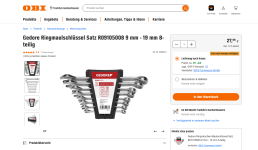
@CCGarage, I was refering to the made in India wrenches specifically. I have some of the old Gedore made in India wrenches for cutting up or modifying if needed. They still produce wrenches under the Gedore Red label that are made in India and sold in German home improvement stores. Gedore Red is not the same quality as Gedore and the other German professional brands, of which I own many tools. Most of the Red label ratchet and socket sets are made in Taiwan.
https://www.obi.de/search/gedore red/
1784928155987.png
1784928172397.png
 

Steve_P

Well-known member
Joined
Sep 15, 2010
Messages
5,193
I have a set of what I believe to be Gedore wrenches, from India, but they lack the "Gedore" label; but they look identical to the Gedore branded ones. they are fairly crudely finished, but decent broaching and are overall fine. I bought them in the early 90s and used them for decades. I'm sure they would test poorly on a youtube channel, but in the real world they're ok for the $30 (whatever) that I paid for probably 20 wrenches. I certainly wouldn't seek them out, and there are probably 20 better choices today, but before the internet, and when I was poor....
 

neophyte

Well-known member
Joined
Apr 23, 2012
Messages
9,837
Location
Pennsylvannia
In the early part of the 20th century when the US was building cities out of steel and the Japanese capital still had people living in homes with paper walls, the Japanese steel industry was so bad, so far behind, they bombed Pearl Harbor to try to scare the US into lifting the steel embargo we placed upon them after they attacked China.

When people talk about Japan’s long mastery of steel, it makes me cringe. They were literally using medieval methods (which are good) 100 yrs ago to make steel implements. Their industrial steel, structural steel was coming from Bethlehem PA.

PS. I love Japan. They make some of the world’s best steel now. I know a few words in Japanese. I want to visit. It’s just, their history with steel is as illustrious as our history with native people. Not really trying to drag them down, but let’s just be honest.
The Best Japanese blacksmiths were excellent at taking the basic steel and iron they had available, and making high quality tools out if that steel and iron, to the extent that the tools are and were considered works of art.
That said, even Toshio Odate said there were tool dealers and manufacturers passing off **** steel tools that were plated to look good.
The traditional laminated steel used for high end and medium end Japanese carpentry tools tends to get praise, as a technique US tool manufacturers can’t make.
Wiss was making scissors and shears using laminated steel up until at least the 1980s, or later, although the aviation shears seem to have never actually used laminated blades, just a molybdenum alloy for the blades.
Stanley may have been making laminated plane blades in Australia up until the 1960s.
Laminated plane blades were likely being made in the USA up until the 1920s or later.

As for India, they now likely have access, or at least some Indian manufacturers do, to high quality steel, due to who now owns ArcelorMittal.
Hundreds of years ago, they also had excellent steel and iron alloys, being the source for what was known as “Damascus Steel”.
Why the “Damascus Steel” stopped being produced seems to be uncertain.
One theory is that the steel required a particular type of iron sand, with small quantities of natural self contained certain alloying elements, and that iron sand ran out.
Another theory is that the British shifted production from traditional steel making techniques, because the British were concerned with quantity of steel, for industrial purposes such as railroad tracks, rather than quality.
The British did take the crucible method used for small batch steel production in India, then imported that method into the UK, then figured out how to scientifically refine that method yo produce specific steel alloys, and then eventually the British ditched the crucible method, maybe in the 1970s, when larger batch production of high alloy specialty steels took over.
 

Matt XYZ

Well-known member
Joined
Apr 11, 2017
Messages
486
Location
Germany
The Best Japanese blacksmiths were excellent at taking the basic steel and iron they had available, and making high quality tools out if that steel and iron, to the extent that the tools are and were considered works of art.
That said, even Toshio Odate said there were tool dealers and manufacturers passing off **** steel tools that were plated to look good.
The traditional laminated steel used for high end and medium end Japanese carpentry tools tends to get praise, as a technique US tool manufacturers can’t make.
Wiss was making scissors and shears using laminated steel up until at least the 1980s, or later, although the aviation shears seem to have never actually used laminated blades, just a molybdenum alloy for the blades.
Stanley may have been making laminated plane blades in Australia up until the 1960s.
Laminated plane blades were likely being made in the USA up until the 1920s or later.

As for India, they now likely have access, or at least some Indian manufacturers do, to high quality steel, due to who now owns ArcelorMittal.
Hundreds of years ago, they also had excellent steel and iron alloys, being the source for what was known as “Damascus Steel”.
Why the “Damascus Steel” stopped being produced seems to be uncertain.
One theory is that the steel required a particular type of iron sand, with small quantities of natural self contained certain alloying elements, and that iron sand ran out.
Another theory is that the British shifted production from traditional steel making techniques, because the British were concerned with quantity of steel, for industrial purposes such as railroad tracks, rather than quality.
The British did take the crucible method used for small batch steel production in India, then imported that method into the UK, then figured out how to scientifically refine that method yo produce specific steel alloys, and then eventually the British ditched the crucible method, maybe in the 1970s, when larger batch production of high alloy specialty steels took over.
I love GJ for the breadth and depth of knowledge from so many members. I never cease learning from the forums. It would be great if all of the member knowledge could somehow be packaged and documented for future generations. And yes, I know most of the info can be found in books or internet searches.
 

AEAdam

Well-known member
Joined
May 27, 2023
Messages
2,833
Location
SE PA
Before we leave this, I have Sheffield made woodworking tools with near mystical steel from makers like Addis. Sheffield was so far head and shoulders above pretty much everyone else in the world for steel manufacturing and steel technological advancements. One could argue Sheffield invented homogeneous steel.

I got to visit Sheffield on a work trip. We raised a few glasses in the Henry Bessemer Pub, and my English work mates didn’t know who Henry Bessemer was or why I was so excited to be there. (I get it, not everyone is a steel (history) nerd).

I think I missed the little walk way along the river sheaf, which powered at least a few factories including Greaves “Sheaf” works.

Sheffield should be a touch stone for tool lovers everywhere. There’s still a lot left to see there. Similarly relevant to this discussion is Springfield Massachusetts, birth place of manufacturing interchangeability.

Without these sorts of advancements, that in so many ways came for unplanned reasons, Western Europe and North America would not be the industrial super powers they are today.
 

RTM

Well-known member
Joined
May 13, 2019
Messages
13,297
Location
SF Bay Area
I’ve only touched a few in boxes at Garage and Estate sales, and just the touch was enough to make it look at the brand, so I didn’t touch any more of them other than to push them aside. Horrid finish every time,

Never used them, I have better.
 

esben57

Well-known member
Joined
Feb 3, 2012
Messages
866
Location
Sheffield. England
GEbrüder DOwidat REmscheid.

Before we leave this, I have Sheffield made woodworking tools with near mystical steel from makers like Addis. Sheffield was so far head and shoulders above pretty much everyone else in the world for steel manufacturing and steel technological advancements. One could argue Sheffield invented homogeneous steel.

I got to visit Sheffield on a work trip. We raised a few glasses in the Henry Bessemer Pub, and my English work mates didn’t know who Henry Bessemer was or why I was so excited to be there. (I get it, not everyone is a steel (history) nerd).

I think I missed the little walk way along the river sheaf, which powered at least a few factories including Greaves “Sheaf” works.

Sheffield should be a touch stone for tool lovers everywhere. There’s still a lot left to see there. Similarly relevant to this discussion is Springfield Massachusetts, birth place of manufacturing interchangeability.

Without these sorts of advancements, that in so many ways came for unplanned reasons, Western Europe and North America would not be the industrial super powers they are today.
A shadow of that nowadays.
 

four.cycle

Well-known member
Joined
Oct 19, 2015
Messages
29,396
Location
Tacoma, Washington
At some point in the not-too-distant future, most Americans will finally come to the realization that one out of five people on the planet live on the Indian subcontinent.

All of my Indian-made "Gedore" was shipped to either @BlakeTheCarGuy - so he could have "loaners" for his co-workers, or to @Caleb T for his three children to work on their bicycles and skateboards.

Thus far I haven't heard any complaints from any of them.
 

CGarage

Well-known member
Joined
Nov 23, 2018
Messages
3,106
Location
United States/Switzerland
At some point in the not-too-distant future, most Americans will finally come to the realization that one out of five people on the planet live on the Indian subcontinent.

All of my Indian-made "Gedore" was shipped to either @BlakeTheCarGuy - so he could have "loaners" for his co-workers, or to @Caleb T for his three children to work on their bicycles and skateboards.

Thus far I haven't heard any complaints from any of them.


Very kind of you. @BlakeTheCarGuy is a nice young man.
 

four.cycle

Well-known member
Joined
Oct 19, 2015
Messages
29,396
Location
Tacoma, Washington
Yes. He seems to be doing quite well.
Nothing wrong in trying to give a young man a leg up.

And @Caleb T's kids are apparently quite pleased with the tools they're receiving. (Even the kickstands! :lol:)

(y)
 
To avoid these ads, REGISTER NOW!
Top Bottom