To avoid these ads, REGISTER NOW!

Are carbide sawzall blades worth the extra money?

Hakeem

Well-known member
Joined
Jan 22, 2024
Messages
1,308
Location
Chicago
I’ve run into some situations involving a seized bolt where a reciprocating saw saved the day. Accordingly I’m ordering the Astro 936, their heavy duty air saw.

When it comes to blades, are carbide blades worth the extra money? I’m sure they cut better but if they don’t last very long I’ll just keep getting the bi-metal blades. I’ve heard reports of the carbide cutting teeth breaking off, but don’t know how accurate they are.

I’ll use some cutting lube for the blade but other than that I don’t really want to have to baby them. Thanks for any insight you can provide.
 
To avoid these ads, REGISTER NOW!

Kurt V

Active member
Joined
Nov 25, 2013
Messages
31
Location
Lincoln, NE
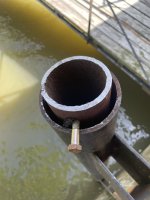
They were invaluable when I had to cut through this quarter inch thick steel pipe. Even with resting every few minutes it only took me about 15 minutes to cut all the way through. The bi metal blades would’ve had me there most of the day. I had two pipes to cut and used one blade for each pipe.
 

Attachments

  • IMG_2257.jpeg
    IMG_2257.jpeg
    429.3 KB · Views: 24

signcrafter

Well-known member
Joined
May 9, 2012
Messages
12,576
I’ve run into some situations involving a seized bolt where a reciprocating saw saved the day. Accordingly I’m ordering the Astro 936, their heavy duty air saw.

When it comes to blades, are carbide blades worth the extra money? I’m sure they cut better but if they don’t last very long I’ll just keep getting the bi-metal blades. I’ve heard reports of the carbide cutting teeth breaking off, but don’t know how accurate they are.

I’ll use some cutting lube for the blade but other than that I don’t really want to have to baby them. Thanks for any insight you can provide.
I'll use carbide blades depending on what I'm cutting. I like them for exhaust pipes and some other stuff on cars. Use them on some cast iron if I don't use a diamond blade. I used to just get quality normal blades and so many times the teeth would just wear out really fast. So started using carbide more and more.
 

YesIHaveAHammer

Well-known member
Joined
Jun 1, 2025
Messages
941
The tpi on carbide usually seems on the low side comparing to the same purpose blade. I guess this is to do with constraints of fixing carbide onto a blade, although Bosch do carbides up to 18 tpi. Do you see any difference with catching in the material?

I stocked up on few types of blades with my new recip saw just this week. Got one carbide to try, the heaviest duty one - 1.25mm thick, 8 tpi, for material thicker than 4mm. I'll see which of the other standard ones get the most use and how they last.
 
Last edited:

woody 73

Well-known member
Joined
Apr 14, 2009
Messages
11,563
Location
The Great State Up North
carbide is very nice, although I have broken my fair share of carbide drill bits, my DP cannot run that slow and the shatter. I think on my bandsaw next time I will go with carbide.
 

Shiftless

Well-known member
Joined
Mar 9, 2014
Messages
14,697
Location
East Bay SFO
On a recent job, I had to cut through a lot of underground tree roots with my Sawzall, many of which were as thick as your wrist. I didn’t even consider any blade besides carbide. Cutting old tree roots through dirt and gravel is tough on saw blades.
 
To avoid these ads, REGISTER NOW!

Nobody-named-Olli

Well-known member
Joined
Jan 9, 2025
Messages
1,707
Location
North Rhine-Westphalia; Germany
Yes, carbide blades are worth it. The cooler the cut, the longer they last. I always recommend cutting paste/wax as it stays on the teeth much better & longer than any fluid. No babying needed.

I only use Bosch’s ‘Swiss made’ carbide blades and I have yet to see one of my recipro saw blades lose a tooth/ or multiple teeth.

Worst I’ve cut with mine to date, steel pipe, halfway filled with (cured) mortar and the rest was dirt. Takes a toll on the blade, but that blade still cuts - and that cut would have eaten several bi-metal blades.

Carbide blades I have lost teeth on are those for OMTs, but those obviously aren’t the topic here.

Can’t stress it enough, use coolant, preferably a paste/wax.

Kind regards,
Olli
 

dnschmidt

Well-known member
Joined
Oct 3, 2014
Messages
7,322
Location
Phoenix, AZ
Sort of analogous to when steel circular saw blades were replaced by carbide. Once you adapt to carbide it's hard to go back to bi-metal.
 

Ohio Andy

Well-known member
Joined
Jul 31, 2024
Messages
2,445
Location
Columbus, Ohio
On a recent job, I had to cut through a lot of underground tree roots with my Sawzall, many of which were as thick as your wrist. I didn’t even consider any blade besides carbide. Cutting old tree roots through dirt and gravel is tough on saw blades.
That's why I started using carbide also. Non-carbide blades when you just jamm them straight into the ground and start cutting through dirt and roots, they dull really fast. Those carbide blades hold much better. I know of no faster way to cut through tree roots when you need to lau pipe underground and you're digging by hand. It also works if you're trying to remove trees, and other similar things with roots.
 

KnurledNut

Well-known member
Joined
Jan 28, 2011
Messages
8,294
Location
n/a
@Hakeem
I think you will be disappointed trying to cut any sizable bolts with an air saw. They perform better on thin metals, preferably mild steel.
That 936 is only rated for 1/4 thickness capacity largely due to its short 10mm stroke length. By comparison, my recip has a stroke length of 1-1/4".
Also its cutting at 7000 strokes per minute, which is over twice the speed of most reciprocating saws which typically average around 3000 SPM, with blades optimized to match. Again, great for sheet metal, but not so much for thick metals.

The Diablo metal cutting carbide blades shine when used with a recip saw to cut high grade fasteners. I've used them on some bolts that Bi-metal blades couldn't cut and quickly dulled. Like the time I blew out a leaf spring shackle hanger at interstate speed on a holiday and ended up replacing it myself in a parts store parking lot since all the local garages were closed. :lol:
55432196778_1c78db92d0_z.jpg

I save the carbide for those special uses since they are expensive and use regular metal cutting blades for mild ferrous.
Technique plays a key role here; learn to not overheat the blade.
I cut this tub in half with the one Lenox Gold blade pictured and the teeth were still in good enough shape when finished to use again.
55432174533_d7c94cbc18_b.jpg
 
Last edited:

RoninB4

Well-known member
Joined
Jul 22, 2020
Messages
3,655
Location
Under My House
-Whether HSS or carbide, the application and technique for each is very important. Carbide isn't the best for every application nor is HSS either. Carbide chips/shatters, HSS can dull/burn up with too much speed or too hard a material. There is no one answer that fits for every application. Specific applications get specific answers.
 
OP
H

Hakeem

Well-known member
Joined
Jan 22, 2024
Messages
1,308
Location
Chicago
Wow, that’s first time I’ve seen everyone on GJ agree on something :D

So carbide it is.
@Hakeem
I think you will be disappointed trying to cut any sizable bolts with an air saw. They perform better on thin metals, preferably mild steel.
That 936 is only rated for 1/4 thickness capacity largely due to its short 10mm stroke length. By comparison, my recip has a stroke length of 1-1/4".
Also its cutting at 7000 strokes per minute, which is over twice the speed of most reciprocating saws which typically average around 3000 SPM, with blades optimized to match. Again, great for sheet metal, but not so much for thick metals.

The Diablo metal cutting carbide blades shine when used with a recip saw to cut high grade fasteners. I've used them on some bolts that Bi-metal blades couldn't cut and quickly dulled. Like the time I blew out a leaf spring shackle hanger at interstate speed on a holiday and ended up replacing it myself in a parts store parking lot since all the local garages were closed. :lol:
55432196778_1c78db92d0_z.jpg

I save the carbide for those special uses since they are expensive and use regular metal cutting blades for mild ferrous.
Technique plays a key role here; learn to not overheat the blade.
I cut this tub in half with the one Lenox Gold blade pictured and the teeth were still in good enough shape when finished to use again.
55432174533_d7c94cbc18_b.jpg
Great Info, I neglected to consider the stroke length/speed of the saw. I’ve been using a coworkers Milwaukee sawzall with success but the bulk is prohibitive in some applications. Hence my interest in a smaller air saw. M14 bolts are probably as big as I’d go but admittedly that’s about twice the stated capacity.

$160 is a bit much to “roll the dice”, I’ll have to consider this a bit further …
 

jblnut

ALLIANCE MEMBER
Joined
Jan 17, 2015
Messages
7,222
Location
In the Middle of MN
I’m certainly not against carbide recip blades but I’ve been quite happy with the Lennox bi-metal blades I’ve been using for the last decade. As with any cutting tool heat is your enemy. No need to squeeze the trigger in all the way or lean your full weight into the tool. I’ve cut some seriously sizable stuff on them with a recip saw and don’t ever remember a time when it took 10+ minutes to make a cut.

I have used carbide recip blades and don’t have bad things to say, just that I haven’t found the cost to performance to be where I think they are a better purchase :dunno:
 
To avoid these ads, REGISTER NOW!
Top Bottom