lolaetype
Well-known member
I haven't read every post so this may or may not have been mentioned. I'd repair the cord with a single outlet male end and when the need arises use one of these.

Some people worry too muchJeesh! 39 posts about extension cord repair!!!
Toss that faulty POS extension cord in the garbage and buy a new one.…….. Never repair these with new cord caps or tied into 1900 boxes because you have just voided the UL listing and you make it very easy for a shyster attorney to "bend you over" on a law suit.
Even if it had a UL listed connector or plug on the repaired end?I knew one electrical inspector who would go to construction sites and do inspections on temporary electric (lights, GFI’s, generators, etc.) and if he came across "hacked up or modified" electrical cords he would make the contractor either cut the ends off the cords or face a penalty because the equipment was no longer UL listed.
The listed extension cord is tested and listed as a COMPLETE extension cord…… Both ends, wire, jacket and then approved if it passes. "IF" you alter ANY part of the cord then you have just voided the listing of that cord. I know this sounds petty and some will "debate" me, but that is the reality.…… "IF" you have an incident (fire, burn, electrocution, etc.) that may have involved the "altered" cord, you may have a problem "IF" the incident involves the cord.Even if it had a UL listed connector or plug on the repaired end?

I'll let you know how it goes when the next electrical inspector comes to my backyard and sees my modified cords.I knew one electrical inspector who would go to construction sites and do inspections on temporary electric (lights, GFI’s, generators, etc.) and if he came across "hacked up or modified" electrical cords he would make the contractor either cut the ends off the cords or face a penalty because the equipment was no longer UL listed.
OSHA says you can repair cords ...sorta.Even if it had a UL listed connector or plug on the repaired end?
I have seen those before.I haven't read every post so this may or may not have been mentioned. I'd repair the cord with a single outlet male end and when the need arises use one of these.
That one *****. Near impossible to plug or unplug in the cold.Interesting. I purchased what Dustball had linked to, not a Coleman Cable product. The outlet I ended up with has a smaller diameter pin position, plus the bent locking tang is oriented opposite the one I purchased. The one I purchased is not NEMA rated, which I now understand you are referencing but is ETL, whatever that is, and OSHA rated. Check the item screen shot and the package. I’m old and miss things, but in this case I just can’t find it and am tired of messing with it.
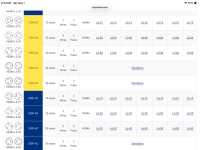
I don't know what you bought but it's important to note the locking tangs on 20A and 15A versions are opposite each other on L5.Interesting. I purchased what Dustball had linked to, not a Coleman Cable product. The outlet I ended up with has a smaller diameter pin position, plus the bent locking tang is oriented opposite the one I purchased. The one I purchased is not NEMA rated, which I now understand you are referencing but is ETL, whatever that is, and OSHA rated. Check the item screen shot and the package. I’m old and miss things, but in this case I just can’t find it and am tired of messing with it.

Only partially plug it in and give it some time. It'll warm itself up.That one *****. Near impossible to plug or unplug in the cold.
I'm with you on the so/sj cordage made up with cord caps. All of these components were listed with the full knowledge that they will be built up in the field.I'll let you know how it goes when the next electrical inspector comes to my backyard and sees my modified cords.
OSHA says you can repair cords ...sorta.
Whether extension cords may be repaired and returned to use. | Occupational Safety and Health Administration
April 4, 2010 Letter # 20070926-7973 Re: Whether extension cords may be repaired and returned to use. Question: Where an extension cord being used in construction has been damaged near the plug end, is it permissible to replace the plug with an approved cord cap made for that type of cord...www.osha.gov
If it's a cord made with separate "listed" SO/SJ cord and listed cord ends, you can repair, replace and modify it to your heart's content, as long as the components you use are listed. You can even make cords in the field as long as it is with listed cord and cord ends.
It's get a little tricky when you get on to factory made cords with molded ends. The above document from OSHA implies that it is okay to repair cords, but the verbiage they use is up to interpretation. They say it's okay to repair the cord as long as you return it to the state it was in "as approved" (as in, as how it was tested by UL, ETL, CSA, whoever).
There's some debate about what "as approved" means. Does it mean with molded cord ends? That is essentially impossible to achieve in the field; or does it just mean with a quality, listed, 3-prong cord end?
Edit: I've written a question into OSHA. Let's see what they say.
Temporary wiring as defined in NEC or portable equipment?I knew one electrical inspector who would go to construction sites and do inspections on temporary electric (lights, GFI’s, generators, etc.) and if he came across "hacked up or modified" electrical cords he would make the contractor either cut the ends off the cords or face a penalty because the equipment was no longer UL listed.
After my Dad died, I inherited, along with the house and the large piles of junk inside and outside the house, an enormous WWII era welder my Grandpa had somehow acquired and dragged home sometime after the war.I read on some welding forum about wrapping some mastic type electrical tape and then some 3M (33 or 77?) tape over that.
Reason is I had a rat got in my garage and chewed through some brand new welding leads and an extension cord. Those animals are bad!
Anyway, doubt it's OSHA complaint. Good thing OSHA doesn't mess with homeowners. The way I see it is any electrical tape is better than exposed wires
Temporary wiring AND portable equipment.…….. Check those tools with the ground prong cut off or failing cords.Temporary wiring as defined in NEC or portable equipment?
The "next inspector" could be just like me and "won’t see it"…… I only did inspections on work that I had permits for unless it was a "eminent hazard" or a true "life hazard violation" like a swimming pool without a barrier, second floor deck rails removed, storage of gasoline inside boiler rooms, etc.I'll let you know how it goes when the next electrical inspector comes to my backyard and sees my modified cords.
OSHA guy is the grim reaper for employers. No question on that part.Temporary wiring AND portable equipment.…….. Check those tools with the ground prong cut off or failing cords.
These were large commercial/industrial jobs NOT the guy or homeowner working on a small residential job. OSHA will also issue violations if they show up and see "modified" cords or equipment.…… Never F around with OSHA so the "right thing" and trash those cheap POS cords, because all it takes is one call from a "pizzed off employee" to OSHA and they will show up and issue violations.
BTW! I have seen 250’ of romex stretched out with cord caps and it was ran across a public road to a construction site…….. I use to cut the cord caps off and then cut the romex.
The 1st one I had actually did that and melted itself to the point I'm not sure how it didn't catch fire.Only partially plug it in and give it some time. It'll warm itself up.
meh. Most of my cords look like that. They've been like that for years and they work just fine. No damage to the conductors or the insulation. If your concerned just wrap some tape around it.Another puzzle.
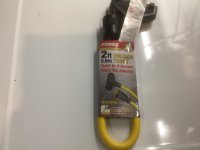
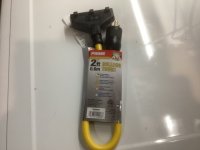
Have a nice fairly heavy duty extension cord that has a 3-fer head on it. Great, while it lasted, but the jacket separated from the molded head. See pics.
Any good ideas on repairing it? I'd really like to keep the 3-fer arrangement and get it back in service.