To avoid these ads, REGISTER NOW!

If PR∇T∇ T∇∇L C∇ had played it safe...

DD T/A

Well-known member
Joined
Aug 30, 2016
Messages
455
Location
North of ▼PL∇MB▼
With such a big following I can't be the only person who has felt that.....I just can't believe that they interpreted the first court cases ruling in such a way that they went through all of the design, made the forges and molds--a VERY expensive task, and wrote all of the parts books....then shipped this stuff...

,,,all without one darn employee saying out loud: Guys, dontchya think are kinda playing with the tiger?

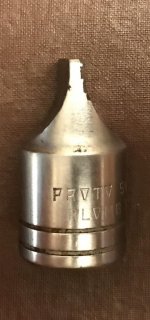
I mean all they had to do was leave off PL∇MB off of what are today the "lawsuit" tools and have it say PR∇T∇ T∇∇L C∇....
That's it, and they could have used that pretty identifiable, pretty cool script forever with no problem at all.

I really think PR∇T∇'s tools became comparatively dull and common after their lawsuit, they lost the one thing that really set PL∇MB apart from anyone else, and that was ....well....Pizazz. Style.


Something that is INCREDIBLY marketable.


I don't know, just seems like PR∇T∇'s move was kinda :lol_hitti
Which for a very successful company is really really dumb. They were on a roll, had something sleek, and their tools withstood the test of use. Ridiculous to just give it up for something so obviously stupid...:wtf:


Disclaimer: This thread was written because I am bored, but too tired to go out and work on my truck.
 
Last edited:
To avoid these ads, REGISTER NOW!

Private Lugnutz

Well-known member
Joined
Mar 30, 2012
Messages
30,489
Location
The Authentic Jersey Shore
DD T/A,

Well, you had fun playing with the little plomb-bob/delta symbol, that's for sure... :), but I'm not sure what you're trying to say, even in jest, sorry. Maybe because your understanding of the sequence of events is a little off?

First of all, it was the Plomb Tool Company at the time. Fayette R. Plumb had no problem with the name of Morris Pendleton's company; their problem was Plomb Tool Company using their own name - even when it was an "O", well before the "V" - like a trademark on hand tools.

Secondly, the first lawsuit was in 1926. The production of the so-called "dual-branded" "Plomb-Proto" or "transition" tools was actually a reaction to the third major lawsuit, filed in December 1948. (The term "lawsuit tools" is usually reserved for grind-offs, in my experience. In other words, as a result of the third lawsuit. But technically, all of Plomb's production from 1926 to 1950 was made under lawsuits by Plumb. The only suit they were successful in making stick was the third one (again, in December 1948), and the fourth one (February 1949), which gave Plomb until March 1950 to comply.

Thirdly, the dual-branding idea, called "a temporary expedient" by Plomb, only cost a company estimated $130,000 in re-tooling. That was the whole point. Thinking that the addition of the Proto brand to the tools (reflecting advertising and packaging stressing the change to "Proto Tools, by Plomb Tool Company") would appease Fayette R. Plumb, they were trying for an immediately easier less expensive fix.

Fourthly, in 1950, when Plomb Tool Company finally dropped all presence of the Plomb brand on its tools, replaced with Proto, the tools were made by the same company in the same plants and, except for the name, looked exactly like formerly Plomb brand tools. Quite literally the only feature the tools lost was the word PLVMB on them.

I'm not a modern tool collector, so I have no comment on the quality or commercial impact of Proto brand tools made by Plomb Tool Company through the 1950's, or Proto brand tools made by Pendleton Tool Industries Incorporated after 1957, but they seem to have had a major following. They don't have the same aura about them as their ancestors, but that's natural. Few modern incarnations do. If there was a sharp decline, I am not aware of it.

EDIT: I would point you to Tool Archives for a very detailed timeline, but it's down for major repairs and re-hosting. AA's timeline is a little flawed, but generally okay for the gist of it. Ditto for the old Van Natta Brothers site. Coincidentally, I was just getting ready to post an update to our understanding of the timeline to either the end of the Tool Archives thread, the Plomb thread, or both. When I do, I will post a link here.
 
Last edited:

mustangSR70

Well-known member
Joined
Sep 2, 2013
Messages
140
Location
Orange County, CA
Lugz, I thought I had read, regarding the so called grind offs, that it had been found that those were actually tools purchased by employees of Plomb. That the name was ground off so that they would not be returne for warranty, exchange, etc. There have been grind offs that dated back to the late '30's, so unless the tool sat in their warehouse for 10 years or so, this would make sense.
Reference Twertsy's post, #1980, on the Plomb picture thread.
I will say, being here in Southern California, 25 miles from the Plomb L.A plant, I do come across quite a few grind off tools at the flea markets and swaps, but generally pass them up.
 

Private Lugnutz

Well-known member
Joined
Mar 30, 2012
Messages
30,489
Location
The Authentic Jersey Shore
Makes sense. My recollection could be fuzzy on that. Have I erroneously juxtaposed the whole category of grind-offs with the dual-branded tools? Or had there been a stream of thought (prior to Todd correcting it) that they were 1949 retail with Plomb or distributors grinding off the Proto name? Either way, I would defer to you and Todd and his friend's ex-employee's anecdotal experience on that point.

Nice location! :) I can see you passing them up. I think the novelty of them has also mainly worn off within the community, pun intended.
 

Username already in use

Well-known member
Joined
Sep 4, 2015
Messages
2,177
Location
Ohio
It makes sense that grind offs would be for employee purchase or factory seconds, but also industrial customers as well. I've found a few Vlchek grind offs here in Ohio and the only reason I can think of for that to happen would be industrial/government procurement - no warranty expressed or implied. :dunno:
 

d42jeep

Well-known member
Joined
Oct 22, 2014
Messages
16,506
Location
Northern California
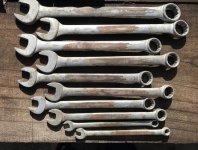
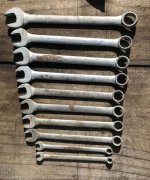
The premise of this thread is surprising to me. I feel that Proto has been a very successful brand over the years and I see some at a lot of sales. Although I prefer PL∇MB because I like the older tools, I would never hesitate to use Proto tools in my user toolbox. The brand name, although now owned by Stanley (what isn’t?), is still in use. Here are some grindoff Proto metric wrenches previously posted.
-Don
 

Attachments

  • E05FB86F-C439-4E64-AE4D-39C0E33B5128.jpg
    E05FB86F-C439-4E64-AE4D-39C0E33B5128.jpg
    130.6 KB · Views: 100
  • C29E6659-6EB1-4234-94D0-E08B777EBD65.jpg
    C29E6659-6EB1-4234-94D0-E08B777EBD65.jpg
    128.1 KB · Views: 81
Last edited:

mustangSR70

Well-known member
Joined
Sep 2, 2013
Messages
140
Location
Orange County, CA
In regards to the OP, Plomb/Proto really only lost the ability to use the name Plomb. The Proto name with the triangles as the O's really had nothing to do with the lawsuit. the lawsuit did not demand that they stop using the upside down triangles as their Os. The heart of the lawsuit was a fact that Plomb was still using the name Plomb on the tools themselves when they were ordered not to.
The lawsuit did not result in the tools becoming any lesser quality, nor did it result in a lack of market identification. I actually believe it was in a way, a smart move by Plomb to thumb it's nose at the court and still stamp on their tools "Proto Plomb Tool Company". For that year and a half it allowed the market to connect Proto and Plomb together. Think of the consumer that would go into their local store looking for a Plomb tool, and not finding it. They might find a tool marked Proto, but without the dual marked tools they may not associate the two brands. By being dual stamped they could now connect the two brands. This, in a way, is a much better way to let the user know that Proto and Plomb is one in the same.
The quality of the tools was just as good as before, the only thing missing was the large pebble panels.
Style is nice, but the quality and value is what sells to somebody who makes a living with the tools.
 
Last edited:

Rileysan

Well-known member
Joined
Sep 11, 2015
Messages
4,298
Location
Milwaukie, Oregon
All he’s trying to say, is font matters.

That's what I took it to mean, and I agree with the premise that Proto should have kept the Delta symbol in place of the 'O'. But as time moves on, marketing changes are made (including logo redesigns) to appeal to new generations and the old logos become symbols of bygone eras.

The question I have is this: did Pendleton Tool lose market share after changing the name from Plomb to Proto? I've never read anything that makes that claim, but it's an interesting question.

PS - regarding grind-offs. I'm totally on board with the "employee sales" theory. I've seen waaay too many Proto empire tools dating well into the 70s to attribute it to anything else. That includes Challenger & P&C.

Brian
 

Rileysan

Well-known member
Joined
Sep 11, 2015
Messages
4,298
Location
Milwaukie, Oregon
Pendleton Tool didn't come about until 1957. The company operated as Plomb until then, just not putting Plomb on the tools.

A technicality that has no relevance to the question. The Pendleton family sold tools under the names Plomb, P&C, Challenger, Vlchek, Penens, Fleet, Tru-Test, and god knows what else. They were all under the umbrella of a single owner.

Brian
 

Private Lugnutz

Well-known member
Joined
Mar 30, 2012
Messages
30,489
Location
The Authentic Jersey Shore
A technicality that has no relevance to the question. The Pendleton family sold tools under the names Plomb, P&C, Challenger, Vlchek, Penens, Fleet, Tru-Test, and god knows what else. They were all under the umbrella of a single owner.
You and I have been down this owner road before, Brian, for a similar reason. It mattered then (wartime contracts awarded to P&C, by name, not Plomb Tool Company, by name), and it matters now. It is an interesting question. But when do you want to compare market share? In 1949, when Plomb Tool Company first started using Proto as a trademarked brand name on tools in response to the fourth suit? A year later? Or eight years later, in 1957, when the company name was Pendleton Tool Industries Incorporated, and it actually owned all the brands you listed, as well as Proto, which you did not? Needless to say, that is a big difference.

If we really wanted to stay true to the OP's original premise - which was that the Plomb Tool Company adding PROTO to their tools as a brand and eventually removing altogether the company name as an implied brand hurt their sales - we should want to compare market shares of tools made and sold by the Plomb Tool Company and implicitly branded by default as Plomb in the 1940's through 1947 (they weren't using brands then or before then, not even the name Challenger, first introduced in 1939 was being stamped on tools themselves, and tools being made and sold by P&C as a managed brand of Plomb would not count in this comparison) to tools made and sold by the Plomb Tool Company and explicitly branded as PROTO in 1949 through 1956.

We could also compare market shares of tools made and sold by the Plomb Tool Company and implicitly branded by default as Plomb in the 1940's through 1947 to tools made and sold by Pendleton Tool Industries Incorporated and explicitly branded as PROTO in 1957 through the 1960's. Even though none of the other brands would rightfully count, I still don't think that would be very fair to the OP's premise.

My bet is on the early Proto market share being bigger than the later Plomb market share. And I suspect it would be dwarfed several times over in the 60's. But I don't think that had anything to do with the name change. Just the burgeoning boomer economy not only floating but making all boats bigger. I actually read somewhere that Plomb sales were tanking in the immediate postwar years, like many other companies. But I'd have to find that source.

I will add one last bit. We tend to glorify and romanticize Plomb now, and I am as guilty as anyone, but it really wasn't an Empire quite just yet in the 40's, especially not compared to the giants. It was knocking on the door. But it wasn't in the gilded palace yet. I think I've talked about this before, but I once compiled a database of contract dollar amounts from the WPB Major War Supply Contracts records I have, and I was shocked at the results. Plomb placed well, but not near the top. Let's just say there is little to no correspondence between popularity of the brands we covet most now as collectors and how well they did in the era we covet them compared to others.

EDIT: Who knows a good source for historical sales information? And would it matter if the company was private or public? Plomb was private I believe. I could be wrong about that, but I recall reading that it hit the NYSE for the first time in the late 1950's when it was Pendleton.
 
Last edited:

d42jeep

Well-known member
Joined
Oct 22, 2014
Messages
16,506
Location
Northern California
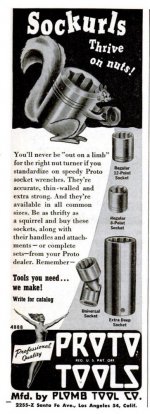
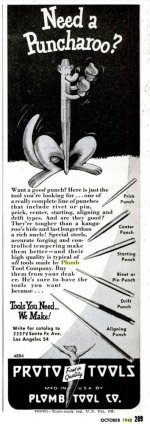
If it was a matter of font, it’s obvious from these ads that it was under consideration. In fact my dual marked drag link bit uses PR∇T∇.
-Don
 

Attachments

  • 4B70D174-C903-49EE-9F7D-56E83A26A4EF.jpg
    4B70D174-C903-49EE-9F7D-56E83A26A4EF.jpg
    77.8 KB · Views: 39
  • 990452D1-B1B3-4750-B3F1-E13F696D1D29.jpg
    990452D1-B1B3-4750-B3F1-E13F696D1D29.jpg
    79.1 KB · Views: 36
  • B952DEAB-03F2-4837-BA99-58D69B57E7B8.jpg
    B952DEAB-03F2-4837-BA99-58D69B57E7B8.jpg
    63.2 KB · Views: 38
Last edited:

Private Lugnutz

Well-known member
Joined
Mar 30, 2012
Messages
30,489
Location
The Authentic Jersey Shore
If it was a matter of font, it’s obvious from these ads that it was under consideration. In fact my dual marked drag link bit uses PR∇T∇.
-Don
Plomb Tool Co trademarked PRVTV (with the plomb bob O's) first. They amended it to PROTO later. I'm on my phone or I would get you exact dates. They were clearly initially thinking it was important to retain some semblance of the old PLVMB-as-un-trademarked-brand look, and then they were quite conscientiously positive they shouldn't. I've been studying this last couple weeks with respect to the dual-branded production timeline, and I have found some crucial details that have been missed. More later. Triple early bird flea market comes first. ;)
 
To avoid these ads, REGISTER NOW!

twertsy

Well-known member
Joined
Jan 5, 2014
Messages
6,726
Location
Reedville, VA
I'll update this as I find stuff:

Note that this is all sales for the company, including subsidiaries.

Plomb Tool Company Total Sales:

1937 - $823,241
1938 - $779,907
1939 - $868,919
1942 - $4,719,450
1943 - $10,277,681
1944 - $10,999,947
1945 - $9,608,744
1946 - $14,217,611
1947 - $12,011,962
1948 - $9,465,890
1949 - $6,762,022
1950 - $8,397,031
1951 - $13,082,986
1952 - $12,755,304
1953 - $13,468,000
1954 - $11,322,000
1955 - $13,386,845
1956 - $15,856,613
 

Private Lugnutz

Well-known member
Joined
Mar 30, 2012
Messages
30,489
Location
The Authentic Jersey Shore
Very interesting, Todd! First of all, I wish someone had taken my bet! :lol:

Talk about numbers telling a story. From small-fry prewar output (37-39) to big wartime boost (42-45) to lawsuit dip (48-50) to numbers exceeding each and all wartime production years (51-56). Note also that the lawsuit "dip" is very relative. Even though the dual-branding period numbers dipped below 1943 and 1944 numbers, they dipped by less than 10%, and that period exceeded 1942 numbers, and was equivalent with 1945.

It would be nice to see the breakouts by brand/subsidiary, but I tend to believe that Proto, as the flagship brand, had a lot to do with the jump to six steady years of $11M or higher. So much for the fiduciary tangibility of those plomb-bob fonts we love so much as vintage collectors. :)

As a side-note
 

ssdave

Banned
Joined
Apr 11, 2015
Messages
2,913
Location
Eastern Oregon
We tend to glorify and romanticize Plomb now, and I am as guilty as anyone, but it really wasn't an Empire quite just yet in the 40's, especially not compared to the giants. It was knocking on the door. But it wasn't in the gilded palace yet. I think I've talked about this before, but I once compiled a database of contract dollar amounts from the WPB Major War Supply Contracts records I have, and I was shocked at the results. Plomb placed well, but not near the top. Let's just say there is little to no correspondence between popularity of the brands we covet most now as collectors and how well they did in the era we covet them compared to others.

You're quite right about collectables. People pick collectibles for a lot of different reasons, but typically they pick things that have a wide variety of items. (makes it more time consuming and interesting to collect all variants) They also pick things that have a particular identifying style, often somewhat decorative (Pebble fits into this niche nicely). They also pick things that have enough pieces that they can amass a collection, with enough rare pieces to make it a challenge.

If there's too many variants, and they changed too often, things become less collectible. If you have to ammass several thousand items before the collection becomes good, there's less interest. Thus, the many variants of CM don't lend themselves to collecting quite as well as Plomb or Williams or Bonney.

If there's only a few of the items in circulation, the collectibility is often less. Without several collectors to have an interest in them and being relatively possible to assemble a collection, there's not much pleasure in collecting them and talking to others about them.

Plomb fits the collector niche well. Relatively common so there's enough to collect. Several variants, and uniform markings through their history for each variant. Pleasing aesthetics. Enough written history to make them easier to catalog. Enough rare pieces to give collectors a challenge. Finite number of pieces, so a relatively complete collection is attainable.
 

Private Lugnutz

Well-known member
Joined
Mar 30, 2012
Messages
30,489
Location
The Authentic Jersey Shore
ssdave: Totally concur. Great summary.

EDIT: My point, in case it was lost, was that I think many collectors tend to make a false transference. To wit, the OP. As Todd just demonstrated, early Plomb Tool Company tools bearing the PLVMB brand obviously were not more marketable than later Plomb Tool Company tools bearing the PROTO brand (and, it has to be noted, other brands - since his numbers are all-inclusive). As vintage tool collectors we tend to ascribe greater quality value to the early eras when we should stick to ascribing better collectible value. That's not to say that much later PROTO tools - like almost all tools, and certainly all tools that succumbed to conglomeration - did not decline in quality. I believe most did. But even then I have to admit to a vintage bias. ;)
 
Last edited:

Rileysan

Well-known member
Joined
Sep 11, 2015
Messages
4,298
Location
Milwaukie, Oregon
I'll update this as I find stuff:

Note that this is all sales for the company, including subsidiaries.

Plomb Tool Company Total Sales:

1937 - $823,241
1938 - $779,907
1939 - $868,919
1942 - $4,719,450
1943 - $10,277,681
1944 - $10,999,947
1945 - $9,608,744
1946 - $14,217,611
1947 - $12,011,962
1948 - $9,465,890
1949 - $6,762,022
1950 - $8,397,031
1951 - $13,082,986
1952 - $12,755,304
1953 - $13,468,000
1954 - $11,322,000
1955 - $13,386,845
1956 - $15,856,613

If there was ever a more compelling way of proving my point, this is it. Call it Plomb Tool, Pendleton Tool, Pied Piper's Tool, or whatever the hell you want. There was one family acting as ambrella corporation that ran all these companies.

Furthermore, sales and market share are two very different things, and sales numbers will not tell the story. One has to take into account the Great Depression, WWII, and the economic boom that began around 1950. All of these things affected sales but not necessarily market share. Additionally and anecdotally, those who participated in the war effort - both at home and away - learned to do things they may not have ever been able to do before; mechanic, carpenter, welder/fabricator, and so on. With prices of tools being lower than ever before, the market was bound to explode. And I contend that the market was ripe for Sears, et al, to step in and take market share.

So I come back to the question: "Did Plomb lose market share due to the name change?".

Brian
 

notlob

Well-known member
Joined
Aug 19, 2013
Messages
1,384
Location
norcal
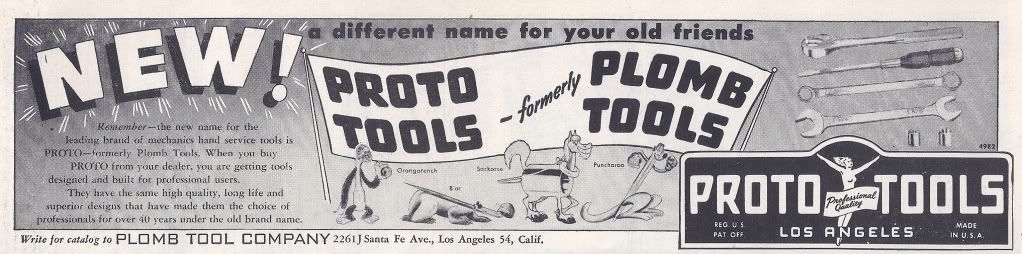
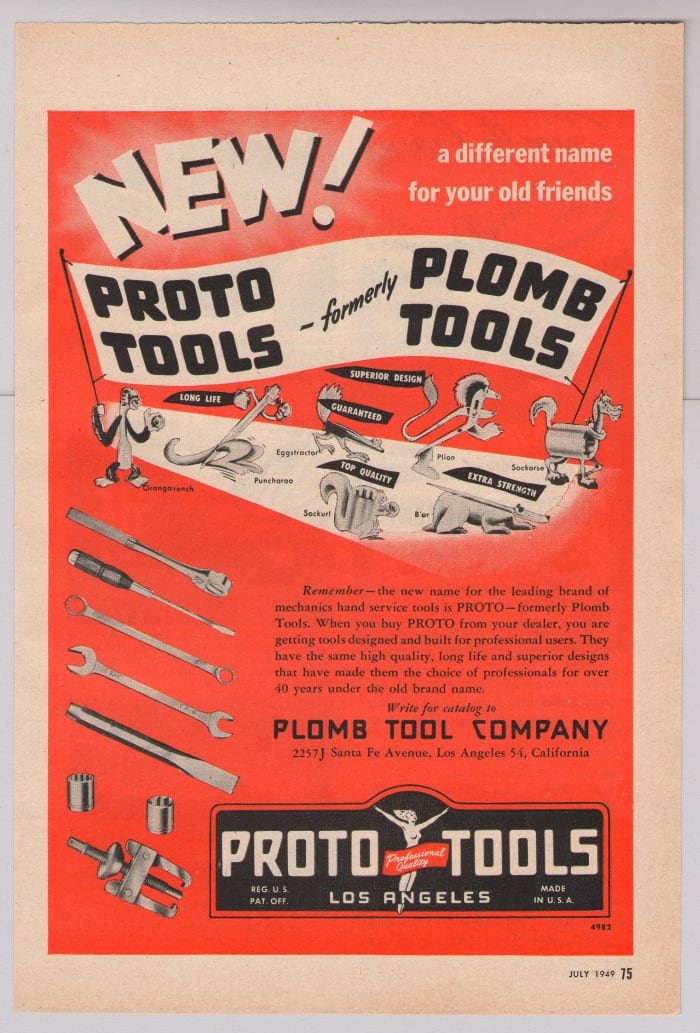
And to help that along, Plomb embarked on an unprecedented advertising campaign with their merchandisers. More on that in a bit.

The campaign seems a bit silly today, but I'm sure it got customers to take notice.

PlumbAdvertisement-TheHomeCraftsman194905.jpg


1_4459710757f4491bc08e4655d4a8f31f.jpg


il_fullxfull.313276038.jpg


Proto-Tools-ad.jpg


images
 
Last edited:

tin medic

Well-known member
Joined
Oct 7, 2014
Messages
589
Location
Fort Sam Houston, TX
So I come back to the question: "Did Plomb lose market share due to the name change?". Brian

I would say no. Plomb went out of its way to make sure all their retailers and customers knew about the name change. I don't think the name change netted them an increase but I don't think it cost them much, if anything.
 

Private Lugnutz

Well-known member
Joined
Mar 30, 2012
Messages
30,489
Location
The Authentic Jersey Shore
Furthermore, sales and market share are two very different things, and sales numbers will not tell the story.
That's true. On the premise that other mfgrs sales increased even more than Plomb Tools Company's sales increased after the change to Proto. Having sales numbers from other mfgrs to compare to would be necessary. Having sales numbers from an association or neutral source would also help.

The OP's premise had nothing to do with market share, though. The OP indicated he thought the name change was a marketing mistake.

Rileysan said:
One has to take into account the Great Depression, WWII, and the economic boom that began around 1950. All of these things affected sales but not necessarily market share.
Agreed. Hence, this part of my post upthread...

Private Lugnutz said:
My bet is on the early Proto market share being bigger than the later Plomb market share. And I suspect it would be dwarfed several times over in the 60's. But I don't think that had anything to do with the name change. Just the burgeoning boomer economy...

The campaign seems a bit silly today, but I'm sure it got customers to take notice.
All dated 1949, by the way. Tin medic has an amazing flyer that demonstrates just how long ("12 months"), big ("160,000,000 ad appearances") and serious the campaign was, which included much more than noticing. They were actually sending free 'Proto Tools by Plomb Tool Co" stickers, decals, and signage to merchandisers, followed up with cards that merchandisers were to have filled out and returned certifying that they had covered-up or replaced their old signage and decals. The flyer has dusted off and reinvigorated my research into the 'Lawsuit' production era timeline. I was going to post some scans from it soon.
 

twertsy

Well-known member
Joined
Jan 5, 2014
Messages
6,726
Location
Reedville, VA
For those curious about cumulative numbers...

Eleven (11) years from 1937 to 1947: $ 64,307,462
Nine (9) years from 1948 to 1956: $104,496,691
And by the way, I found 2 more acquisitions in the early 1950s that could likely be added to determine the "27 factories."

Sent from my Pixel 2 XL using Tapatalk
 

d42jeep

Well-known member
Joined
Oct 22, 2014
Messages
16,506
Location
Northern California
Some more small ads with the updated Proto logo.
-Don
 

Attachments

  • IMG_3041.jpg
    IMG_3041.jpg
    78.7 KB · Views: 23
  • IMG_3043.jpg
    IMG_3043.jpg
    120.8 KB · Views: 25
  • IMG_3046.jpg
    IMG_3046.jpg
    72.2 KB · Views: 25

Private Lugnutz

Well-known member
Joined
Mar 30, 2012
Messages
30,489
Location
The Authentic Jersey Shore
Some more small ads with the updated Proto logo.
Thanks, Don. Plomb used a sequential serial number system (decade/year/two-digit number) on their catalogs, flyers, and ads during this time. The dates and/or high serial numbers (49XX) on those are consistent with the timeline.

And by the way, I found 2 more acquisitions in the early 1950s that could likely be added to determine the "27 factories."
That's great news, Todd.

For anyone interested in less monolithic, more detail-oriented context for Todd's original numbers, we can overlay it with what we know about when particular brands, managed brands (subsidiaries), or private label contract production would've been included in the figures or not.

Plvmb Only

1937 - $823,241
1938 - $779,907
1939 - $868,919

Plvmb and P&C

1942 - $4,719,450
1943 - $10,277,681

Plvmb, P&C, and Circle-U

1944 - $10,999,947
1945 - $9,608,744

Plvmb, P&C, Circle-U, and Firestone

1946 - $14,217,611
1947 - $12,011,962

Plvmb, P&C, Circle-U, Firestone, and PENENS/Fleet/Challenger

1948 - $9,465,890

'Prvtv/Plvmb', P&C, Firestone, and PENENS/Fleet/Challenger

1949 - $6,762,022

Proto, P&C, Firestone, and PENENS/Fleet/Challenger

1950 - $8,397,031
1951 - $13,082,986

Proto, P&C, and PENENS/Fleet/Challenger

1952 - $12,755,304
1953 - $13,468,000
1954 - $11,322,000
1955 - $13,386,845
1956 - $15,856,613
 
Last edited:

Rileysan

Well-known member
Joined
Sep 11, 2015
Messages
4,298
Location
Milwaukie, Oregon
That's true. On the premise that other mfgrs sales increased even more than Plomb Tools Company's sales increased after the change to Proto. Having sales numbers from other mfgrs to compare to would be necessary. Having sales numbers from an association or neutral source would also help.

The OP's premise had nothing to do with market share, though. The OP indicated he thought the name change was a marketing mistake.


Agreed. Hence, this part of my post upthread...

I think you're spot on! Although it might be a herculean effort to try to figure out market share this many years after the fact. That, and can you derive tool sales numbers from corporate giants like Sears, Wards, Western Auto, etc. overall earnings reports?

Here's a curve ball for you all: What do the sales numbers look like for Plomb made Craftsman tools? Did Plomb miss an opportunity to be the main supplier of socket sets (which they supplied ca. 1946-48) or other manner of hand tools? The decision by Sears to go with Western Forge over Plomb or New Britain changed the fortunes of both companies (for better or worse).

Brian
 

Private Lugnutz

Well-known member
Joined
Mar 30, 2012
Messages
30,489
Location
The Authentic Jersey Shore
What do the sales numbers look like for Plomb made Craftsman tools?
I should've included Circle-U in the breakdown, actually. We know when they made them for Sears and that would've been included in sales. I will circle back and amend that.

Although it might be a herculean effort to try to figure out market share this many years after the fact.
It would be. We can maybe get a feel for it in other ways, though.

Comparing Plomb's annual sale figures to another Mfgr's annual sales figures won't define Plomb's market share (their percentage of all sales vs. the percentage of all other mfgrs' sales), or the market share of the other company, but it will help characterize Plomb's performance relative to the other company.

For their 40th anniversary shareholders' meeting in 1960, Snap-on published The Story of Snap-on, a 56-page pamphlet that they handed out to all shareholders. It was a historical, nostalgic, anecdote-filled 'this is how we got here' publication, as remembered and told by the members of the core founders and early principals who were still alive. Page 49 included a short chart reporting annual performance every five years.

I am picking Snap-on because the data is conveniently readily available, but using another 600-lb gorilla is actually a great comparison.

Here are Snap-on's numbers compared to the numbers for the Plomb Tool Company in those same years. I have added the fourth column showing the calculated difference in percentage.

Yr ------ Snap-on ----------- Plomb ------- % Diff.
1940 --- $ 2,515,768 ------ No Data ------- No Data
1945 --- $ 9,529,960 ----- $ 9,608,744 -- +.826
1950 --- $12,022,174 ----- $ 8,397,031 -- (-30)
1955 --- $18,791,107 ----- $13,386,845 -- (-28)
 
Last edited:

shanny19

Well-known member
Joined
May 24, 2014
Messages
1,209
Location
PNW
This thread is turning into a repository of awesome, thanks for the contributions.
 

r_olson_06

Well-known member
Joined
Feb 12, 2012
Messages
4,076
Location
SD
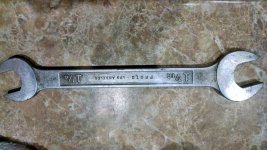
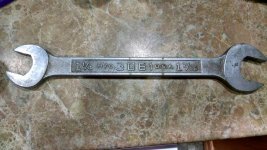
Just got this grind off. Never seen one like this.IMG_20181024_182805356_HDR.jpegIMG_20181024_182825875_HDR.jpeg

Looking for the following Plomb Pebbles Wrenches 3055, 3060, 3061, 3062, 3070
 

Provincial

Well-known member
Joined
Sep 21, 2011
Messages
6,855
Location
Near Salem, OR
One should be careful in comparing sales figures year to year to consider inflation.

There was almost no inflation in the late 1930's and 1940, with a jump of almost 10% in 1941 and 9% in 1942. It dropped to the 2% range until 1946, when it jumped by 18.13%, followed by 8.83% in 1947. The decade finished with 2.99% in 1948 and deflation (!) of -2.07% in 1949.

The 50's started out with 5.93% in 1950 and 6.00% in 1951, but dropped below 1% for the next four years. The decade finished out with rates near 3% the next two years and about 1.75% the last two years.

The Consumer Price Index more than doubled between 1937 and 1959.
 
To avoid these ads, REGISTER NOW!
Top Bottom