mjozefow
Well-known member
This thread is going to try to combine the knowledge held within the GJ and beyond about these useful and wonderful tools. This is a joint effort between BanjoSavesTheDay and myself. If you have more info on history of a vise company or another that should be listed please PM it to me, you will receive credit. The goal is to keep ALL information on the first page.
How to restore a bench vise!
SOME REALLY NEAT VINTAGE ADS - Some really great info for finding DOM and original specs of your vintage vise.
FAQ:
Q: What are the different types of bench vises?
A: There are four main types of bench vises. These are the machinist's vise, the mechanic's vise, the post vise, and the woodworkers vise.
The machinist's vise is considered the "cream of the crop". They are stoutly made and are finely machined. The jaws should match up perfectly, and they will be made of very high grade (60,000psi or greater) cast* iron. Note: The surface behind the back jaw is NOT an anvil or hammering surface!

*Technically, machinist's vises are almost always made of ductile iron, not cast iron. And yes, before some wag says "well they're cast in a mold, so it's cast iron," the phrase cast iron usually implies grey or white cast irons, which are brittle due to significant graphite content existing in the iron in flakes. Ductile iron's graphite is in a nodular shape which inhibits cracking. It's an important distinction in vises, because high quality vises are made from nodular or spheroidal (ductile) iron, and cheaply made economy vises (often imported) are made of grey cast iron. - Thanks zrexxer
The mechanic's vise is a vise designed to function as more than a mere vise. They usually have an integrated anvil area, and are made of lower grade iron.

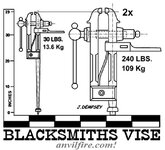
The post vise is a blacksmith's tool, and features a post going to the ground so that it may be hammered upon. My understanding is that these vises are made of forged wrought iron, not cast iron, allowing them to have ductility. It is therefore possible to "spring" the jaws without breaking them.
The woodworker's vise is an under-mount vise, usually with a retractable dog for clamping work upon the workbench. This is the last time one of these will be mentioned here.

Q:How can I tell if my vise is a cheap import? (note: I'm not talking about the GOOD vises that have been imported like Records)
A: Taken as a rule, this is the easiest way to tell:
1. The lead screw on an import will be too small for the jaw size.
2. An import will not name the country of origin
3. It was purchased at a home center in recent years
4. If the jaws "T" too much.
5. If it is a funky rotating design with one side being pipe jaws and the other being regular jaws.
________________________________________
Q: What are the basic parts of a vise?
A: The basic parts are shown here:

________________________________________
Q: Is a swivel base important?
A: Yes and no. A swivel base is an asset if you need to position long stock at odd angles, however, a fixed base vise will almost always be more solid.
_________________________________________
Q: I found a vise that has been welded. What is it worth?
A: Whatever scrap value is. I would never trust someone's repair unless you know it was done right. Which is very difficult.
_________________________________________
Q: Can a broken vise be fixed?
A: Yes, sort of. Cast iron is very difficult to weld properly. They are usually brazed or welded while red-hot. If you are looking to buy a vise that is broken to fix, pass.
_________________________________________
Q: How much is this old vise worth?
A: I will let you know when I come across a well used vise worth over $1/lb unless it is a very rare configuration. This is one man's opinion. If the vise needs work or has been sitting a long time $.60/lb is more reasonable. Neglect is often often better than wear, I value heavily worn vises under $.50/lb usually. When they are restored, then I feel the value roughly doubles if a good job is done, and the vise has been made better in both function and looks.
I should note however, that Wilton's seem to command a premium. I really don't know why. Autopts, who buys a lot of these says that $25 per inch of jaw width for a good used Wilton. I tend to agree that this is a fair price, especially if you plan to re-sell on eBay.
_________________________________________
Q: What happened to all of these companies?
A: They simply made a product that was too good. If you bought some of these old vises, you likely never needed another one. As industrial expansion in the USA started to slow, the demand for quality vises declined.
_________________________________________
Q: What should I look for in a vise?
A:
-USA or European made. Some made in Japan vises are good too.
-Look for a covered lead screw. This will ensure you are buying a stouter vise.
-Make sure the dynamic jaw does not wobble all over.
-When screwing in the dynamic jaw, the vise should not rack, and should be a one-fingered affair
-The shape of the jaws is a HUGE consideration. T-shaped jaws are not as strong as V shaped.
-Look for how much "meat" the jaws have to them. A good vise will have very stout looking and feeling jaws.
-Check the slide for hammer marks, particularly on rectangular slide vises. Bring the dynamic jaw all the way out. It should not resist at any point. Reeds tend to stick a bit at the back even if they have never been hammered. Hammering leads to mushrooming, which leads to sticking.
T-Shaped:

V-Shaped:

<a href="http://i112.photobucket.com/albums/n187/tractorguy15/Vise2012.jpg" target="_blank"><img src="http://i112.photobucket.com/albums/n187/tractorguy15/th_Vise2012.jpg" border="0" alt="Photobucket" ></a>
_________________________________________
Q: What do you mean by covered leadscrew?
A:
This is an exposed lead screw on an American Scale vise:

A rectangular slide vise (RIDGID):
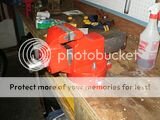
An enclosed slide Wilton:

_________________________________________
Q: What are the different types of replaceable jaw inserts?
A: They are as follows (or sometimes a combination of several styles)
Wilton-Style Screw on inserts- These are easy to replace, and offer the user an easy way to change jaws styles. The right photo shows how I put UHMW jaws on mine.


T-style inserts- These are very strong, and the main advantage is that there are no exposed fasteners. This makes restoration easier on a vise that has been abandoned for a long time of used hard. The pins are not convenient by any means, but are much harder to foul up.

U-style inserts-
These usually screw in, and are found on Prentiss vises and others. They cover the entire jaw, but can be a pain to get off. This is a little Sawyer vise. Ignore the welds, it was really cheap.

Parker Inserts- Parker has a unique way of doing these. They are a shaped, pinned jaw made of hardened tool steel. They are very strong. The pins can be removed from below by hammering them out with a punch.


How to restore a bench vise!
SOME REALLY NEAT VINTAGE ADS - Some really great info for finding DOM and original specs of your vintage vise.
FAQ:
Q: What are the different types of bench vises?
A: There are four main types of bench vises. These are the machinist's vise, the mechanic's vise, the post vise, and the woodworkers vise.
The machinist's vise is considered the "cream of the crop". They are stoutly made and are finely machined. The jaws should match up perfectly, and they will be made of very high grade (60,000psi or greater) cast* iron. Note: The surface behind the back jaw is NOT an anvil or hammering surface!
*Technically, machinist's vises are almost always made of ductile iron, not cast iron. And yes, before some wag says "well they're cast in a mold, so it's cast iron," the phrase cast iron usually implies grey or white cast irons, which are brittle due to significant graphite content existing in the iron in flakes. Ductile iron's graphite is in a nodular shape which inhibits cracking. It's an important distinction in vises, because high quality vises are made from nodular or spheroidal (ductile) iron, and cheaply made economy vises (often imported) are made of grey cast iron. - Thanks zrexxer
The mechanic's vise is a vise designed to function as more than a mere vise. They usually have an integrated anvil area, and are made of lower grade iron.
The post vise is a blacksmith's tool, and features a post going to the ground so that it may be hammered upon. My understanding is that these vises are made of forged wrought iron, not cast iron, allowing them to have ductility. It is therefore possible to "spring" the jaws without breaking them.
The woodworker's vise is an under-mount vise, usually with a retractable dog for clamping work upon the workbench. This is the last time one of these will be mentioned here.
Q:How can I tell if my vise is a cheap import? (note: I'm not talking about the GOOD vises that have been imported like Records)
A: Taken as a rule, this is the easiest way to tell:
1. The lead screw on an import will be too small for the jaw size.
2. An import will not name the country of origin
3. It was purchased at a home center in recent years
4. If the jaws "T" too much.
5. If it is a funky rotating design with one side being pipe jaws and the other being regular jaws.
________________________________________
Q: What are the basic parts of a vise?
A: The basic parts are shown here:
________________________________________
Q: Is a swivel base important?
A: Yes and no. A swivel base is an asset if you need to position long stock at odd angles, however, a fixed base vise will almost always be more solid.
_________________________________________
Q: I found a vise that has been welded. What is it worth?
A: Whatever scrap value is. I would never trust someone's repair unless you know it was done right. Which is very difficult.
_________________________________________
Q: Can a broken vise be fixed?
A: Yes, sort of. Cast iron is very difficult to weld properly. They are usually brazed or welded while red-hot. If you are looking to buy a vise that is broken to fix, pass.
_________________________________________
Q: How much is this old vise worth?
A: I will let you know when I come across a well used vise worth over $1/lb unless it is a very rare configuration. This is one man's opinion. If the vise needs work or has been sitting a long time $.60/lb is more reasonable. Neglect is often often better than wear, I value heavily worn vises under $.50/lb usually. When they are restored, then I feel the value roughly doubles if a good job is done, and the vise has been made better in both function and looks.
I should note however, that Wilton's seem to command a premium. I really don't know why. Autopts, who buys a lot of these says that $25 per inch of jaw width for a good used Wilton. I tend to agree that this is a fair price, especially if you plan to re-sell on eBay.
_________________________________________
Q: What happened to all of these companies?
A: They simply made a product that was too good. If you bought some of these old vises, you likely never needed another one. As industrial expansion in the USA started to slow, the demand for quality vises declined.
_________________________________________
Q: What should I look for in a vise?
A:
-USA or European made. Some made in Japan vises are good too.
-Look for a covered lead screw. This will ensure you are buying a stouter vise.
-Make sure the dynamic jaw does not wobble all over.
-When screwing in the dynamic jaw, the vise should not rack, and should be a one-fingered affair
-The shape of the jaws is a HUGE consideration. T-shaped jaws are not as strong as V shaped.
-Look for how much "meat" the jaws have to them. A good vise will have very stout looking and feeling jaws.
-Check the slide for hammer marks, particularly on rectangular slide vises. Bring the dynamic jaw all the way out. It should not resist at any point. Reeds tend to stick a bit at the back even if they have never been hammered. Hammering leads to mushrooming, which leads to sticking.
T-Shaped:
V-Shaped:
<a href="http://i112.photobucket.com/albums/n187/tractorguy15/Vise2012.jpg" target="_blank"><img src="http://i112.photobucket.com/albums/n187/tractorguy15/th_Vise2012.jpg" border="0" alt="Photobucket" ></a>
_________________________________________
Q: What do you mean by covered leadscrew?
A:
This is an exposed lead screw on an American Scale vise:

A rectangular slide vise (RIDGID):
An enclosed slide Wilton:
_________________________________________
Q: What are the different types of replaceable jaw inserts?
A: They are as follows (or sometimes a combination of several styles)
Wilton-Style Screw on inserts- These are easy to replace, and offer the user an easy way to change jaws styles. The right photo shows how I put UHMW jaws on mine.

T-style inserts- These are very strong, and the main advantage is that there are no exposed fasteners. This makes restoration easier on a vise that has been abandoned for a long time of used hard. The pins are not convenient by any means, but are much harder to foul up.
U-style inserts-
These usually screw in, and are found on Prentiss vises and others. They cover the entire jaw, but can be a pain to get off. This is a little Sawyer vise. Ignore the welds, it was really cheap.
Parker Inserts- Parker has a unique way of doing these. They are a shaped, pinned jaw made of hardened tool steel. They are very strong. The pins can be removed from below by hammering them out with a punch.
Last edited:


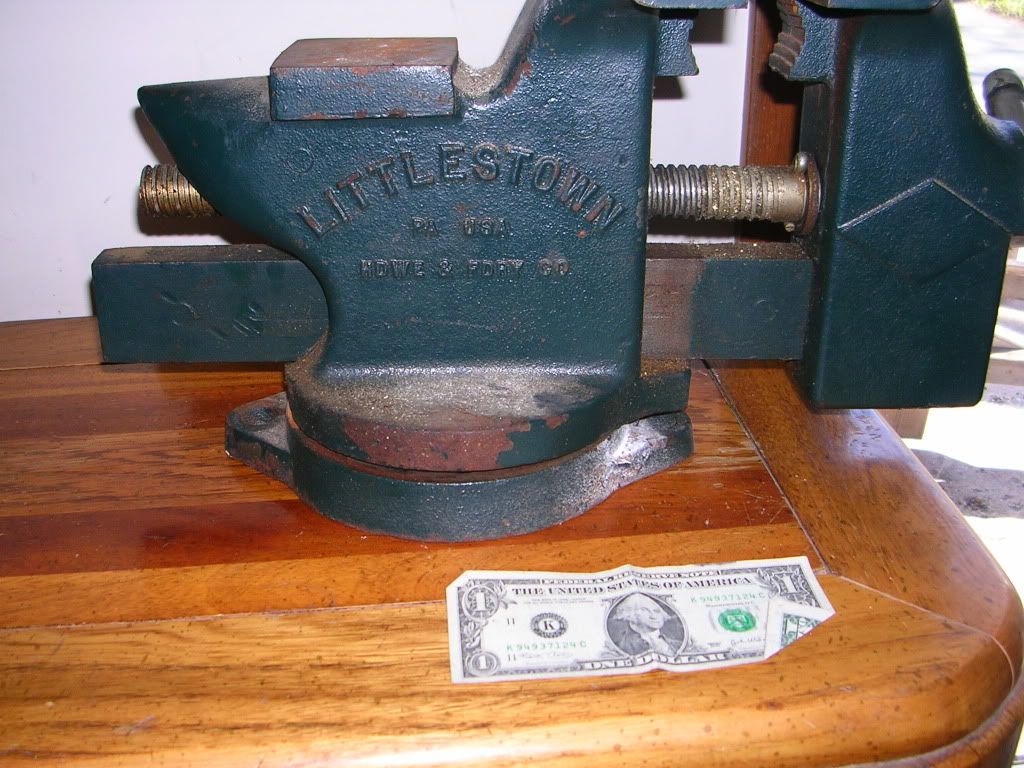

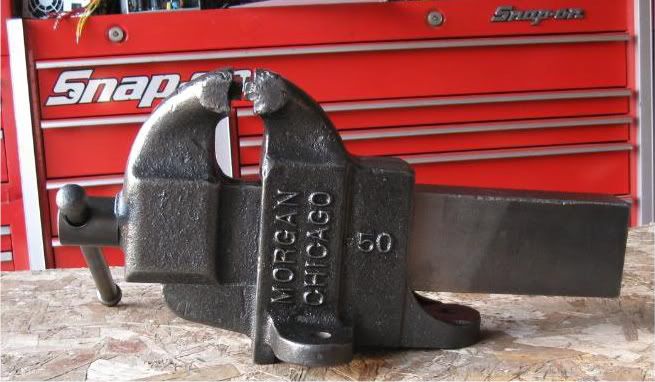
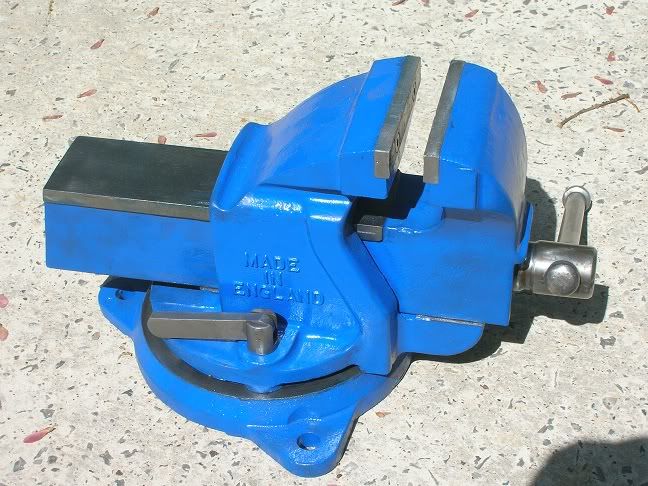
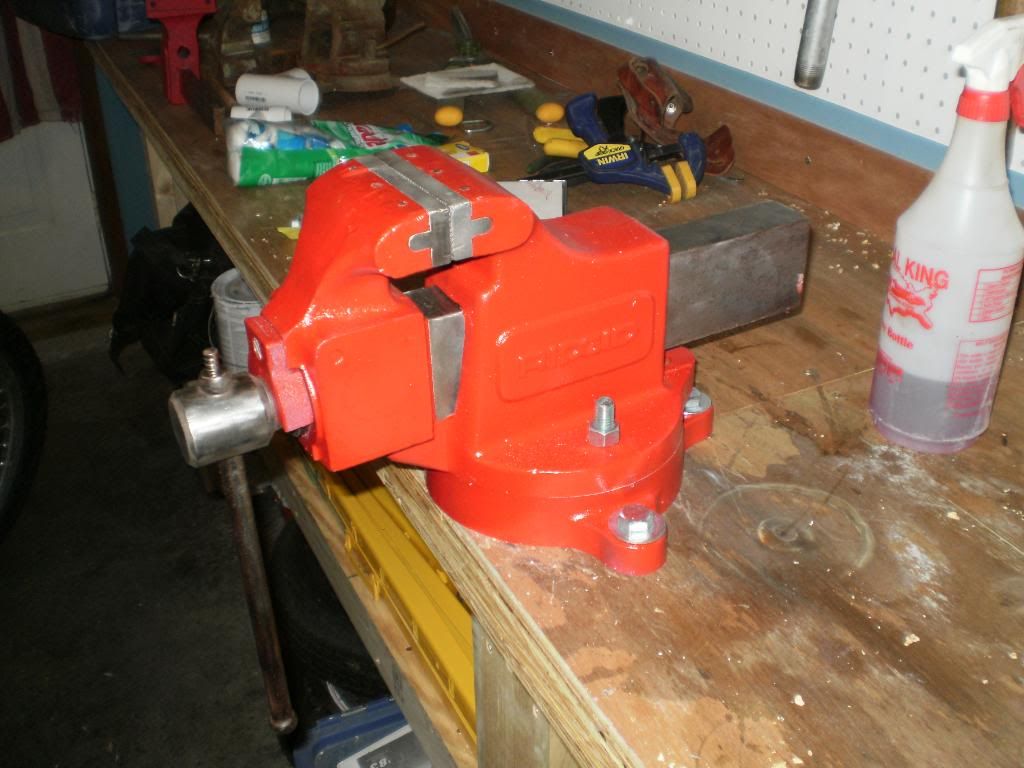



 DO NOT HAMMER ON A MACHINIST VISE! THERE IS NO ANVIL AREA. AND YOU WILL RUIN THE SLIDE, OR CHIP THE BACK.