I posted about the HScope to another thread, but it disappeared so I'll mention it here. Sorry if this gets long, it's a subject I've been investigating for a little while and I hope this info saves someone else some time and aggravation.
HScope is an Android app that allows you to connect a USB scope to an Android tablet or phone. It isn't quite up to Pico standards, but it has some features that are useful for automotive diagnostics (touchscreen interface, FFT, waveform capture and store, etc.) A copy of the HScope app, a cheap USB scope like a Hantek 6022BE, and a cheap Android tablet will set you back less than $200. You can use the Hantek on a PC as well (though not with the HScope app). You can download the free version of the app to evaluate, though it's missing some features. If you already have an Android tablet (or even a phone, though I recommend a tablet), you could be up and running for $100 or less. You don't need to use a Hantek scope, either. Several brands will work (check the HScope website), or you can even make your own out of an STM32 microcontroller if you want. You won't have a lot of the tools that you'll need later (current clamp, pressure transducers, etc.) but you can build up your arsenal as you go.
There is a channel on YouTube called Gadgets Playlist that shows a lot of the features of the scope and also shows how to make DIY test gear for it (COP ignition probe, in-cylinder pressure transducer, etc.). Most of the projects will give you back change from a $20 bill so they are good for a serious home-gamer or a tech that's just starting out. You'll also learn a lot.
You may also see something like an Autel AL539b, and someone may try to convince you that it's a scope. I have one, and while it is a nice tool for certain things and has a multimeter that can show a graph, it is NOT a scope. It will show you the waveform from something like a crank position sensor so you can see if it is DOA or not, but I wouldn't get my hopes up about trying to catch an intermittent glitch with it, and it won't record data or allow you to change the timebase settings. It's a nice all-in-one tool that will read codes, test batteries, and show you a waveform (sort of), but there have been some exaggerated claims made about it that you should take with a large grain of salt.
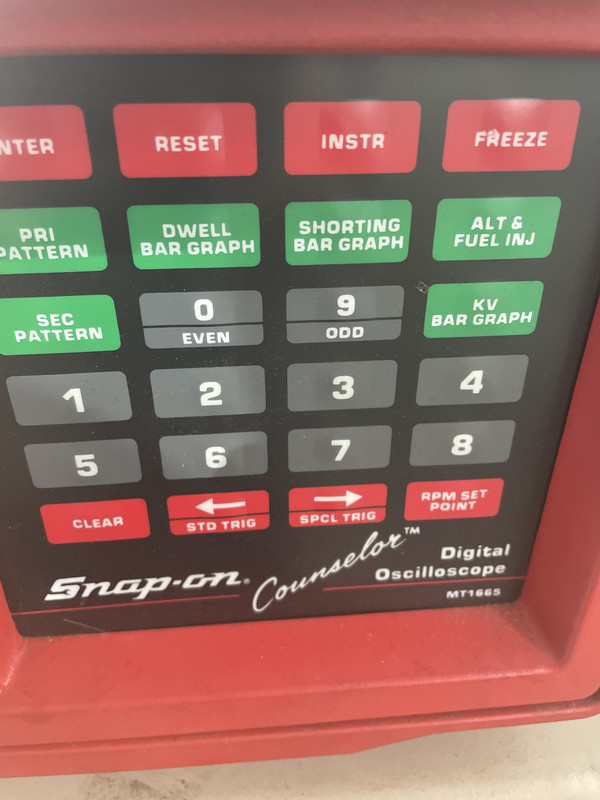
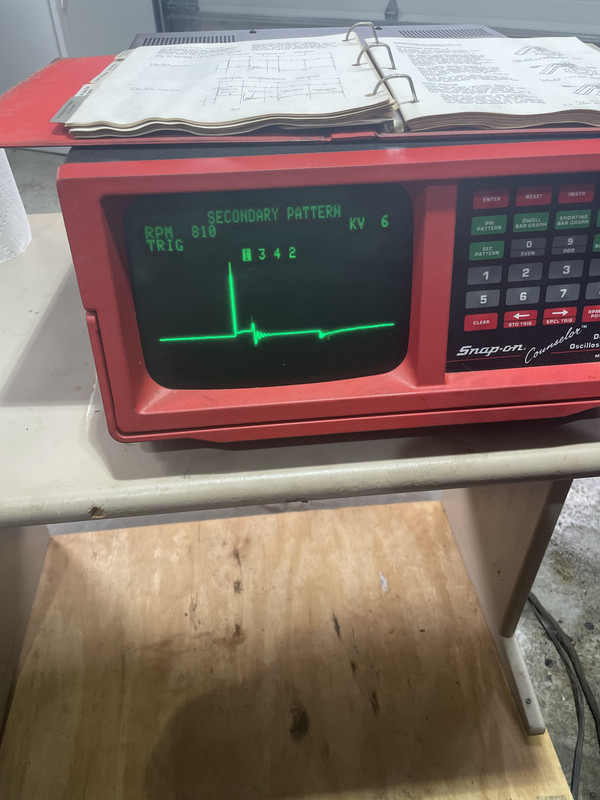
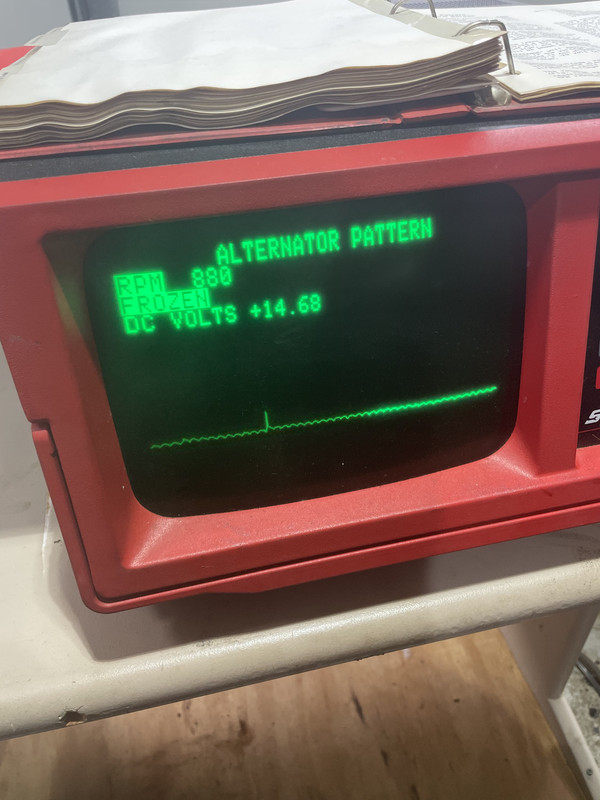
I've used old analog scopes in automotive diagnostics before but they wouldn't be my choice today. Typically they are non-storage scopes so are mostly useful for capturing repetitive events (like a bad alternator diode). A lot of what you'll be looking for are single-shot events, and the ability to store the waveform and review it later (or email it, or post it on an automotive forum) is very useful. Also, modern scopes have automatic measurements and cursors, so you don't have to spend time counting graticule lines to figure out frequencies or amplitudes.
Most analog scopes are now at least 30 years old. There are a lot of dried-out or leaking electrolytic capacitors in the power supplies, a lot of tarnished contacts in the switches, and a lot of life gone from the CRTs. That Tek 453 is a great analog scope with a really interesting history, but the last ones rolled out of the factory in the mid-1970s. I think a 453 weighs something like 29 lbs., has a tiny screen, and needs an extension cord to power it. No thanks.
If you absolutely HAVE to have an analog scope for whatever reason (IE you're either nostalgic or a glutton for punishment), look for one of the bazillion generic 20 MHz scopes that were released in the 1980s under a hundred different names. Look for one that shows a trace and displays a square wave when you connect the probes to the calibrator output, make sure both channels work, and don't pay more than $50. Shipping these heavy monsters is what often drives the cost up, so look for something local if you can. Don't get a single-channel scope unless it's free and working. 2 channel scopes are cheap and plentiful, and you give up a lot by not having that second channel.
If you don't have the knowledge to tell if a scope is functional enough to use, walk away. There is nothing more frustrating than having to teach yourself how to troubleshoot a scope that you need to use RIGHT NOW. Yes, that's bitter experience talking. I wouldn't buy an analog scope for automotive work if I had a choice, but there was a time when a used Tektronix T922R was all I could (barely) afford. Don't go this route unless you're REALLY out of alternatives, and even then, plan on upgrading to a digital storage scope as soon as you can. This is coming from a guy that looks for ANY excuse to drag home another analog scope.
There are several YouTube channels that have good information on diagnostics. Some of my favorites are:
Gadgets Playlist-- lots of DIY gear and HScope use. He details how to build diagnostic equipment for pennies on the dollar.
Pine Hollow Auto Diagnostics-- Runs a one-man shop out of his house, also does mobile diagnostics. Famous for his "Russian Repairs" (fixing stuff on the cheap that normally would just get replaced). Does a lot of detailed analysis.
New Level Auto-- Keith DeFazio does (used to do) mobile diagnostics. Extremely knowledgeable, he has since left the technician world and is now (I think) a tech service rep. He doesn't do any more diagnosis videos, but the ones on his channel are still super useful.
ScannerDanner-- Teaches at Rosedale Technical College, has a ton of detailed case studies on his channel. Since he's a teacher, he breaks things down very logically and covers the basics well.
This is a fascinating line of work/hobby, so have fun and learn a lot.


 ).
).