Footer
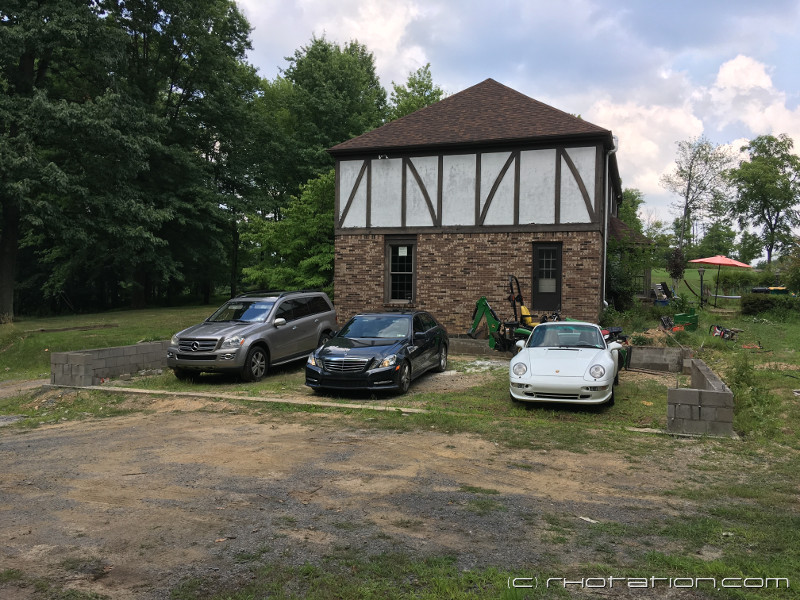
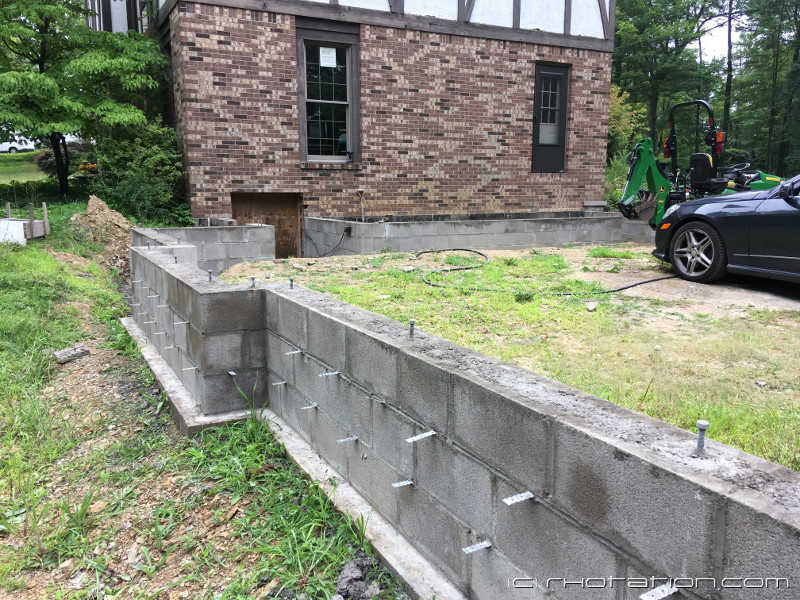
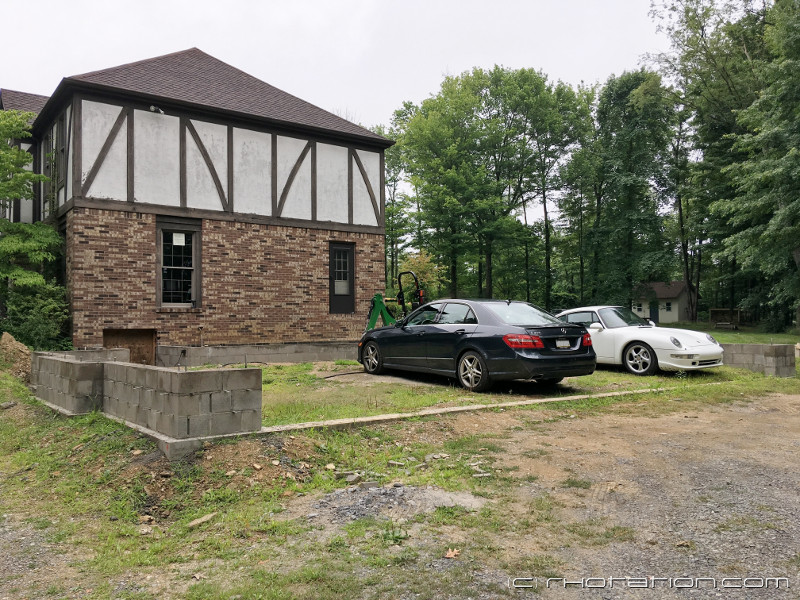
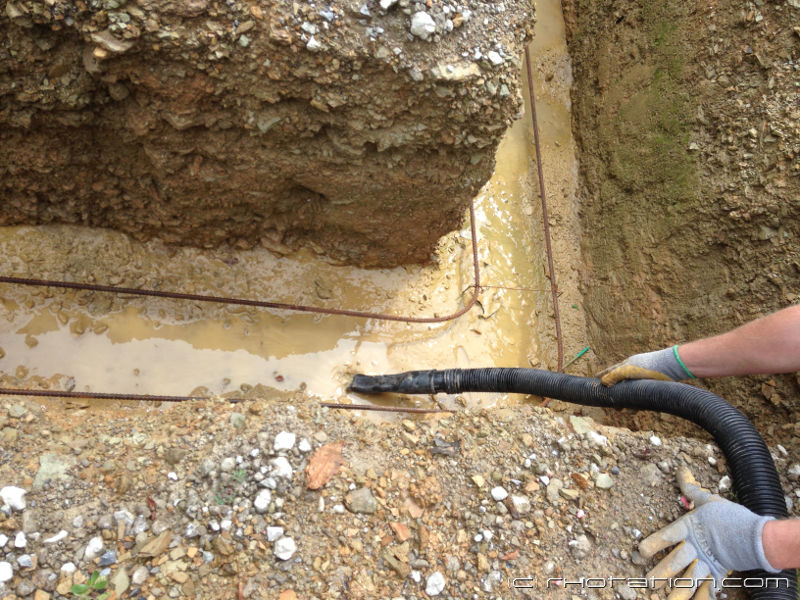
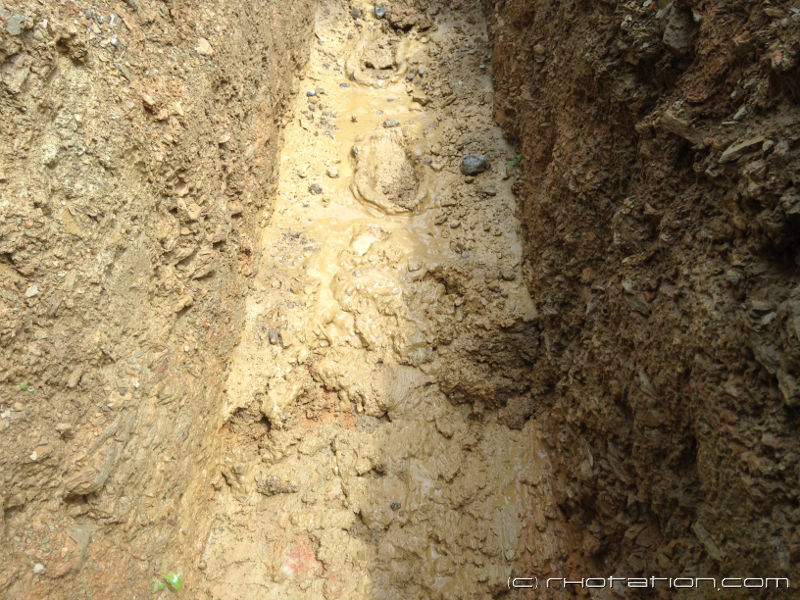
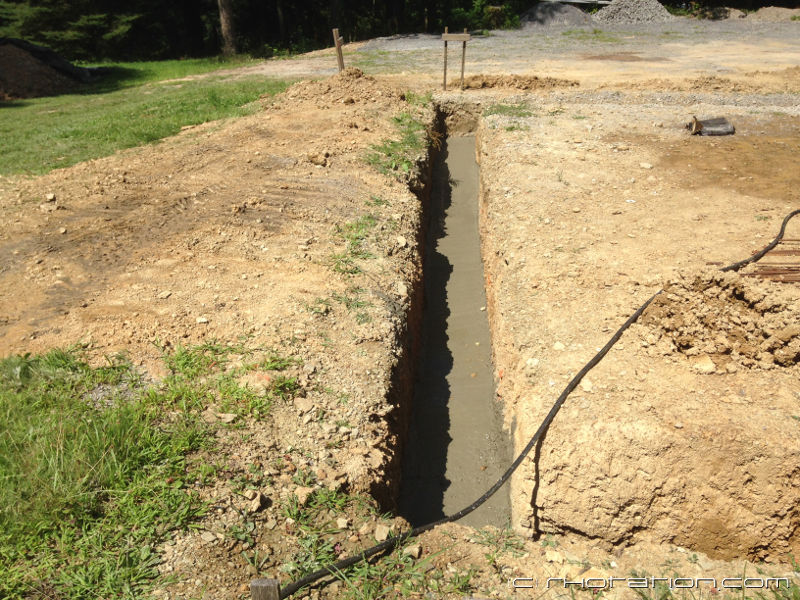
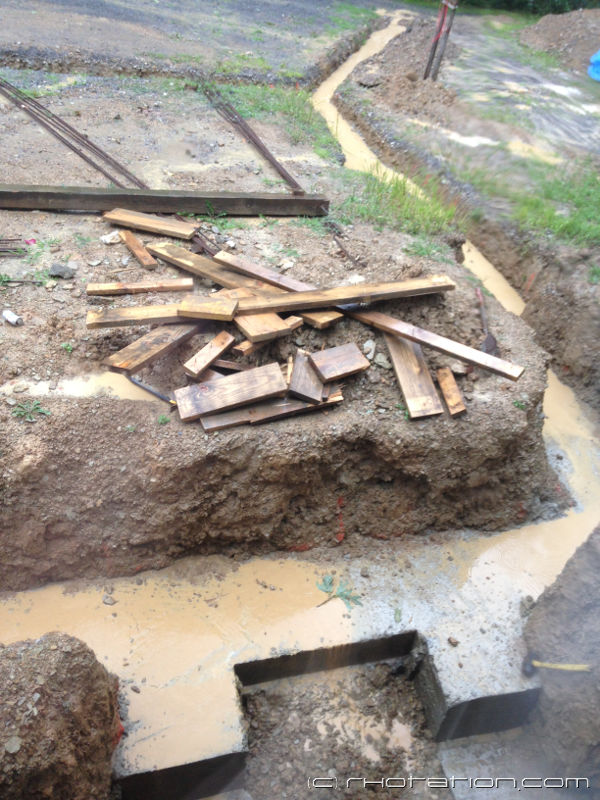
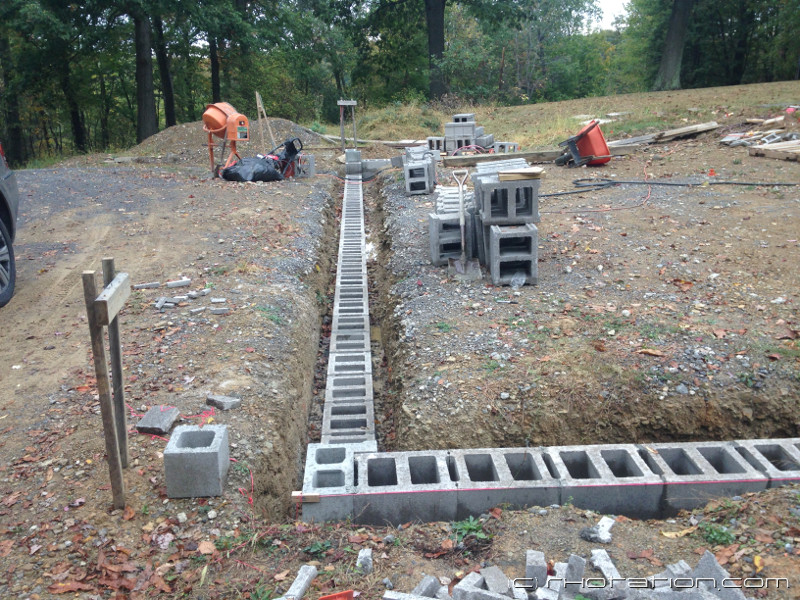
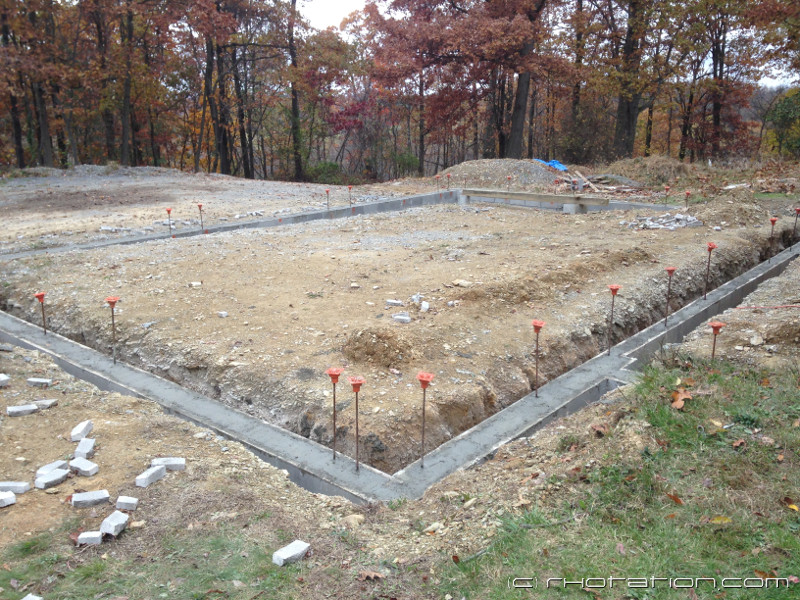
So 6 weeks of summer sun and fun (and rain) and this is what the footing trenches looked like at the end of July. Alot of silt had washed back into the trench and it was holding water in some low spots. Started off by shopvac'ing out the water as best as possible. Then we had to untie the rebar at the corners and lift it out in long pieces still tied to the chairs. Then came the unpleasent job of shoveling out all the muck. Here is a suggestion if you find yourself 3 ft deep shoveling mud from a trench. Don't take a full shovel of it and flip it upside down and then fling it because all that will do is make it explode when it hits the ground covering your shirt, arms, face, glasses and hat in mud. The stuff was so sticky we had to scrape it off and hose down the shovels just so they would function. This was not fun so I'll reiterate , if at all possible, excavate, inspect and pour your footing all at once.
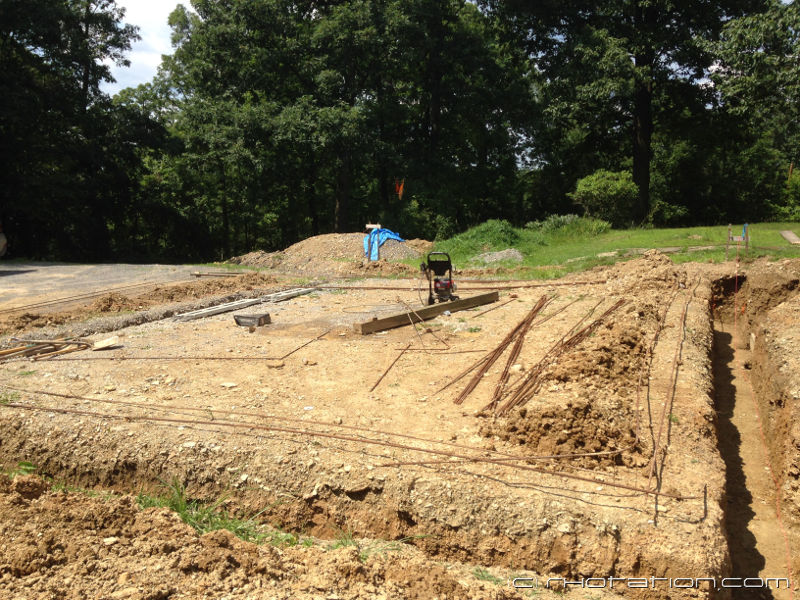
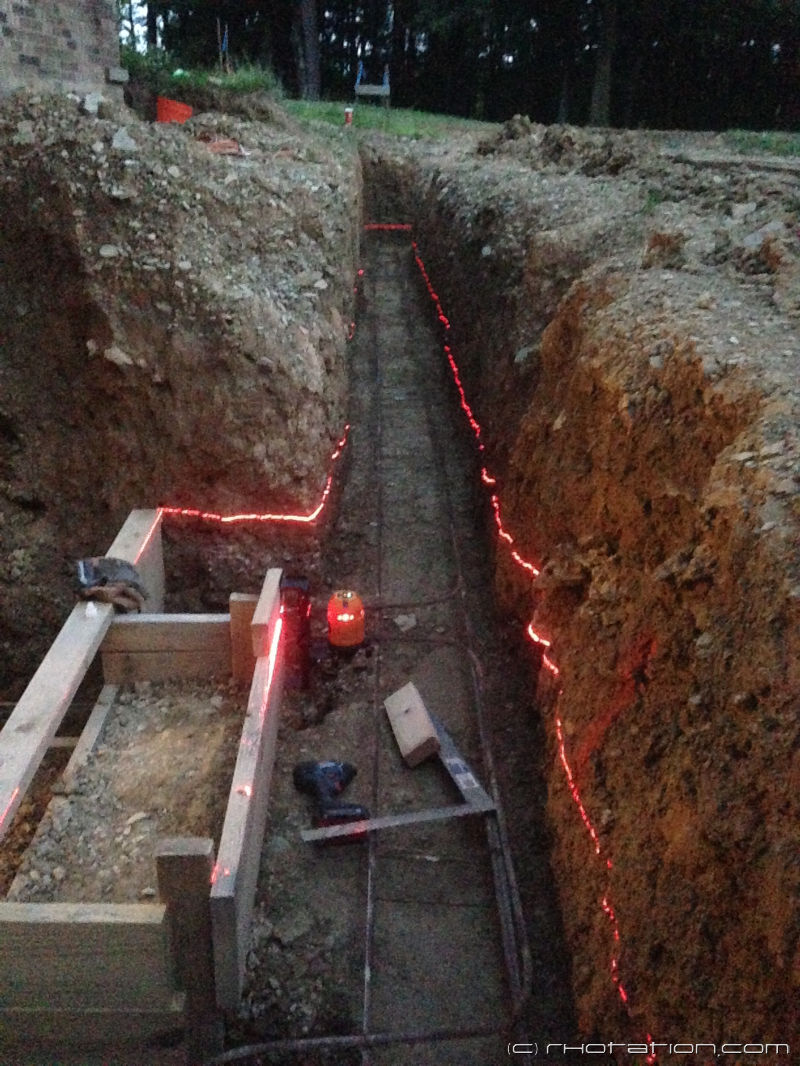
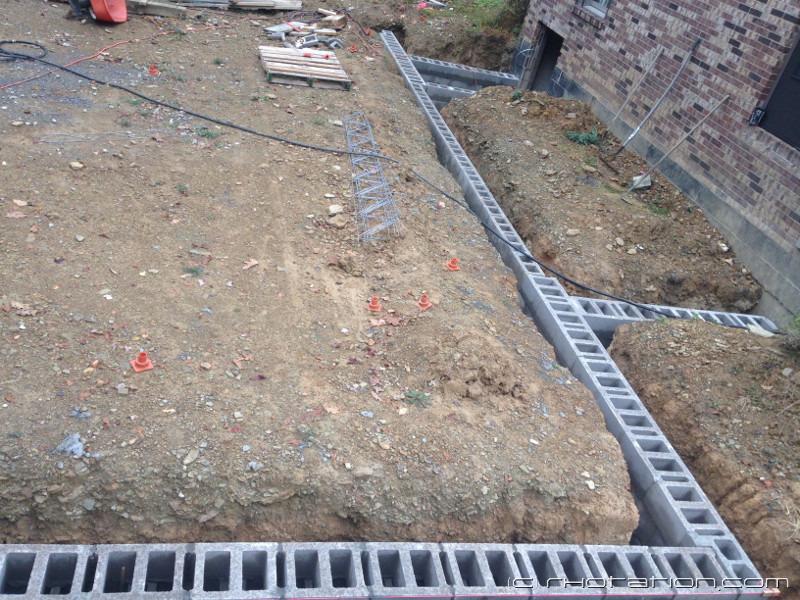
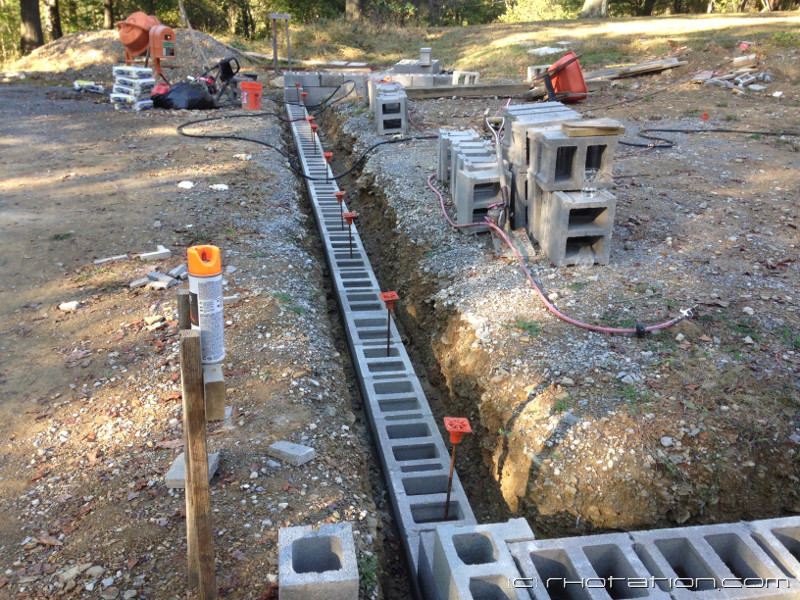
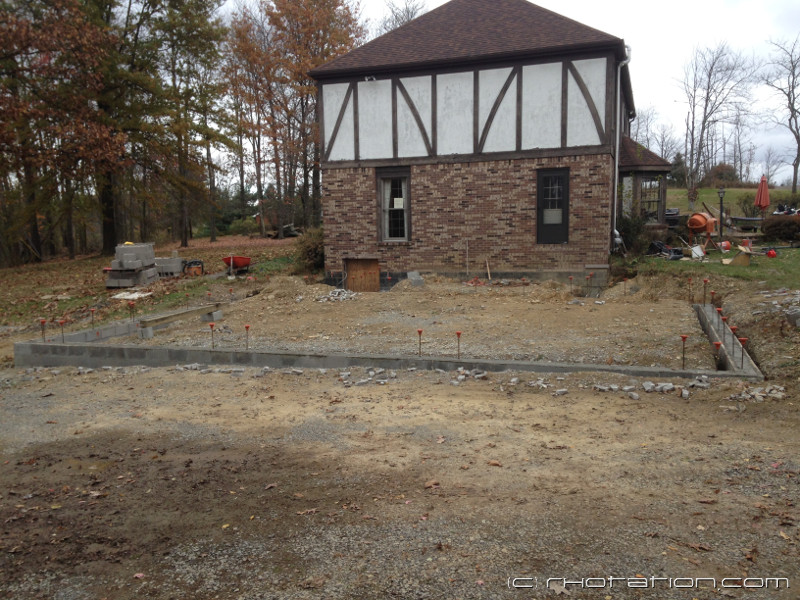
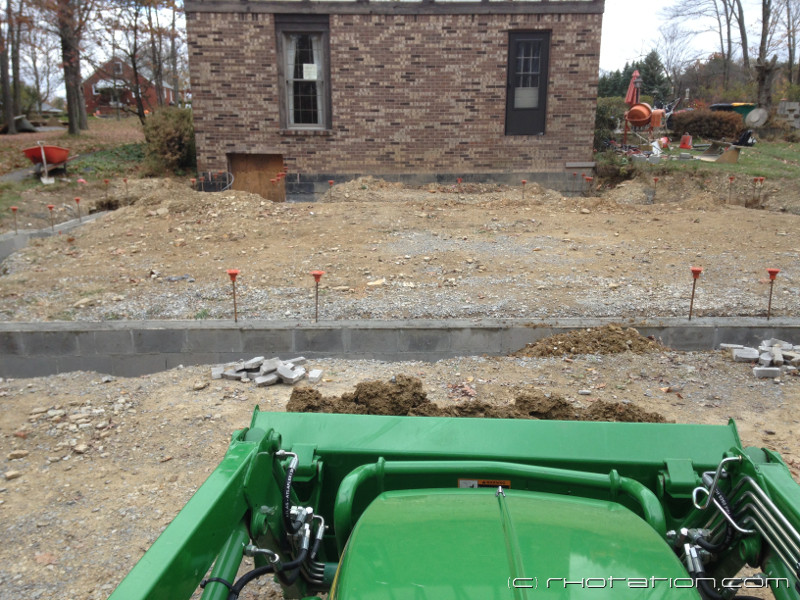
Started on a Saturday and by Sunday the trench was dried out and good as new. We reinstalled the rebar and expoxied it into the block foundation of the house. There were two things left to decide. First, what I was going to do about installing vertical rebar? Answer, I just didn't feel comfortable knowing exactly where the bars would go so I punted and would later drill and epoxy them into the footer. Second, how should I mark where the top of the footer should be? I was considering two techniques I'd seen. The first is to hammer rebar into the ground until the top was at footing level. The second is to paint down the outside of the trench walls until you hit footing level. I was weary of the first method just because there would be rebar going from the footing to the ground and rusting rebar can crack concrete so I used the second method. I took the laser level and set it even with the top of the form which I already knew was at correct height. I held a block of wood to the line then painted down to it which gave me a reasonably clean break.
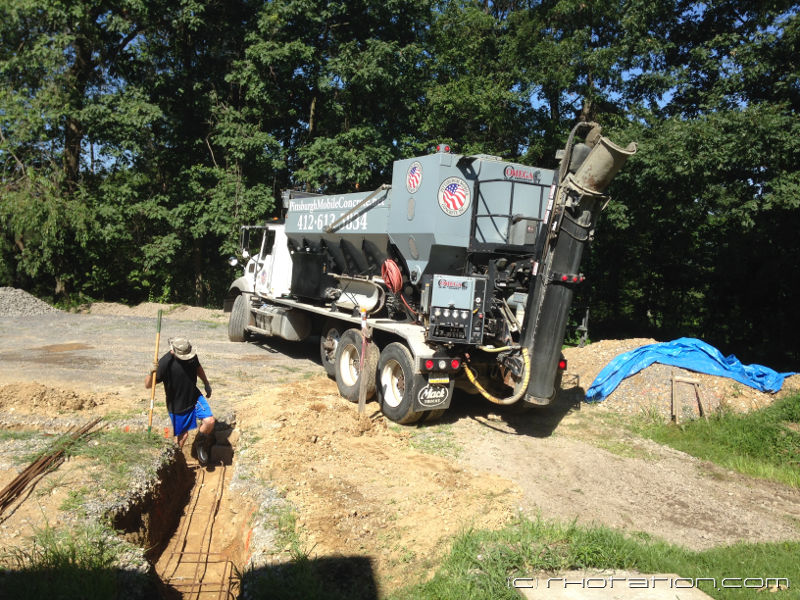
I'm using a company called Pittsburgh Mobile Concrete and they specialize in Volumetric mixers. Price was about 7-10% more than traditional readymix but well worth it for many reasons. 1) No Waste. I tried to cut my trench as consistent as possible but there was still variation in width and depth so I was going to have to over order readymix to ensure I didn't run short if I went traditional. This also means I wouldn't have to dump any unused amount on my property. 2) No Early Set. Since volumetric machines mix as its being poured, I didn't have to worry about when the truck actually left the plant or about how long it took to pour. Sure I'd have to pay $25/15 min overage charge past 1 hour but I wasn't rushing to empty a whole truck. 3) Adjustable Slump. Great for stepped footings and hard to reach areas as we'll see below.
The truck pulled up the driveway as my friend did a final survey of the trench. I kinda 'apologized' to the driver that it would be amateur hour and there were only two of us and I did this while handing him some dead presidents. I wasn't expecting him to do anything other than operate the truck but figured starting off on a good foot would make the whole thing go smoother by leaning on his experience. He surveyed the site and suggested we start at the door opening.
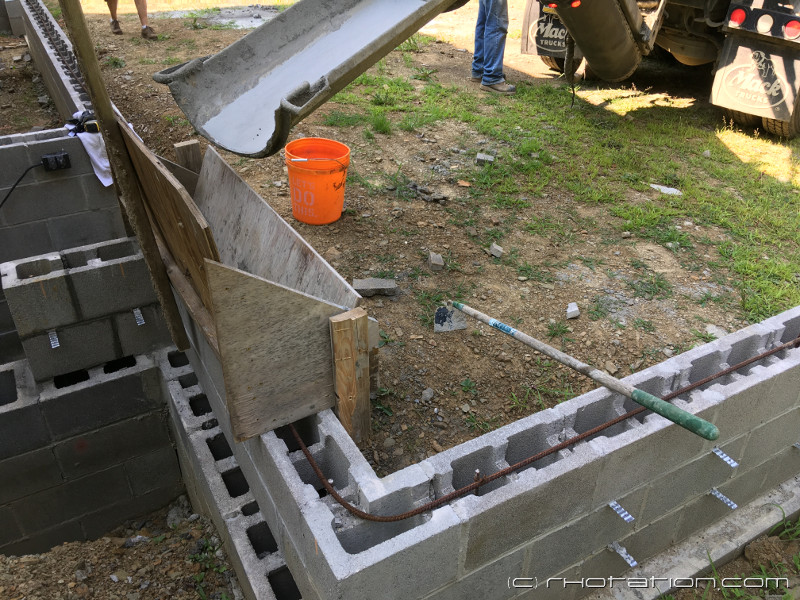
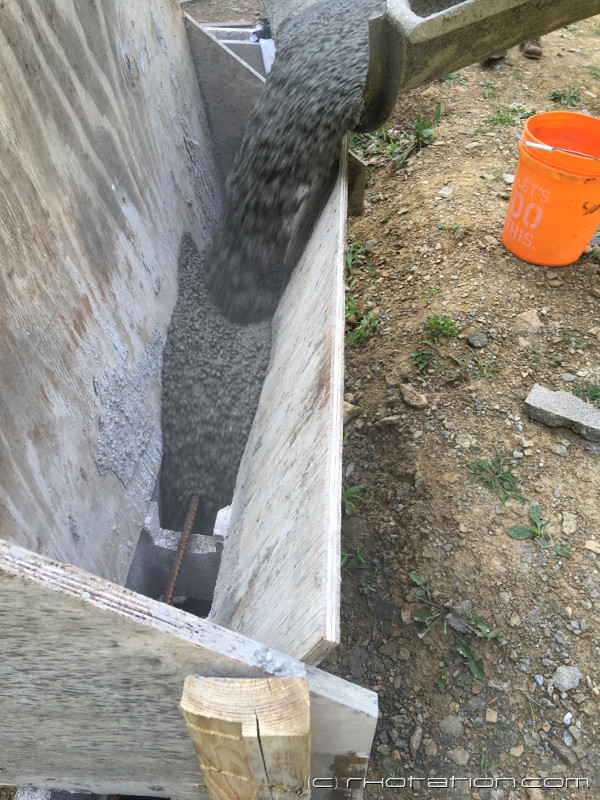
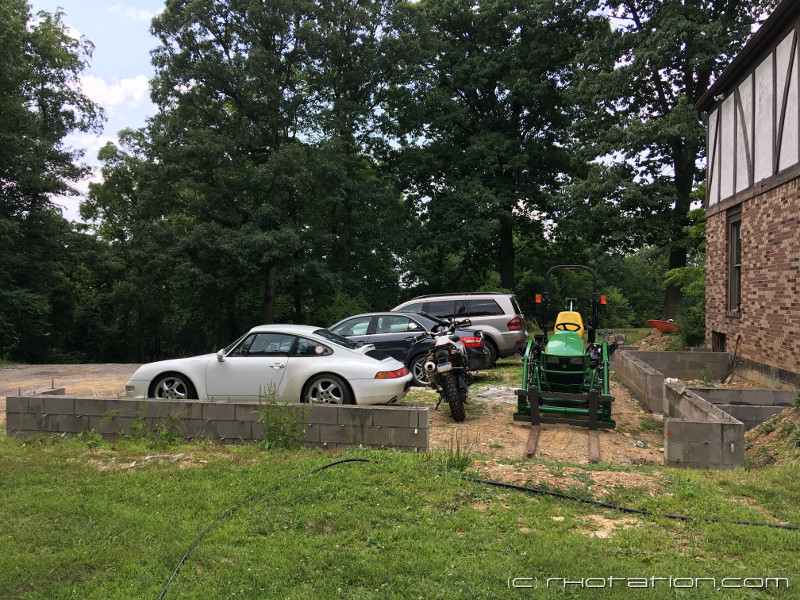
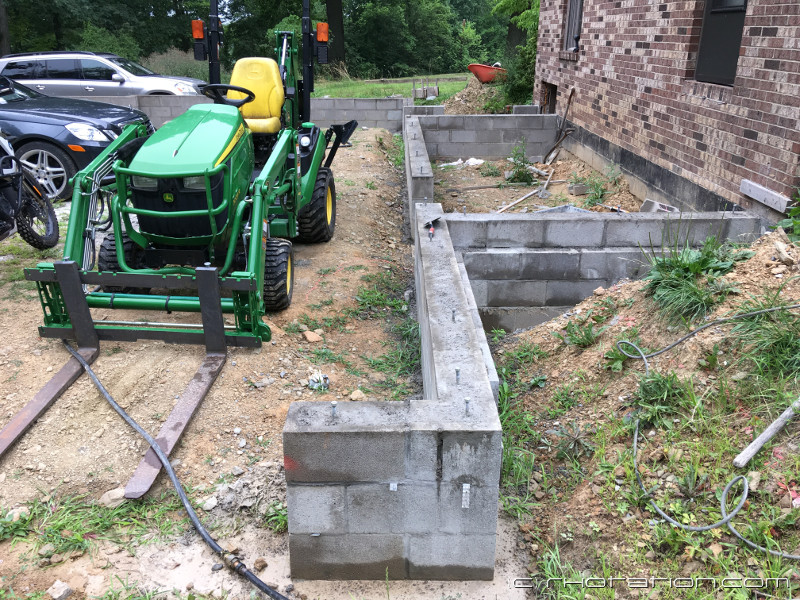
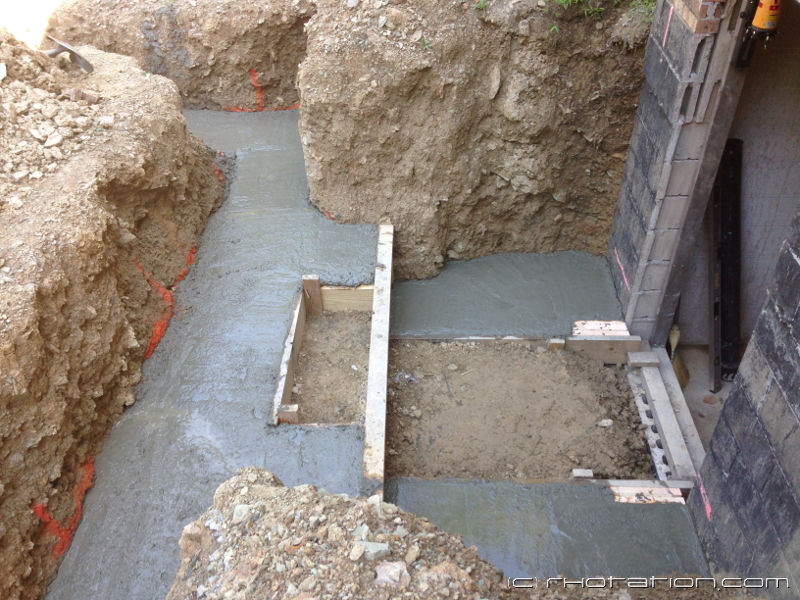
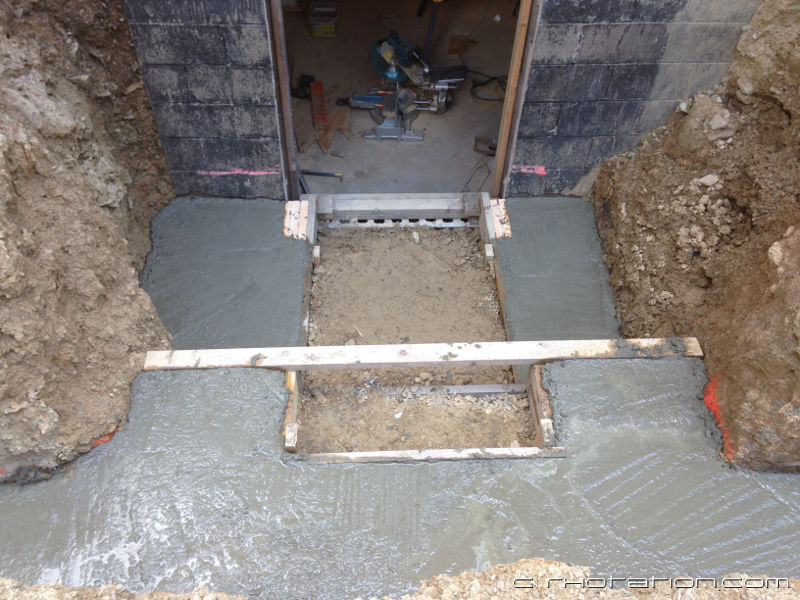
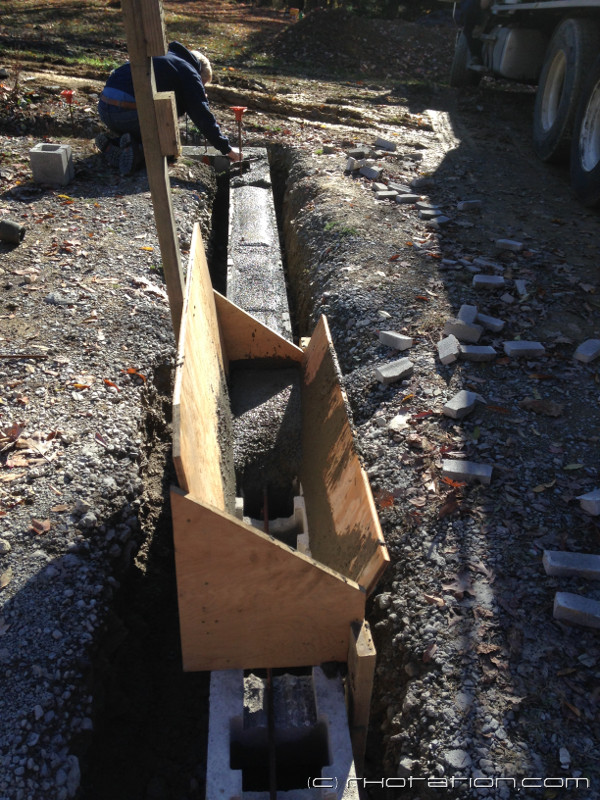
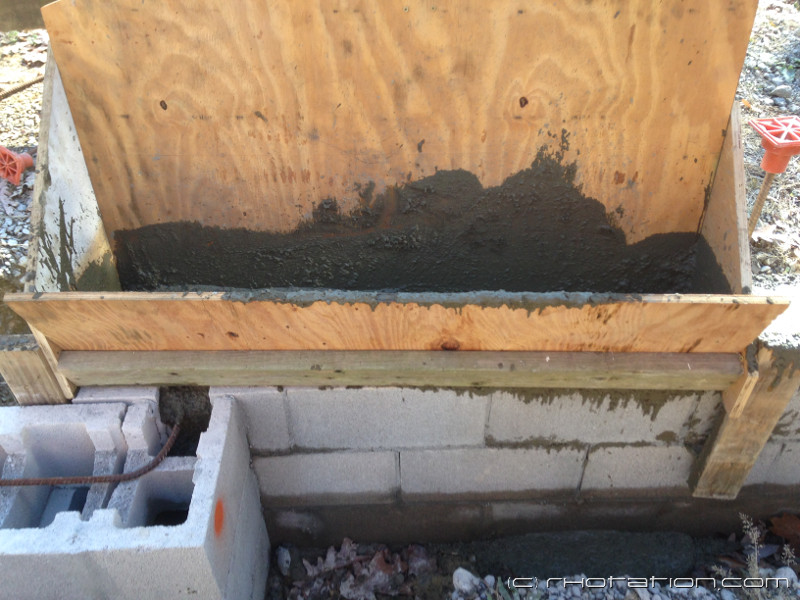
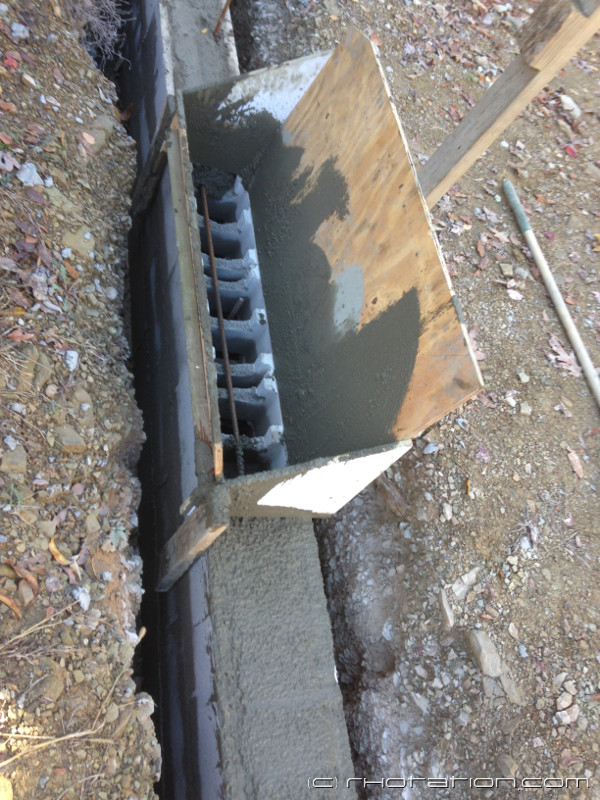
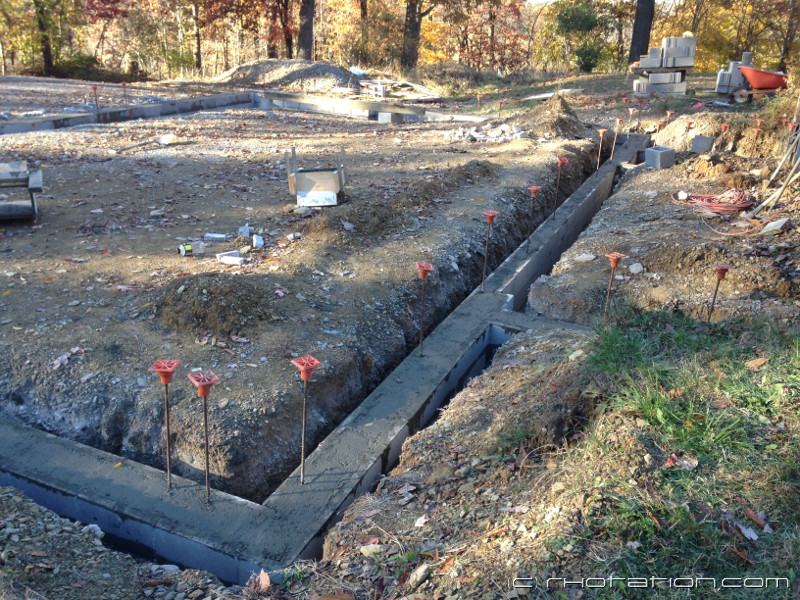
No in progress pics but it went something like this. He backed up as far as he could and put the shoot just past the corner, almost to the form. he suggested a higher slump mix so we could pull the flowable concrete with rakes down both stepped areas to the low part. When the low parts were very close to full, he changed the mix to a very low slump mix which we then shoveled into the step area. This created a 'plug' to prevent the weight of the higher concrete from pushing out the low stuff and it worked great. We went back to a higher slump mix and filled all around the top of the form work. You can see the orange paint lines we are filling up to.
After that he just kept moving the truck a few feet at at time and we worked our way around the entire garage. When we got to the far side we had to water down the mix again so we could pull it into the trench parallel and closest to the house since the chute couldn't reach anywhere near far enough. I know I lost some PSI doing this but I'm not concerned.
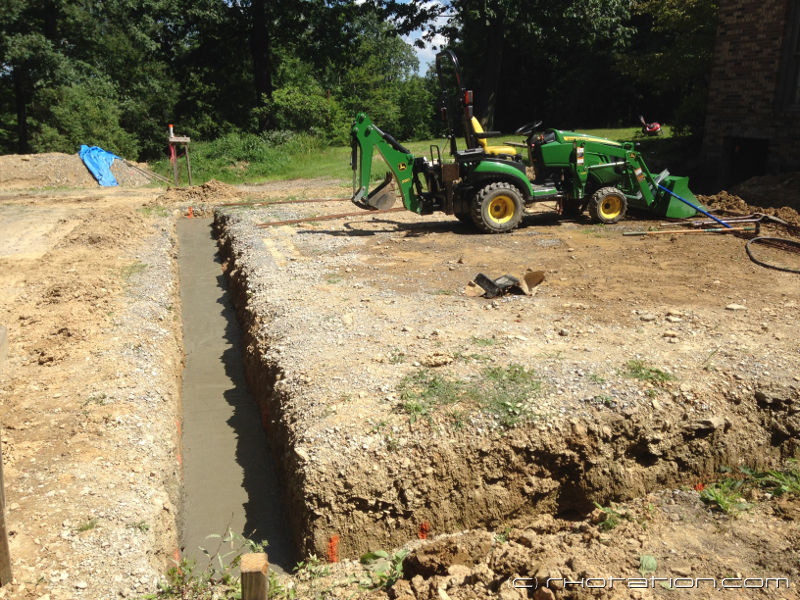
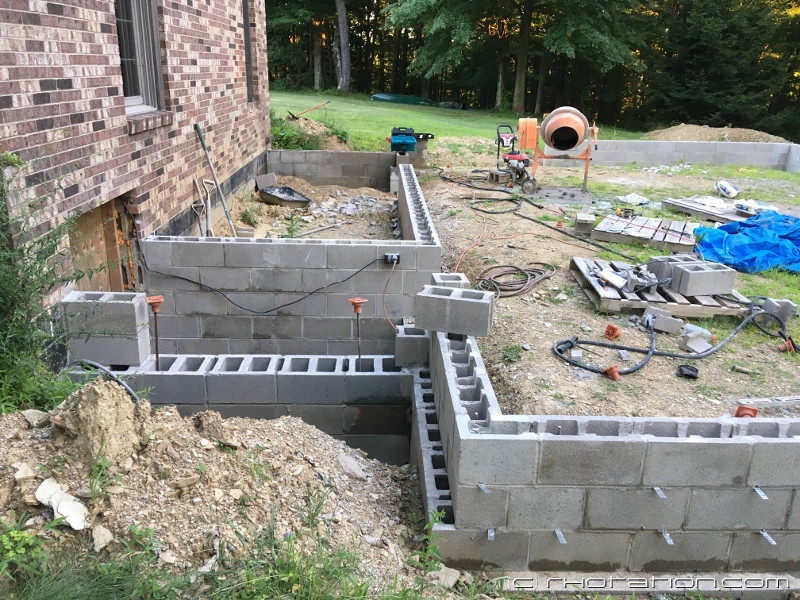
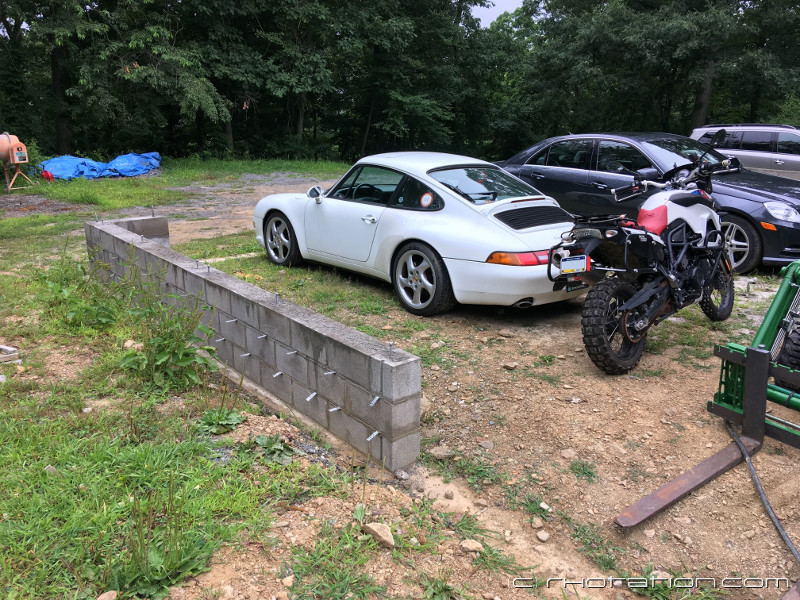
Overall, I was very pleased with how the whole process worked and with the service from Pittsburgh Mobile Concrete and the driver (if they stumble upon this, Thanks!). The only area that had a problem was one corner where I was leveling out an earlier section and my friend didn't notice he was placing too much and went over the orange paint about an inch for 4-6 feet . The rebar stakes would have really helped avoid this and in hindsight I would have found and used some form of non-corrosive plastic stakes to use. I'd end up having to cut off the bottom of some of the blocks to get it my first row of CMU level in that area.
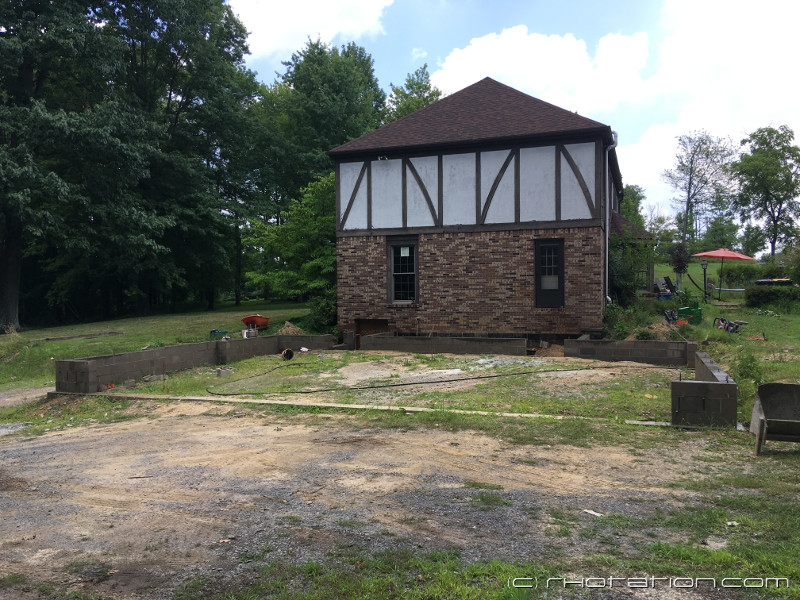
Great feeling to be building UP finally
Until Next Time...
So 6 weeks of summer sun and fun (and rain) and this is what the footing trenches looked like at the end of July. Alot of silt had washed back into the trench and it was holding water in some low spots. Started off by shopvac'ing out the water as best as possible. Then we had to untie the rebar at the corners and lift it out in long pieces still tied to the chairs. Then came the unpleasent job of shoveling out all the muck. Here is a suggestion if you find yourself 3 ft deep shoveling mud from a trench. Don't take a full shovel of it and flip it upside down and then fling it because all that will do is make it explode when it hits the ground covering your shirt, arms, face, glasses and hat in mud. The stuff was so sticky we had to scrape it off and hose down the shovels just so they would function. This was not fun so I'll reiterate , if at all possible, excavate, inspect and pour your footing all at once.
Started on a Saturday and by Sunday the trench was dried out and good as new. We reinstalled the rebar and expoxied it into the block foundation of the house. There were two things left to decide. First, what I was going to do about installing vertical rebar? Answer, I just didn't feel comfortable knowing exactly where the bars would go so I punted and would later drill and epoxy them into the footer. Second, how should I mark where the top of the footer should be? I was considering two techniques I'd seen. The first is to hammer rebar into the ground until the top was at footing level. The second is to paint down the outside of the trench walls until you hit footing level. I was weary of the first method just because there would be rebar going from the footing to the ground and rusting rebar can crack concrete so I used the second method. I took the laser level and set it even with the top of the form which I already knew was at correct height. I held a block of wood to the line then painted down to it which gave me a reasonably clean break.
I'm using a company called Pittsburgh Mobile Concrete and they specialize in Volumetric mixers. Price was about 7-10% more than traditional readymix but well worth it for many reasons. 1) No Waste. I tried to cut my trench as consistent as possible but there was still variation in width and depth so I was going to have to over order readymix to ensure I didn't run short if I went traditional. This also means I wouldn't have to dump any unused amount on my property. 2) No Early Set. Since volumetric machines mix as its being poured, I didn't have to worry about when the truck actually left the plant or about how long it took to pour. Sure I'd have to pay $25/15 min overage charge past 1 hour but I wasn't rushing to empty a whole truck. 3) Adjustable Slump. Great for stepped footings and hard to reach areas as we'll see below.
The truck pulled up the driveway as my friend did a final survey of the trench. I kinda 'apologized' to the driver that it would be amateur hour and there were only two of us and I did this while handing him some dead presidents. I wasn't expecting him to do anything other than operate the truck but figured starting off on a good foot would make the whole thing go smoother by leaning on his experience. He surveyed the site and suggested we start at the door opening.
No in progress pics but it went something like this. He backed up as far as he could and put the shoot just past the corner, almost to the form. he suggested a higher slump mix so we could pull the flowable concrete with rakes down both stepped areas to the low part. When the low parts were very close to full, he changed the mix to a very low slump mix which we then shoveled into the step area. This created a 'plug' to prevent the weight of the higher concrete from pushing out the low stuff and it worked great. We went back to a higher slump mix and filled all around the top of the form work. You can see the orange paint lines we are filling up to.
After that he just kept moving the truck a few feet at at time and we worked our way around the entire garage. When we got to the far side we had to water down the mix again so we could pull it into the trench parallel and closest to the house since the chute couldn't reach anywhere near far enough. I know I lost some PSI doing this but I'm not concerned.
Overall, I was very pleased with how the whole process worked and with the service from Pittsburgh Mobile Concrete and the driver (if they stumble upon this, Thanks!). The only area that had a problem was one corner where I was leveling out an earlier section and my friend didn't notice he was placing too much and went over the orange paint about an inch for 4-6 feet . The rebar stakes would have really helped avoid this and in hindsight I would have found and used some form of non-corrosive plastic stakes to use. I'd end up having to cut off the bottom of some of the blocks to get it my first row of CMU level in that area.
Great feeling to be building UP finally
Until Next Time...
Last edited:
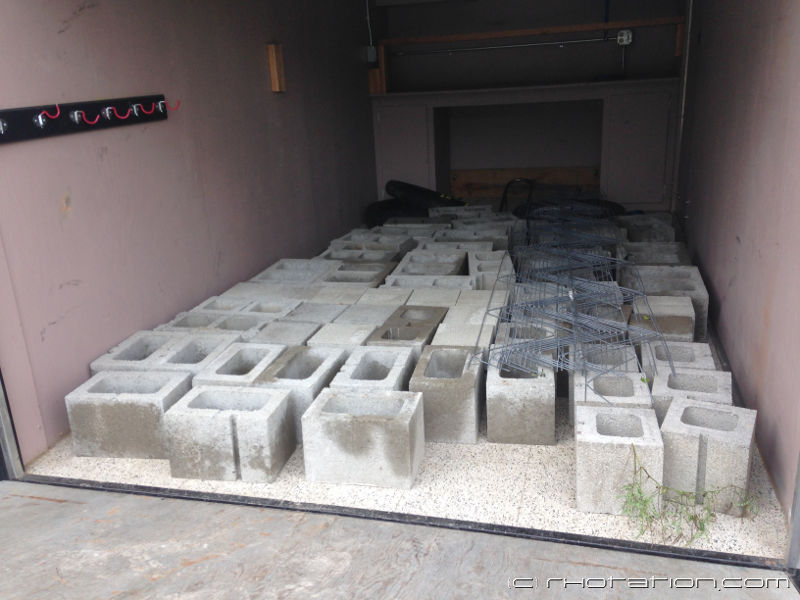
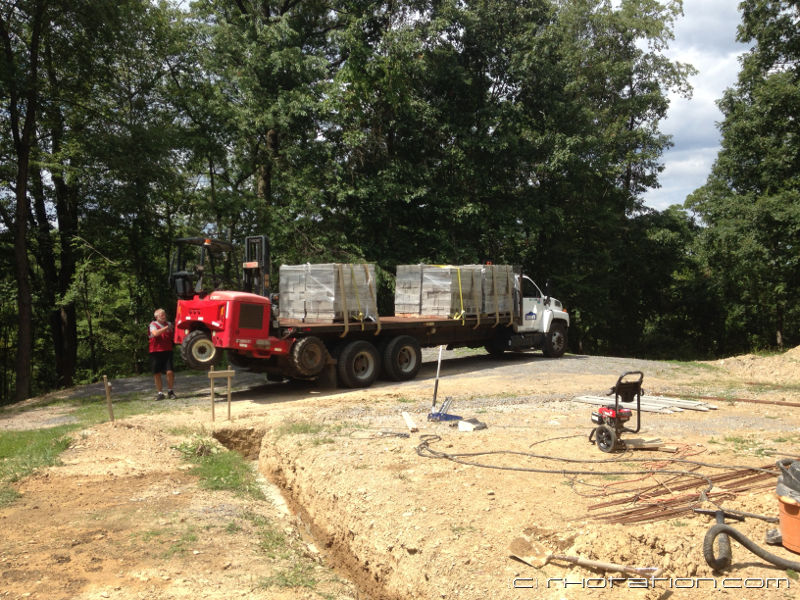

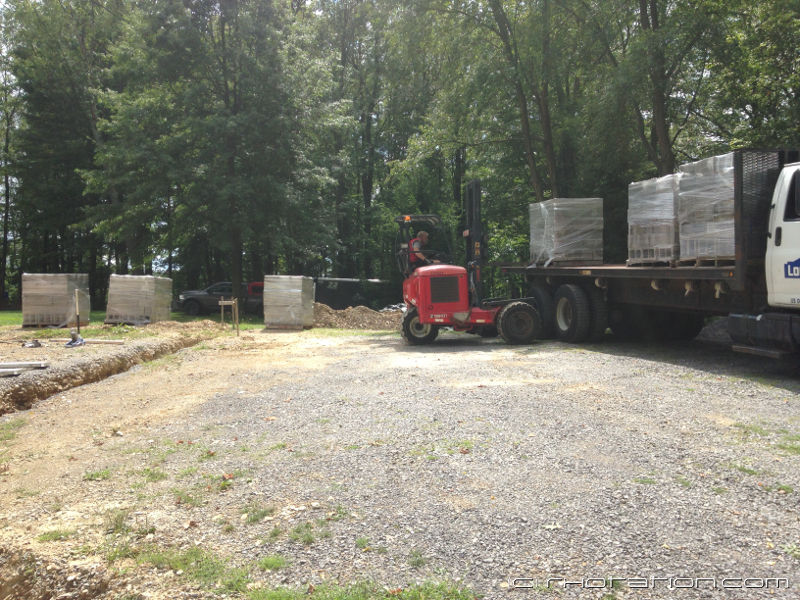

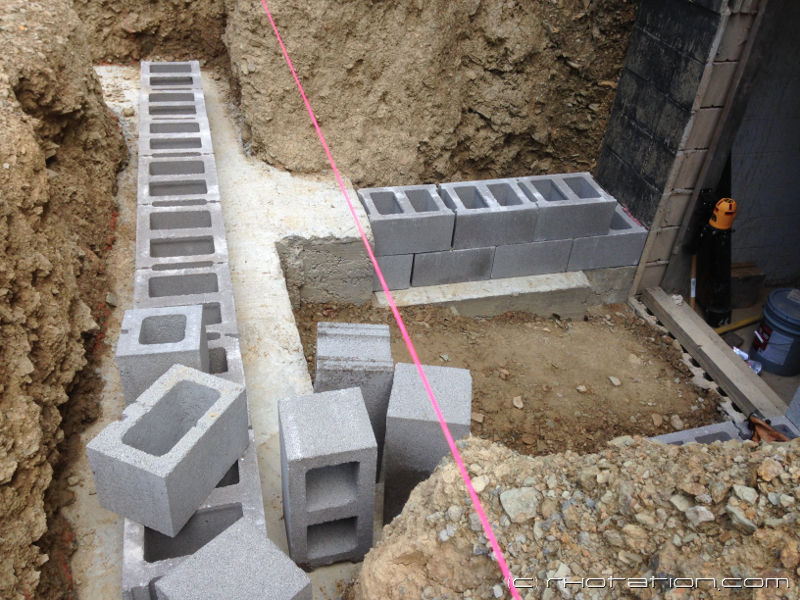
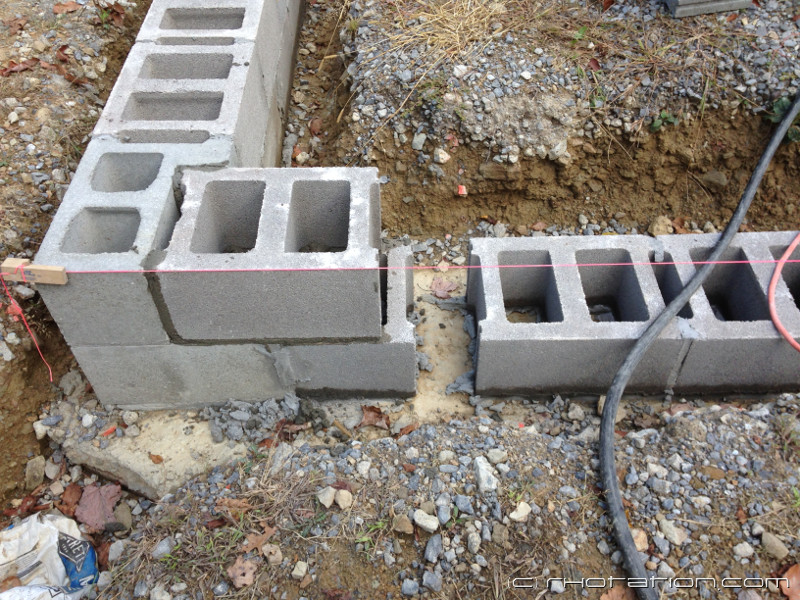
 ...and strangely enough the name stuck. For the rest of the day she was my Mortar Ho, dutifully bringing me mortar and I even got her applying the head joints to the blocks before I laid them into the mortar bed. It was the most productive day of block laying, I think we got 75 or so down in 6 hours.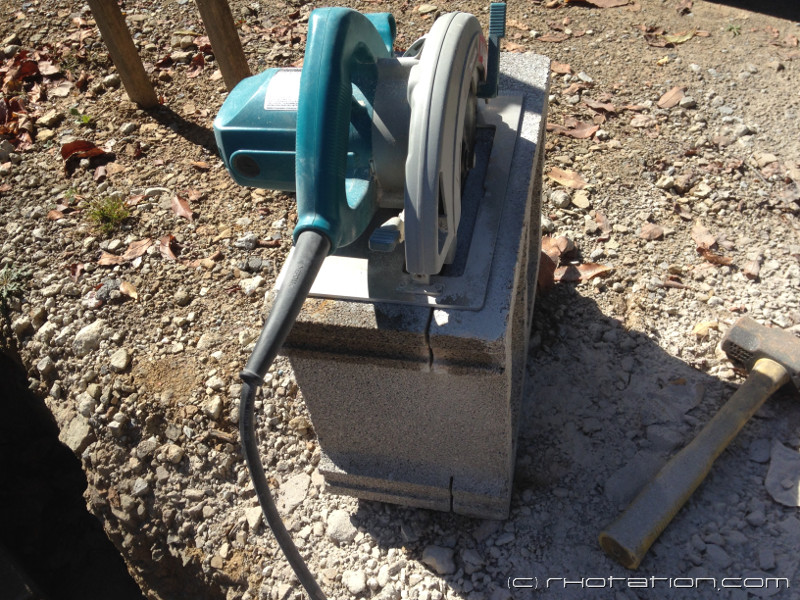
 . Lets take a moment from our scheduled program to clean up this disaster. And no comment on the leopard print broom, I used what I found in the laundry room.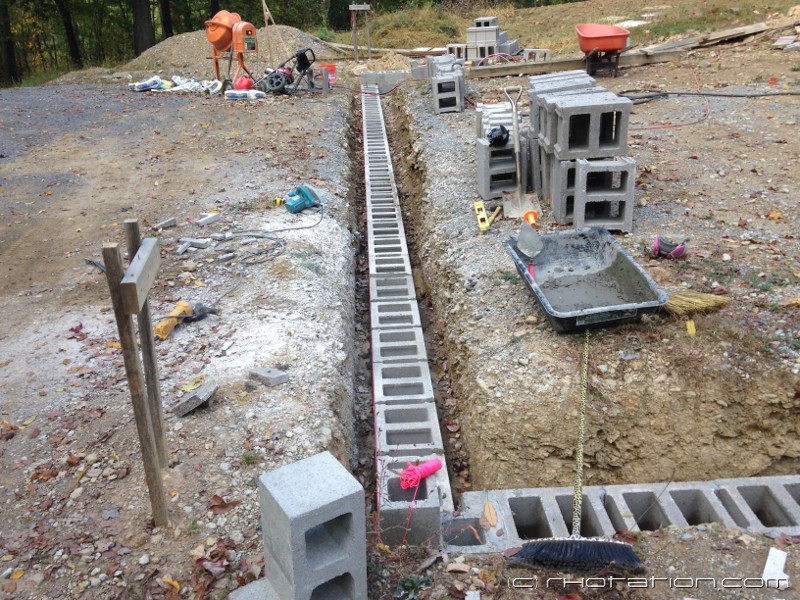

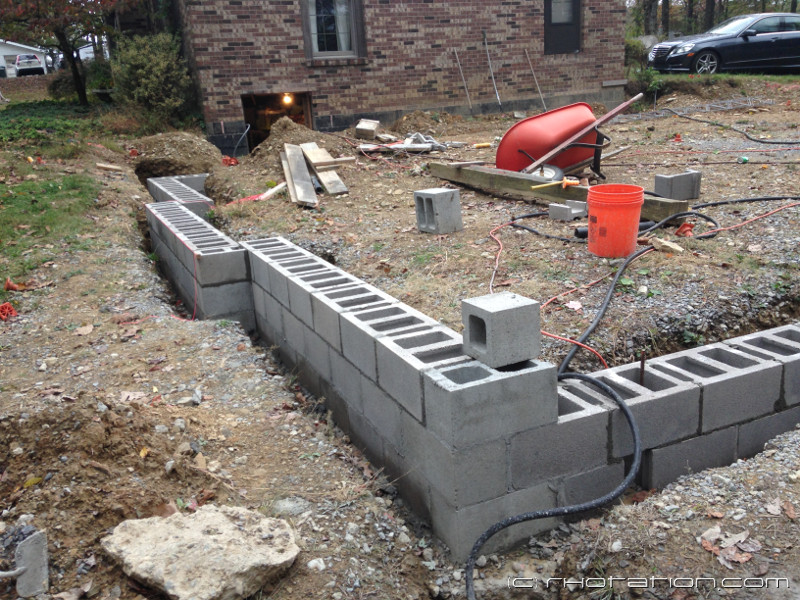
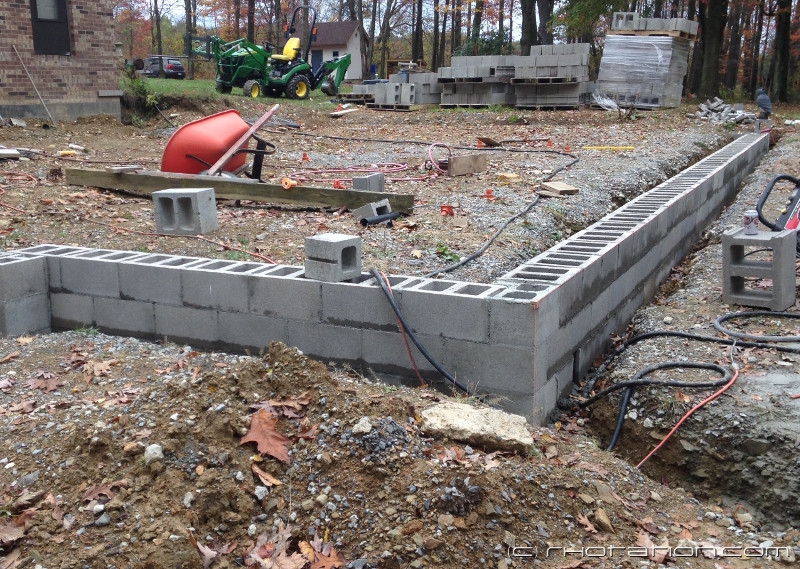


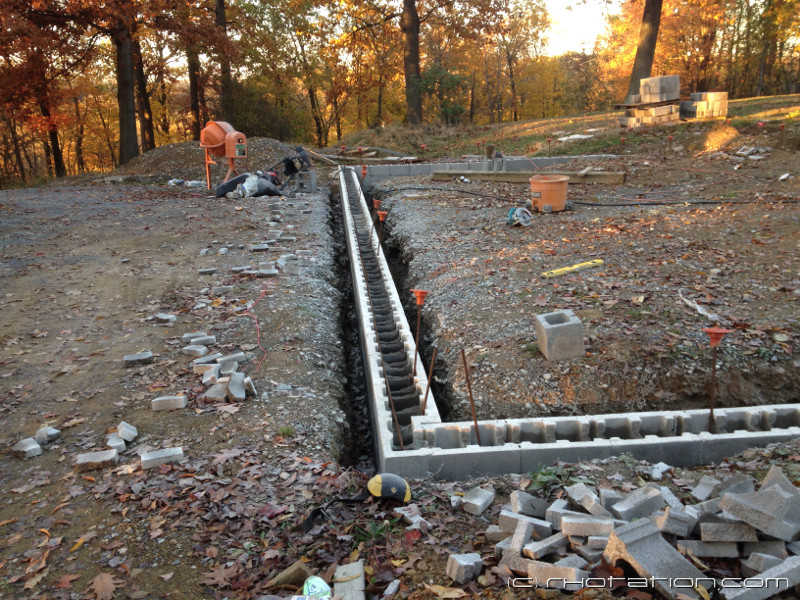
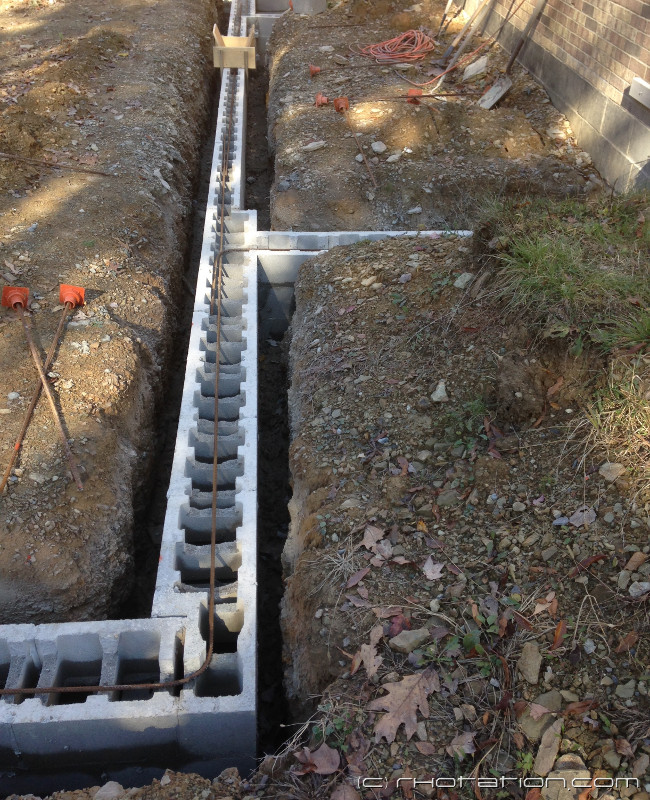
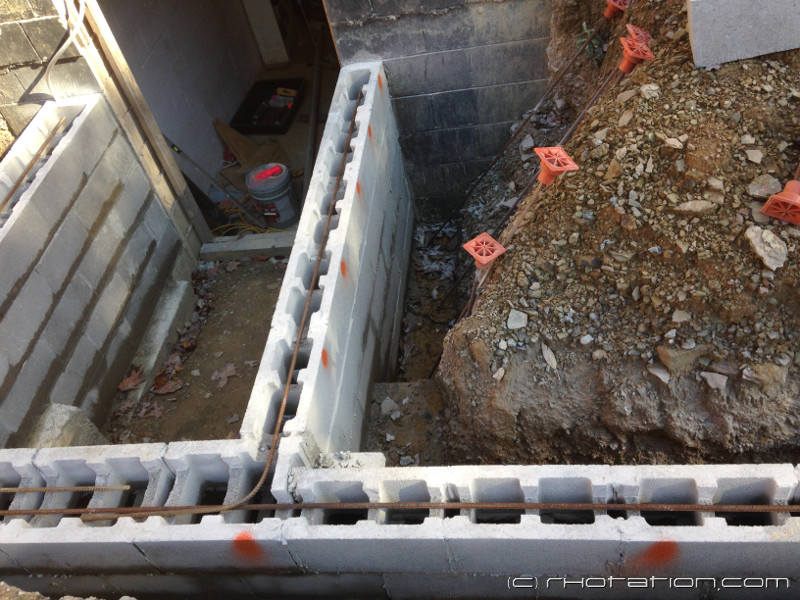

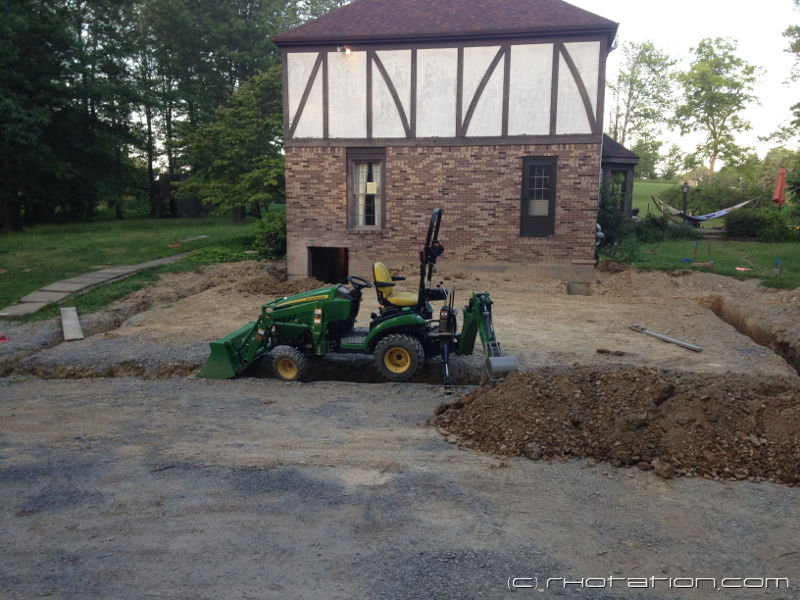
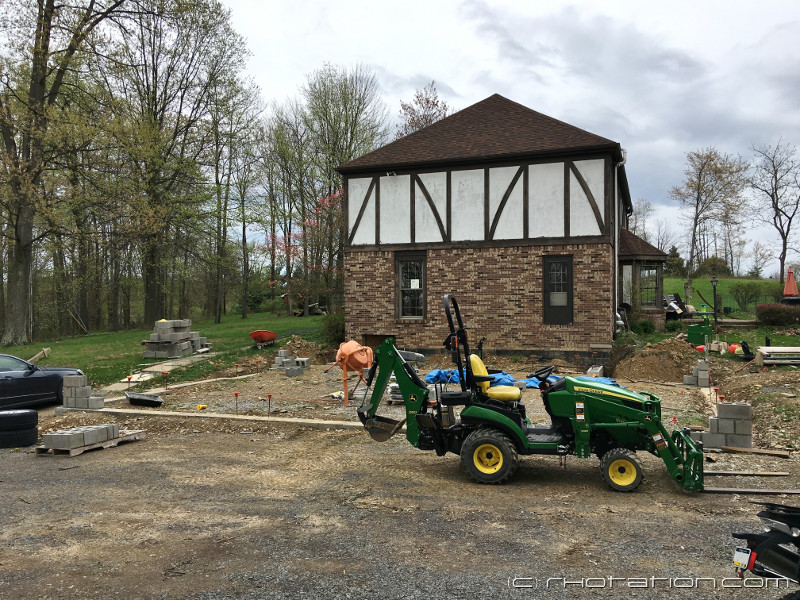

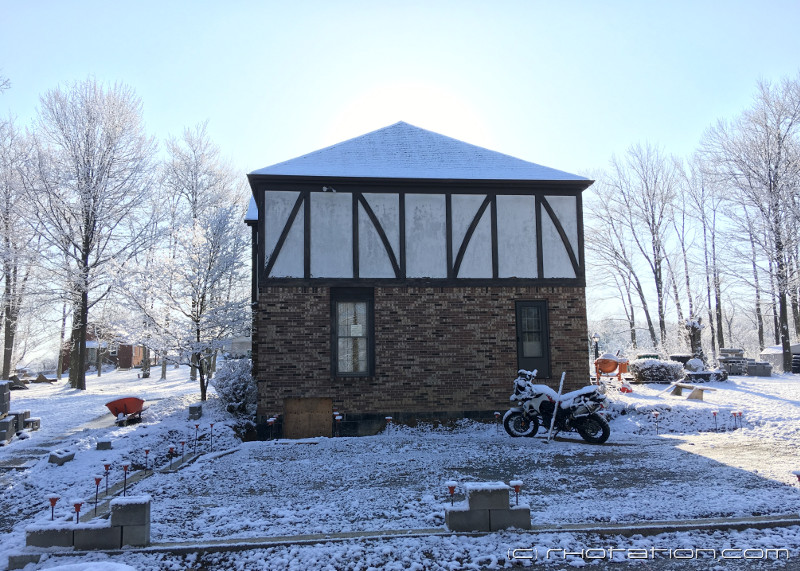
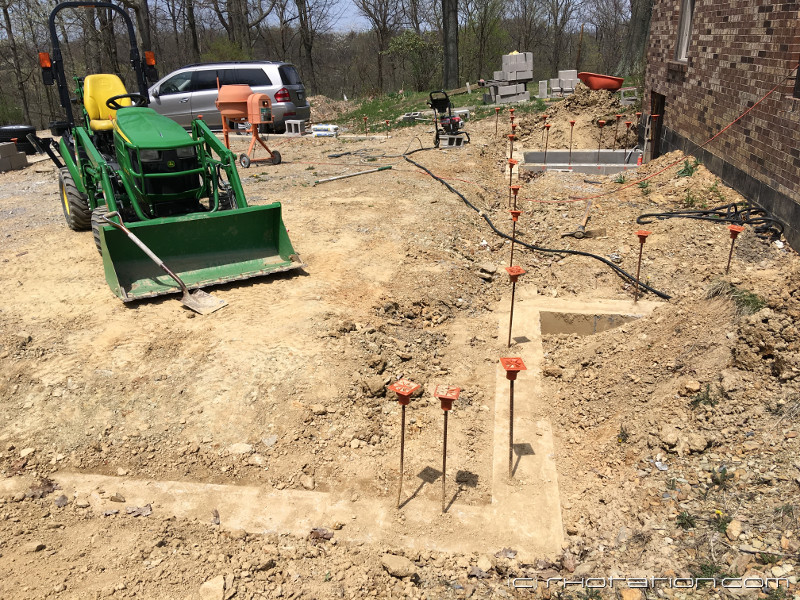
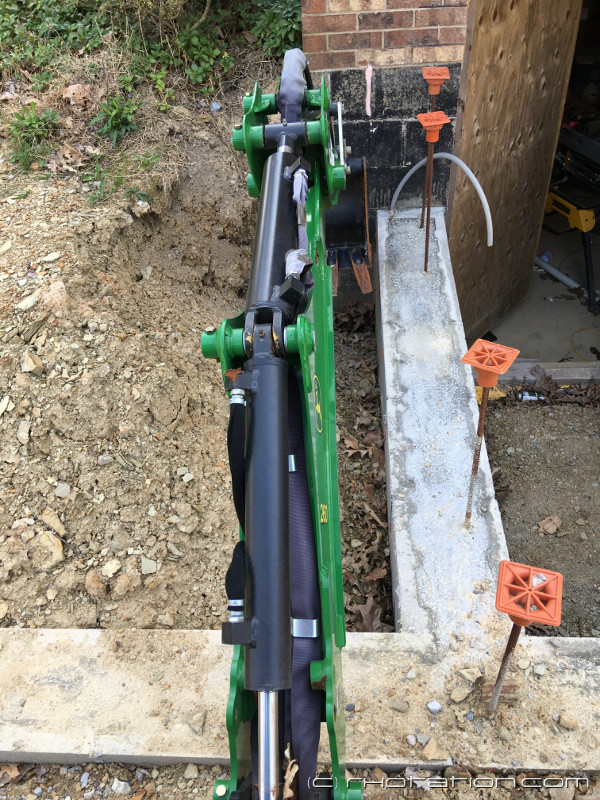
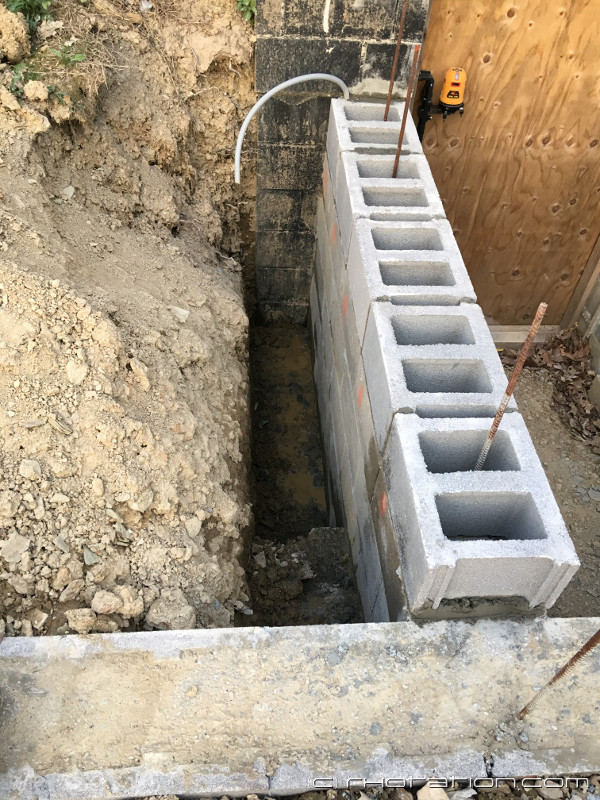
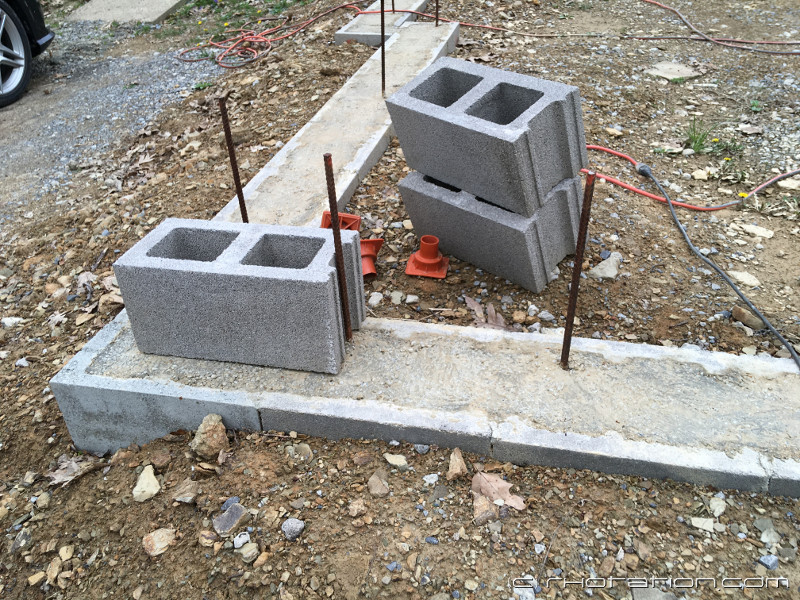
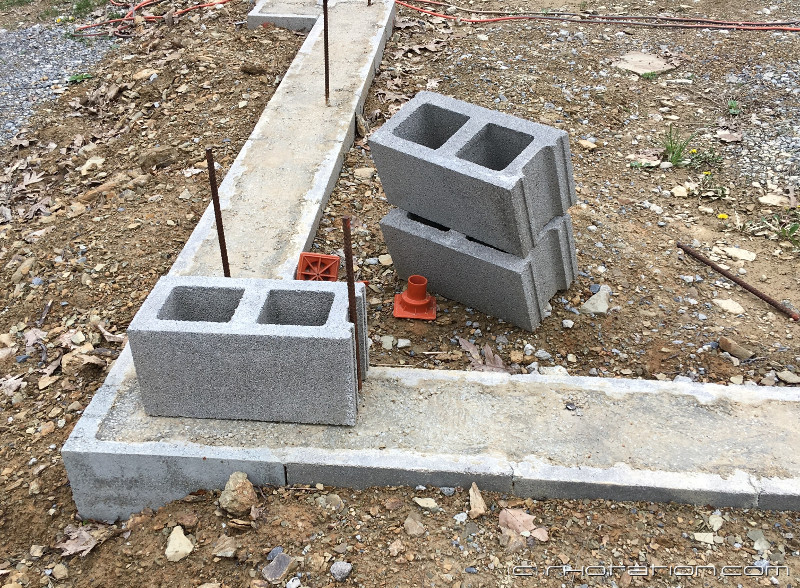
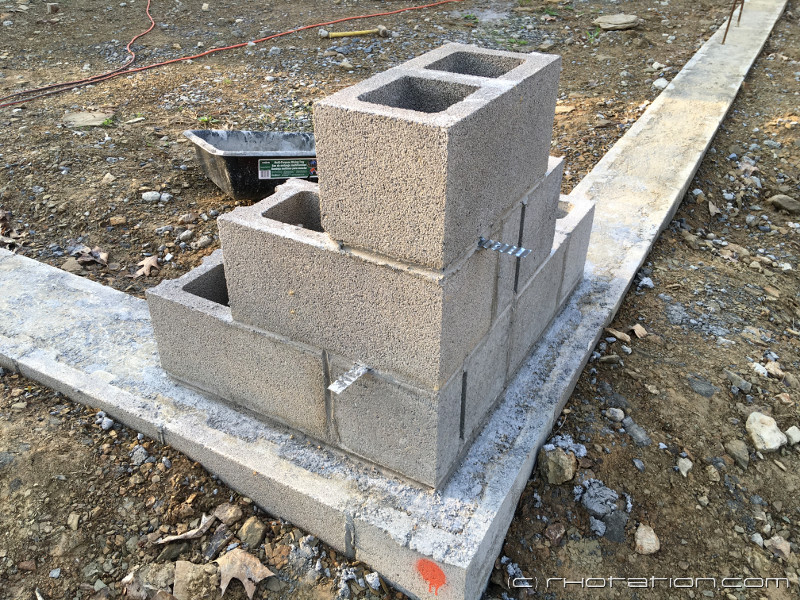
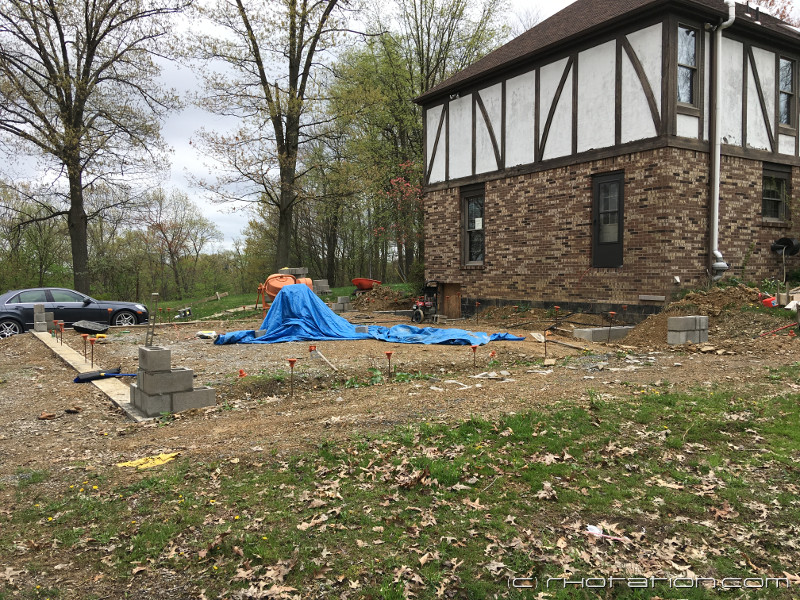
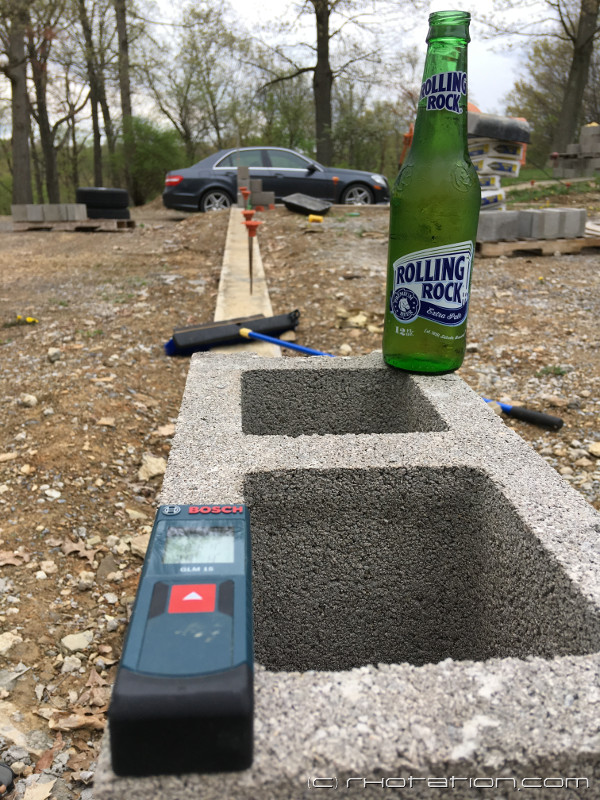

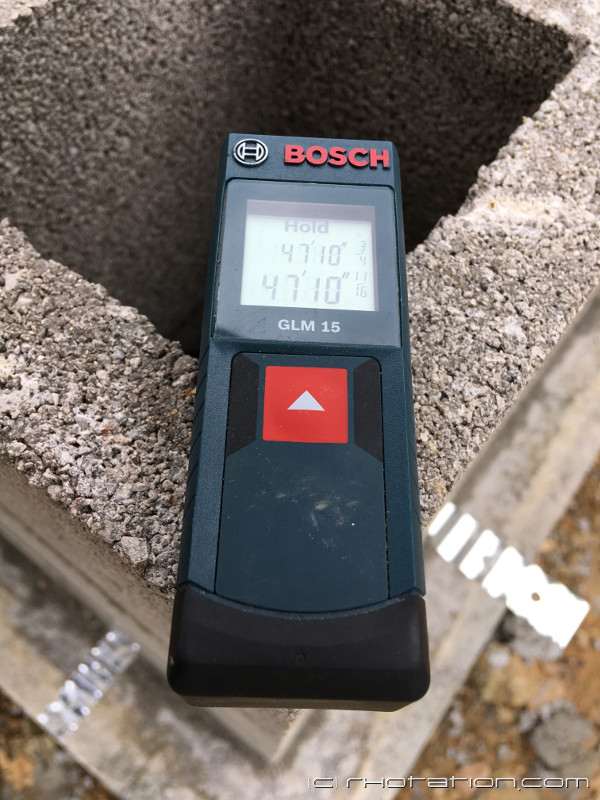

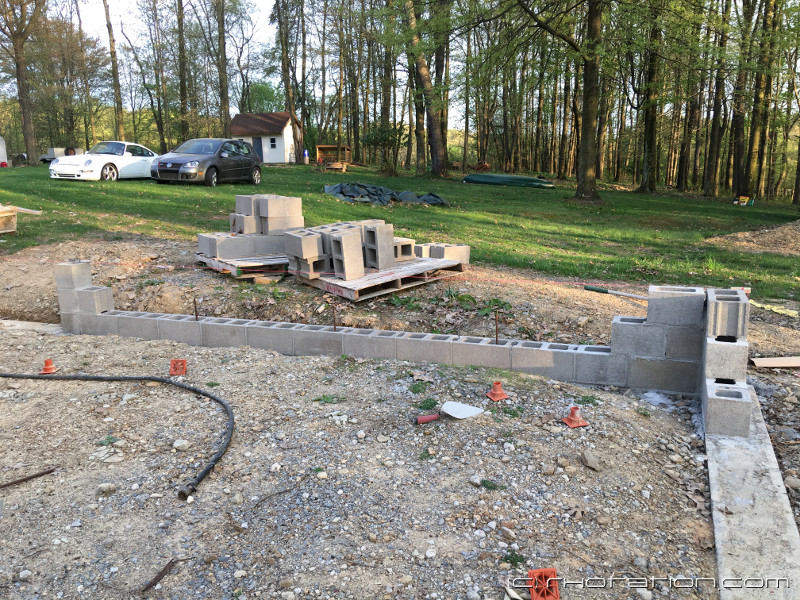
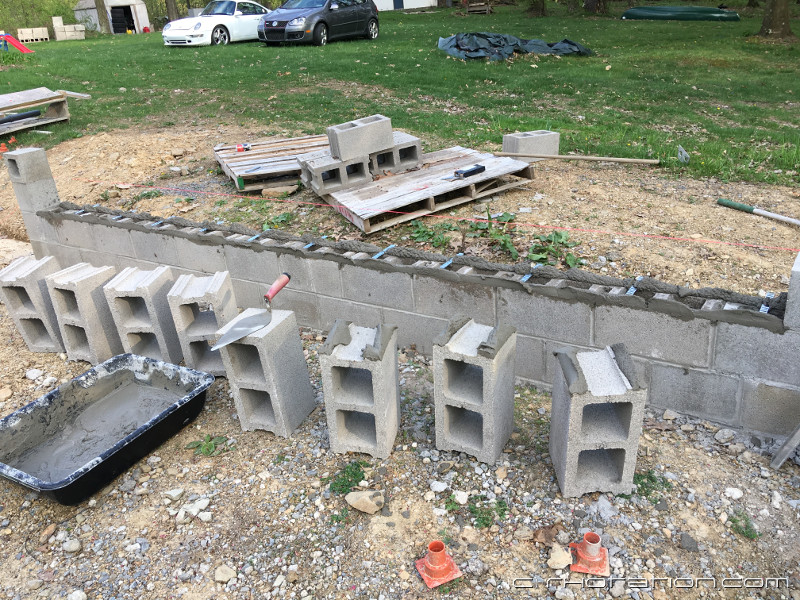
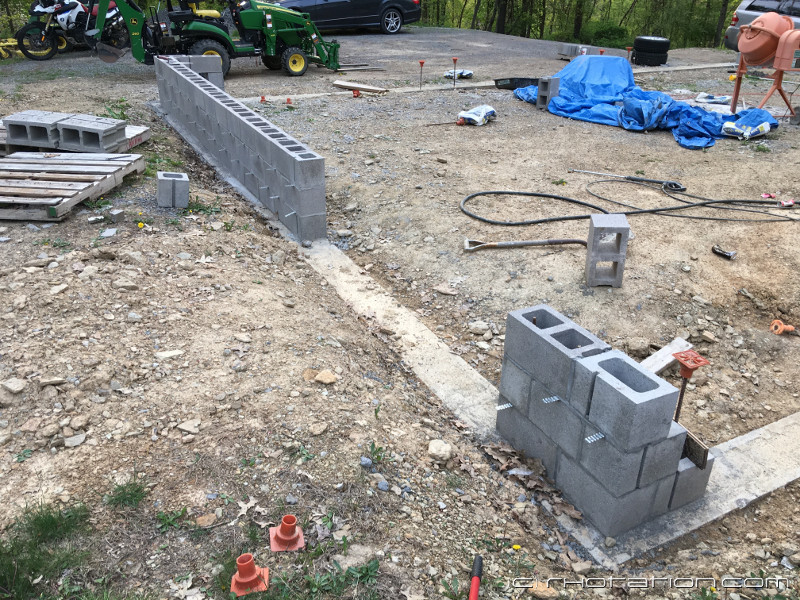
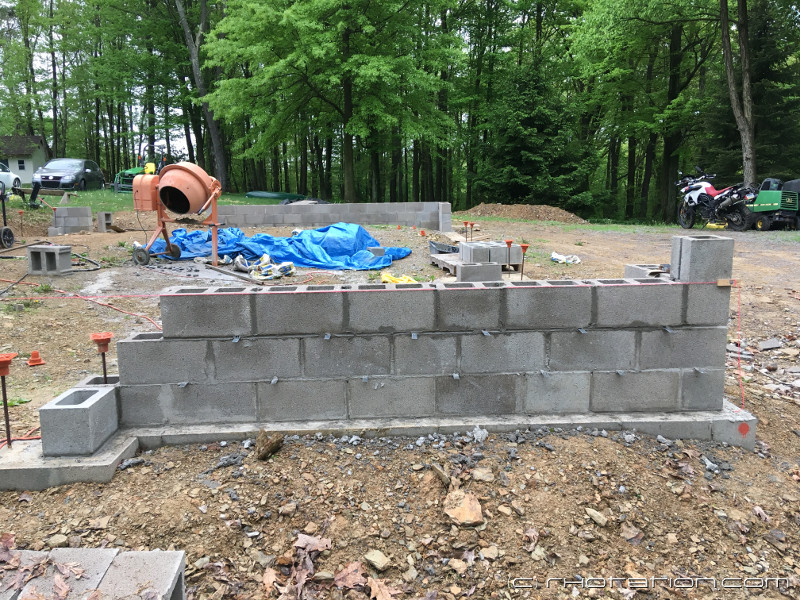
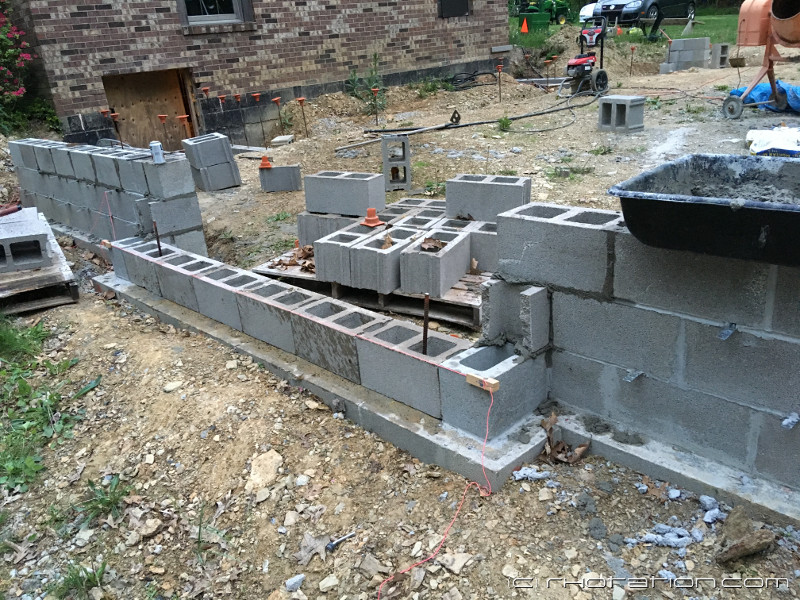
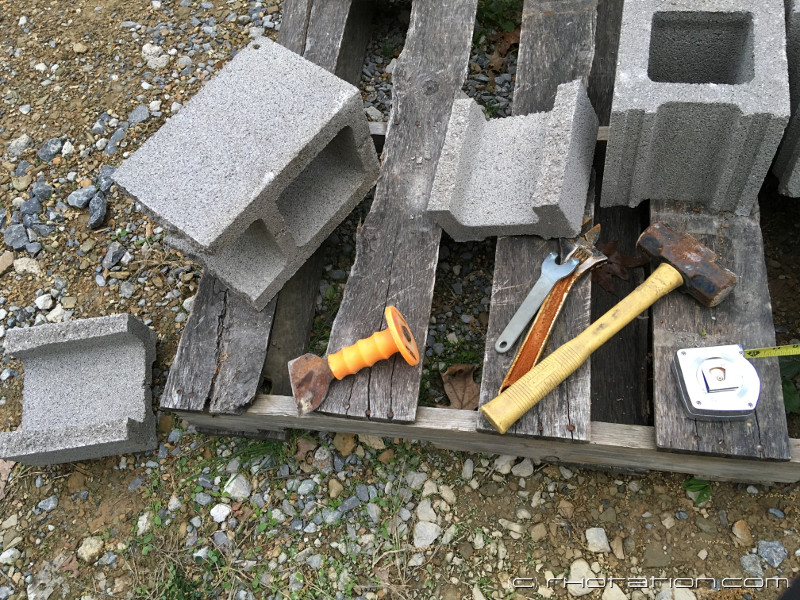
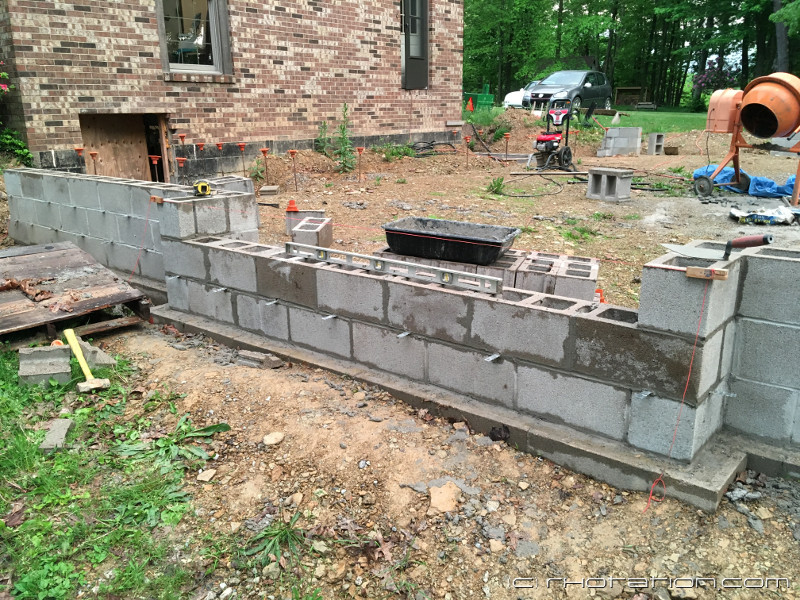
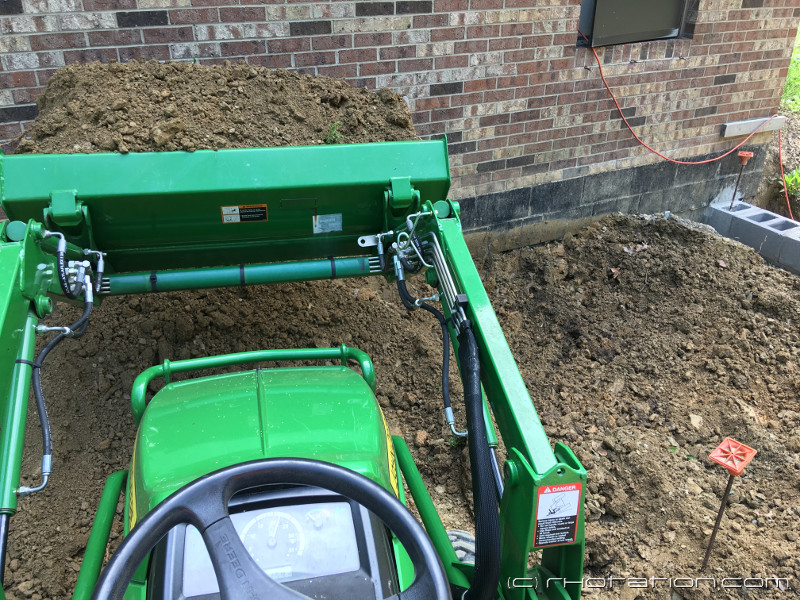
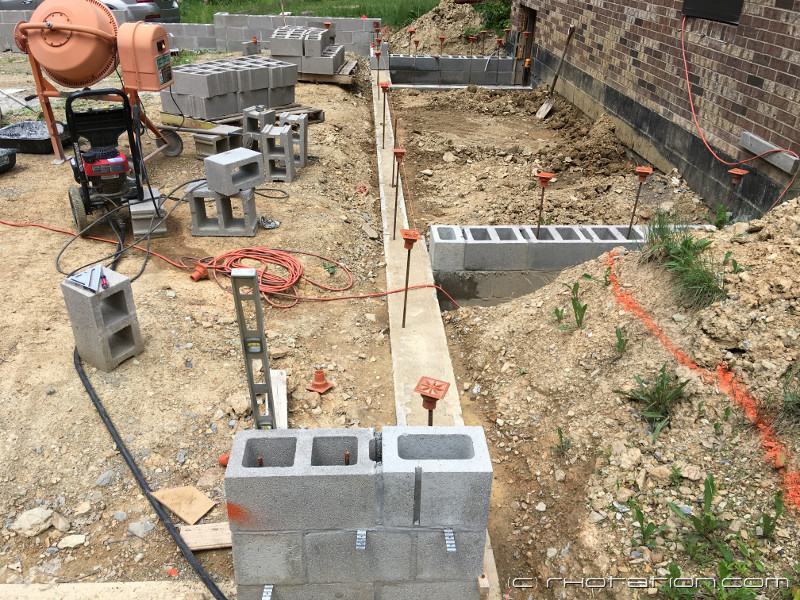
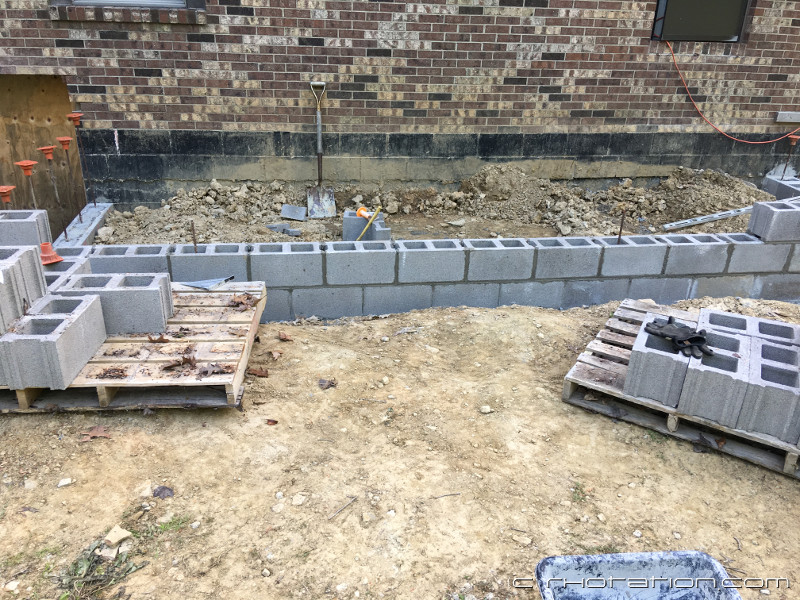
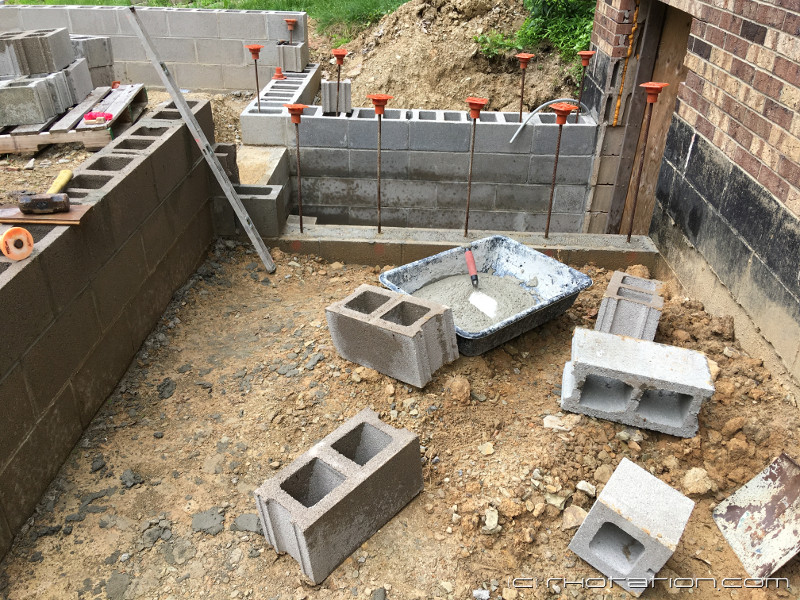
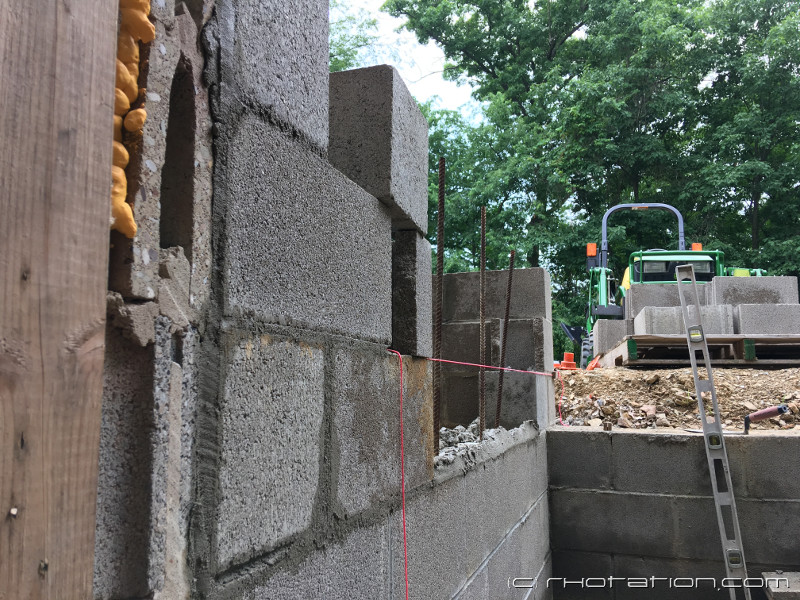
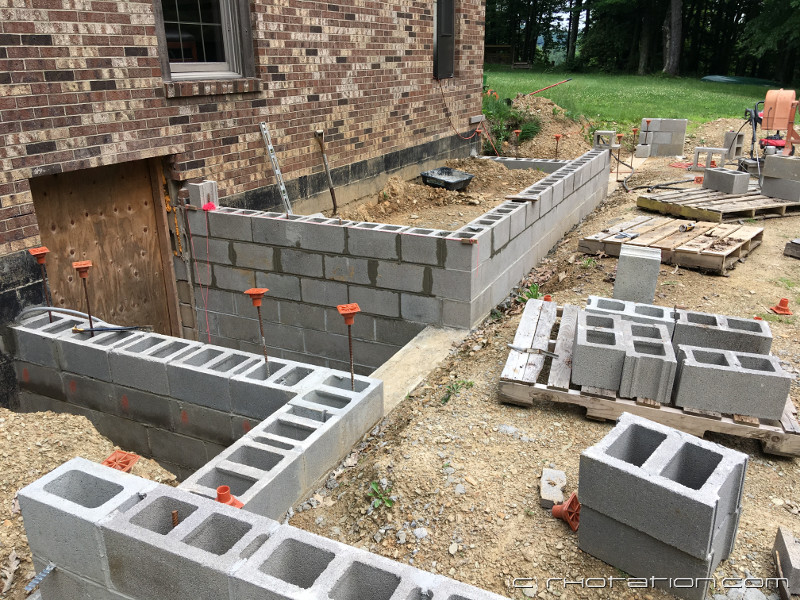
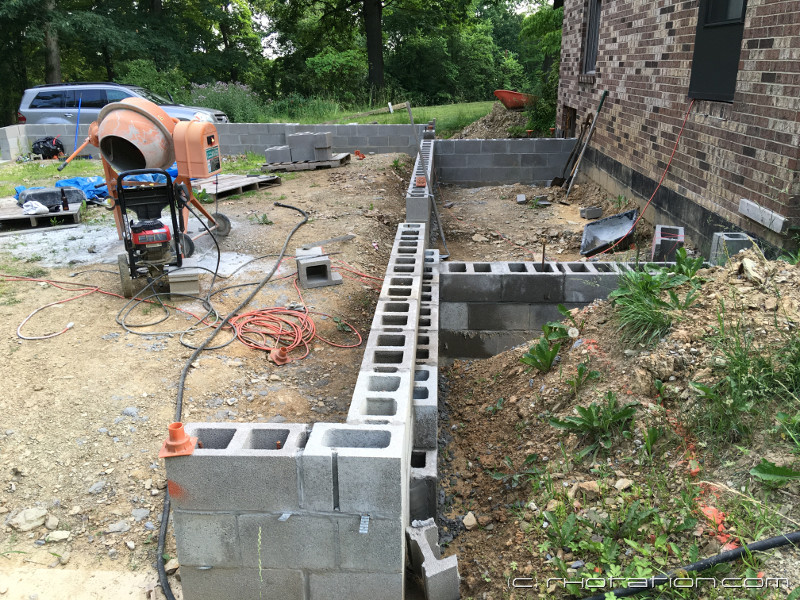
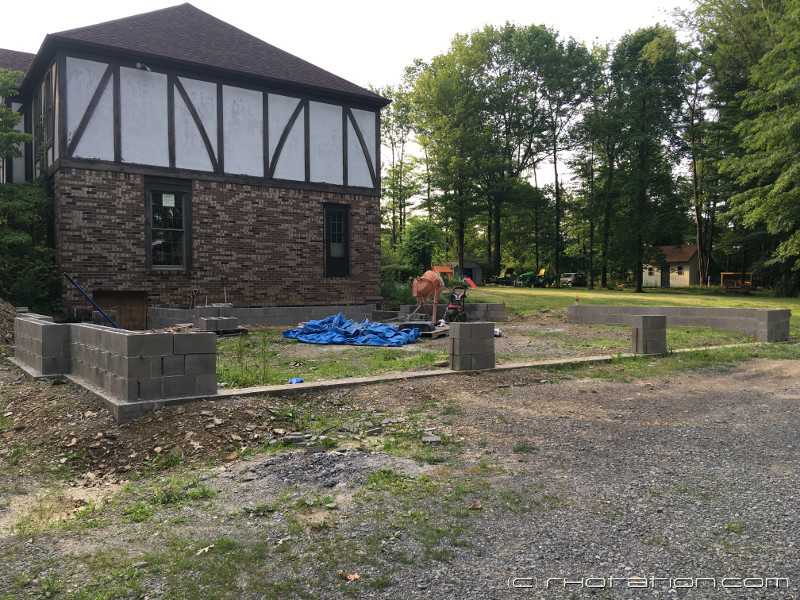

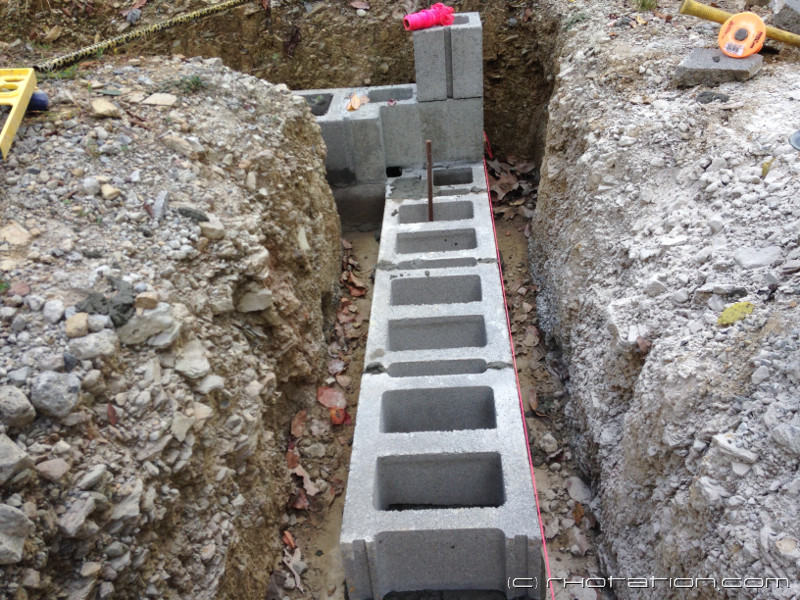
 . It all worked out anyways since the heat index was almost 100 both days and I wasn't getting much work done in that heat. When I got back I decided it was time to rig up outside power on this side of the house rather than running extension cords through an open door. After that was done I cut the bond beam channels in the block and laid and tied the rebar, epoxying it into the house foundation on the return walls. . At this point the $15 dollar diamond blade (DEWALT DW4712B) in my circular saw had cut through over 200 block (including first grouting) and was kaput.