I glommed onto an excellent Channellock deal at Menards (courtesy of user measuredtwice, thanks man). So now that I have a shiny new pair of 9.5" Channellock 420, it seems like a good time to compare them to what's already in my toolbox in that general size.

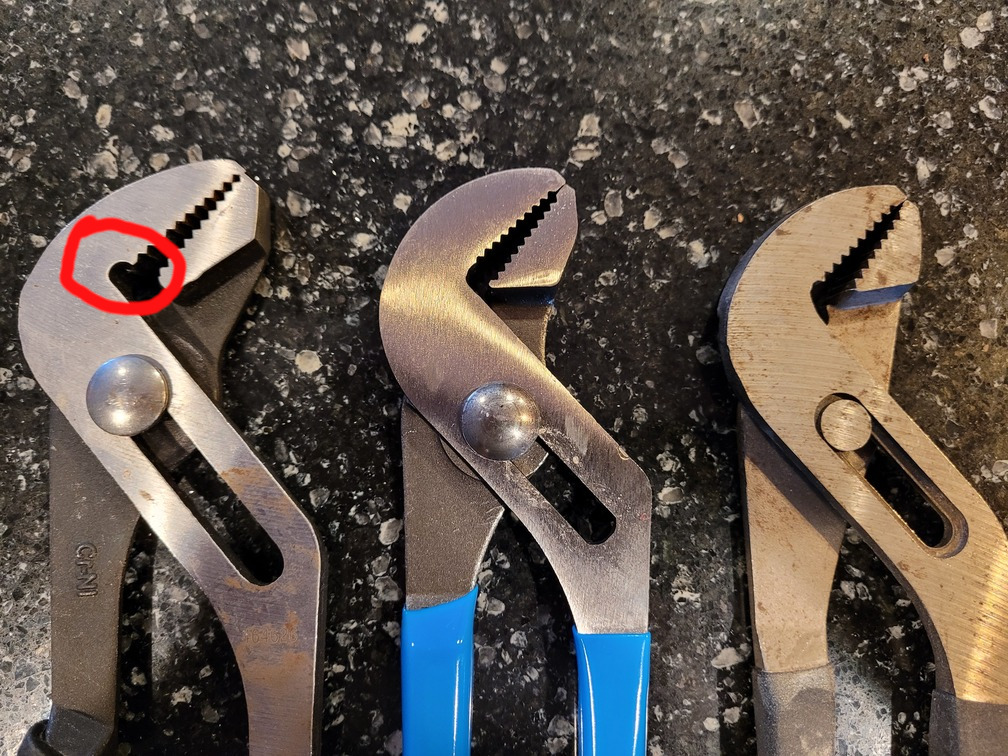
Here we see two pair of Kobalt made-in-China groove joint pliers, in 8" and 10" size, alongside the new pair of USA Channellock #420 in 9.5" size, and a pair of USA Craftsman (Western Forge) 9.5" that I have had for lo these many moons, probably about 20 years.
Random observations:
The handles on the Kobalt are seriously chunky. Sometimes this is nice but sometimes they get in the way. I sort of feel like they are that way for style rather than function. They also don't have the curved ends, which seem like they must be there for a reason, maybe to help guide your grip on the tool.
The Channellock handles are classic blue dip. The Craftsman handles have that textured black rubbery plastic they were doing in the '90s, which I kind of like for grip but not so much for cushioning. The grip comes much further up the handles on the Channellock than the others.
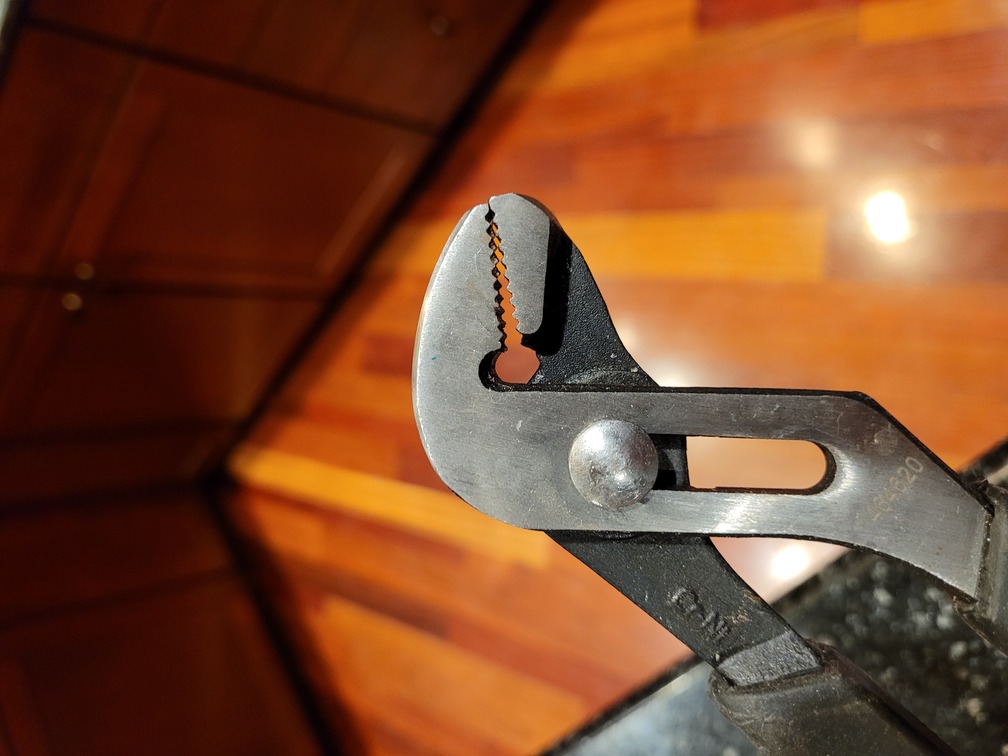
There's also a little angular recess at the top of the Kobalt jaws, which serves no apparent purpose other than style:

They all operate about the same, no major differences in fit.
The Kobalt are marked Cr-Ni, chrome nickel. The Channellock is C1080 carbon steel. I have no idea about the Craftsman. I don't know enough metallurgy to know what these differences mean in use, so perhaps someone will chime in and school me on it.
The Craftsman and Channellock are about the same length, with exactly the same jaw spread, but the Channellock is significantly narrower side-to-side than the Craftsman, which might make a difference in a tool belt.

Both Kobalt have a little rounded cutout at the back of the jaw. It's not evident in the pictures, but this leaves a circular opening. This seems intentional. Maybe it's for pulling wire.
The Kobalt have basically the same joint design as the Channellock, with a large roundhead rivet. The Craftsman rivet is flush. This is true on the other side too:
You can see the Channellock rivet is better detailed than the Kobalt rivet. The Channellock has a nice bevel on it, whereas the Kobalt is just mashed down leaving a hard corner to catch on work or tool belts. The Craftsman is flush on both sides.
Consequently the Craftsman is thinner and less likely to have problems in tight spots. Conversely, one would reasonably expect that joint to be weaker. Obviously they never broke on me, but I'm not super hard on tools, so I'd be interested to know people's thoughts.
Of the three brands, the Channellock has the best alignment at the tips of the jaws, followed closely by the Craftsman, then the Kobalts. Comparing teeth would not be fair when one pair is brand new and the others have been in service.
Note the Channellock has a rectangularish recessed channel on the inside of the slide area, presumably to help guide the slide. There is a lot more meat to the jaw than the Craftsman has, and the rivet is farther down the slide. I would expect that to affect leverage but it doesn't seem to.
A while back, I looked at some USA Channellocks and they seemed rough to me. (I wrote it up at the time and got roasted alive.) This pair does not. It's visibly nicer than the Kobalt and very well made. Same goes for the #337 7" diagonal cutters that came in the set with it.
Other than that I am not offering any conclusions, just the above observations about them.
Here we see two pair of Kobalt made-in-China groove joint pliers, in 8" and 10" size, alongside the new pair of USA Channellock #420 in 9.5" size, and a pair of USA Craftsman (Western Forge) 9.5" that I have had for lo these many moons, probably about 20 years.
Random observations:
The handles on the Kobalt are seriously chunky. Sometimes this is nice but sometimes they get in the way. I sort of feel like they are that way for style rather than function. They also don't have the curved ends, which seem like they must be there for a reason, maybe to help guide your grip on the tool.
The Channellock handles are classic blue dip. The Craftsman handles have that textured black rubbery plastic they were doing in the '90s, which I kind of like for grip but not so much for cushioning. The grip comes much further up the handles on the Channellock than the others.
There's also a little angular recess at the top of the Kobalt jaws, which serves no apparent purpose other than style:
They all operate about the same, no major differences in fit.
The Kobalt are marked Cr-Ni, chrome nickel. The Channellock is C1080 carbon steel. I have no idea about the Craftsman. I don't know enough metallurgy to know what these differences mean in use, so perhaps someone will chime in and school me on it.
The Craftsman and Channellock are about the same length, with exactly the same jaw spread, but the Channellock is significantly narrower side-to-side than the Craftsman, which might make a difference in a tool belt.
Both Kobalt have a little rounded cutout at the back of the jaw. It's not evident in the pictures, but this leaves a circular opening. This seems intentional. Maybe it's for pulling wire.
The Kobalt have basically the same joint design as the Channellock, with a large roundhead rivet. The Craftsman rivet is flush. This is true on the other side too:
You can see the Channellock rivet is better detailed than the Kobalt rivet. The Channellock has a nice bevel on it, whereas the Kobalt is just mashed down leaving a hard corner to catch on work or tool belts. The Craftsman is flush on both sides.
Consequently the Craftsman is thinner and less likely to have problems in tight spots. Conversely, one would reasonably expect that joint to be weaker. Obviously they never broke on me, but I'm not super hard on tools, so I'd be interested to know people's thoughts.
Of the three brands, the Channellock has the best alignment at the tips of the jaws, followed closely by the Craftsman, then the Kobalts. Comparing teeth would not be fair when one pair is brand new and the others have been in service.
Note the Channellock has a rectangularish recessed channel on the inside of the slide area, presumably to help guide the slide. There is a lot more meat to the jaw than the Craftsman has, and the rivet is farther down the slide. I would expect that to affect leverage but it doesn't seem to.
A while back, I looked at some USA Channellocks and they seemed rough to me. (I wrote it up at the time and got roasted alive.) This pair does not. It's visibly nicer than the Kobalt and very well made. Same goes for the #337 7" diagonal cutters that came in the set with it.
Other than that I am not offering any conclusions, just the above observations about them.
Last edited:
 But when I went to look at the Doyle groove joint at the same time, they didn't seem quite up to the level of other brands.