
OccupantRJ
Well-known member
About 15 years ago, I got sick of hearing a shop vac run to evacuate dust from my glass bead cabinet, so I set out to see what I could do about it. Looking around in my contingent materials pile,  I saw a possible solution in an old well water tank, which was begging to be used for SOMETHING.
For the uninitiated, a cyclone dust separator pulls dust particles from the blasting cabinet during operation, to allow one to see what you are blasting, and also to filter out the nuisance dust from the actual grit. Light years ahead of a shop vac.
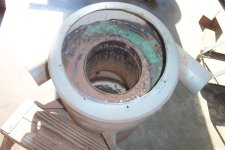
There is an inflatable 12 inch diameter vertical dust collector bag with a side inlet on the output of the blower housing that filters the nuisance dust from entering the room, and a 5 gallon bucket at it's lower end to collect this waste. The airflow leaves the blast cabinet through the bottom via a 3" flex hose, and enters the connection in the suction side of the lower compartment on the separator.
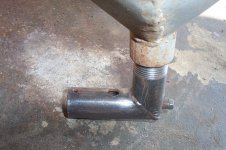
After entering, the flow is forced in a swirling fashion to the outer walls of the containment vessel, where the solid particles, being heavier, slide down into the funnel section. The glass beads are stored in this funnel and suctioned into the cabinet via a hose attached to the 90 degree flow regulator. This hose leads to the blast gun. After use, the beads drop to the bottom of the cabinet where they are vacuumed through the flex hose to the reclaimer.
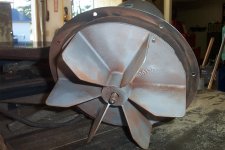
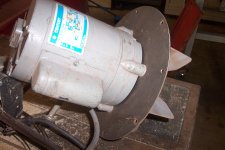
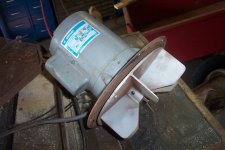
The 6 inch piece of pipe protruding downward through the partition wall of the reclaimer sets up a small tornado in the reclaimer, and the nuisance dust, being lighter, is pulled upwards through the center of this tornado into the blower impeller, then out into the filter bag. The flow regulator has an atmospheric hole in it to allow atmo air to enter the grit stream. This sets the air/grit ratio supplied to the gun.
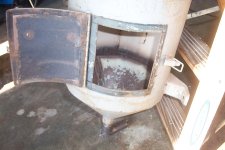
The suction hose can be slid back and forth to partially expose the hole in the regulator, then held in place with a thumbscrew through the wall of the regulator. The glass beads are simply poured into the reclaimer through the access door on it's side, up to the break point in the cone. More is added as it depletes.
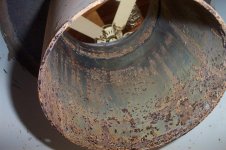
This unit was flooded 12 years ago, so since I am now in the process of refurbishing it, I decided to take a few pics to maybe help others build one if they wish. Please excuse the poor photo quality and lighting. I was tired and ready to quit for the day when I snapped these.
I saw a possible solution in an old well water tank, which was begging to be used for SOMETHING.For the uninitiated, a cyclone dust separator pulls dust particles from the blasting cabinet during operation, to allow one to see what you are blasting, and also to filter out the nuisance dust from the actual grit. Light years ahead of a shop vac.
There is an inflatable 12 inch diameter vertical dust collector bag with a side inlet on the output of the blower housing that filters the nuisance dust from entering the room, and a 5 gallon bucket at it's lower end to collect this waste. The airflow leaves the blast cabinet through the bottom via a 3" flex hose, and enters the connection in the suction side of the lower compartment on the separator.
After entering, the flow is forced in a swirling fashion to the outer walls of the containment vessel, where the solid particles, being heavier, slide down into the funnel section. The glass beads are stored in this funnel and suctioned into the cabinet via a hose attached to the 90 degree flow regulator. This hose leads to the blast gun. After use, the beads drop to the bottom of the cabinet where they are vacuumed through the flex hose to the reclaimer.
The 6 inch piece of pipe protruding downward through the partition wall of the reclaimer sets up a small tornado in the reclaimer, and the nuisance dust, being lighter, is pulled upwards through the center of this tornado into the blower impeller, then out into the filter bag. The flow regulator has an atmospheric hole in it to allow atmo air to enter the grit stream. This sets the air/grit ratio supplied to the gun.
The suction hose can be slid back and forth to partially expose the hole in the regulator, then held in place with a thumbscrew through the wall of the regulator. The glass beads are simply poured into the reclaimer through the access door on it's side, up to the break point in the cone. More is added as it depletes.
This unit was flooded 12 years ago, so since I am now in the process of refurbishing it, I decided to take a few pics to maybe help others build one if they wish. Please excuse the poor photo quality and lighting. I was tired and ready to quit for the day when I snapped these.
Attachments


Last edited:

![IMG_0381[1].jpg](/forum/data/attachments/940/940811-92ed4f119c4ae2f1bfa82c8c00a5133f.jpg)
![IMG_0324[1].jpg](/forum/data/attachments/940/940978-2629b5e8470fc910e19c2531e7d3cdec.jpg)
![IMG_0382[1].jpg](/forum/data/attachments/941/941002-cf1bf564ae44eae468add29f8a899365.jpg)
![IMG_0387[1].jpg](/forum/data/attachments/941/941023-5cf36de9e1312ea7538ac2ca8e181834.jpg)