
You are using an out of date browser. It may not display this or other websites correctly.
You should upgrade or use an alternative browser.
You should upgrade or use an alternative browser.
Can I see your woodburner set-ups??
- Thread starter DESTRO
- Start date
Franz©
Banned
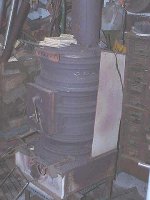
How'sthis one trip your trigger?
Made it 29 years ago out of car wheels & some scrap that was layng around.
The light colored shield around the back is connected to a blower. The blower is activated by a furnace fan control.
Had to replace the stack about 4 times so far but the stove still works fine.
Made it 29 years ago out of car wheels & some scrap that was layng around.
The light colored shield around the back is connected to a blower. The blower is activated by a furnace fan control.
Had to replace the stack about 4 times so far but the stove still works fine.
Attachments
poncho62
Well-known member
Yeah guys...post your homemade stoves on here....Just don't let your insurance company see them, your home owners insurance will be canceled in a flash.
Franz©
Banned
Yeah guys...post your homemade stoves on here....Just don't let your insurance company see them, your home owners insurance will be canceled in a flash.
Guess again. I've changed insurance carriers twice since that stove was built and both carriers have had underwriting inspectors look at the property.
Neither carrier had any problem with the stove in the shop or the stove in the house. I made both stoves.
90% of the insurance paranoia is based on misinformation!
poncho62
Well-known member
Franz©;150932 said:Guess again. I've changed insurance carriers twice since that stove was built and both carriers have had underwriting inspectors look at the property.
Neither carrier had any problem with the stove in the shop or the stove in the house. I made both stoves.
90% of the insurance paranoia is based on misinformation!
OK...but if your place burns down, and then when they won't pay because your stove and chimney setup is not UL or CSA(Canada) approved.....don't come back complaining....I'm not willing to take that chance. I have been told by my carrier that they don't approve of any woodstove.........so, I removed it. Just my experience.
Maybe a person on here with an insurance background will enlighten us.
I googled this......here's a couple of articles
http://www.kanetix.ca/ic_property_info_prop_articles_04
http://www.dougbelcher.com/home-insurance-issues.htm
http://www.mygreathome.com/fix-it_guide/woodstove.htm
Last edited:
krusty the clown
Member Emeritus
Thanks for the pic's so far. They don't just have to be homemade jobs either.Plain store bought ones will work too. I'm getting a free boxwood style one from my dad.Just gotta figure out where to put it and which way to go with the chimney.
Franz©
Banned
OK...but if your place burns down, and then when they won't pay because your stove and chimney setup is not UL or CSA(Canada) approved.....don't come back complaining....I'm not willing to take that chance. I have been told by my carrier that they don't approve of any woodstove.........so, I removed it. Just my experience.
Maybe a person on here with an insurance background will enlighten us.
I googled this......here's a couple of articles
http://www.kanetix.ca/ic_property_info_prop_articles_04
http://www.dougbelcher.com/home-insurance-issues.htm
http://www.mygreathome.com/fix-it_guide/woodstove.htm
Well, since I'm not completely conversant with how you folks up in the Socialist Communist country Canada do things in your system, your carrier may have powers US carriers don't.
Well established law in the US states that a carrier MUST pay for losses on any policy the carrier has in force. The only thing a carrier can refuse to pay for in a loss situation is the specific noncompliant device that caused the fire.
Now, plenty of claims agents for carriers regularly misinform claimants to protect carriers, but that tends to be looked on very unfavorably later on in the process, and punitive damages tend to be awarded against carriers.
We have multiple areas in this country carriers are desperate to get out of given the high losses they have taken there in recent years, for things the carrier never thought they would pay for such as mold claims in Texas, and being stupid enough to write fire coverage in California wildfire areas as well as storm damage along the Gulf of Mexicl Coast. As these cases work their way thru our courts the carriers are loosing because it is well established the carrier has the sole opportunity to assess risk, set premium, and terms and conditions of the policy.
The general rule of contract law clearly dictates anything not specificly excluded in the contract of insurance is covered. Carriers routinely take a course of action designed to exasperate claimants. Carriers also have a tremendous advantage in that they have conspired with government insurance regulators to establish a workaround that allows any participating carrier to any insured's complete record on a database maintained by the government.