To avoid these ads, REGISTER NOW!

luvit owns a kill-a-watt. what does yours say?

luvit

Well-known member
Joined
Jul 11, 2011
Messages
1,580
.
images


so a few years ago i bought a kill-a-watt.
the reason i bought it was to determine the true operating cost of 3 cheap pool pumps @ 100% duty.
.
  • $38 /season - my 3 swimming pool pumps & chlorinator
  • $0.93 - three pots of coffee/day for a week.. that's it for a week? (on for about 6hrs/day)

what have you discovered with your kill-a-watt?
.
 
To avoid these ads, REGISTER NOW!

Bull

Super Moderator
Joined
Dec 12, 2005
Messages
16,189
Location
MA
I discovered that mine is either defective, or the instructions are so poor, I don't understand how to use it. Bought one last winter, tried it, and it made no sense to me.
 

Eds Garage

Active member
Joined
Sep 3, 2010
Messages
33
Location
Ellensburg
I used mine to discover that the cheap cfl bulbs I was using have terrible power factor which means high peak currents even though wattage is low. That can be tough on switches. I now try to limit cfl's to just those areas that require low wattage lights to be left on for long periods of time and don't string too many on one circuit.

For the shop T8 strip lighting, I measured an excellent power factor correction of nearly 1.

If heating an area with a portable electric heater, I can measure accumulated kwh and quickly determine how much $$ it is costing me.

These little kill-a-watt meters are very cool for the geek in us.
 

Bull

Super Moderator
Joined
Dec 12, 2005
Messages
16,189
Location
MA
can i have it, bull?
lol.

Nah, but maybe you can help me figure out what the heck it is telling me. I can't even remember what the deal was. I'll dig it out and plug it in and see what happens, now that I know others on here have experience with them. :)
 
OP
L

luvit

Well-known member
Joined
Jul 11, 2011
Messages
1,580
basically bull, all you set is how much your power company charges per killowatt hour.
my electric bill says the power company charged me 7.1 cents per kWh
.
i figured i pay $0.120 per kWh after taxes and surcharges
(kWh on electric bill divided by the cost of the bill).
so i setup my kill-a-watt to read $0.120 / kWh.. that's it.

i have the P3 model in the picture of the OP.

.
quick instructions
  1. tap MENU Button until you see "KWH" in the upper right corner of the LCD screen.
  2. press and hold the SET Button until your numbers flash to set.
  3. once you configured your KWH price, tap SET again to "saue" your cost/kWh.
hope this helps. let me know if you need more info.
.
 
Last edited:

slip knot

Well-known member
Joined
Mar 22, 2010
Messages
2,861
Location
Texas gulf coast
I've used mine to set the speed on my generator. Hz/cycles setting is easier to use than a meter. just plug it in and set the speed.
 

Charles (in GA)

Well-known member
Joined
Jan 11, 2006
Messages
12,489
Location
50 mi south of Atlanta
Your cost per month will vary, but you can get pretty close. My house comes in at about 13 cents per Kwh. The shop on its own meter comes in a little more, because the fixed cost of the bill is a larger portion of the bill (less use per month than the house).

It will tell you voltage (mine runs about 123 or 124 volts), and you can also see cycles, usually 59.9Hz, Power factor, and amps. It keeps running totals of hours it is powered and the current passed thru it to figure Kwh consumed and cost of that Kwh.

Plug it in and push and hold reset, that clears the time and everything but the cost figure you saved, then plug it in and plug in something like the fridge into it. After a month, remove it and plug it in where you can see it, I use and extension cord to make this easy, and you can see the hours, and the Kwh used and the total cost to run that fridge for a month.

Plug some electronic device you DON'T use into it and leave it for a month (such as a TV) and get a surprise when you see how much that device, when turned off for a month, actually consumes.

This does the same thing your meter on your house does, just on a smaller scale.

Charles
 

MustangRick

Well-known member
Joined
Dec 26, 2006
Messages
308
Location
KC
I was shocked at how low my quad processor computer power usage was. I wasn't surprised when my old stand up freezer was using close to $200 a year. The new ones are supposed to use only $60/year....
 
To avoid these ads, REGISTER NOW!

darkzero

Well-known member
Joined
Oct 20, 2011
Messages
3,315
Location
SoCal
what have you discovered with your kill-a-watt?
.

Thanks to you I remembered buying one a few years ago & never really used it. What I have discovered is that rediscovered it, sitting on top of an old VCR in my room. :thumbup:

Time to try it out on something I have now that I didn't have when I got it.

I wish they made 240V version of it but come to think of it that wouldn't make sense with all the different plug types available.
 

theoldwizard1

Well-known member
Joined
Feb 22, 2011
Messages
43,077
Location
SE MI
I was shocked at how low my quad processor computer power usage was.
About 8-10 years ago the company I worked for justified switching from CRTs to LCD displays (which were more expensive at the time) based on the electricity saved. We are talking about thousands of machines, although it took several years for the switch over to take place as leases expired.
 

2drx4

Well-known member
Joined
Oct 13, 2008
Messages
398
Location
Northern BC, Canada
ugh, sorry i don't know more about CA S&H
here some more starting at $16:
https://www.google.com/search?rlz=1....,cf.osb&fp=e7945424ae3140a1&biw=1680&bih=955
.
.


It's impossible to get around... The newegg one turned out to be shipping from the US anyways, so there was probably going to be another $10 COD on it :shocking: And no real guarantee on how long it would take to get.

If any other Canadians want one, I found one on Amazon.ca. Still would up being $44 or so for the P3, but that's to my door in a couple days with no extra charges. The older model would be less.

No matter, I want to stick it on my fridge, then my block heater, and we'll see what else I can come up with after that. Maybe the dishwasher, even though I don't use it.
 

ForceFed70

Well-known member
Joined
Apr 27, 2010
Messages
3,441
Location
BC, Canada
About 8-10 years ago the company I worked for justified switching from CRTs to LCD displays (which were more expensive at the time) based on the electricity saved. We are talking about thousands of machines, although it took several years for the switch over to take place as leases expired.

Funny, I spent a lot of time at my company measuring and explaining why switching from CRT to LCD wasn't going to "pay for itself" in electricity costs. Although LCD's certainly used less electricity.

Same with Laptops instead of regular PC's.

People really tend to overestimate the costs of running electronics.
 

RonRock

Well-known member
Joined
Oct 6, 2007
Messages
1,171
Location
Iowa, USA
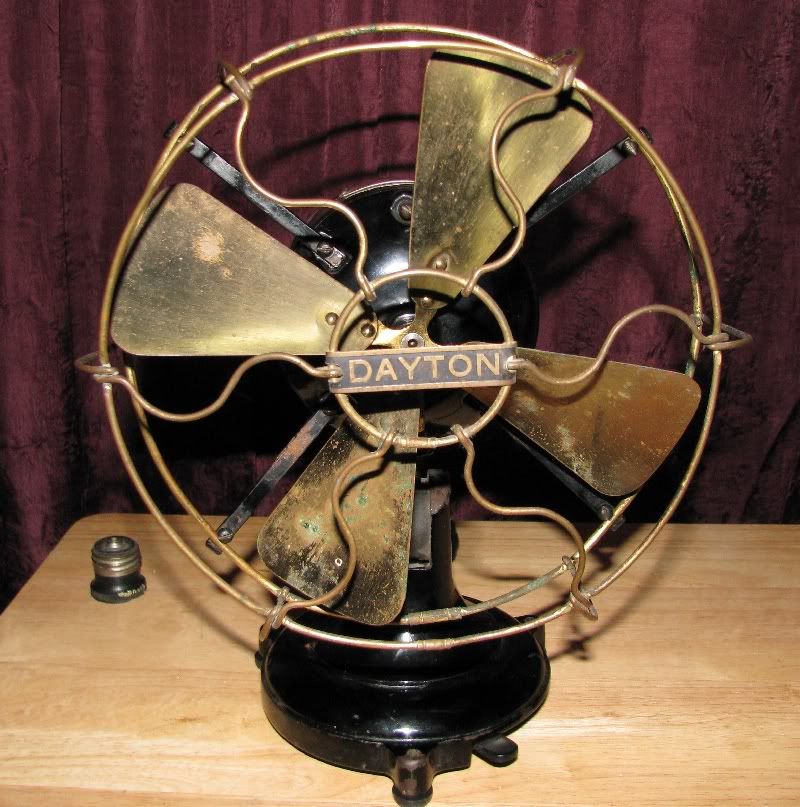
I use mine to check the operationtional condition of early fans

IMG_3209.jpg


Sorry OT.

Cool fan, I have one similar to yours. I think mine is a Westinghouse but looks pretty much like yours. Any idea of the value? Don't really matter I don't want to sell, just curious.
 
OP
L

luvit

Well-known member
Joined
Jul 11, 2011
Messages
1,580
I've used mine to set the speed on my generator. Hz/cycles setting is easier to use than a meter. just plug it in and set the speed.
thanks! i'm gonna check my generator too.
.
.
  • i bought a new house where the furnace force air turns-on too often. i'm sure the house is just not airtight or well insulated, yet. -- i have free heat, but the fan runs too often, in my opinion.
  • i'm gonna rig this kill-a-watt this thing up to my forced-air fan and see if the forced air motor is costing me very much until i identify & fix the real problem.
.
.
 

Highbeam

Well-known member
Joined
Feb 15, 2011
Messages
2,292
Location
Mt Rainier foothills, WA
I've had one for years.

I use it when running a portable genset backfed into my house panel, legally of course, and as most of you know there are two phases of 110 entering the house. Most portable gensets only have a voltage regulator on one of the 110 legs or between both legs to assure 220. This means that even loading of the phases is essential to provide proper voltage to both "sides" of the panel.

I also used it to determine that my old fridge is NOT an energy hog as so much of the propoganda would have you believe.

Most of my electric costs are from the 60 amp hot tub and the water heater in the house. Those can only be measured with the clamp on meter and I only have access to clamp ons that measure instant amps and not a running total.

If you really want to be a geek they sell whole house power monitors that allow you to track and view your home consumption over time.
 

Charles (in GA)

Well-known member
Joined
Jan 11, 2006
Messages
12,489
Location
50 mi south of Atlanta
If you really want to be a geek they sell whole house power monitors that allow you to track and view your home consumption over time.

Its called the electric meter on the outside of your house. The new digital ones that many power companies have wholesale changed over to, don't even require an "special skills" to read. (old dial meters required you to know that the dials turned different directions and to read the number it had passed, not the number it had not yet reached)

Charles
 

Highbeam

Well-known member
Joined
Feb 15, 2011
Messages
2,292
Location
Mt Rainier foothills, WA
Ah but that is not geeky enough. The whole house power monitors track your consumption and when it occurs so that you can correlate the two and determine base loads and spikes.

My power meter is still dials and wheels. I learned how to read it but I will be happy when I get a fancy digital one.
 

Charles (in GA)

Well-known member
Joined
Jan 11, 2006
Messages
12,489
Location
50 mi south of Atlanta
My power meter is still dials and wheels. I learned how to read it but I will be happy when I get a fancy digital one.

Don't get too happy about that, as your power bill will most likely go up somewhat. Mechanical meters have friction, and as they get old, they get slow, and the bill is less as a result. Suddenly they stick in a new electronic meter (and for the purpose of remote reading, and possibly remote control to shut off your power, some meters have this capability) and then your power bill goes up.

Charles
 

SixStringMadness

Well-known member
Joined
Jan 11, 2012
Messages
148
Location
Knox Vegas
I've had one for years.

I use it when running a portable genset backfed into my house panel, legally of course, and as most of you know there are two phases of 110 entering the house. Most portable gensets only have a voltage regulator on one of the 110 legs or between both legs to assure 220. This means that even loading of the phases is essential to provide proper voltage to both "sides" of the panel.

You are half right. The feed entering your home is 1 single phase. There is either single phase or three phase, but no two phase.

The 240VAC entering your house is using one of the three phase provided by your power facility. To reach 120VAC, the transformer is tapped in the center of the secondary coil, so from leg A to center the potential difference is 120VAC, and leg B to center is 120VAC, but leg A to leg B the potential difference is 240VAC. All within the same phase, 180°/360° wave.

When you have three phase, the potential difference between two of the phases, and a real neutral is (120° of the 360° cycle) 208VAC not the 240VAC you see in your home.

You are however 100% correct, an even balance between the two legs helps lower you electric bill without ever turning an appliance off or installing CFL's......
 
Last edited:

Highbeam

Well-known member
Joined
Feb 15, 2011
Messages
2,292
Location
Mt Rainier foothills, WA
You are half right. The feed entering your home is 1 single phase. There is either single phase or three phase, but no two phase.

The 240VAC entering your house is using one of the three phase provided by your power facility. To reach 120VAC, the transformer is tapped in the center of the secondary coil, so from leg A to center the potential difference is 120VAC, and leg B to center is 120VAC, but leg A to leg B the potential difference is 240VAC. All within the same phase, 180°/360° wave.

When you have three phase, the potential difference between two of the phases, and a real neutral is (120° of the 360° cycle) 208VAC not the 240VAC you see in your home.

You are however 100% correct, an even balance between the two legs helps lower you electric bill without ever turning an appliance off or installing CFL's......

I knew someone would catch that, it was a simplification for the sake of understanding. Phases and legs are pretty much the same for us non-sparky types.:beer:
 
To avoid these ads, REGISTER NOW!
Top Bottom