To avoid these ads, REGISTER NOW!

Bofus' 40x60x14 dream coming true

bofus

Well-known member
Joined
Dec 8, 2007
Messages
45
Location
Washington State, USA
Over the past few years, I have been building my dream shop. It has been a labor of love and at times very frustrating. I won't go into all the details, but the property is 1-1/2 acre and the maximum sized building that can be built here on under 2.5 acres is 1580 sq.ft. and no larger than the footprint of the house. There are also height restrictions as well, but too complicated to explain here. These restrictions apply only to free-standing buildings and were enacted many years after I bought the property. Anyhow, I stood before the county commissioners plead my case and was granted a variance to build my shop (40x60) as long as it was built like the house (stick built, shingles, vertical grooved siding, brick) and conditional use (no business - only hobby). I think they thought I wouldn't do it when I learned of the cost...but I was determined!

After getting plans drawn up approved and permits in place, the first order of business was to get the old septic system inspected and the old building demolished. The building was apparently a dog kennel when new, and fortunately had its own septic system. The septic system failed inspection and I had to remove the old tank and put in a new one (1100 gallons). The following pictures show the old building before and after demo. I left the north concrete pad, but the rest was demolished.

1.jpg

2.jpg
 
Last edited:
To avoid these ads, REGISTER NOW!
OP
B

bofus

Well-known member
Joined
Dec 8, 2007
Messages
45
Location
Washington State, USA
Next came the dirt work. As the backhoe dug out for the foundation, he took out the buried piping and some concrete remnants from the old building. I ended up busting them up with a sledge hammer and taking them to the recycler. Lots of sweat. I put several conduits ranging from 1" to 1-1/2" in various places around the shop in the foundation, and just put duct tape over the bottom. These are for future use...or not...at least they are there if I ever need them.

This is the first change I would make if I had it to do over again: The vertical part of the foundation walls I specifed 2-1/2 ft. I learned that I could have had 3' for the same price as the forms are 3' tall. The contractor erred in making the block-outs for the doorways by 6" so the day after he poured the walls, he ended up having to bust out 6" from each doorway...not good for green concrete, but it did have the advantage of leaving the rebar sticking up which I bent over to tie in with some rebar I put in the slab floor.

3.jpg


4.jpg


5.jpg


6.jpg


7.jpg


8.jpg


9.jpg
 
Last edited:
OP
B

bofus

Well-known member
Joined
Dec 8, 2007
Messages
45
Location
Washington State, USA
Next came installing the insulation on the inside of the foundation, and the placement of all the below-grade plumbing. The plumbing is for a washing machine, 2 sinks (one in bathroom, one in workbay), urinal, toilet, shower, watersoftener, and compressor condensate drain. Outside the foundation, you can see the main line running along the building to the septic tank. I had the plumber install an RV dump on the outside of the building, and another inside the building at the far end. The sonotubes are filled with concrete to support awnings over the doors and one that will eventually house my compressor..more to come on that.

In the last picture, the gravel has been spread and thickened slab areas along the locations where the interior walls will eventually be erected. There is also a 10x20 area in the middle of the far side that will allow the slab to be 6" thick rather than 4" like the rest of the slab. I did this just in case I decide to put in a two-post hoist. Another lesson learned here. You should decide at this point whether or not you are going to paint the floor. If you are, you should put down a vapor barrier before you pour the slab..I wish I had.

10.jpg


11.jpg


12.jpg


13.jpg
 
Last edited:
OP
B

bofus

Well-known member
Joined
Dec 8, 2007
Messages
45
Location
Washington State, USA
The crew poured and finished the entire slab before noon. These guys are amazing...they really earn their money! It was a 6 sack mix and had welded wire in the bathroom area and in the thickened area of the workbay (area for the two post lift). They saw-cut the expansion joints the following day. Here is where I wish I had done a couple of things differently. First, I wish I had them include a 1" raised curb around where the shower walls would be, and the other, I wish they would have built in more slope to the floor within the confines of the shower toward the drain. The shop floors are all flat except at the door locations. There is a slight slope to the floor in the bathroom toward the shower drain so that anything that might leak will flow toward the shower drain.

The unloading technique for the stack of building materials was a little surprising as it involved backing up the truck, slamming on the brakes, grabbing a forward gear and popping the clutch all in quick succession. It only ruined two pieces of OSB on the bottom...the rest was perfect.

14.jpg


15.jpg


16.jpg


17.jpg
 
Last edited:
OP
B

bofus

Well-known member
Joined
Dec 8, 2007
Messages
45
Location
Washington State, USA
Next the framing contractor went to work erecting the exterior walls and then standing them up. The exterior sheeting utilized HardiPanels that were 4'x9' (to minimize waste vs. 4'x8' standard sheets). The last picture shows on the left where the 10'x20' bathroom will be and the work bay (20'x30') on the right, and the far end of the building will be 40'x40' for storage.

18.jpg


19.jpg


20.jpg


21.jpg


22.jpg


23.jpg
 
Last edited:
OP
B

bofus

Well-known member
Joined
Dec 8, 2007
Messages
45
Location
Washington State, USA
Next the 4/12 roof trusses were stood up and the interior framing for the bathroom was completed. Sheeting on the roof was 7/16" OSB. (If I did this all again, I think I would have used heavier sheeting.) Tar paper and 25 year shingles finished the roof. Framing was completed for the bathroom and the flooring for the mezzanine installed. I really didn't plan on having a shelf in the work bay, but when I saw the framers getting ready to cut off the excess from the mezzanine floor joists, I asked them to leave it. I like it...works good for storing stuff up and out of the way.

24.jpg


25.jpg


27.jpg


28.jpg


29.jpg


30.jpg
 
Last edited:
OP
B

bofus

Well-known member
Joined
Dec 8, 2007
Messages
45
Location
Washington State, USA
The plumbers did the rough plumbing and the HVAC folk installed the heat pump and ducting. The air handler is located in the mezzanine above the bathroom. You might notice that I included a plumbing wall inside the foundation/framing wall. The only reason is to make it nearly impossible for the water lines to freeze - even with no heat in the dead of a bad winter.

I put the external entrance to the bathroom for several reasons. First, if I have back-yard events, barbeques, etc., I can make the bathroom available to people without having them wandering through my shop. The other thing is for security purposes; if someone climbed through the window, there is nowhere to go and nothing much worth taking. I figured it wouldn't be too much of an inconvenience to step outside and back in to use the restroom while working.

31.jpg


32.jpg


33.jpg


34.jpg


35.jpg


42.jpg
 
Last edited:
OP
B

bofus

Well-known member
Joined
Dec 8, 2007
Messages
45
Location
Washington State, USA
The brick was installed on the front, and the awnings were installed over the man-door entry and the lawnmower entry. The other awning is where I will eventually build a compressor enclosure (Husky 80 gallon). The thought here is that the compressor will be on a separate pad and within an enclosure that has no phyisical contact with the main building except the power cable and the air hose. This should make it very quiet inside the building. Compressed air piping is 3/4" K copper (I should have run 1/2"...oh well) to feed the majority of the shop and to the front of the building (along with hot/cold water hose bib). You can see the condensate blow-off vent notch in the bottom row of brick. I put a lot of extra copper piping in the wall at the bottom to serve as a reservoir in case I get lazy and forget to blow off the condensate for a while. I'm not sure how much water will make it past the filter/separators, but I'm not taking any chances and it is relatively easy and inexpensive to make these allowances at this stage of construction.

I ended up having to put a ridge cap and soffit vents in each of the awnings. Gotta love inspectors :lol_hitti

38.jpg


43.jpg


39.jpg


44.jpg


36.jpg


37.jpg
 
Last edited:
OP
B

bofus

Well-known member
Joined
Dec 8, 2007
Messages
45
Location
Washington State, USA
I discovered the most boring job in the world. Caulking every seam and every nailhead on the whole outside of the building. I hope to NEVER do that again. I used a power roller to paint the building. It worked great.

The 400 amp service and electrical wiring was completed. Note the conduits that go from the left panel and down to the outside...no purpose other than they are there if I ever need them. I might need a pool or hot tub someday. The insulation was installed (R21 in walls and R39 in the ceiling and R-13 around ductwork) in the work bay and in the bathroom.

40.jpg


41.jpg


46.jpg


47.jpg


48.jpg


49.jpg
 
Last edited:
OP
B

bofus

Well-known member
Joined
Dec 8, 2007
Messages
45
Location
Washington State, USA
My original intentions were to only insulate and finish the bathroom and work bay since they are the only areas heated/cooled. My wife convinced me to reconsider insulating and finishing the remainder of the shop since the hassle/cost today is FAR less than it would be in the future. This involved cramming all the stuff from the storage side into the workbay, Attic ventilation was installed (in this case, power exhaust fan and soffit vents) and I added an attic access ladder with a plywood walkway along the center of the buidling. This should make servicing the fan an easy thing rather than a major pain someday in the future. Smoke/heat detectors and lights were also installed in the attic space.

45.jpg


50.jpg


51.jpg


52.jpg


53.jpg


54.jpg
 
Last edited:
OP
B

bofus

Well-known member
Joined
Dec 8, 2007
Messages
45
Location
Washington State, USA
The drywall dudes did their thing. These guys really make a hard job look easy. Hanging 12' sheets of 5/8" rock on the ceiling is very hard without a jack...they earn their money!!! We had to paint the 40x40 area over the weekend to clear all the stuff out the workbay so they could do the drywall in there. It is a tough job to roll two layers of paint on that much area (especially the ceiling) in 2 days! A smart (sane) person would have used a airless sprayer...but no one ever accused me of being either.

When the drywall was completed and primed, we then painted the workbay and bathroom walls/ceilings.

55.jpg


56.jpg


57.jpg


58.jpg


59.jpg


61.jpg
 
Last edited:
OP
B

bofus

Well-known member
Joined
Dec 8, 2007
Messages
45
Location
Washington State, USA
After the painting was done, I installed the lighting. I used a LOT of lights because I like a lot of light. Engineers at work gave me a lot of grief for the amount of candlepower, but I like it and why go to a tanning salon when you can do it at home?

One neat feature I included rather than a fixed hand railing on the mezzanine, I came up with the idea to use a gate with a garage door track to make it movable. I installed rollers on both sides at the bottom and it is very sturdy...it works great!!! I wish the building was 2' taller...if you spend much time in the mezzaine, it is a real pain in the back (it's only 5' high up there). Someday I will add a swiveling hoist (like the ones used on the back corner of a welding truck bed) so I can pick up stuff from the floor below and store it in the mezzanine above.

The compressed air system has a moisture separator in the bathroom where the line enters from the outside compressor, and is then routed to the workbay where there is a moisture separator/filter/regulator that feeds the majority of the shop, including the front of the building as shown in an earlier picture. There is also an ultra-fine filter and separator to service the workbench with instrument quality air and in case I ever want to paint something. The moisture separators sit over the shop sink and include float actuated drains (as you will see in a later picture).

60.jpg


62.jpg


63.jpg


64.jpg


65.jpg
 
Last edited:
OP
B

bofus

Well-known member
Joined
Dec 8, 2007
Messages
45
Location
Washington State, USA
Now I will begin to describe some of the frustration I had in buiding the shop. My original idea was to use Hardibacker (normally used as an underlayment for tile) and to coat the shower ceiling, walls, and floor with polyurea (similar to spray-on bedliner, only smooth). I also added 8" around the baseboard in the workbay of the shop. I used unsanded grout to fill the gaps and it worked much the same as drywall mud, only it is more resistant to water. A local contractor put the primer on the bathroom floor, but then told my wife, "I don't think he's gonna like it". She called me and I told her to have him STOP. He is the one person who could guarantee that statement. I had him shoot me a sample to show me what he meant, and he was right. The majority of it looked great, but you could see a stipple where each pass from the spray nozzle overlapped. It would not have looked good. On to plan b.

I found a company who said if I scuffed up the primer, they had a 5 step coating system that would be the ticket. I started sanding the primer and it was not attached to the floor well at all...so I scraped it off the entire floor using a single razorblade. :mad: It also became apparent that the joints on the shower walls did not stand up to the flexing when I was sanding them, so I decided to install another layer of Hardibacker oriented vertically to give the needed rigidity.

66.jpg


67.jpg


68.jpg


69.jpg


70.jpg
 
Last edited:
OP
B

bofus

Well-known member
Joined
Dec 8, 2007
Messages
45
Location
Washington State, USA
Well, after that ordeal, I installed the 5/16" HardiBacker oriented vertically using glue and screws. Note: in an earlier post I mentioned that I wish I had included a concrete curb at the shower wall locations. The reason for the curb would be that the Hardibacker could sit on the floor with a concrete curbing behind the board thereby making an even more water/bullet proof installation. I also used an alkaline resistant mesh on the joints, again using tile grout in the same fashion as drywall joint compound. I then proceeded to go with the 5 step flexible epoxy system. Not one of my best decisions. The first coat was a two part water-based epoxy primer (worked great), the next two (thick-sticky goo, two part epoxy) flexible layers, the first of which I later learned never did set up. The next layer was another layer of the primer.

Thee final coat was the color coat (gray) which I did by myself (that's me in the picture). The problem with the final coat is that if it is just the slightest bit too thick, it foams as it hardens leaving bad places here and there, especially in the corners....and that is the one place in the shower that you don't want to have a problem. I could have sanded out the foamed areas and recoated, but I when I was up on a step stool to install a lightbulb, the stepstool tore through the floor coating and that's how I discovered that the first flexible layer did not set up. This required me to have to scrape all this stuff up off the floor...a chore I would not wish on an enemy. I left it on the shower walls, but I did sand it (as shown in the last picture) to get rid of all traces of foamed epoxy and to make it flat for a different epoxy two-step system that Bob recommended having used it many times before.

Here I have to acknowledge one of the greatest human beings on earth. Bob helped me with the very difficult installation of the 5 step system and also helped me through the misery of scraping it all off including wiping it all down with Methyl Ethyl Ketone (nasty smelling stuff) to get rid of the remaining stickey mess. For that, Bob earned my eternal respect and gratitude.

71.jpg


72.jpg


74.jpg


75.jpg


76.jpg


77.jpg
 
Last edited:
OP
B

bofus

Well-known member
Joined
Dec 8, 2007
Messages
45
Location
Washington State, USA
To prepare the floor, we put on a layer of leveling grout and sanded it to fill in all the gouges we made when scraping the floor. We also added a 1" radius along the wall/floor joint. The two step epoxy system worked great, and we installed it in both the bathroom (brush/roller) and in the workbay (spray). We included sand on the shower floor between coats which worked great. The use of paint as a finish in the shower floors and walls has proven to be every bit as great as I imagined it to be. My family of 5 used that shower for months during a recent house remodel, and it looks as perfect today as the day it was painted. My hope is that I can make that same statement 10 years from now. There is now a water softener and a hot water tank in the closet and a sink, washer & dryer not shown in the pictures. The triple sink will have a counter top added to make it double as a workbench. I intend to set up the sinks as a three step solvent cleaning station...on wheels so I can move it away from the wall when using the parts cleaning brush. I will also add a countertop so that it will double as a workbench. for now, I will do one more posting to show some of my projects. Someday I will finish the compressor enclosure and update this thread.

78.jpg


79.jpg


82.jpg


80.jpg


83.jpg
 
Last edited:
OP
B

bofus

Well-known member
Joined
Dec 8, 2007
Messages
45
Location
Washington State, USA
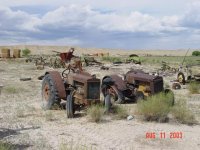
The cars include a 1968 GT500KR (restoration in process), 62 Corvette (race car project on hold since I met my wife 20 years ago...priorities changed :)), 1930 and 1931 Case model CO (maybe someday...if I live long enough...I will restore the 30 and keep the 31 running and looking like it currently does), 1967 Mustang (wife's car), and 37 Ford humpback (someday streetrod). As you can see, I have enough projects to last the rest of my natural-born life... and now I finally have a place to work on them. A little nicer than the thing I tore down...shown in the first and last pictures that I have uploaded. That's it for now. More to come in the future.

84.jpg


85.jpg


90.jpg


93.jpg


92.jpg
 

Attachments

  • 91.1.JPG
    91.1.JPG
    67.5 KB · Views: 120
Last edited:

jerry46765

Member
Joined
May 26, 2007
Messages
16
Location
Indianapolis
WOW! Thank you for taking the time to post all these details.

I am inspired from your work.

I am in the middle of a 40x60 2 story stick frame construction, and it seems to be taking forever to complete it. I understand things happen, weather, and scheduling cause delays.

Hopefully, in the next few months, I can provide a similar summary on my project.

Thanks again for posting, it made my day.

Jerry
 
Last edited:
To avoid these ads, REGISTER NOW!

markb1

Well-known member
Joined
Jan 24, 2007
Messages
241
Thanks for posting, Very inspiring, I'm sure those projects are going to move a little faster now. Enjoy.
 

russlaferrera

Well-known member
Joined
Nov 24, 2006
Messages
2,035
Location
Central Virginia
Thank you for posting. The shop came out great, as did the pictures. You incorporated almost everything you wanted. As most of us will agree their are somethings we would have liked to change. If we would have seen, heard, read about the what and whys we may have changed the master plan.

You did a great job in the planning. The construction crew did a great job. All thats left is to live the dream.
 
OP
B

bofus

Well-known member
Joined
Dec 8, 2007
Messages
45
Location
Washington State, USA
Thanks everyone for all the positivie feedback. I spent a great deal of time planning and replanning the shop while I was recovering from neck surgery. We took the 67 on its first road trip and got rear-ended at a stop light...had to have a disc removed, two vertebrae fused, and it took a LOT of arguing to get the car fixed vs. totalling it.

I think I answered the first question about what I plan on using the shop for....my car and tractor projects!

The epoxy I ended up using is made by Ameron. The first coat is Amerlock 400 and the top coat is PSX700, which is an engineered siloxane.
 

WolverineCoatings

Well-known member
Joined
Oct 22, 2007
Messages
833
Location
Spartanburg, SC
I read all of this one... it was interesting..

I'm not a fan of polyurea... While there are some very quality products out there, there are also a TON of crappy ones! We've seen alot of polyurea horror stories. We don't offer Polyurea for garage floors...

Next, the product that you used that foams and hardens if you get it too thick would be a moisture cured urethane. MC Urethanes have excellent durability when applied properly.

Anyway, I know that must have been an extremely frustrating experience. All is well that ends well!
 
OP
B

bofus

Well-known member
Joined
Dec 8, 2007
Messages
45
Location
Washington State, USA
It has been a while since my last post, but I am once again working on the shop...no, it's not complete yet. Now I am working on the compressor room. I neglected to get a picture of the forming, wire mesh and rebar before I poured the mud...but basically, it has welded wire mesh throughout and 3/8" rebar around the perimeter and one row down the middle along the long dimension. The pad is isolated from the foundation and the posts using 1/2" thick concrete expansion joint material. The dimensions are 5'x8' and is 5 1/2" thick and uses a 5 sack mix. The third picture is my brother who spent his vacation working with me on the project.

94.jpg


95.jpg


96.jpg
 
Last edited:
OP
B

bofus

Well-known member
Joined
Dec 8, 2007
Messages
45
Location
Washington State, USA
After stripping the forms, I decided that it would be best to set the compressor on the pad before we began framing. Although it is only about 24" wide, the compressor weighs a lot, is top heavy and pretty clumsy to move around. It was in the way a bit during the framing, but I think it was the right thing to do vs. trying to wrestle it through the 32" doorway.

2"X4" stud walls were erected and screwed into the posts and beams using Grabber woodscrews (I love 'em). I also shot in one concrete anchor to make the door frame rigid. I framed in two smaller openings; one up high over the door for an exhaust fan and one down low for an air inlet. The exhaust fan will be be thermostatically controlled to keep the room from getting too hot when the compressor is running in the summer time.

We then wrapped the framing and installed Hardi-Panel siding using screws that are normally used for Hardi-Backer tile underlayment. The siding is not structural in this portion of the installation and therefore I didn't have to follow any specific nailing requirements - only as necessary to securely attach the siding to the framing. These screw heads are self counter-sinking; which is really nice.

97.jpg


98.jpg


99.jpg


100.jpg
 
Last edited:
OP
B

bofus

Well-known member
Joined
Dec 8, 2007
Messages
45
Location
Washington State, USA
The room will be fully insulated and I will include provisions (rigid foam?) for plugging the air intake/exhaust openings in the winter. It shouldn't take too much to keep the room above freezing...although I don't know how much of a heat source it will require. I believe the bottom of the tank would be the most critical area to keep above freezing and maybe a lightbulb placed under the tank would suffice. Thoughts?
 
OP
B

bofus

Well-known member
Joined
Dec 8, 2007
Messages
45
Location
Washington State, USA
Next I installed the door, a motion sensing light and some of the wiring. Then came insulation and a vapor barrier.

102.jpg


103.jpg


104.jpg


108.jpg


112.jpg
 
Last edited:
OP
B

bofus

Well-known member
Joined
Dec 8, 2007
Messages
45
Location
Washington State, USA
Drywall is now hung, taped and mudded. It is really kind of funny...I haven't done much drywall work, but of all that I have done, the inside of the compressor room is the very least important on how it looks...and it came out better than any other drywall work I have ever done. Go figure.

I then primed and painted it. Pictures show the progress.


114.jpg

119.jpg

120.jpg

126.jpg

127.jpg

129.jpg
 
Last edited:

Stärke

Member
Joined
Feb 10, 2008
Messages
6
Location
ND
Real nice garage.:thumbup: A dream one for sure!! In ND, we have similar restrictions on how big the garage can be.:(

Definitely an inspiration!:thumbup:
 
OP
B

bofus

Well-known member
Joined
Dec 8, 2007
Messages
45
Location
Washington State, USA
Thanks for the kind words.

I used expanding foam to seal along the joint between the building and the compressor room, and around the louvers. I then installed the trim pieces and caulked the joints.

115.jpg


116.jpg


117.jpg


122.jpg
 

JohnK007

Well-known member
Joined
Sep 13, 2007
Messages
807
Location
Downers Grove, IL
It is really kind of funny...I haven't done much drywall work, but of all that I have done, the inside of the compressor room is the very least important on how it looks...and it came out better than any other drywall work I have ever done. Go figure.

By the looks of things it's probably because you had LOTS of practice before you got to it! Fantastic build. Your idea about the separate entrances to the bathroom and garage is a great one. So simple and yet practical.
 
To avoid these ads, REGISTER NOW!
Top Bottom