

superautobacs
Well-known member
I started this post for a couple reasons. First of all, having lived in Japan for 14 years, I'm a supporter and a fan of Japanese tool manufacturers. Among the many tool manufacturers in Japan, KTC (Kyoto Tool Company) is one of my favourites. I've known that KTC has a museum that's open to the public and I decided that I must visit the museum when the chance arose. My chance came earlier this year and so my primary reason is to share the photos that I took from my visit to KTC. And by doing so perhaps I may interest some people who may have never heard of KTC.
Although unheard of in other parts of the world, KTC is the most recognized tool company in Japan, especially within the automotive industry. Other tool companies in Japan will often gauge themselves against KTC.
KTC is located close to the historical capital of Kyoto--the cultural center of Japan. If you wish to read the history behind the 62-year old company, click here: http://en.ktc.co.jp/mg/about.html
Through email correspondence with KTC's Mr. Iki, I was able to arrange a visit to the museum and even a private tour of the factory. Here's a link to KTC's "monozukuri" museum: http://en.ktc.co.jp/mg/guide.html
Upon my arrival, I was quickly greeted my Mr. Iki who became my guide.
Starting off with an overview of the backwall. The standard tools are in the foreground and the further down you go, the more automotive/trade specialty tools there are:

KTC has also started making bicycle tools:
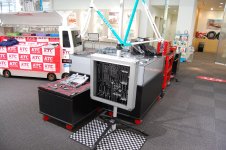
Here's a decommissioned forging hammer:
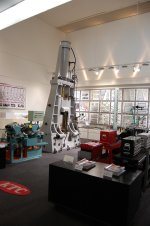
One example of their latest toolbox offerings (notice the top lid resembles a valve cover):

Here's an illustration of the various manufacturing stages of a ratchet/wrench:
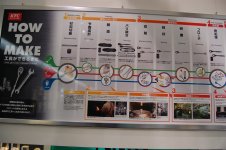
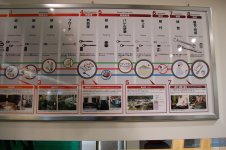
Below it is a sample of the early stages of manufacturing:



Here's a vantage point from the operator of a forging hammer:

Close up the forging die used for a double box offset wrench:

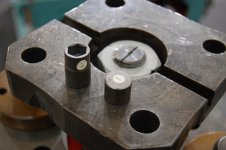
Here's a cutaway of a decommissioned cold forging machine used for making sockets:

That small stock on the right, in one one second, becomes a socket like the one on the left:
Some random photos from the wall of tools:
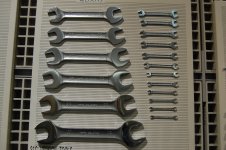
Standard DOEs
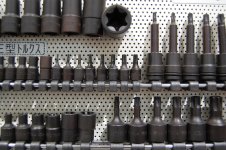
Impact grade in/external Torx Impact sockets:
Beautiful cantilever boxes with some innovative features:

I believe this is a set for working on cramped engine bays, to help access belt tensioners, pulleys, etc. :

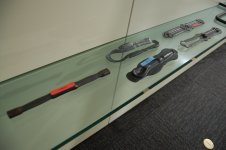
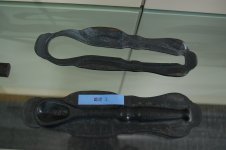
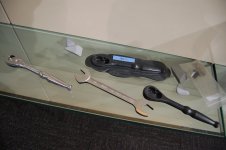
These reversible ratcheting wrench heads were probably the first type that KTC ordered from Taiwan during the 1990s. They were not very popular as they were very expensive and were perceived as being gimmicky/fragile tools:

I believe the ratcheting wrenches on the lower left were from the late 1990s/early 2000s. These, along with the ones shown above, are no longer made, but replaced by newer and much improved versions:

Close ups:


These are actually made by an Italian company:
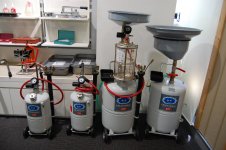
I'm not sure what caught my attention to take this photo....perhaps it was their stackable, galvanized parts tray set (they have full SS trays as well):

They had a Japanese made vise (Nabeya/Eron) and I just had to take a photo of it:

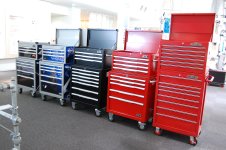
Their larger rolling cabs used be imported from Waterloo (the one on the far right), but they've introduced a box that's proudly made 100% in Japan:
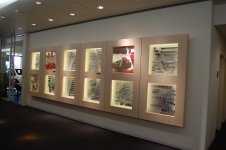
Here's their wall showcasing their premium line of tools: Nepros

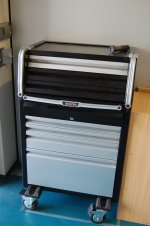
One of their other innovative boxes (this was introduced about 5 years ago):
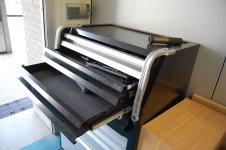
The first 4 drawers can be opened simultaneously for easy access to the most common tools:
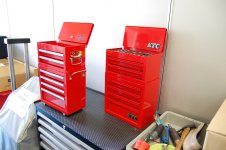
Miniature boxes! :
After the tour of the museum, I was fortunate to be allowed a factory tour as well. Understandibly, photographs were restricted except for the following. I'm glad that I'm able to share at least a couple photos to the GJ community of the factory:
A few boxes worth of sockets, square drives, and drive adaptors for a customer that KTC has had close relationships with for the past few decades.
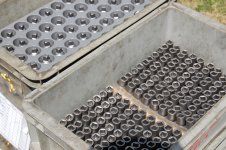
The level of care and attention to place the peices on a divided tray is pretty impressive, and this isn't their premium Nepros line; it's their standard KTC line of tools! :

At the time of the tour, the forging facility was in the midst of churning out their standard ratchets:

With their excess "skin" punched off and awaiting to be shipped to the machining facility:
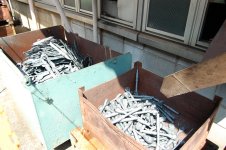
Those ratchets are fed by a metal conveyor that spills out a ratchet every 5 seconds or so:

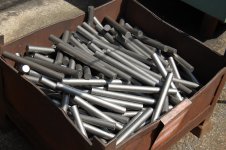
Some time before, those ratchets pictured above looked like this, in raw stock, before it gets heated to forging temperature:
So, that's all the pictures I have to offer to you guys and I hope you all enjoyed them.
Many thanks to KTC for creating the Monozukuri Museum and to Mr. Iki for the time spent away from his desk to give me a tour that probably lasted a lot longer that he had expected, and also for answering many of my "difficult" questions truthfully.
Although unheard of in other parts of the world, KTC is the most recognized tool company in Japan, especially within the automotive industry. Other tool companies in Japan will often gauge themselves against KTC.
KTC is located close to the historical capital of Kyoto--the cultural center of Japan. If you wish to read the history behind the 62-year old company, click here: http://en.ktc.co.jp/mg/about.html
Through email correspondence with KTC's Mr. Iki, I was able to arrange a visit to the museum and even a private tour of the factory. Here's a link to KTC's "monozukuri" museum: http://en.ktc.co.jp/mg/guide.html
Upon my arrival, I was quickly greeted my Mr. Iki who became my guide.
Starting off with an overview of the backwall. The standard tools are in the foreground and the further down you go, the more automotive/trade specialty tools there are:
KTC has also started making bicycle tools:
Here's a decommissioned forging hammer:
One example of their latest toolbox offerings (notice the top lid resembles a valve cover):
Here's an illustration of the various manufacturing stages of a ratchet/wrench:
Below it is a sample of the early stages of manufacturing:
Here's a vantage point from the operator of a forging hammer:
Close up the forging die used for a double box offset wrench:
Here's a cutaway of a decommissioned cold forging machine used for making sockets:
That small stock on the right, in one one second, becomes a socket like the one on the left:
Some random photos from the wall of tools:
Standard DOEs
Impact grade in/external Torx Impact sockets:
Beautiful cantilever boxes with some innovative features:
I believe this is a set for working on cramped engine bays, to help access belt tensioners, pulleys, etc. :
These reversible ratcheting wrench heads were probably the first type that KTC ordered from Taiwan during the 1990s. They were not very popular as they were very expensive and were perceived as being gimmicky/fragile tools:
I believe the ratcheting wrenches on the lower left were from the late 1990s/early 2000s. These, along with the ones shown above, are no longer made, but replaced by newer and much improved versions:
Close ups:
These are actually made by an Italian company:
I'm not sure what caught my attention to take this photo....perhaps it was their stackable, galvanized parts tray set (they have full SS trays as well):
They had a Japanese made vise (Nabeya/Eron) and I just had to take a photo of it:
Their larger rolling cabs used be imported from Waterloo (the one on the far right), but they've introduced a box that's proudly made 100% in Japan:
Here's their wall showcasing their premium line of tools: Nepros
One of their other innovative boxes (this was introduced about 5 years ago):
The first 4 drawers can be opened simultaneously for easy access to the most common tools:
Miniature boxes! :
After the tour of the museum, I was fortunate to be allowed a factory tour as well. Understandibly, photographs were restricted except for the following. I'm glad that I'm able to share at least a couple photos to the GJ community of the factory:
A few boxes worth of sockets, square drives, and drive adaptors for a customer that KTC has had close relationships with for the past few decades.
The level of care and attention to place the peices on a divided tray is pretty impressive, and this isn't their premium Nepros line; it's their standard KTC line of tools! :
At the time of the tour, the forging facility was in the midst of churning out their standard ratchets:
With their excess "skin" punched off and awaiting to be shipped to the machining facility:
Those ratchets are fed by a metal conveyor that spills out a ratchet every 5 seconds or so:
Some time before, those ratchets pictured above looked like this, in raw stock, before it gets heated to forging temperature:
So, that's all the pictures I have to offer to you guys and I hope you all enjoyed them.
Many thanks to KTC for creating the Monozukuri Museum and to Mr. Iki for the time spent away from his desk to give me a tour that probably lasted a lot longer that he had expected, and also for answering many of my "difficult" questions truthfully.
Last edited:


