DoghouseForge
Well-known member
My neighbor is a retired finsih carpenter and is always building something cool in his shop. He has a large pastic tub in which he tosses the "shorts", or "scraps" where I come from... 
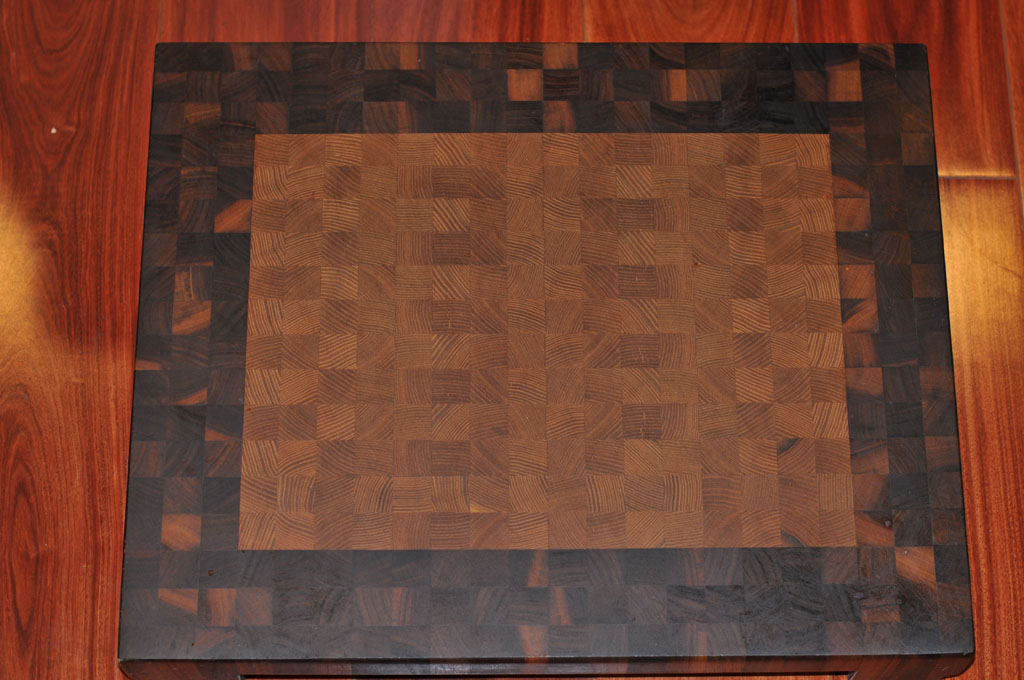
I asked him if I could take them to make a cutting board out of and he gladly said yes... So this is what I made....
I used my 10"table saw and cut the sections into 2 " strips. Next I moved the Blade(fine finsh) to about 1/8" from the fence. This let me run all the edges and clean up the random pieces as best I could. Some of the pieces were not 90deg. to start with, and I honestly couldnt figure out exactly how to correct that. In my rookieness I thought that simply running the 4 sides on the equally measured blade setting would correct that but instead it just cuts an equal copy of the angle you started with.
I suppose you could use a carpenters square, mark a new 90 and cut the line, but I didnt think of that at the time so i decided to wing it.
Anyway, i put the "puzzle" together and got out the glue and clamps.

In the future I will use 2 clamps on the top and 1 clamp on the bottom so it pulls force equally. Instead as you can see I tried to put all three on top and the result was terrible. It caused a slight bow in the surface that I would later have to get corect with the sander.
Dry and pretty disappointing...

I used a square and marked off the sides to be cutt at the widest points possible.

Hope was slightly lifted at this point..slighty...
Holy Sanding! I used the 36grit 3x21 belt to really get after all the unevenness. I actually think I might be winning!

***funny side story*** I went to the store with the ingenious idea that "I'll buy a planer and that will fix this thing right up" .. I had no idea a planer was so much money! Needless to say, I did not buy a planer and went back to sanding...
So my slacker attempt at leveling all the sides went ok at best. I had some pretty big gaps but my shopmate Jarrid offered a cool fix. Mixing the saw dust from the board with the woodglue created homemade fast dry wood filler.. I took advantage of this technique!


so that dried and I resanded it down. I then had to do a second run of filler to get the final seams... It added another hour but it was totally worth it. Since I was working on several things it seemed silly to rush it.
anyway, after sanding up to 80grit

I used the palm sander and rolled the edges. I like this look, one day Im gonna try to make one with perfect edges and alignment but for my first one this is an awesome technique to bleand in my amatureness.

After sanding up to 220grit
side one

side two

I used a food grade Butcher block oil and sealer.

Then waited 12 hours or so and wet sanded up 400grit.
Another coat was applied and it also was allowed to dry for about 6 hours.
Then I wet sanded it up to 2000grit...
Turned out way better than it looked like it would in the beginning, and its smooth as glass.


How it looks with some of the knives I made this weekend. I love how the handles match colors in the board.

So lessons learned to save you the trouble -
1. - 90deg doesnt come from measuring the blade distance really carefully
2. - Planers are really expensive
3 - Use your clamps in opposition to avoid the curve
4 - Just keep sanding ...its bound to turn into something
5 - If I can make it out of wood anyone can...
6. - Use the endgrain of the wood instead of the long grain for a harder, longer lasting cutting surface.
Thanks for checking it out!
JP
I asked him if I could take them to make a cutting board out of and he gladly said yes... So this is what I made....
I used my 10"table saw and cut the sections into 2 " strips. Next I moved the Blade(fine finsh) to about 1/8" from the fence. This let me run all the edges and clean up the random pieces as best I could. Some of the pieces were not 90deg. to start with, and I honestly couldnt figure out exactly how to correct that. In my rookieness I thought that simply running the 4 sides on the equally measured blade setting would correct that but instead it just cuts an equal copy of the angle you started with.
I suppose you could use a carpenters square, mark a new 90 and cut the line, but I didnt think of that at the time so i decided to wing it.
Anyway, i put the "puzzle" together and got out the glue and clamps.

In the future I will use 2 clamps on the top and 1 clamp on the bottom so it pulls force equally. Instead as you can see I tried to put all three on top and the result was terrible. It caused a slight bow in the surface that I would later have to get corect with the sander.
Dry and pretty disappointing...

I used a square and marked off the sides to be cutt at the widest points possible.

Hope was slightly lifted at this point..slighty...
Holy Sanding! I used the 36grit 3x21 belt to really get after all the unevenness. I actually think I might be winning!

***funny side story*** I went to the store with the ingenious idea that "I'll buy a planer and that will fix this thing right up" ..
I had no idea a planer was so much money! Needless to say, I did not buy a planer and went back to sanding...So my slacker attempt at leveling all the sides went ok at best. I had some pretty big gaps but my shopmate Jarrid offered a cool fix. Mixing the saw dust from the board with the woodglue created homemade fast dry wood filler.. I took advantage of this technique!


so that dried and I resanded it down. I then had to do a second run of filler to get the final seams... It added another hour but it was totally worth it. Since I was working on several things it seemed silly to rush it.
anyway, after sanding up to 80grit

I used the palm sander and rolled the edges. I like this look, one day Im gonna try to make one with perfect edges and alignment but for my first one this is an awesome technique to bleand in my amatureness.

After sanding up to 220grit
side one

side two

I used a food grade Butcher block oil and sealer.

Then waited 12 hours or so and wet sanded up 400grit.
Another coat was applied and it also was allowed to dry for about 6 hours.
Then I wet sanded it up to 2000grit...
Turned out way better than it looked like it would in the beginning, and its smooth as glass.


How it looks with some of the knives I made this weekend. I love how the handles match colors in the board.

So lessons learned to save you the trouble -
1. - 90deg doesnt come from measuring the blade distance really carefully
2. - Planers are really expensive
3 - Use your clamps in opposition to avoid the curve
4 - Just keep sanding ...its bound to turn into something
5 - If I can make it out of wood anyone can...
6. - Use the endgrain of the wood instead of the long grain for a harder, longer lasting cutting surface.
Thanks for checking it out!
JP
Last edited: