Speed-Racer
Well-known member
- Joined
- Aug 25, 2008
- Messages
- 737
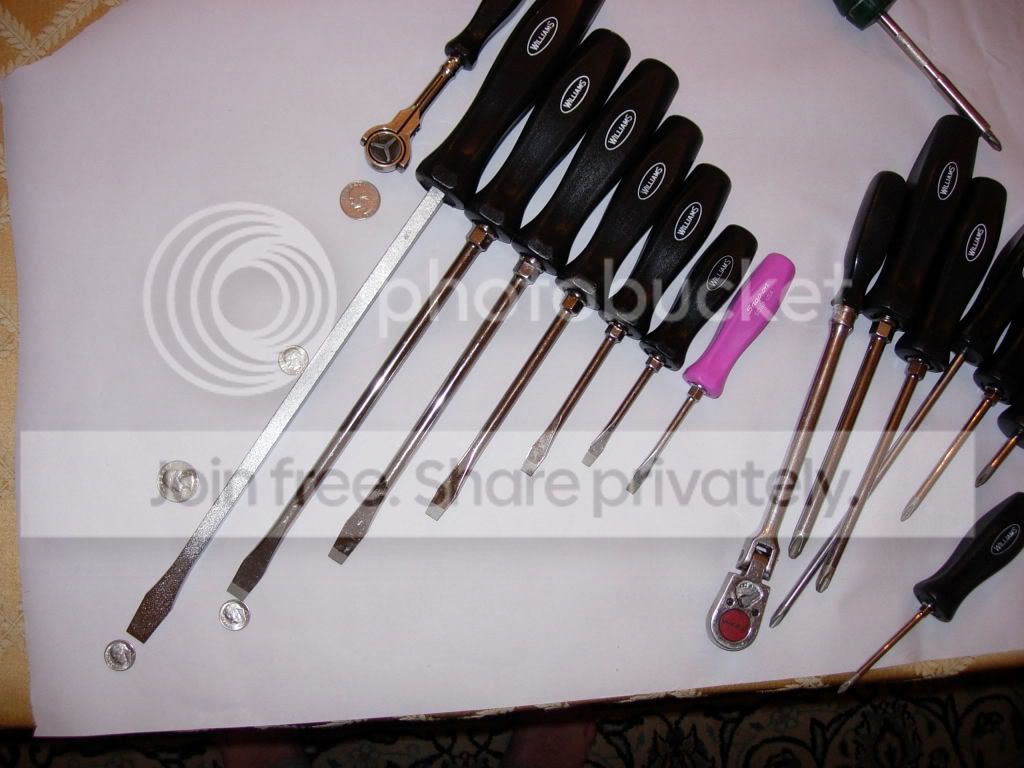
I just received my Williams 6 piece Phillips screwdriver 100P 6PDset in the mail today, the straight set is backordered.
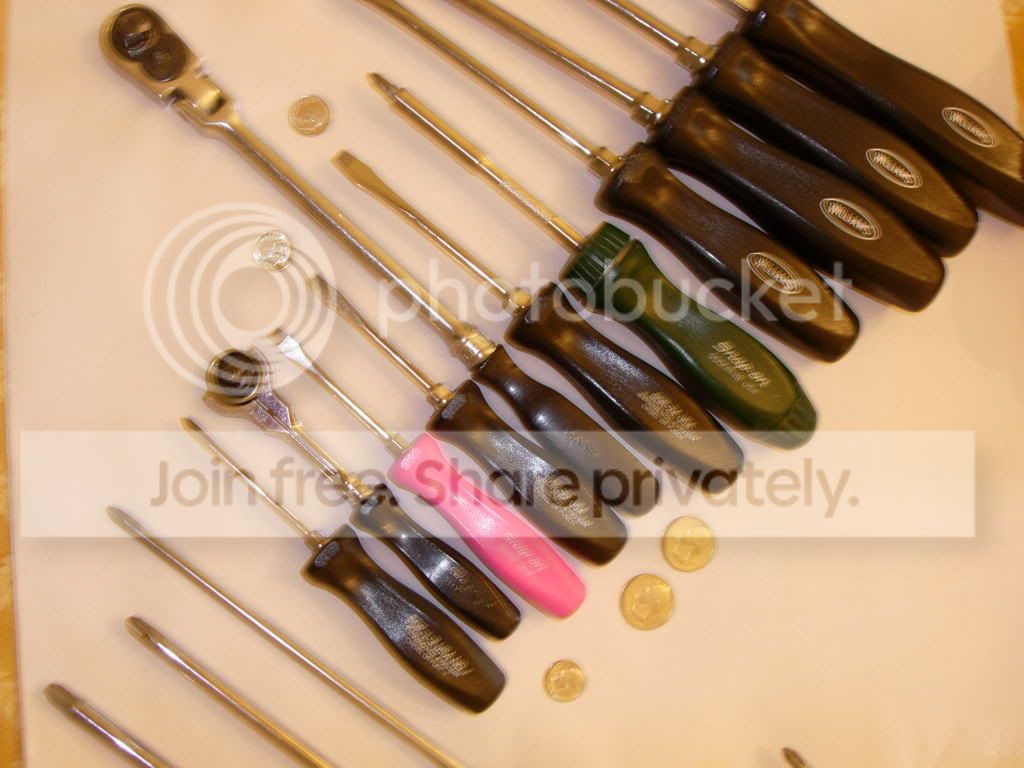
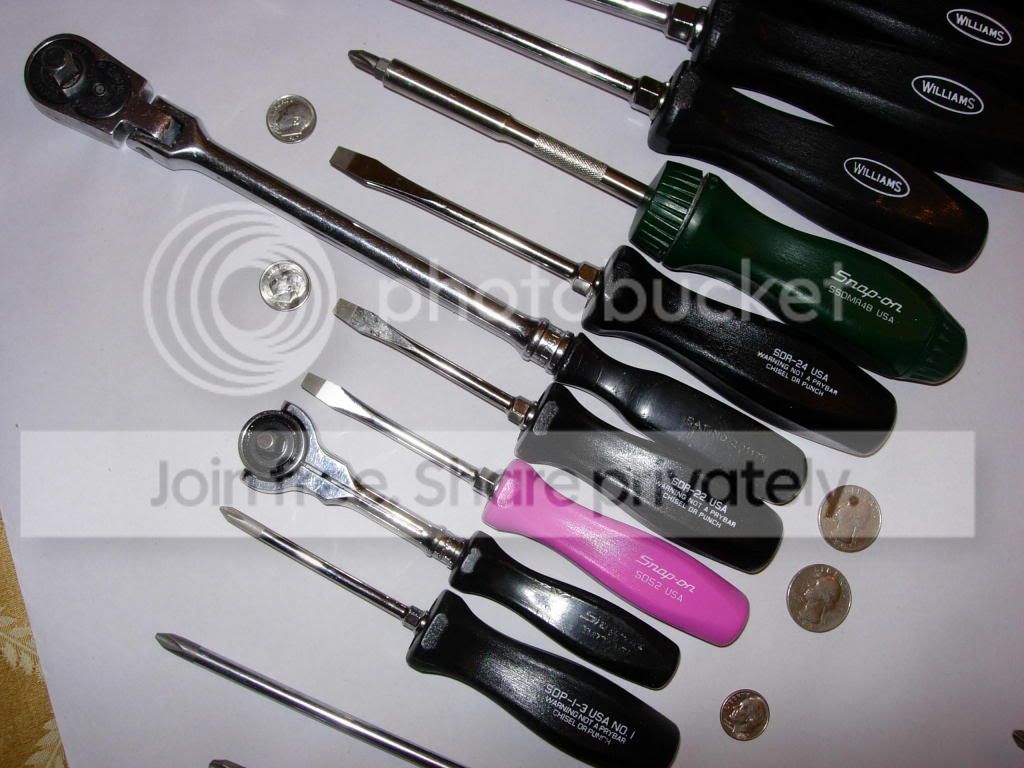
Upon first look they are identical to the Snap-on’s. After comparing them up close, I had to pull out a digital caliper to compare with my first generation Snap-on and one second gen. I noticed a few differences. Comparing the large #4 Philips, the shank where a ½ wrench could be used for extra torque on the Snap-on is .375in tall vs. .300in for the Williams, a ½ open end wrench fits fine on both. This could be due to the age/design difference, SSDR64 USA No 4 vs. SDP 4-6 USA NO 4.
To put that in viewable terms, the open end width of my Snap on OEX16 wrench is .24in. The Snap On shank allows a second ½ wrench to grip about half the shank(.24in+.12in = .36in), the second wrench on the Williams grips only about a quarter(.24in + .06=.30in). The box end of my OEX16 is .367 wide, perhaps the Snap on shank was designed to completely engage the shank with the box end. For the number 2 Phillips, you cannot see the difference maybe .232in vs .220in for the Williams.
The only second gen Snap On Phillips I own is a SDDP31, the blades are again identical lengths, the shank height on the Snap on is .210 vs .172, we are talking maybe 1/32 of an inch difference in shank height. Shaft dia difference on the Number 1 & 2 Phillips is thicker by .003in, for the #4 is thicker by .008(.373-.365), but that may be due to 10-20 years of occasional use or different machining.
The handle on the Williams is .105 longer, a little under a 1/8 of an inch. The black plastic handles may be .024in difference in width at the widest point 1.044 vs. 1.020. I can tell the used Snap-on is a little smoother due to use and wear. It is very hard to see the difference when holding them together. If you put them on the desk, point them at each other, the Phillips tips are the same height.
The No. 1, 2 and the stubby have the anti camout ribs.
The stubby has three flats. If you think of a clock face, you can grip 12, 4, and 8 on the back. The inner flats are 2, 6, and 10 on a clock face ( just noticed that) sorta a double triangle vs. four sides on the older series, the overall length of the stubby is 3.5in.
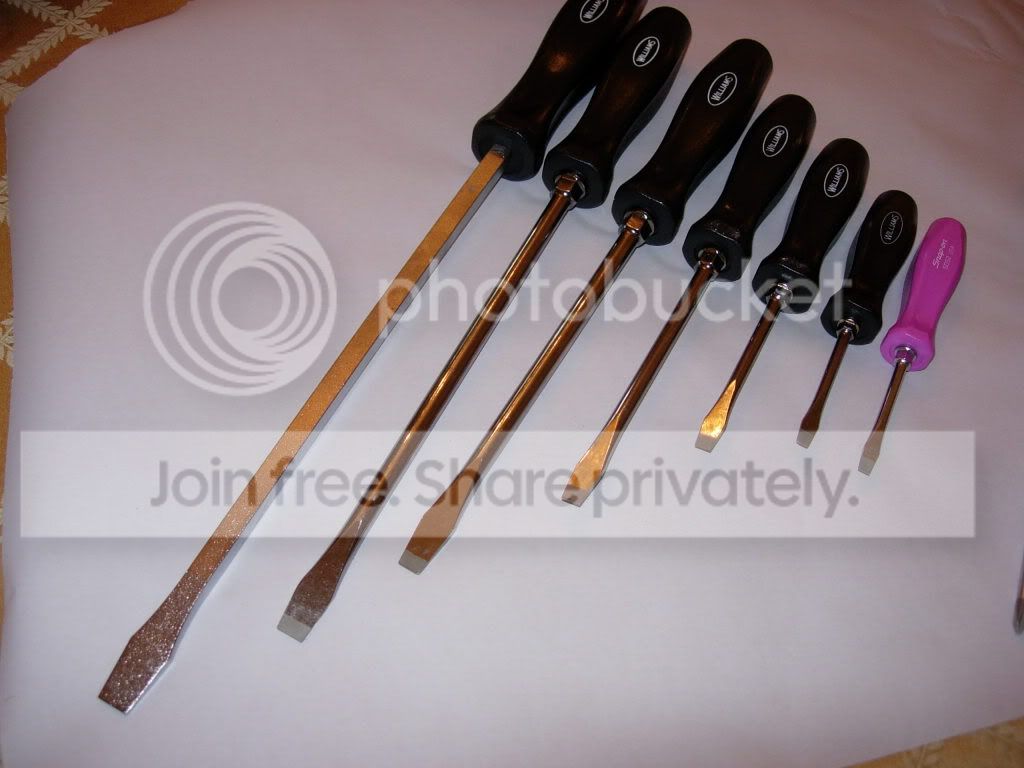
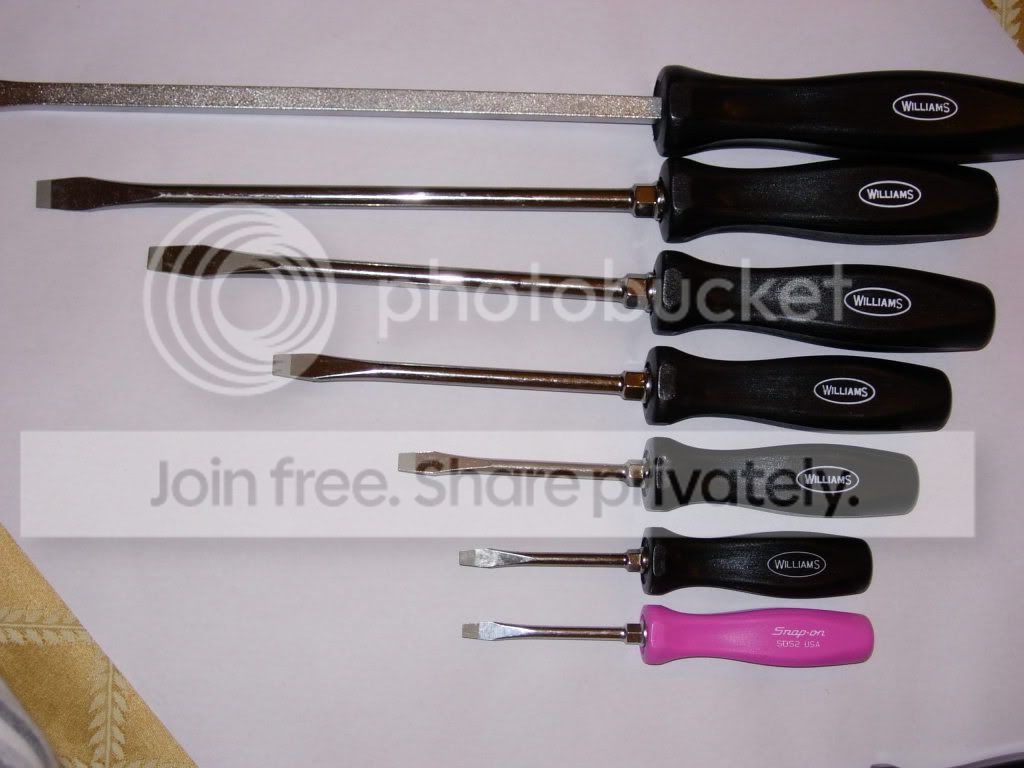
During the measuring and comparing I found myself picking up a Williams thinking it was my Snap on. The black plastic handles, chrome finish and tips appear to be identical; the tips have the same great grip on a screw. They feel right in your hand, the balance is right.
The machining groves on the plastic are identical, same with the machining in the front where the blades are inserted. They appear to be identical. If not for the board, I would put them in my tool box and never bother to measure them. I really don’t think you could see the differences with a picture. I have rambled on more than I intended.
Upon first look they are identical to the Snap-on’s. After comparing them up close, I had to pull out a digital caliper to compare with my first generation Snap-on and one second gen. I noticed a few differences. Comparing the large #4 Philips, the shank where a ½ wrench could be used for extra torque on the Snap-on is .375in tall vs. .300in for the Williams, a ½ open end wrench fits fine on both. This could be due to the age/design difference, SSDR64 USA No 4 vs. SDP 4-6 USA NO 4.
To put that in viewable terms, the open end width of my Snap on OEX16 wrench is .24in. The Snap On shank allows a second ½ wrench to grip about half the shank(.24in+.12in = .36in), the second wrench on the Williams grips only about a quarter(.24in + .06=.30in). The box end of my OEX16 is .367 wide, perhaps the Snap on shank was designed to completely engage the shank with the box end. For the number 2 Phillips, you cannot see the difference maybe .232in vs .220in for the Williams.
The only second gen Snap On Phillips I own is a SDDP31, the blades are again identical lengths, the shank height on the Snap on is .210 vs .172, we are talking maybe 1/32 of an inch difference in shank height. Shaft dia difference on the Number 1 & 2 Phillips is thicker by .003in, for the #4 is thicker by .008(.373-.365), but that may be due to 10-20 years of occasional use or different machining.
The handle on the Williams is .105 longer, a little under a 1/8 of an inch. The black plastic handles may be .024in difference in width at the widest point 1.044 vs. 1.020. I can tell the used Snap-on is a little smoother due to use and wear. It is very hard to see the difference when holding them together. If you put them on the desk, point them at each other, the Phillips tips are the same height.
The No. 1, 2 and the stubby have the anti camout ribs.
The stubby has three flats. If you think of a clock face, you can grip 12, 4, and 8 on the back. The inner flats are 2, 6, and 10 on a clock face ( just noticed that) sorta a double triangle vs. four sides on the older series, the overall length of the stubby is 3.5in.
During the measuring and comparing I found myself picking up a Williams thinking it was my Snap on. The black plastic handles, chrome finish and tips appear to be identical; the tips have the same great grip on a screw. They feel right in your hand, the balance is right.
The machining groves on the plastic are identical, same with the machining in the front where the blades are inserted. They appear to be identical. If not for the board, I would put them in my tool box and never bother to measure them. I really don’t think you could see the differences with a picture. I have rambled on more than I intended.