To avoid these ads, REGISTER NOW!

How are you door openings formed up on your slab?

krazykevin76

Active member
Joined
Sep 9, 2013
Messages
35
Location
Texas
Will pour my 40x50 shop slab Tuesday. The builder told me to place 2x2's around the edge of my forms so the tin will have a place to sit. Then anywhere I have a door (I'm installing roll up doors) just leave the 2x2's off. My concrete guy suggested that he make a slope, say from about 8 to 10 inches into the slab and slope it down 1 1/2"s to mate up with the lip where the tin will sit. Sounds like a good idea to me because one of my doors is facing north and I could see a good cold front blowing rain into the shop under the door.

That idea helps because I will do a second pour one day and add a porch on to the east side of my building. The porch surface will be the same height as the bottom of the lip on my main slab. With out doing a slope I'll have 2 different elevations from the shop to my porch, which I don't think I would like.

What you guys have or how would you change yours if you could do it again?

Thanks
 
To avoid these ads, REGISTER NOW!

nehog

Well-known member
Joined
Jan 2, 2010
Messages
7,935
Location
Jaffrey, NH
1. What kind of building?
2. The 2x2 is what my building had, done the way your builder suggests.
3. I'd be very careful about slopes so that water does not run into the walls and cause rusting and/or rot.
4. If this is a factory built (say, steel) building, you should get plans for the foundation/floor that describes exactly how to build it.
5. If you do your add-on slab at the level of the bottom of the lip, you will have two levels with the add-on slab being about 2 inches lower than the shop floor.
 
OP
K

krazykevin76

Active member
Joined
Sep 9, 2013
Messages
35
Location
Texas
Sorry for not putting some more details. This is going to be a 40x50 metal building. It will be made from 4" square tubing. My builder doesn't have plans. After I pour the slab, the builder will come out to verify demensions and then build my building. He just mentioned the 2x2's for everywhere there will be tin, and then where the doors will go, roll up style, he said just leave the 2x2's off so it will be flat. My concrete guy suggested he build a slope that slopes from the door to the edge of my slab. That slope will end up the same depth as the bottom lip for my tin, which will be 1 1/2".

I was curious how others had their foundation formed for their doors. Like do your doors set on the slope, or does the door set on the flat part of your slab and then the concrete slopes from there. I've also had suggested to me to put like a 2x6 down do I'll have the same lip, but it will just sit another 3 1/2" into my slab. But I think I like the idea of a slope instead of the lip where my door will sit.

Thanks
 

nehog

Well-known member
Joined
Jan 2, 2010
Messages
7,935
Location
Jaffrey, NH
1. He just mentioned the 2x2's for everywhere there will be tin, and then where the doors will go, roll up style, he said just leave the 2x2's off so it will be flat.


2. My concrete guy suggested he build a slope that slopes from the door to the edge of my slab. That slope will end up the same depth as the bottom lip for my tin, which will be 1 1/2".

I was curious how others had their foundation formed for their doors. Like do your doors set on the slope, or does the door set on the flat part of your slab and then the concrete slopes from there. I've also had suggested to me to put like a 2x6 down do I'll have the same lip, but it will just sit another 3 1/2" into my slab. But I think I like the idea of a slope instead of the lip where my door will sit.

Thanks

1.
This appears to be what I have. But I have a building that was planned and built by a building company not some guy with a truck. I get some bad vibes on this setup...


2. Sorry, this makes no sense to me at all. You slope to the door, away from the walls.

You need to design this from the start or at the end you're going to be unhappy with the result. You'll have water where you don't want it, things won't fit right, etc. There needs to be a general contractor who is in charge, making sure that there are no mistakes, and that each sub is online and understands what is needed. I don't see that with your project and it sounds like a train wreck waiting to happen.

IMHO you don't just slap together some steel and call it a building. You need to engineer it to handle the conditions of the building site, the materials, and construction methods. Do you have a building permit? For that matter, where is this building? And to be kinda a jerk, there is no way that 4x4 steel tube would be strong enough to build a building which would be experiencing snow, wind or seismic loads. My 30x60 building has huge I beams holding things up.
 
OP
K

krazykevin76

Active member
Joined
Sep 9, 2013
Messages
35
Location
Texas
Wow! Yes, jerk comes to mind.

I'm sorry for not being clear on my question but you sure make a lot of assumptions from me asking a single question about how others on the forum have their concrete formed at their door openings. No one is throwing steel together from a truck. Where you come up with this I have no clue. These buildings are engineered for the Texas coast. They have to be to be built and insured around here. They are rated for 140+mph winds. They are made from 4" square tubing. Hell, my old shop was made from 2" square tubing and it was rated for 120mph. So your notion of a 4x4 building not being strong enough is totally false.

I had a simple question that I needed some ideas on. Maybe it's my fault for not being clear on my question and I will apologize to the forum, but for you to take the time and thought to come up with your post and to go ahead and call yourself a jerk for absolutely no reason, is disappointing. Thankfully everyone else I've dealt with on the forum has been polite and very helpful.

Yes, your name is Peter, and I see that you "will never grow up"
 

Daniel Dudley

Well-known member
Joined
Sep 4, 2009
Messages
3,546
You should do what your builder suggests, and you should have him confirm the measurements before the pour. Once it's poured it is literally set in stone.

I don't build anything without plans, even if it is just a rough sketch with the numbers written on it. Your sketch should be supplied by the builder.

He should still check it before you pour. Now I know this isn't the advice you were asking for, but it is all that I have got. People here will try to help you. Take the advice that works for you, and ignore the rest without commenting on it.

I'm not coming back to this thread, so don't even bother to reply.
 

nehog

Well-known member
Joined
Jan 2, 2010
Messages
7,935
Location
Jaffrey, NH
*plonk*


You asked questions, gave insufficient information, and I answered. If the building is engineered then the foundation/floor part of that engineering is what you follow, not some jerk on GJ. Come back in a few years and let us know how it is working out.</plonk>
 
OP
K

krazykevin76

Active member
Joined
Sep 9, 2013
Messages
35
Location
Texas
Thank you very much Nuttsgt. With that much slope into your slab, where does your door hit? I take it your door sits a few inches "on the sloped" part of your slab correct?

Thanks for helpful information.
 

BD1

Well-known member
Joined
Mar 18, 2007
Messages
4,602
Location
north side
I have seen it where the door bottom is actually 1 1/2'' below the inside slab. This way there is less chance of any wind, rain, snow, etc, coming in.
 
To avoid these ads, REGISTER NOW!

Falcon67

Well-known member
Joined
Jun 11, 2009
Messages
18,371
Location
Merkel, TX
Most door lips around here are formed like your tin lip, except with a 2x4 or 2x6 depending on how deep the door sits into the opening. That leaves a small lip to catch water. I personally just went with a flat opening. But, my door faces south which makes a difference.
 
OP
K

krazykevin76

Active member
Joined
Sep 9, 2013
Messages
35
Location
Texas
Thanks all. I think either way I won't mind, but I'm leaning towards the sloped idea. I'll find the profile of the door from my builder and go from there.


Thanks
 

Steroblan

Well-known member
Joined
Jan 31, 2012
Messages
259
Location
Northern Calif
My shop doors have a 3/4" pocket set into the concrete to prevent any sort of moisture from washing or blowing into the shop. It helps with dirt too.
 

Attachments

  • HPIM2268.jpg
    HPIM2268.jpg
    150.5 KB · Views: 118
  • HPIM2269.jpg
    HPIM2269.jpg
    145.2 KB · Views: 111
  • HPIM2271.jpg
    HPIM2271.jpg
    144.8 KB · Views: 113

Bruce4310TX

Well-known member
Joined
Nov 4, 2009
Messages
507
Location
Forth-Worth, TX
my 30x40 14' walls just built this summer 4" square tube 3/16. this winter we had 4" of solid ice held the load just fine so i think yours will also.
 

larry4406

Well-known member
Joined
Jan 27, 2006
Messages
19,118
Location
Northern Virginia
I used stem walls to support my wood framed garage (slab poured after fully framed).

I did not pour a weather lip in the slab at the garage door location. Instead, the concrete crew finished the slab with a slight downward taper at the location of the garage doors. Later my exterior concrete connected to the garage slab. My garage doors had a nice gasket seal at the bottom and never had wind driven rain challenge the seal.

The lack of the weather lip was ideal for rolling jacks in and out of the garage and was not a trip hazard. I will never do a weather lip again for my garages given a chance.

Pictures of my stem wall, garage slab and exterior concrete. Also, a typical garage slab detail with the weather lip depression (detail shows 2" but it typically is about 1" on the houses my company builds). The "line" on the garage slab is staining from where the garage door gasket sits in its normally closed position.

Hope this helps.
 

Attachments

  • Garage Stem Wall.JPG
    Garage Stem Wall.JPG
    46.6 KB · Views: 112
  • Garage Slab.JPG
    Garage Slab.JPG
    92.9 KB · Views: 129
  • Garage Slab Weatherlip.JPG
    Garage Slab Weatherlip.JPG
    48.4 KB · Views: 156
Last edited:

Kevin54

MEMBER EMERITUS
Joined
Jan 12, 2005
Messages
29,341
Location
Urbana, Ohio
I used stem walls to support my wood framed garage (slab poured after fully framed).

I did not pour a weather lip in the slab at the garage door location. Instead, the concrete crew finished the slab with a slight downward taper at the location of the garage doors. Later my exterior concrete connected to the garage slab. My garage doors had a nice gasket seal at the bottom and never had wind driven rain challenge the seal.

The lack of the weather lip was ideal for rolling jacks in and out of the garage and was not a trip hazard. I will never do a weather lip again for my garages given a chance.

Pictures of my stem wall, garage slab and exterior concrete. Also, a typical garage slab detail with the weather lip depression (detail shows 2" but it typically is about 1" on the houses my company builds). The "line" on the garage slab is staining from where the garage door gasket sits in its normally closed position.

Hope this helps.

I would like to see all garage floors done this way, and wish I had done it to mine at the time :thumbup:
 

Baclay9

Well-known member
Joined
Jul 1, 2013
Messages
71
Location
Central Oklahoma
Mine was just recently done and was done the way you are asking. 2x2 everywhere the steel will be and then sloped down @ the roll up doors to make the water run away.
 

bczygan

Well-known member
Joined
Nov 4, 2009
Messages
22,002
Location
DETROIT! Arsenal of Scrappers
It sounds like a Texas thing, this 4x4 tube frame. Could you guys post some photos of the structure?

And OP, we always chime in with lots of questions and suggestions on this forum. We like to get all up in your business, and we absolutely LOVE lots of photos of your project, from start to finish.
 
Last edited:

NUTTSGT

Super Moderator
Staff member
Joined
Sep 14, 2009
Messages
50,895
Location
Northern Central Ohio
Thank you very much Nuttsgt. With that much slope into your slab, where does your door hit? I take it your door sits a few inches "on the sloped" part of your slab correct?

Thanks for helpful information.

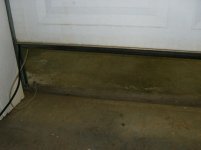
The taper starts right on the outside of the door. You can see where I sprayed the sealer with the doors just "off" the floor.

Since I was putting an overhang out front, I knew I wouldn't need alot of fall or have an issue with rain coming in. That is of course it's not a hard wind driven rain coming out of the north.
 
To avoid these ads, REGISTER NOW!
Top Bottom