To avoid these ads, REGISTER NOW!

Salt kills weeds better than Round-up (any downside???)

drivesitfar

Well-known member
Joined
Oct 23, 2013
Messages
36,017
Location
Pacific Northwest
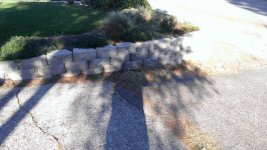
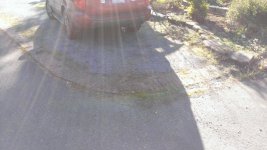
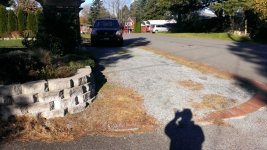
I heard rock salt would kill the weeds i have in my crushed rock parking area. as i was going to go pick some up my wife comes home from Costco with a 25 pound bag of salt for that purpose. it might have been 50 pounds, but at $8 I thought i'd give it a try. i put a few pounds on a nasty little area to weed next to my driveway and a block wall i built a few years ago.

then the next day i came home and my wife had salted most of the gravel parking area that had well rooted weeds that needed pulling. 2 weeks later it looked like this. i'm sold and might never buy another bottle of Round-up or weed killer again.

i'll still pull or spray weeds in my lawns, but wondering if there is a downside to salting weeds (and slugs).

thanks
 

Attachments

  • WP_20141116_005.jpg
    WP_20141116_005.jpg
    152.2 KB · Views: 2,293
  • WP_20141116_004.jpg
    WP_20141116_004.jpg
    149.2 KB · Views: 2,174
  • WP_20141116_006.jpg
    WP_20141116_006.jpg
    147.5 KB · Views: 2,169
To avoid these ads, REGISTER NOW!

killahog

Well-known member
Joined
Aug 3, 2014
Messages
825
Location
Morrow County Ohio
Thats interesting I can remember a friend of mine who used to put a tablespoon of salt underneath each of his tomato plants when he planted them. He thought it made them grow better, now you are using it to kill stuff.
 

jkwilson

Well-known member
Joined
Dec 5, 2012
Messages
758
Location
SW Indiana
Salt will run off and kill plants around the gravel as well as getting picked up by your vehicles causing them to rust. Not good at all
 

48RON54

Well-known member
Joined
Dec 27, 2013
Messages
2,666
Location
Inland Empire, CA
my wife uses a mixture of epsom salt, vinegar and something else to kill weeds..... it works better and lasts longer than any herbicide I've tried......to be fair, it is a dirt back yard that sprouts weeds in the winter, so there is really no worry about it killing something it shouldn't.
 
OP
D

drivesitfar

Well-known member
Joined
Oct 23, 2013
Messages
36,017
Location
Pacific Northwest
All: interesting comments so far. i'm also thinking of salting the blackberries in an area where i want nothing to grow. not sure if that will work, but round-up only kills them for maybe a season if that.

I've seen vinegar eat a cast iron vise so not surprised that it might kill a few weeds.
 

rburke65

Well-known member
Joined
Nov 10, 2007
Messages
12,349
Location
Canfield, Ohio
I have read about the Epsom salts, vinegar solution. I think you add a little liquid soap to it so the solution will stick better to the weed.
 

4xdog

Well-known member
Joined
Aug 18, 2012
Messages
5,611
Location
Santa Fe, NM
It's kind of an odd comparison to consider glyphosate herbicicdes and rock salt as "interchangeable" chemistries.

Roundup glyphosate is broken down rapidly -- it's a *very* short term herbicide that lets the land grow again. Salting the earth inhibits plants from growing back for a long time (not good where replanting may be desired), and will tend to spread through the ground (not so good at staying where it's put).

Think of them as short term plant poisons and long term ground poisons.
 

chops101

Well-known member
Joined
Jul 15, 2013
Messages
554
Location
S. FL
Yes, my wife also mixes up 1 gal vinegar, 2 cups Epson salt, 1/4 cup dawn dish soap in a gallon sprayer and goes at the weeds on the back patio. Works great and one less thing I have to do.
 

Davefr

Well-known member
Joined
Jan 7, 2010
Messages
11,832
Location
OR
If you calculate the cost per sq ft at the effective appliction rate, I bet generic roundup would be cheaper. 3 oz of roundup in 2 gallons of water can spray a decent size area.

Roundup won't hurt the soil, salt will. Also rain runoff can take it where you don't want it to go.

Roundup used to be real expensive but now that Monsanto's patent has expired it's really pretty cheap.
 

VictorBravo

Well-known member
Joined
Jul 13, 2014
Messages
321
Location
Asotin County, Washington
Roundup or glyphosate kills plants that are actively growing (most of them, anyway), but does not kill seeds or dormant plants. As said above, it's useful for clearing an area of vegetation for replanting. It does not prevent new growth, (with exception, as in if you spill a bunch of concentrate).

Salt kills by preventing roots from absorbing moisture. Nothing except maybe some really unusual plants can grow on salted soil until it has been diluted. It gets diluted by rainfall or watering, with runoff that can ruin other areas, or seepage that might affect high water tables.

How long it is effective depends on amount of water, drainage, soil type, etc. It's a relatively long term devastation approach, which is why one of the most horrifying war tactics of ancient times was "salting the earth," which meant that the city would essentially be dead for a long time because of no agriculture.
 

jkwilson

Well-known member
Joined
Dec 5, 2012
Messages
758
Location
SW Indiana
If you calculate the cost per sq ft at the effective appliction rate, I bet generic roundup would be cheaper. 3 oz of roundup in 2 gallons of water can spray a decent size area.

Roundup won't hurt the soil, salt will. Also rain runoff can take it where you don't want it to go.

Roundup used to be real expensive but now that Monsanto's patent has expired it's really pretty cheap.

Not just cheaper, insanely cheaper. I can mix Roundup for .19 a gallon. Vinegar costs ten times that much.
 

Pluribus

Well-known member
Joined
Dec 16, 2012
Messages
2,143
Location
Skagit County, WA
I would not sprinkle rock salt around, as I would not want to track it around on my tires and have it fling up under my vehicles, or on my shoes where I'd track it into the house.

I've tried the vinegar/table salt/dish soap combo, using the 5%(?) acetic vinegar found at Costco, and it didn't work very well. I have some 20% acetic now that I got at the farm supply, which I will be using when things dry out. You can find lots of recommendations for the mix online, but a lot of them go with about a cup of table salt per gallon of vinegar, then about a tablespoon worth of dish soap to act as a surfactant to cut the waxy coating on some leaves. With this the salt is dissolved, and after you spray it, there's a limited amount of time where you might track it onto something else.

If you do this, keep in mind the 20% acetic vinegar is downright dangerous stuff! You don't want it on your skin, and especially not in your eyes. Think really good PPE coverage.

Not sure if this stuff will touch the blackberries, which I usually count on having to dig up. They'll probably survive a nuclear war. Have you considered goats? Napalm?
 

Bondo

Well-known member
Joined
Dec 22, 2007
Messages
2,549
Location
Greenfield, Maine
Not sure if this stuff will touch the blackberries, which I usually count on having to dig up. They'll probably survive a nuclear war. Have you considered goats? Napalm?

Ayuh,.... store brand Bleach,.....
 
OP
D

drivesitfar

Well-known member
Joined
Oct 23, 2013
Messages
36,017
Location
Pacific Northwest
ALL: short of getting a goat which i'm not very close to getting my wife to agree to i'm seeing some great ideas that can be used.

i thought spreading salt on my 15 yards of crushed gravel wouldn't hurt and would very much like it permanent. even if i put a weed felt under the gravel i'm betting the weeds would just grow in the gravel.

funny story about blackberries surviving a nuclear blast. those and the crows are taking over our planet.

so how much is a gallon of non diluted Round-up now if it's so cheap?

keep the good stuff coming in guys
 
To avoid these ads, REGISTER NOW!

k1rodeoboater

Well-known member
Joined
Feb 1, 2011
Messages
357
Location
NC
One of the other reasons not to use salt. If you're caught by someone doing it the fines in some local governances are pretty hefty in addition to you having to fix the damaged areas (which also includes areas affected by run-off from your property).

If you don't want to use round-up then use vinegar to kill the weeds mixed with some dish soap. But the concentration has to be fairly high as well as the acidity. You basically need the stuff they use in labs to clean equipment, and this stuff will burn your skin on contact so wear gloves and use a respirator when spraying. It basically burns the weeds leaves and roots. Vinegar you get at the grocery store really isn't strong enough to kill the tougher weeds.

Honestly though, round up is by far the cheapest and probably the safest solution overall.

If you have a hardscape and you want to keep weeds out of it the best way is to put down pond liner instead of the weed cloth. You have to factor in drainage from the hardscaped area, but this is easy enough to plan for so you don't have a giant puddle that has to evaporate. The weeds won't puncture through it unless you poke a hole through or something from underneath it does. Any soil that does accumulate in there that can sprout a weed will be minimal and you can easily pull the weeds out. If a lot of dirt piles up then you can rake the rocks into piles and hose it off. Though be forewarned this option is not the cheap way to do things but it certainly does make for easy maintenance of hardscapes. This won't work for the OP's application but figured it's a tip some of you might find useful.
 

jgorm

Well-known member
Joined
Jan 5, 2015
Messages
463
Location
San Diego
my wife uses a mixture of epsom salt, vinegar and something else to kill weeds..... it works better and lasts longer than any herbicide I've tried......to be fair, it is a dirt back yard that sprouts weeds in the winter, so there is really no worry about it killing something it shouldn't.

I tried that and it ***** compared to glycophosphate. multiple applications didn't kill the weeds.

I've used salt too. Probably 400+lbs. If you want nothing to grow, and it doesn't rain a ton where you live, it works good. Home depot had 40lb for $4 used for water softness. I moved to a place with trees everywhere do salt is not an option. I just ordered a backpack sprayer and some off brand glycophosphate.
 

AMCguy

Well-known member
Joined
Dec 23, 2009
Messages
2,022
Location
Sunshine Coast, BC Canada
I've been in the lawn and landscape maintenance business since 1986. I can tell you first hand;

The use of non specific, post emergence herbicides like roundup, is getting to be harder and harder to sell people on. With all the Monsanto hating and tree hugging going on these days the best thing to come along is vinegar. More specifically, the widespread acceptance of it as a herbicide.

The vinegar to use is "pickling vinegar" it's 7% acetic acid. Table vinegar is 5%. That's a big difference in acidity and it makes a big difference in effectiveness. I can buy a gallon for $3.00 and add a squirt of dish soap to it, throw it in my sprayer and put a pretty good hurting on about 1,000 square feet. If I have to do it again to get 100% kill I don't mind.

All the horticultural vinegars you find in the garden centres are essentially the same thing at many times the price. On the front of any pesticide product regardless of what it's used to control, in little tiny print is something called the "guaranteed minimum analysis" or guarantee for short. Read it. It names the active ingredient and the amount in which it's present. Brand has little to do with it, but if it has "eco"or "enviro" in the name, be prepared to pay.

Salt is a very effective soil sterilant. It's also cheap and readily available. Use it responsibly because it lasts a long time and may not stay where you put it.

For a very effective two step approach, apply vinegar and after you get control, hit it with salt.
 

Scotland

Well-known member
Joined
Jan 16, 2015
Messages
88
Location
Greenville, SC
ALL commercial herbicides are salt based. The key active ingredient in Roundup is "IsopropylAmine salt of glyphosate." Add some water and soap (surfactant) and you have Roundup. When you look at the bottle of any herbicide and see the active ingredient ending in "ine" that indicates a "salt" of some sort. The best way to buy a roundup knockoff is to read the ingredients and buy the one with most goodie (active ingredient) for the least amount of money.
http://www.naturescountrystore.com/roundup/page2.html
 

CNGsaves

Well-known member
Joined
Sep 26, 2012
Messages
13,233
Location
KS and OK
Don't know where these supercheap RoundUp prices are coming from . . . no such thing around here. $20 might get you the skinny quart jug concentrate of RoundUp at HomeDepot or WalMart. I've seen big jugs of RoundUp but that was ready-to-use (ie already diluted with water) & those aren't cheap either. No such thing as 19 cents a gallon RoundUp mix . . . not with store bought retail.

When I mix up 2 gallon sprayer of RoundUp mix from concentrate, IIRC I'm using full label rate of 6 oz of concentrate for 2 gallons water.

For gravel driveway that will remain a driveway for decades to come, it's likely no big deal to apply salt as weedkiller for long-term coverage, in moderation. If you plan on converting it to flowerbed in year or two, then do not use salt. Also, if you've got running water across the driveway, then I wouldn't use high concentrations of salt there as the salt will leach into yard or wherever that water flows.

Heck as kid growing up, we spread dirty diesel fuel, old motor oil, & contaminated gas on sandy driveway to keep from it blowing and also kill plants. Never migrated to yard and yes has long-term effect of killing plant life. For lifetime driveway, the oil treatment has served it's purpose just like an "oil road" or asphalt road has same effect of killing plant life. Heck grandpa used straight diesel fuel in sprayer when he was killing small trees or weeds along the electric fence.
 

bushmechanic

Well-known member
Joined
Mar 17, 2014
Messages
4,820
How long it is effective depends on amount of water, drainage, soil type, etc. It's a relatively long term devastation approach, which is why one of the most horrifying war tactics of ancient times was "salting the earth," which meant that the city would essentially be dead for a long time because of no agriculture.

Yup.

You'd better be sure you don't ever want anything to grow there again. Once you saturate it enough, you've essentially killed the soil.

As noted, you'll make the land barren for ages if you really go at it; and that's the side effect. Saturating the area with salt essentially ruins it.

It took thousands of years to build up the top few feet of dirt, and you just killed it, and it's too late for even your grandchildren to change their minds if you concentrate it to that point.

Now, that may be fine. It's not as if you're causing some widespread ecological disaster by killing your driveway, but again as noted, before the area is saturated, some is going to run off, and you could end up damaging nearby patches of foliage. Permanently.

You'll kill a few bugs, and as a result run off some other critters, but aside from that you shouldn't really have too many problems.

If you just sprinkle some here and there, it shouldn't be an issue, but if you let it build faster than it can dissipate, you'll eventually reach a point of no return.
 

bushmechanic

Well-known member
Joined
Mar 17, 2014
Messages
4,820
Ayuh,.... If rock salt is such a weed killer, how come weeds grow so well in roadside ditches,..??..??

Because water is necessarily present when roads are salted, and ditches are designed to move water, which dissolves salt, and doesn't become saturated quickly enough to precipitate the required amount into the soil.

Make no mistake, if you dumped it faster than it could be swept away, or poured it in there on a dry day with only a bit of rain in the near future, those ditches would be clear.
 

Flange

Well-known member
Joined
Jun 9, 2010
Messages
424
Location
Northern England
It's kind of an odd comparison to consider glyphosate herbicicdes and rock salt as "interchangeable" chemistries.

Roundup glyphosate is broken down rapidly -- it's a *very* short term herbicide that lets the land grow again. Salting the earth inhibits plants from growing back for a long time (not good where replanting may be desired), and will tend to spread through the ground (not so good at staying where it's put).

Think of them as short term plant poisons and long term ground poisons.

What he said.

Why would you want to pollute the ground long term as well as impacting the surrounding area from run off etc?
 

Ed ke6bnl

Well-known member
Joined
Aug 1, 2005
Messages
495
Location
Agua Dulce, Calif.
I gave the vinegar stuff a try with poor results that maybe me though. I use salt for my home softener was thinking that when it regenerates I could easily collect the water/salt discharged from it and try to kill weeds, I live in the high desert and don't need to worry about other plants don't have any. will be giving that a try. along with store bought herbicide. Last year was my first year to use herbicides and that was a pleasure compared to all those years using hand tools to do it
 

dfiler2

Well-known member
Joined
Dec 15, 2014
Messages
2,858
Location
NW Minnesota
Funny how the road in front of my house has salt spread on it at least 50 times a winter, then the plow comes by and throws the salt rich snow 5 feet deep into my front yard, every year. My lawn is fine.
 

Davefr

Well-known member
Joined
Jan 7, 2010
Messages
11,832
Location
OR
Don't know where these supercheap RoundUp prices are coming from . . . no such thing around here. $20 might get you the skinny quart jug concentrate of RoundUp at HomeDepot or WalMart. I've seen big jugs of RoundUp but that was ready-to-use (ie already diluted with water) & those aren't cheap either. No such thing as 19 cents a gallon RoundUp mix . . . not with store bought retail.

They key is to look for generic roundup. The best place to buy it is a farm store. (vs. brand name Roundup at full price)

Never buy ready to use Roundup!!! You're paying a high retail price for 98% water.
 
Last edited:

JAckal

Well-known member
Joined
Oct 4, 2009
Messages
66
Location
Nw Arkansas
I can remember some of the old timers talk about a place they didn't like "They should burn it down, and salt the earth so nothing will ever grow there again". Don't know if it was true, but they sure said it a lot.
 

Will S.

Well-known member
Joined
Apr 15, 2010
Messages
446
Location
The First State
To anyone considering using salt as a vegetation killer, if you are on well-water, I wouldn't even consider it. The salt will filter down to and contaminate the aquafer.
 

jgorm

Well-known member
Joined
Jan 5, 2015
Messages
463
Location
San Diego
ALL commercial herbicides are salt based. The key active ingredient in Roundup is "IsopropylAmine salt of glyphosate." Add some water and soap (surfactant) and you have Roundup. When you look at the bottle of any herbicide and see the active ingredient ending in "ine" that indicates a "salt" of some sort. The best way to buy a roundup knockoff is to read the ingredients and buy the one with most goodie (active ingredient) for the least amount of money.
http://www.naturescountrystore.com/roundup/page2.html
We are talking about salt as table salt or NaCl. Most chemicals are salts and they can be VERY different.

I can remember some of the old timers talk about a place they didn't like "They should burn it down, and salt the earth so nothing will ever grow there again". Don't know if it was true, but they sure said it a lot.
That's where I got the idea from old bible style stories where they salted the earth.
To anyone considering using salt as a vegetation killer, if you are on well-water, I wouldn't even consider it. The salt will filter down to and contaminate the aquafer.
True, but it would probably take 100s of years of heavy yearly applications.
 
To avoid these ads, REGISTER NOW!
Top Bottom