To avoid these ads, REGISTER NOW!

The WWII Mechanics' Kit: a Living History Display

To avoid these ads, REGISTER NOW!
OP
P

Private Lugnutz

Well-known member
Joined
Mar 30, 2012
Messages
30,473
Location
The Authentic Jersey Shore
BACKGROUND

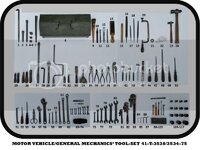
One of these kits - the grandfather of the wheeled Pelican-case "GMTK" Army mechanics use today - was issued to every Army mechanic serving at a 2nd Echelon maintenance depot (or "motor pool") during WW2. It was called the Motor Vehicle Mechanics' Tool-Set until late 1943, and the General Mechanics Tool-Set in 1944 and 1945.

It weighed about 55 lbs.!

REFERENCES

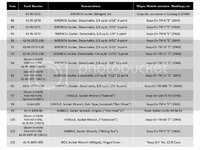
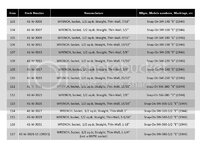
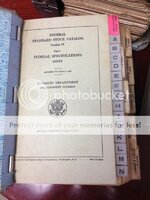
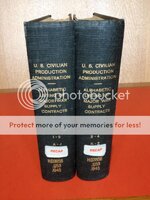
Research occupied as much of my time for this project as actual tool collecting. Here are photos of some of the original reference documents I used to identify the contents of the kit, the specifications for each tool, and its suppliers.

ORD 5

IMG_4129_zps37ddaaa5.jpg

ORD 6

Coverpage_zps02c6d09b.jpg

Federal Specifications

IMG_4057_zpsec656ed2.jpg
IMG_4062_zpsd8aa5e75.jpg

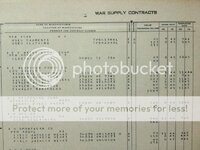
CPA War Supply Contracts

IMG_3094_zpsd337bd18.jpg
IMG_3112_zpsb430496d.jpg

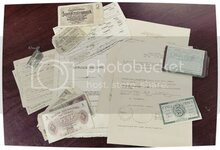
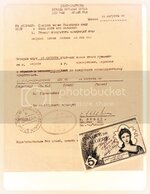
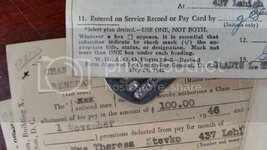
PERSONAL EFFECTS

The letter is fictional, but historically accurate, and all the memorabilia is original, from my father, uncles, and a great aunt, all WWII veterans.

* The layout for my kit is from the Quartermaster Corps Truck Company Handbook, TM 10-475, dated December 1943. (Some of the tools in my kit, included in later war kits, were added in subsequent manuals, which used different layouts, but I like this early layout best.)

END NOTE

I've been collecting this kit for a long time, mainly through flea markets and estate sales, and I want to thank everyone at GJ who replied to my WANTED ad, providing some of the final pieces.

I hope you enjoyed looking at it as much as I enjoyed putting it together!
 
Last edited:

Craptain

Well-known member
Joined
Apr 18, 2013
Messages
4,027
Location
Tampa Bay FL
That is a really nice job you did. I am very impressed with the research and collection.

Sent from my LG-D801 using Tapatalk
 

Bruce Lancaster

Well-known member
Joined
Apr 3, 2006
Messages
1,642
This is a crossing point between tool collecting and a doctoral dissertation in technical history!
The word "awesome" has been abused in recent years; this is where it actually applies!
 

snapmom

Well-known member
Joined
Sep 4, 2008
Messages
3,512
Location
Florida
It is odd that the midget snap on tools are 1/4 dr and not 9/32. Both were made with the E code.
 
OP
P

Private Lugnutz

Well-known member
Joined
Mar 30, 2012
Messages
30,473
Location
The Authentic Jersey Shore
Thanks, all. I appreciate your appreciation.

Hi Snapmom,

The US Army Air Corps liked the 9/32" square drive and they did buy from Snap-On and Plomb. The Quartermaster Corps (QMC) and Ordnance Department used 1/4" square drive exclusively. As I know you know, Snap-On was late to the 1/4-drive game. They were cleverly able to put out a ratchet as early as 1943, because it used all the same components as the 9/32-drive ratchet, with a different drive plug. It took longer to set up a new line for sockets and other handles and extensions, though. Prior to late 1944, the QMC and Ordnance Dept, which was responsible for all wheeled vehicles and maintenance, bought their 1/4-drive sets from others, primarily Stevens-Walden, Duro-Chrome, SK, and New Britain.
 

elvee

Well-known member
Joined
Nov 1, 2006
Messages
309
Location
Atlanta, GA
Lug nuts, that is absolutely amazing. Having a green iron bug myself, and having friends who have succumbed, I know what is involved in putting that together. Are you involved with any of the reenactor groups or do you make it to any of the big gatherings?
 

RM209

Well-known member
Joined
Apr 17, 2009
Messages
892
Location
MD
Lug: Very cool! Every so often I run across some of the WWII stuff (both Plomb and Snap-on) and get a kick thinking about the trucks and airplanes the tools may have been used to service.

Thanks,

RM209
 
OP
P

Private Lugnutz

Well-known member
Joined
Mar 30, 2012
Messages
30,473
Location
The Authentic Jersey Shore
Thanks, elvee. I prefer setting up static Living History Displays at schools or fairs or car shows (I drive a fully-restored Willys 1942 MB) to re-enacting, and yes, I do attend rallies - usually Military Vehicle Preservation Association sponsored. I work part of the time at Aberdeen Proving Ground in Maryland (just north of Camp Holabird, where the jeeps were tested in 1941 and 42) and there is a big one there every year.

I know that "kick" well, RM209! :)
 
OP
P

Private Lugnutz

Well-known member
Joined
Mar 30, 2012
Messages
30,473
Location
The Authentic Jersey Shore
'Zackly, captain14! That's one of the characteristics of the kit that appeals to me the most: it's simplicity and versatility. All of the portable master mechanics' kits from that era - from Snap-On, Plomb, Bonney, etc - all had that same quality. No multimeters. No pneumatics. No digital pressure gauges. Of course, it has to be said - no computers or solid state electronics, either.

If you're wondering why there are no pullers, lifters, torches, compressors, hoists, etc, I will point out that these were individual kits at the depots closest to the action, for basis service and repair. Sometimes the depots weren't even a facility - just some trucks and a shelter. There was much more equipment and tools at the depots in the rear, where major repair and overhauls were done.
 

captain14

Well-known member
Joined
Dec 19, 2012
Messages
7,019
Location
Near College Park Maryland 20740
GJ member HSpencer (Small Operation Garage) actually described the responsibility of each level of the military motor pool in his thread. Hopefully he will chime in here and add additional insight.

THats how I feel working on my 1987 Dodge D150. one toolbag pretty much handles the majority of the work.
 
To avoid these ads, REGISTER NOW!

captain14

Well-known member
Joined
Dec 19, 2012
Messages
7,019
Location
Near College Park Maryland 20740
'Zackly, captain14! That's one of the characteristics of the kit that appeals to me the most: it's simplicity and versatility. All of the portable master mechanics' kits from that era - from Snap-On, Plomb, Bonney, etc - all had that same quality. No multimeters. No pneumatics. No digital pressure gauges. Of course, it has to be said - no computers or solid state electronics, either.

If you're wondering why there are no pullers, lifters, torches, compressors, hoists, etc, I will point out that these were individual kits at the depots closest to the action, for basis service and repair. Sometimes the depots weren't even a facility - just some trucks and a shelter. There was much more equipment and tools at the depots in the rear, where major repair and overhauls were done.

Military Aviation Units are set up the same way. Closer to the front lines, they do basic maintenance to keep it running and further back other units pick up more I depth repairs and maintenance. Military Medical Units are the same style, basic skills to keep you alive and send you on to other higher level of care units further back.
 
OP
P

Private Lugnutz

Well-known member
Joined
Mar 30, 2012
Messages
30,473
Location
The Authentic Jersey Shore
I have a near-complete original Willys MB jeep on-board toolkit (missing a WO-A 1100 marked drain plug wrench, always looking for it...), and I haven't yet decided on my next project, Snapmom, but chances are it will be military.

The funny thing is (ducking before I say this...), I'm not really a big Snap-On junkie! One of the benefits to Snap-On, and one of the main reasons I chose it for my centerpieces (1/2- and 1/4-drive socket wrench sets), is the date codes. They are one of the few mid-century Mfgrs who used them. Bonney, Wright, J.P.Danielson, and Plomb (for a vey short duration that did overlap with the beginning of WWII) were the others. Some of the other Mfgrs I chose have well-known wartime construction and marking characteristics (e.g., Duro-Chrome Circle-X DOEs and "G series ignition wrenches, Tobrin screwdriver blade sizes on the tip, Williams "ALLOY" Superrenches, etc), but I wanted this kit to be super-verified.
 

larry_g

Well-known member
Joined
Apr 28, 2007
Messages
16,867
Location
oregon
I have a near-complete original Willys MB jeep on-board toolkit (missing a WO-A 1100 marked drain plug wrench, always looking for it...),

.

Here is one of my pet peeves. A lot of guys on this forum looking for a particular tool and odds are another has it in the his junk box. People should take the time to post a picture of what they are looking for so that us non-collectors could maybe see what it is and recognize if we have it.

It's like the tool box you have for the kit you pictured. I have one that has no markings on it and I've always assumed that it was a school project or something. The box came to me from my father in law. I don't collect tools, I just use them. Since joining this board I discovered there are tool collectors out there, who'd a thunk it.

lg
no neat sig line
 
Last edited:
OP
P

Private Lugnutz

Well-known member
Joined
Mar 30, 2012
Messages
30,473
Location
The Authentic Jersey Shore
Here is one of my pet peeves. A lot of guys on this forum looking for a particular tool and odds are another has it in the his junk box. People should take the time to post a picture of what they are looking for so that us non-collectors could maybe see what it is and recognize if we have it.

GJ has a whole classified section for this standard practice, Larry, and I have used it quite often to include my final search for some of the more uncommon items in this kit. As for the MB kit, it has some extremely rare pieces (such as the drain plug wrench) that are so rare that a cottage industry in reproductions has cropped up around them, and the prices have become astronomical for the originals, when they pop up. (A Willys MB wheel puller, drain plug wrench, and brake bleeder wrench will put you back a monthly house payment or two!) For that reason, you will find lots of guys in our hobby have more or less resorted to staying in the background, hunting on their own, or collaborating with trusted partners.

I posted photos of MB kit stuff on previous incantations of this forum. There may still be one with a drain plug wrench in the archives somewhere, but here it is again...

DPW_zpspw0csrwo.jpg


It's like the tool box you have for the kit you pictured. I have one that has no markings on it and I've always assumed that it was a school project or something. The box came to me from my father in law.
If you post photographs, I'd be happy to help you identify the vintage and manufacturer (it is possible from the features, such as the shape of the cast iron feet, the welding method on the handles, the shape of the top tray handle and the number of oiler holes in the tray, and the number of hinge elements on the lids). They were made for many decades.


I don't collect tools, I just use them. Since joining this board I discovered there are tool collectors out there, who'd a thunk it.
I use modern tools to preserve, restore, and maintain wartime vehicles. I use some vintage tools in that process - and even in an emergency kit, but not the ones that have any real value. I treat collectible service tools like any other historical artifact that deserves a high, dry preserved place of honor in our automotive culture. They have a value beyond the utilitarian, as products of a golden age of US know-how, manufacturing, and might.
 
Last edited:

Gmonkee

Well-known member
Joined
May 9, 2010
Messages
2,717
PL, I do the Ford T tools by choice and by accident have more later Ford A a nd tractor stuff than ever. I have stumbled upon some military issue tools over time and got the better ones. A SO slider breaker bar with the 1945 date code was the best find. Too late to make it to Europe it was probably surplussed after the war stateside.

I have stumbled across a few DOE wrenches that fit the descriptions of the WWII military vehicle tool kits but the price of postage VS the value of the tool in most cases makes it a losing deal to sell. I am NOT stateside and international rates kill.

I find the stateside production tools during the war period to be more interesting as there were less of them sold and they wore out faster if heavily used. I have about 4 examples found in central Mexico right now.
 
OP
P

Private Lugnutz

Well-known member
Joined
Mar 30, 2012
Messages
30,473
Location
The Authentic Jersey Shore
I find the stateside production tools during the war period to be more interesting as there were less of them sold and they wore out faster if heavily used. I have about 4 examples found in central Mexico right now.

If you mean tools made during the war for civilian markets, it is an interesting area, Gmonkee. Other than manufacturers that explicitly marked them somehow (i.e,. tools with a "war finish" mark), though, it would be impossible to distinguish them from tools made for federal use, which had some form of wartime alloy ("ALLOY", AISI numbers, etc) marking and finish (naked steel, enamel, cadmium plating, or chemical process - phosphate, zinc, black oxide, parker, etc), unless they were found in some kind of unmolested NOS packaging. Also, War Production Board L Order 219, in late 1943, prohibited all civilian hand tool production. This is the same period when they were coming around in trucks and gathering up old tools for re-smelting. You can sometimes see a reference to these and earlier WPB restrictions in 'DISCONTINUED' notices stapled in the wartime era catalogs of the few Mfgrs who managed to publish them.
 
Last edited:

Bruce Lancaster

Well-known member
Joined
Apr 3, 2006
Messages
1,642
I just tracked down this great older post to re-read it, and now I want to bring it back to the top for anyone who might have missed it! Bruce
 

Gear Wolf

Well-known member
Joined
Feb 25, 2015
Messages
567
Thank you for putting this all together and taking the time/effort to show it to us here! An excellent opportunity to take a ride on the way back machine! ^_^
 

twertsy

Well-known member
Joined
Jan 5, 2014
Messages
6,725
Location
Reedville, VA
I have a near-complete original Willys MB jeep on-board toolkit (missing a WO-A 1100 marked drain plug wrench, always looking for it...), and I haven't yet decided on my next project, Snapmom, but chances are it will be military.

The funny thing is (ducking before I say this...), I'm not really a big Snap-On junkie! One of the benefits to Snap-On, and one of the main reasons I chose it for my centerpieces (1/2- and 1/4-drive socket wrench sets), is the date codes. They are one of the few mid-century Mfgrs who used them. Bonney, Wright, J.P.Danielson, and Plomb (for a vey short duration that did overlap with the beginning of WWII) were the others. Some of the other Mfgrs I chose have well-known wartime construction and marking characteristics (e.g., Duro-Chrome Circle-X DOEs and "G series ignition wrenches, Tobrin screwdriver blade sizes on the tip, Williams "ALLOY" Superrenches, etc), but I wanted this kit to be super-verified.

Lugz, if you check out my site, we've figured out how Plomb dated tools during WWII, it's on the front page.........................Just an fyi.
 

twertsy

Well-known member
Joined
Jan 5, 2014
Messages
6,725
Location
Reedville, VA
If you mean tools made during the war for civilian markets, it is an interesting area, Gmonkee. Other than manufacturers that explicitly marked them somehow (i.e,. tools with a "war finish" mark), though, it would be impossible to distinguish them from tools made for federal use, which had some form of wartime alloy ("ALLOY", AISI numbers, etc) marking and finish (naked steel, enamel, cadmium plating, or chemical process - phosphate, zinc, black oxide, parker, etc), unless they were found in some kind of unmolested NOS packaging. Also, War Production Board L Order 219, in late 1943, prohibited all civilian hand tool production. This is the same period when they were coming around in trucks and gathering up old tools for re-smelting. You can sometimes see a reference to these and earlier WPB restrictions in 'DISCONTINUED' notices stapled in the wartime era catalogs of the few Mfgrs who managed to publish them.

Lugz, are you sure you are correct on L-219? As I understand it, the order limited the amount of "reserve stock" or inventory large companies were allowed to retain but did not prohibit all civilian sales. Further, it put a board in place (forget the name offhand) with Plomb's Pendleton as Chairman that consisted of basically all the CEOs of the War Department Contract tool producers who set forth the "schedule of tools" allowed to be produced and sold to the civilian markets. These were generally those tools that were less in demand by the War Department. Every wartime civilian oriented tool catalog I have has sections that are crossed out with "discontinued" or "suspended" for those major War Department needed tools.
 
OP
P

Private Lugnutz

Well-known member
Joined
Mar 30, 2012
Messages
30,473
Location
The Authentic Jersey Shore
Hi Twerts,

I will share some of my research with you, and explain my rationale, and you can agree or disagree or draw your own conclusions.

I have acquired a lot of WPB documents from NARA and other places that we could review, but these two pages from a 1942 Cornwell catalog summarize the situation in 1942.

file.jpg

file.jpg

And yes, similar references to the WPB orders and their impact can be found in other catalogs, along with caveats to ‘see your jobber about availability’ (i.e., don’t trust the catalog), but note that between 1943 and 1945 the situation had gotten so bad that very few of the major Mfgrs even bothered to publish a catalog.

Note that Limitation Order L-219 went into effect in late 1943. I don’t have copy of it, unfortunately. My conclusions about it have been derived from other documents.

Here is a summary of Limitation Order L-157, for example, taken from a 1943 WPB Supply Priorities and Allocations Board bulletin.

file.jpg

As you can see, it’s about hand tools, but not mechanics type hand tools. While it would be better to have a similar summary for L-216, I have never managed to find that bulletin. But, I think it’s reasonable to conclude that it provides us an idea of how the L orders worked. It’s hard to read, but I will direct you to the second full sentence, which reads, “On or after May 8, 1943, no producer shall manufacture these articles except by specific authorization.”

Here is an excerpt from a page of the 1943 US Code book.

WPBOrderL-216_4_zps449efc05.jpg

The phrase “mechanics’ hand tools” is fairly blanketing, in my opinion, and the schedules that the US Code thought to include for more detail on what that might include (wrenches, pliers, files, etc) seem just as blanketing. To what extent they were limited, and whether or not they were prohibited without authorization, as in the other L order, is not known. Perhaps not all. It just seems odd to me that the government was rounding up tools from civilians for re-smelting if mfgrs were still making new tools for civilians to buy.

Again, maybe you will reach a different conclusion.

EDIT: If you have historical documents I would be glad to read them and re-evaluate.
 
Last edited:

twertsy

Well-known member
Joined
Jan 5, 2014
Messages
6,725
Location
Reedville, VA
Nope, I was just going by what I've read in passing during research, since I wasn't specifically researching this topic. I was not able to find the L-216 either but, I do live outside DC so not out of the question to stop by the archives and get a copy. Hell, I'm going by there for a meeting today. Looking back through the recent date code study we did on Plomb though, I don't seen any late '43 or 44 coded tools at all so, the theory that they simply could not produce for civilians makes sense.
 
To avoid these ads, REGISTER NOW!
Top Bottom