
Denwood
Well-known member
Makita SP6000 X2 Track Saw Review
As part of my garage thread, I've been running through a basement renovation including a new laundry room and theater area. My shop is small, and the Rigid table saw I use does not have the large infeed/outfeed setup that would be required to break down 4x8 sheets. In the past, I used a circular saw, clamped straight edge etc. to break down sheets which was dusty, tedious, and required measuring a lot to set back the straight edge.
Looking through the reviews, it appeared that Makita was the "dark horse" of the track saws, costing hundreds less than Festool, but having excellent power, light weight and comparable performance. I read quite a few reviews so was expecting to spend a bit of time checking the base and blade setup.
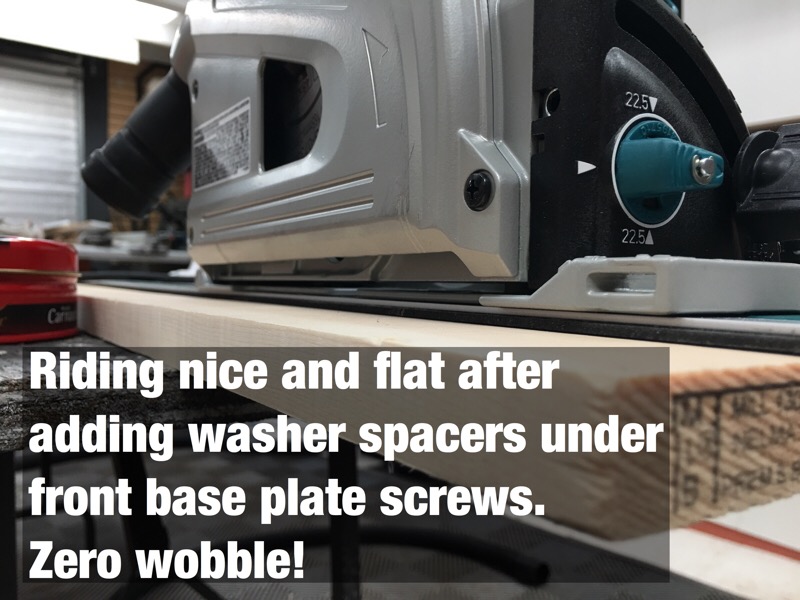
Before firing up the saw, I carefully checked the blade to see that it was square and true to the base. The saw base had a small bow in it which was also reported by a few other customers in reviews. This bow resulted in a slight wobble on the track, so it needed to be addressed. I fixed it by removing the saw base (four screws) and shimming the front of the plate up about 1/32" with two small washers underneath the front two screws. The plate is pretty much perfect now. Makita should really make this a basic quality control check as it likely would affect cut quality if not addressed.
After spending some time sorting the base plate issue and squaring the blade, the saw is working exactly as expected. There's no question that it is both more accurate, cuts cleaner, and produces less dust than cutting on my table saw. The ability to plunk the track down, align the track edge and cut is an amazing improvement over my previous straight edge/measure offset/circular saw/clamping method. On the first cut through some 5/8" melamine, I was surprised by how easily the saw moved through the material...so easily in fact that I stopped to make sure the depth was set correctly (it was!).
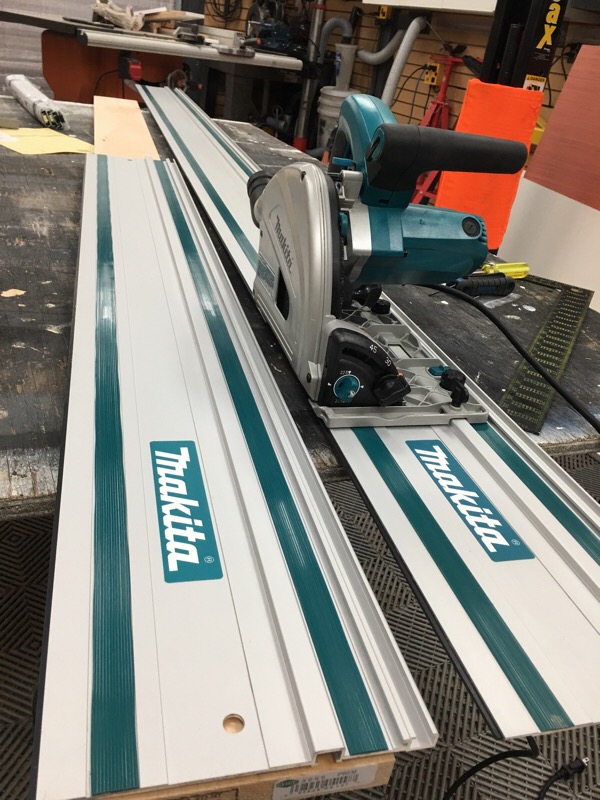
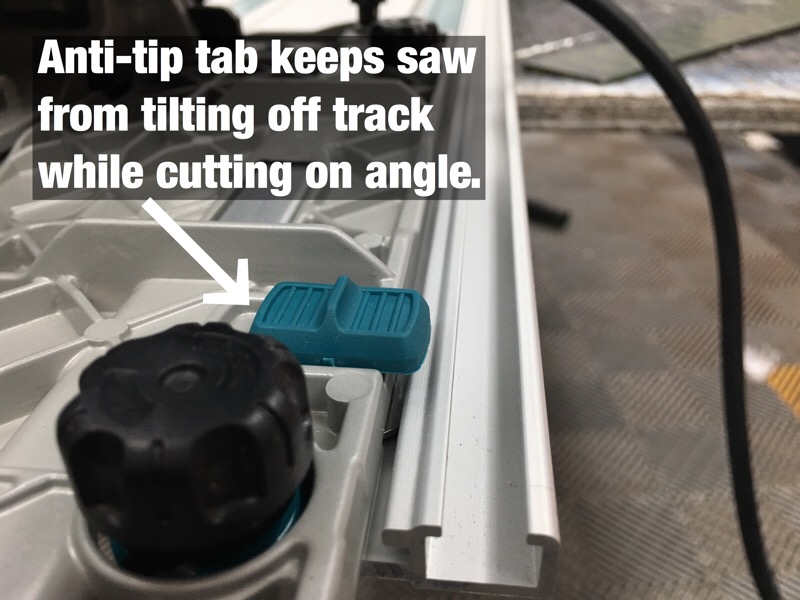
The two tracks arrived in perfect shape. The 118" long track will require an added rack to safely store it in the shop. I waxed both tracks and the saw base. Sliding effort is surprising low, you might find yourself wondering if there are bearings in play. The saw base has two tool-less adjustments fore and aft to take any play out of the track. When swapping tracks, I found a small adjustment needed to made to get to zero play, likely amounting to a few thousandths of an inch.
Other reviewers have commented that unlike other tracks saws, the blade included with the Makita is excellent out of the box. I'd agree and have no plans to replace it.
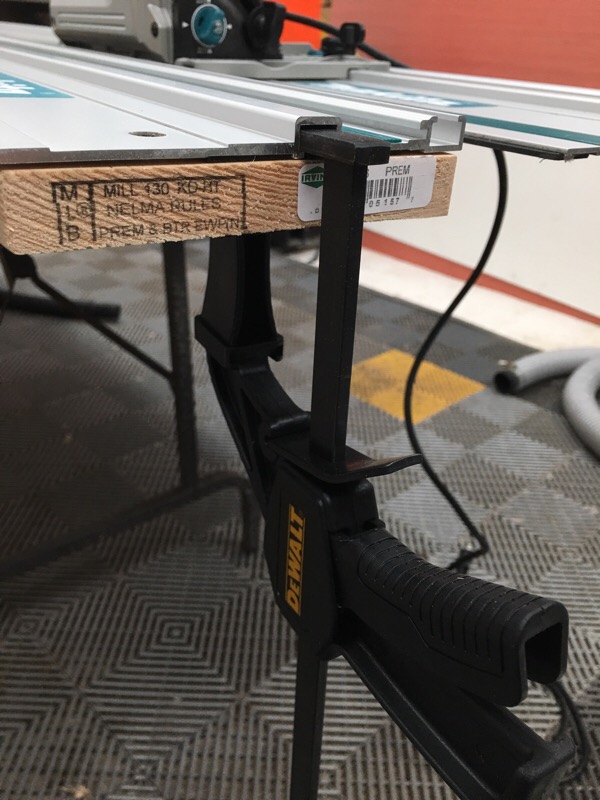
The Dewalt track clamps are very nice. I did not use the clamps at all making the cuts on the laundry room torsion box "test" panel at the end of this post. Gravity and the non-skid strips on the tracks held them in place nicely while cutting.
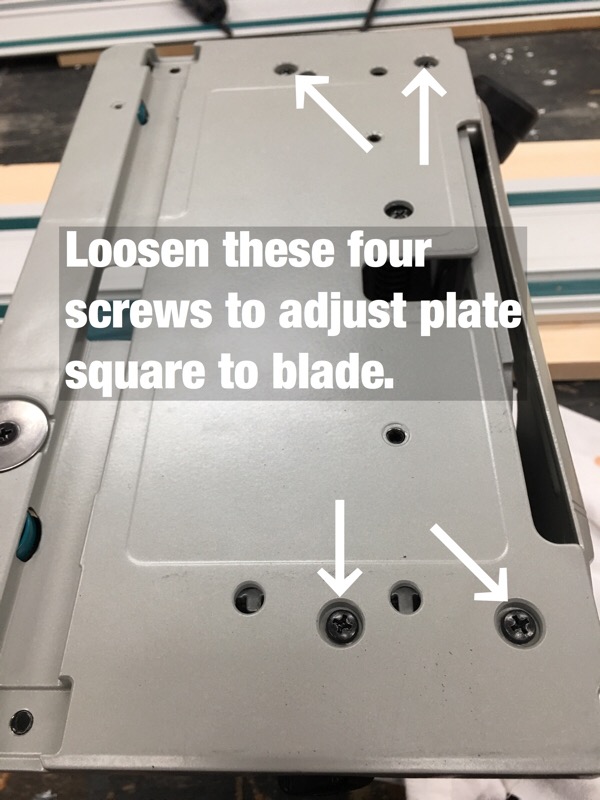
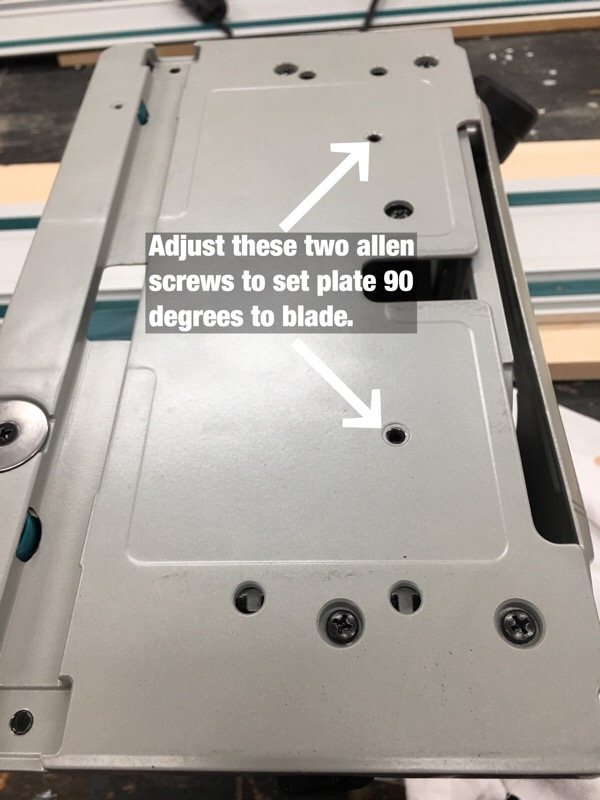
The instructions really don't explain how to square the base plate to the blade, or adjust the 90 degree setting for cuts. If you remove the base plate, you can figure this out..but these pics should help.
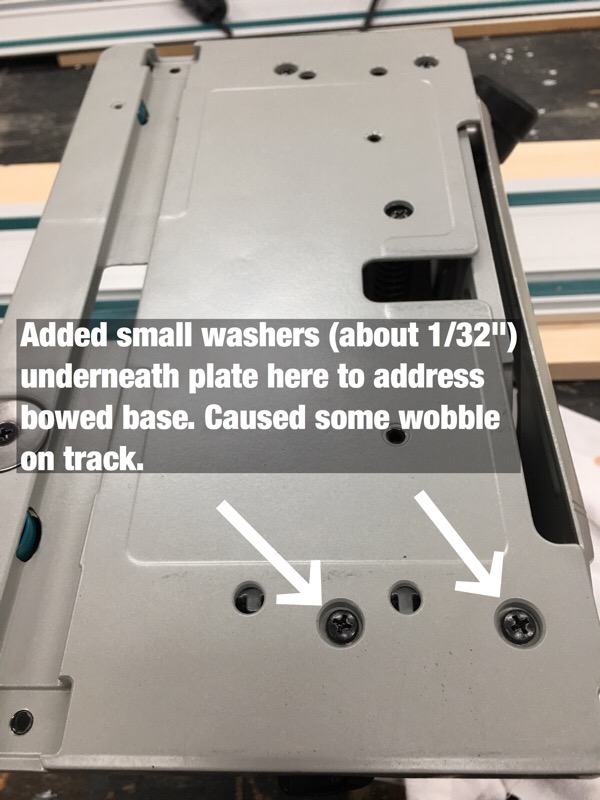
After some tweaking the base is pretty much perfectly flat.


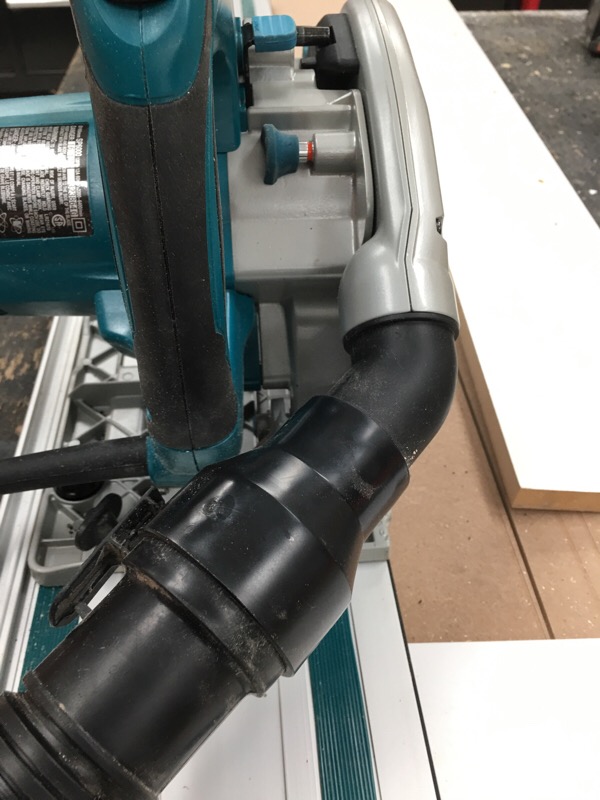
Dust collection is excellent. Trying a cut without a hose connected filled the area with a surprising amount of dust in a few seconds of use. With the hose connected, there is virtually zero dust
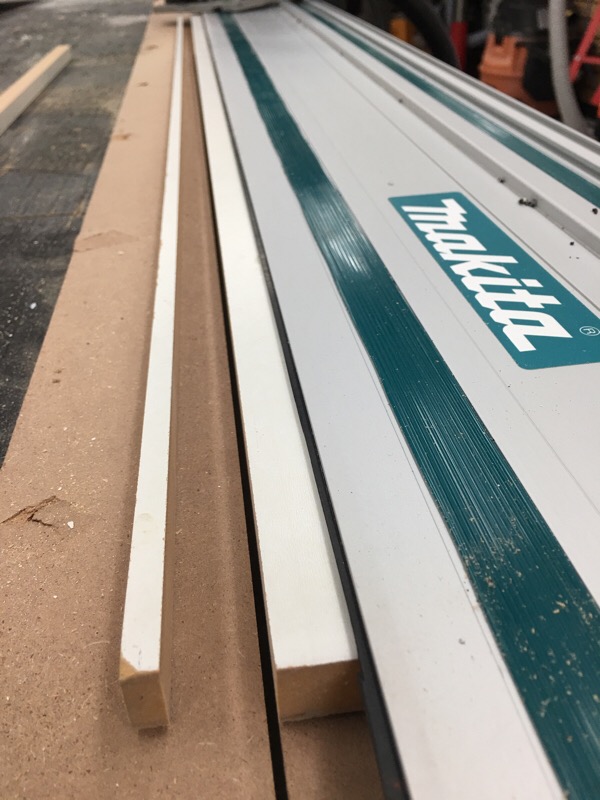
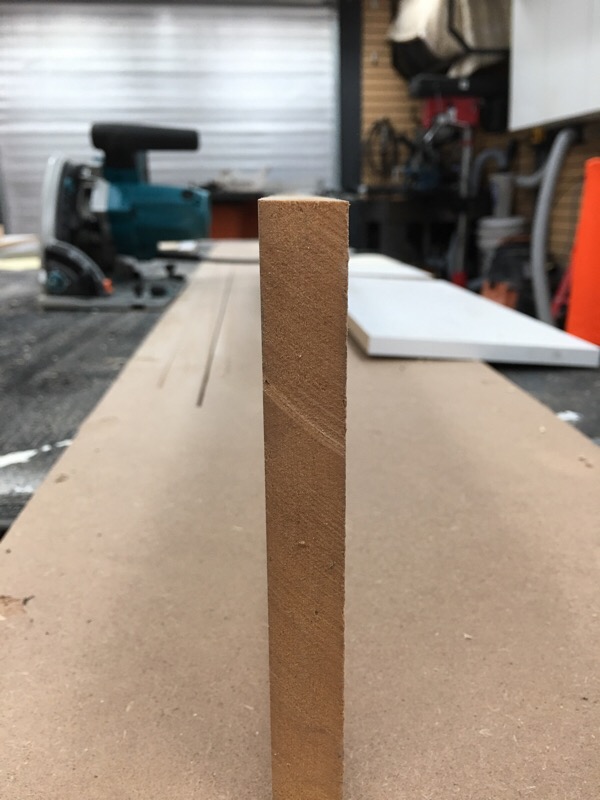
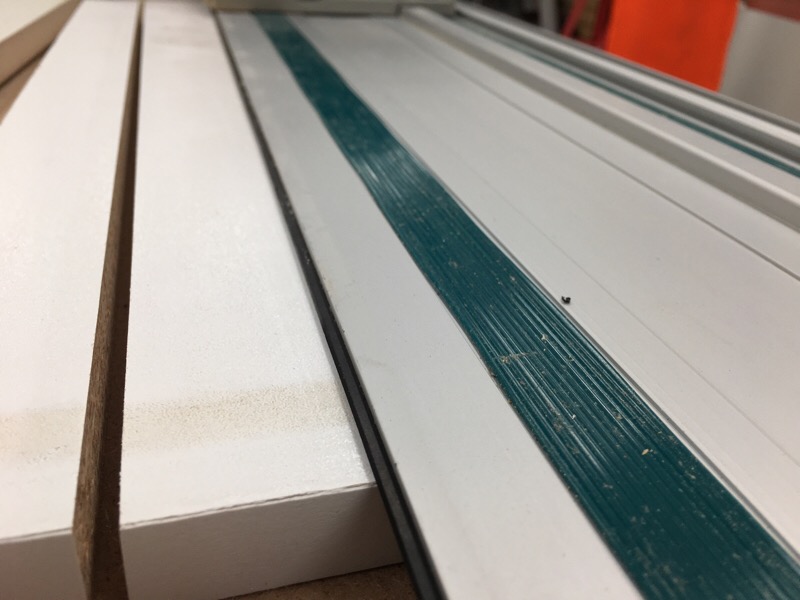
A few test cuts on some scrap melamine show that the stock blade, set up properly, provides pretty much perfect cuts. The edges are sharp (don't slide your finger down these!), clean and laser straight.
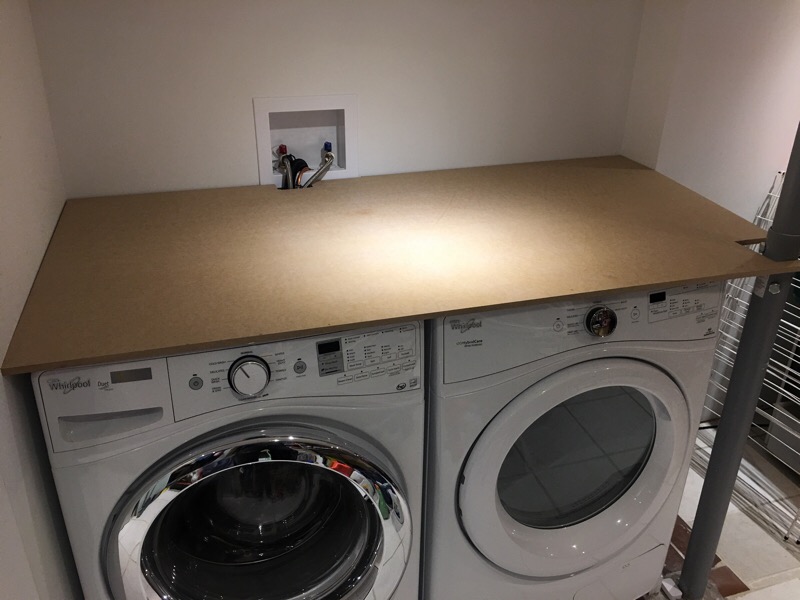
This is the first panel cut with the track saw, and test fitted after using the "tick stick" method (a few posts back) to transfer the irregular shape to the material. This panel is one of four that will result in a clear span torsion box counter top over this new laundry area. It was ridiculously easy cutting with the Makita track saw! Dust is pretty much zero with my small Dust Deputy cyclone setup. Cutting the panel took only about 5 minutes once marked out using the tick stick template I made a few days ago. Fit was perfect..no adjustment required.
As part of my garage thread, I've been running through a basement renovation including a new laundry room and theater area. My shop is small, and the Rigid table saw I use does not have the large infeed/outfeed setup that would be required to break down 4x8 sheets. In the past, I used a circular saw, clamped straight edge etc. to break down sheets which was dusty, tedious, and required measuring a lot to set back the straight edge.
Looking through the reviews, it appeared that Makita was the "dark horse" of the track saws, costing hundreds less than Festool, but having excellent power, light weight and comparable performance. I read quite a few reviews so was expecting to spend a bit of time checking the base and blade setup.
Before firing up the saw, I carefully checked the blade to see that it was square and true to the base. The saw base had a small bow in it which was also reported by a few other customers in reviews. This bow resulted in a slight wobble on the track, so it needed to be addressed. I fixed it by removing the saw base (four screws) and shimming the front of the plate up about 1/32" with two small washers underneath the front two screws. The plate is pretty much perfect now. Makita should really make this a basic quality control check as it likely would affect cut quality if not addressed.
After spending some time sorting the base plate issue and squaring the blade, the saw is working exactly as expected. There's no question that it is both more accurate, cuts cleaner, and produces less dust than cutting on my table saw. The ability to plunk the track down, align the track edge and cut is an amazing improvement over my previous straight edge/measure offset/circular saw/clamping method. On the first cut through some 5/8" melamine, I was surprised by how easily the saw moved through the material...so easily in fact that I stopped to make sure the depth was set correctly (it was!).
The two tracks arrived in perfect shape. The 118" long track will require an added rack to safely store it in the shop. I waxed both tracks and the saw base. Sliding effort is surprising low, you might find yourself wondering if there are bearings in play. The saw base has two tool-less adjustments fore and aft to take any play out of the track. When swapping tracks, I found a small adjustment needed to made to get to zero play, likely amounting to a few thousandths of an inch.
Other reviewers have commented that unlike other tracks saws, the blade included with the Makita is excellent out of the box. I'd agree and have no plans to replace it.
The Dewalt track clamps are very nice. I did not use the clamps at all making the cuts on the laundry room torsion box "test" panel at the end of this post. Gravity and the non-skid strips on the tracks held them in place nicely while cutting.
The instructions really don't explain how to square the base plate to the blade, or adjust the 90 degree setting for cuts. If you remove the base plate, you can figure this out..but these pics should help.
After some tweaking the base is pretty much perfectly flat.
Dust collection is excellent. Trying a cut without a hose connected filled the area with a surprising amount of dust in a few seconds of use. With the hose connected, there is virtually zero dust
A few test cuts on some scrap melamine show that the stock blade, set up properly, provides pretty much perfect cuts. The edges are sharp (don't slide your finger down these!), clean and laser straight.
This is the first panel cut with the track saw, and test fitted after using the "tick stick" method (a few posts back) to transfer the irregular shape to the material. This panel is one of four that will result in a clear span torsion box counter top over this new laundry area. It was ridiculously easy cutting with the Makita track saw! Dust is pretty much zero with my small Dust Deputy cyclone setup. Cutting the panel took only about 5 minutes once marked out using the tick stick template I made a few days ago. Fit was perfect..no adjustment required.
Last edited:

