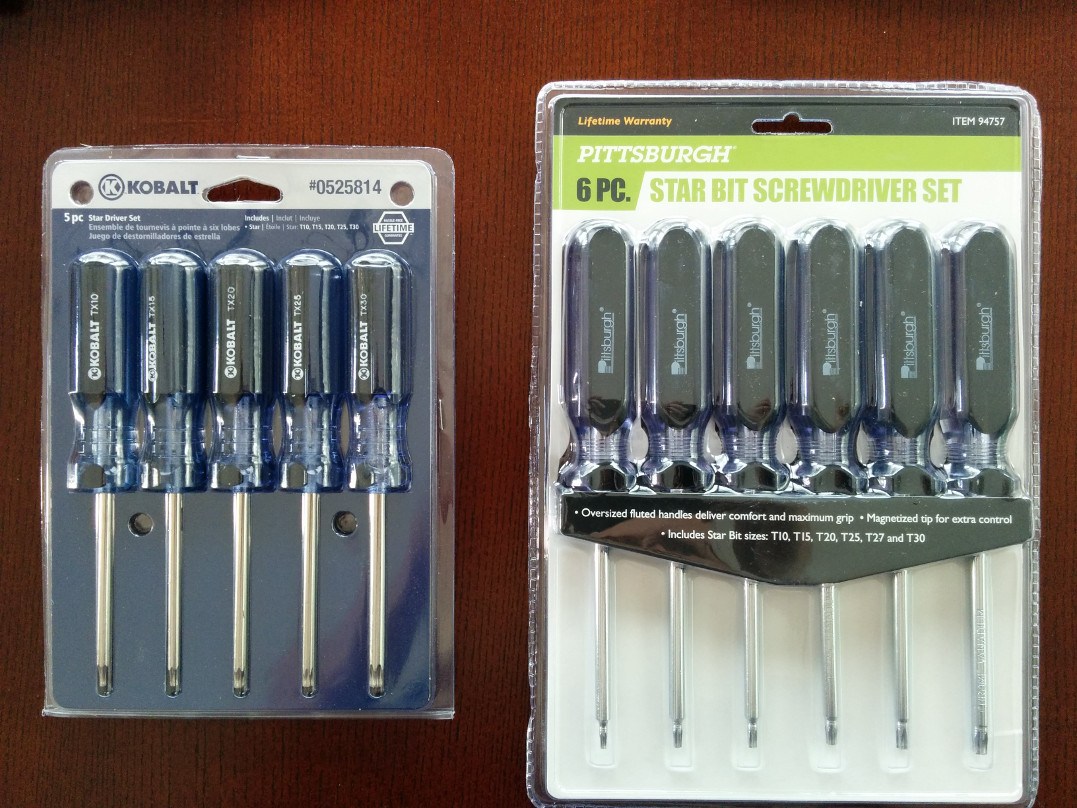
Today we're comparing inexpensive Torx driver sets from Kobalt (MSRP $9.99 at Lowe's) and Pittsburgh (MSRP $7.99 at Harbor Freight). I paid $8.01 and $6.39 respectively, after factoring in a Lowe's rebate and employee discount (my wife works there), and a 20% Harbor Freight coupon.
The Kobalt set has five drivers, T10-15-20-25-30. The Pittsburgh set has those five drivers and adds a sixth in T27 size, and a storage rack, such as it is.
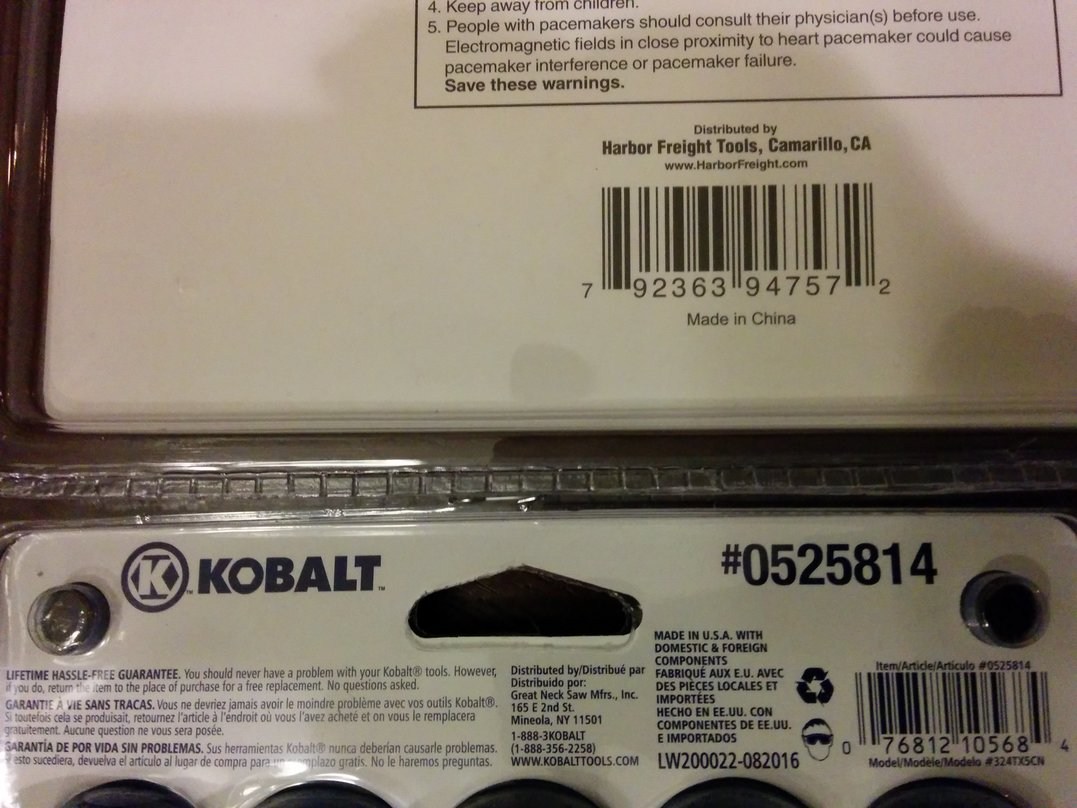
The Kobalts are made in USA, apparently by Great Neck. The Pittsburghs are from China. There is no Pittsburgh Pro set, so Taiwan would be unlikely.
Once removed from their packages, the Pittsburgh's larger size becomes more apparent. They have larger handles and longer shafts:
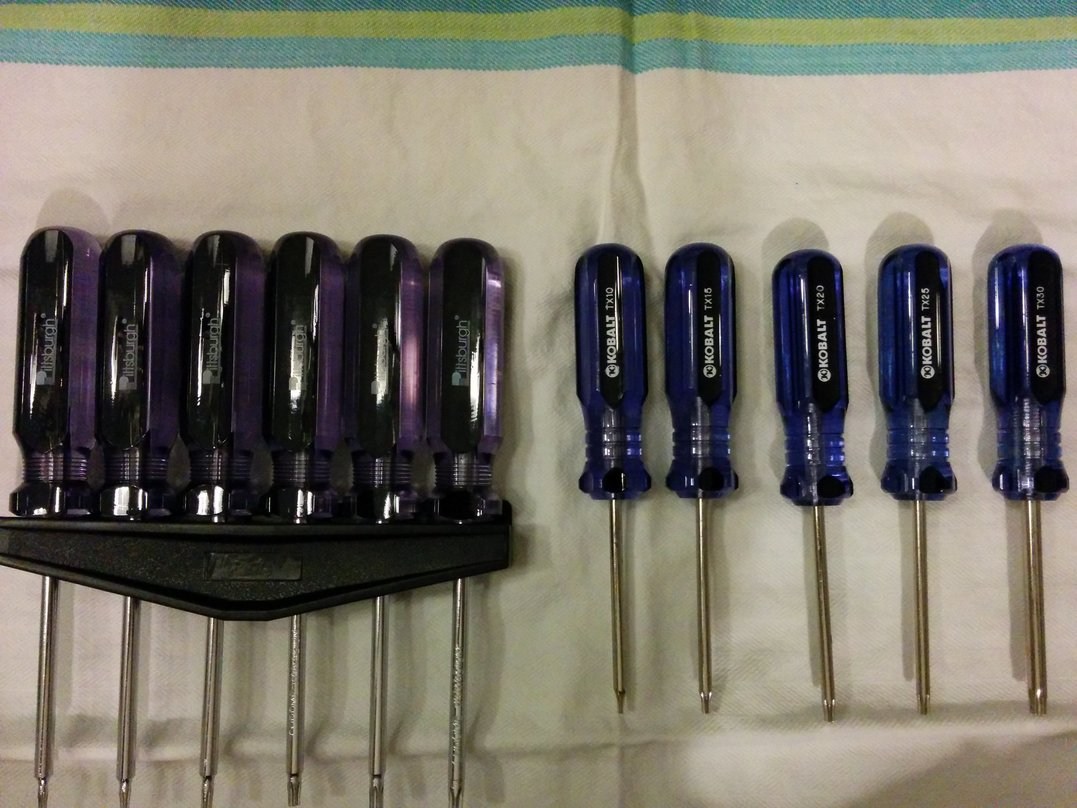
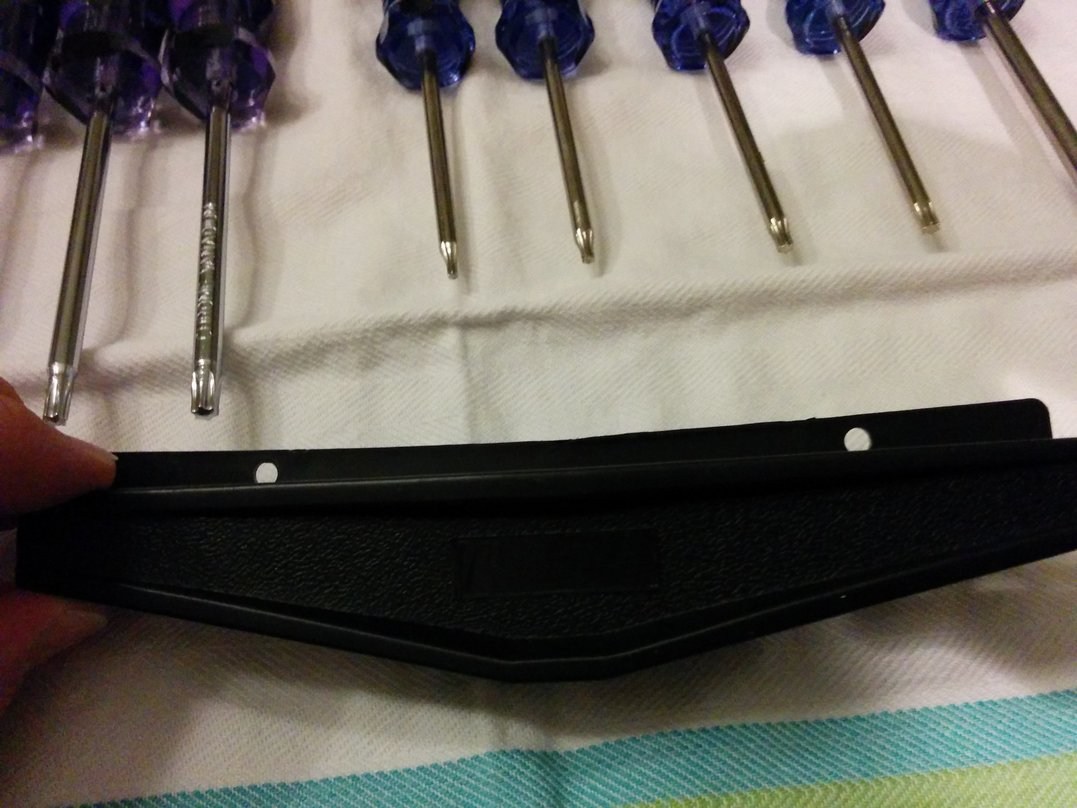
The included Pittsburgh rack is malformed junk and should be thrown far away:
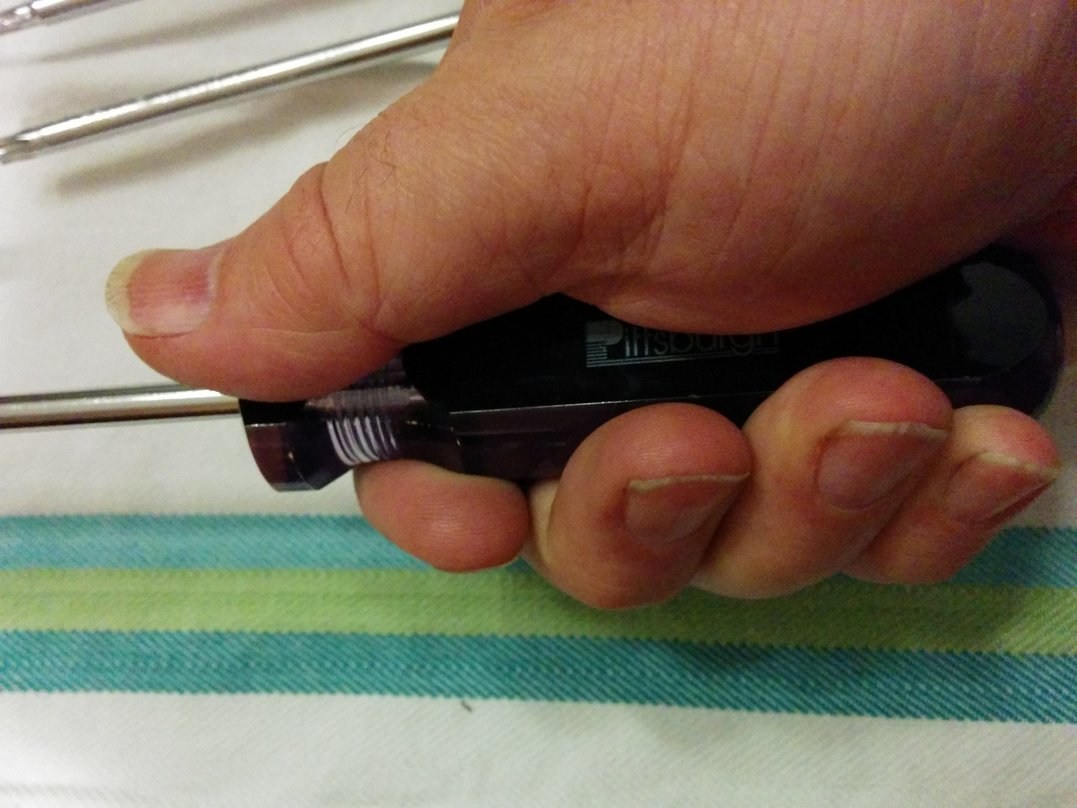
The Pittsburghs have large, comfortable three-cornered acetate handles with flat surfaces and nicely curved corners. Technically they're hexagonal but in practice they're more triangular. The Kobalts have smaller, more traditional six-sided fluted handles, like any ordinary Great Neck or Craftsman acetate screwdriver you've ever seen. The Pittsburgh handle fits my average-sized hand nicely and feels comfortable to use:
By comparison, the Kobalts are a little cramped to hold:
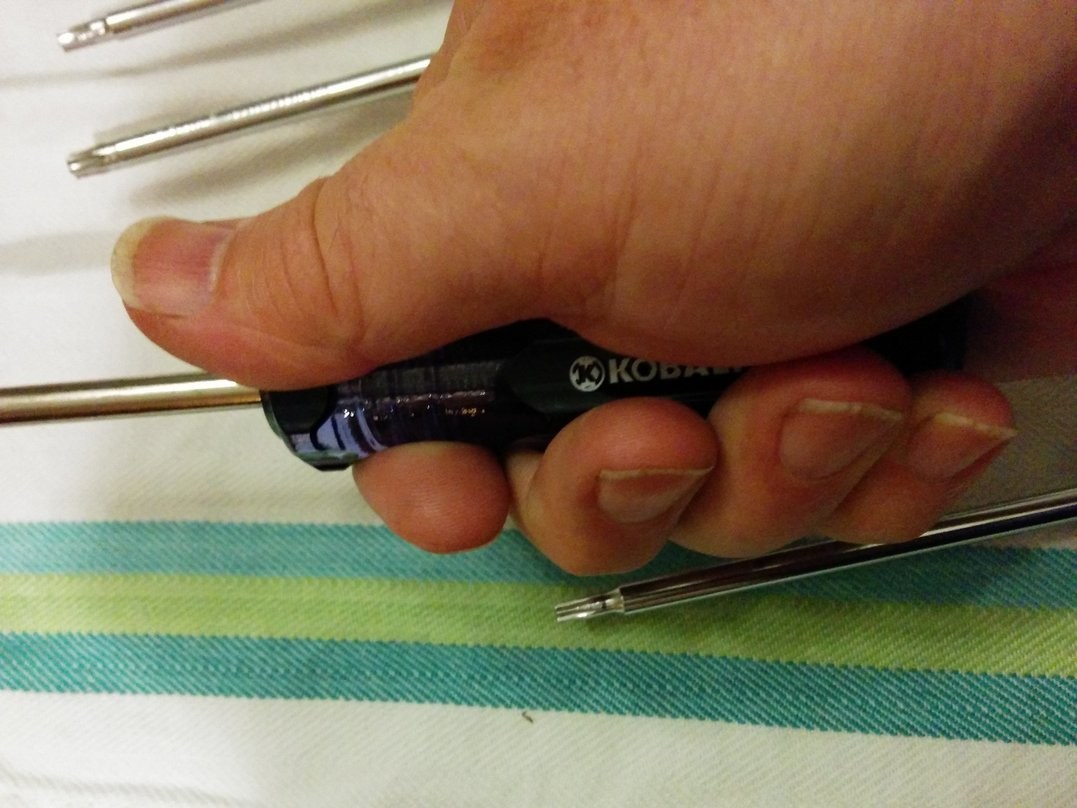
I do not really have giant balloon hands, that's just the perspective of the photo as my phone camera struggles to take closeup shots.
The Kobalts have the Torx sizes printed on the handles. The Pittsburghs do not, which is a pretty stupid thing to leave off.
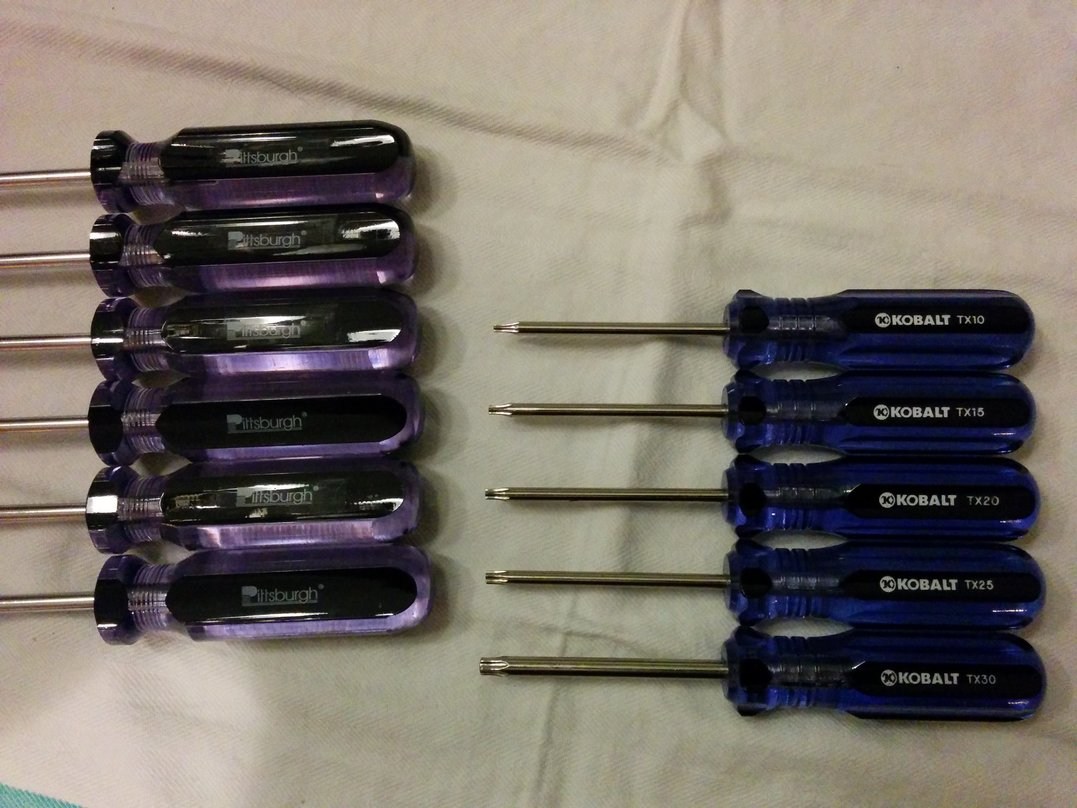
All in all the casting quality of the handles is nicer on the Kobalt, but the Pittsburgh are more comfortable to use.
Looking at the tool shafts, we can see Pittsburgh advertises that they are chrome vanadium. The Kobalt set is apparently just ordinary screwdriver steel with no special claims made. This gives the Pittsburgh drivers a brighter chrome appearance, which would be a nice thing if it didn't emphasize the coarse machining:
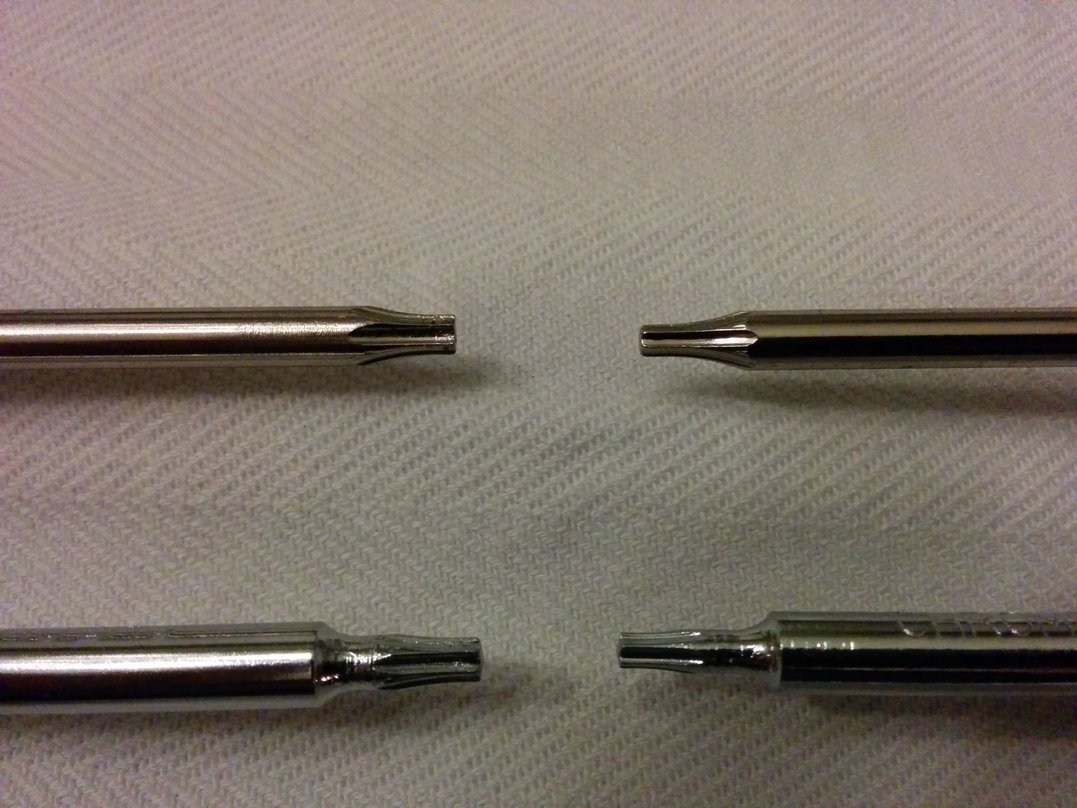
That's Kobalt on top, Pittsburgh below. The grooves on the Pittsburgh tips are rough and sloppy, and vary in length. The Kobalt aren't perfect either but they're still a lot better. That doesn't seem to translate to differences in actual driving performance, though. Both of them adequately gripped the Torx screws I tested them on, with about the same acceptable amount of play.
The final and most tedious test was shaft straightness. Crooked screwdrivers are a particular peeve of mine, and here's where the Pittsburgh drivers really fall down. I checked for shaft alignment by setting each flat side of the driver in turn on a flat surface, and measuring whether the tip had any runout. Five of the six Pittsburgh drivers had significant runout, about 1/8" in most cases. This one is typical:
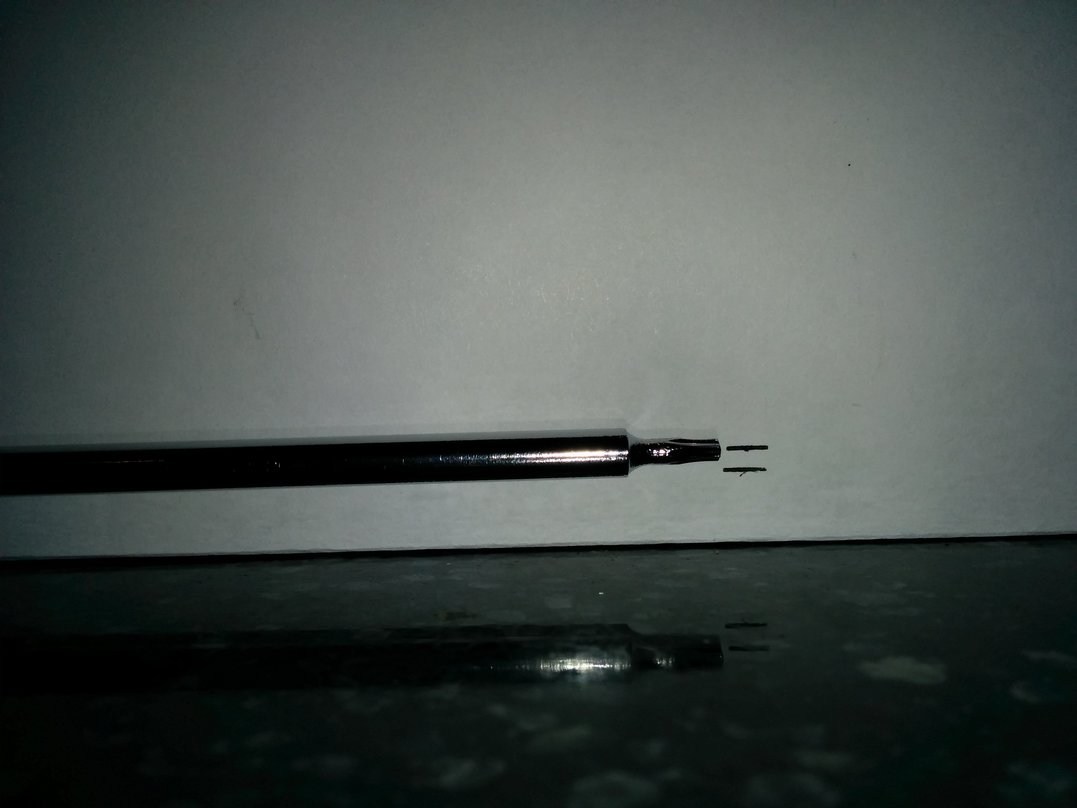
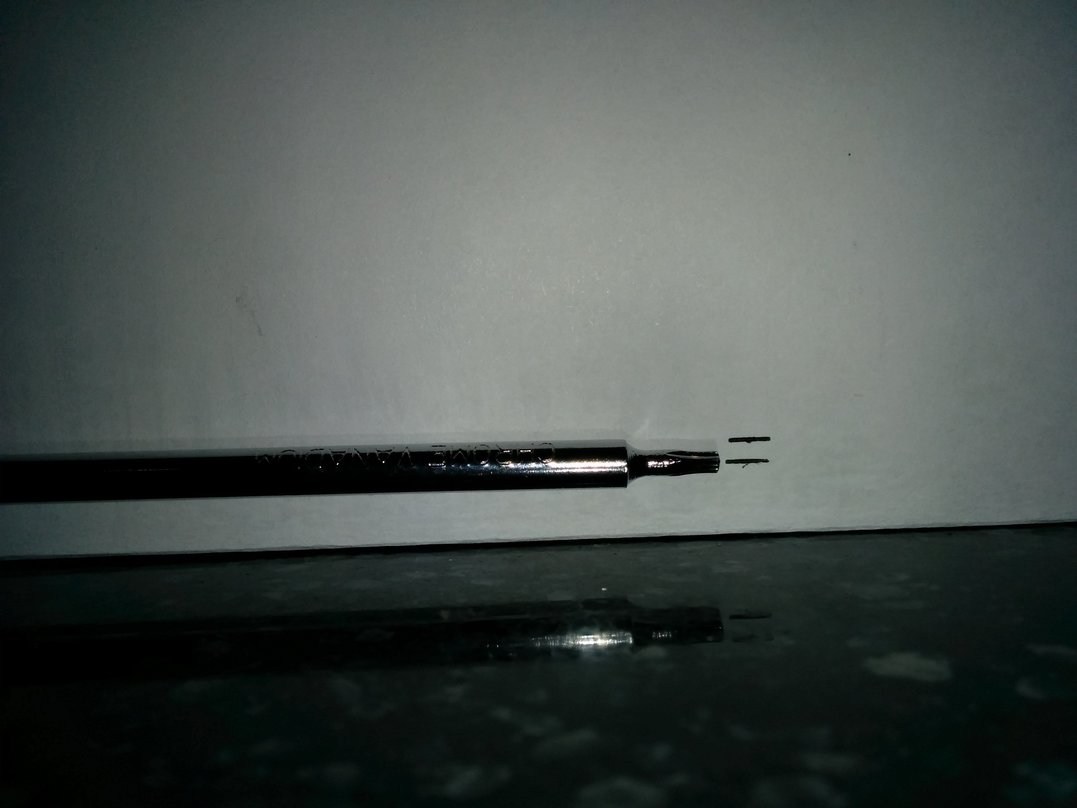
In those two photos, you can actually see the deflection in relation to the white paper background. The Kobalt drivers had no such problem; every one of them was 100% straight.
Pittsburgh has the price advantage, better shaped and sized handles, and you get one more driver. But they aren't straight, they don't look particularly well-made, the six identical handles don't have size markings, and the rack doesn't count in their favor, being as it's an insult to your workshop. What I really wish is that Kobalt would adopt the Pittsburgh handle design. But I'll put up with the inferior Kobalt handle shape rather than put up with the Pittsburgh set's other failings.
Verdict: Kobalt.
The Kobalt set has five drivers, T10-15-20-25-30. The Pittsburgh set has those five drivers and adds a sixth in T27 size, and a storage rack, such as it is.
The Kobalts are made in USA, apparently by Great Neck. The Pittsburghs are from China. There is no Pittsburgh Pro set, so Taiwan would be unlikely.
Once removed from their packages, the Pittsburgh's larger size becomes more apparent. They have larger handles and longer shafts:
The included Pittsburgh rack is malformed junk and should be thrown far away:
The Pittsburghs have large, comfortable three-cornered acetate handles with flat surfaces and nicely curved corners. Technically they're hexagonal but in practice they're more triangular. The Kobalts have smaller, more traditional six-sided fluted handles, like any ordinary Great Neck or Craftsman acetate screwdriver you've ever seen. The Pittsburgh handle fits my average-sized hand nicely and feels comfortable to use:
By comparison, the Kobalts are a little cramped to hold:
I do not really have giant balloon hands, that's just the perspective of the photo as my phone camera struggles to take closeup shots.
The Kobalts have the Torx sizes printed on the handles. The Pittsburghs do not, which is a pretty stupid thing to leave off.
All in all the casting quality of the handles is nicer on the Kobalt, but the Pittsburgh are more comfortable to use.
Looking at the tool shafts, we can see Pittsburgh advertises that they are chrome vanadium. The Kobalt set is apparently just ordinary screwdriver steel with no special claims made. This gives the Pittsburgh drivers a brighter chrome appearance, which would be a nice thing if it didn't emphasize the coarse machining:
That's Kobalt on top, Pittsburgh below. The grooves on the Pittsburgh tips are rough and sloppy, and vary in length. The Kobalt aren't perfect either but they're still a lot better. That doesn't seem to translate to differences in actual driving performance, though. Both of them adequately gripped the Torx screws I tested them on, with about the same acceptable amount of play.
The final and most tedious test was shaft straightness. Crooked screwdrivers are a particular peeve of mine, and here's where the Pittsburgh drivers really fall down. I checked for shaft alignment by setting each flat side of the driver in turn on a flat surface, and measuring whether the tip had any runout. Five of the six Pittsburgh drivers had significant runout, about 1/8" in most cases. This one is typical:
In those two photos, you can actually see the deflection in relation to the white paper background. The Kobalt drivers had no such problem; every one of them was 100% straight.
Pittsburgh has the price advantage, better shaped and sized handles, and you get one more driver. But they aren't straight, they don't look particularly well-made, the six identical handles don't have size markings, and the rack doesn't count in their favor, being as it's an insult to your workshop. What I really wish is that Kobalt would adopt the Pittsburgh handle design. But I'll put up with the inferior Kobalt handle shape rather than put up with the Pittsburgh set's other failings.
Verdict: Kobalt.
 You may not care about the finish, but you might still find some value in learning about handle comfort and shaft runout.


 Left hand has the shorter nails, right hand the longer.
 .
.