

laurie71
Well-known member
Another topic looking for advice for my upcoming garage build -- I'm gradually learning everything I need to! 
So I want running water in my shop -- no bathroom facilities for reasons I've listed elsewhere, but I do want a utility sink to wash up in before going back in the house, and for other clean-up and parts washing duties, etc. It also gives me more options for the hydronic in-slab heat I'll be putting in (i.e. more types of water heater / boiler, including ones that can do double duty supplying hot water to the utility sink).
Here's the thing: if my budget runs over I may not get heat right away. And even if I do, I want to plan for potential mid-winter heating failure in the future.
Obviously the water supply line coming from the house needs to be below frost depth -- that's supposedly 30" here, but I'm thinking if my cellar is deep enough to bring the line water line out at 36" - 40" deep, that might be a good idea.
At the garage end of the supply, I don't want to just bring the supply line up into the building. If I don't have (or loose) heat, I don't want risk of it freezing. Yes, I can make provisions for blowing out the lines from the house, but I'd like to be able to get water in the shop when working in there with temporary / portable heat.
Here's what I have in mind; you all can tell me if I'm crazy, overthinking this, or over-solving the problem... I'm thinking of running the main supply to a frost proof hydrant like this:
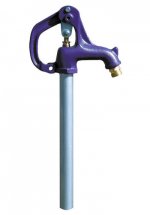
I'd have it come up through the slab in the utility closet that will house the pumps / manifolds / water heater for the in-slab heat as well as my compressor. I'll have a way to pipe compressed air into the water lines to blow them out so I can clear the lines after use in the winter, and the hydrant will ensure my supply line can't freeze.
Result: year round water in an unheated garage. Yes, it's a waste of effort if I have working heat, but I'd be able to put off installing heat until next year if I needed to, and I'd have the flexibility to keep my pluming safe during winter power outages or other heating failures.
What are your thoughts?
So I want running water in my shop -- no bathroom facilities for reasons I've listed elsewhere, but I do want a utility sink to wash up in before going back in the house, and for other clean-up and parts washing duties, etc. It also gives me more options for the hydronic in-slab heat I'll be putting in (i.e. more types of water heater / boiler, including ones that can do double duty supplying hot water to the utility sink).
Here's the thing: if my budget runs over I may not get heat right away. And even if I do, I want to plan for potential mid-winter heating failure in the future.
Obviously the water supply line coming from the house needs to be below frost depth -- that's supposedly 30" here, but I'm thinking if my cellar is deep enough to bring the line water line out at 36" - 40" deep, that might be a good idea.
At the garage end of the supply, I don't want to just bring the supply line up into the building. If I don't have (or loose) heat, I don't want risk of it freezing. Yes, I can make provisions for blowing out the lines from the house, but I'd like to be able to get water in the shop when working in there with temporary / portable heat.
Here's what I have in mind; you all can tell me if I'm crazy, overthinking this, or over-solving the problem...
I'm thinking of running the main supply to a frost proof hydrant like this:I'd have it come up through the slab in the utility closet that will house the pumps / manifolds / water heater for the in-slab heat as well as my compressor. I'll have a way to pipe compressed air into the water lines to blow them out so I can clear the lines after use in the winter, and the hydrant will ensure my supply line can't freeze.
Result: year round water in an unheated garage. Yes, it's a waste of effort if I have working heat, but I'd be able to put off installing heat until next year if I needed to, and I'd have the flexibility to keep my pluming safe during winter power outages or other heating failures.
What are your thoughts?

