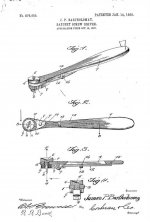
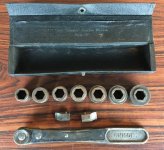
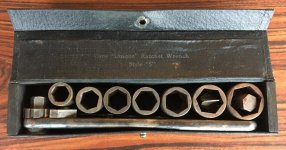
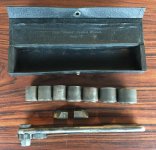
can anyone tell me any information about James P. Bartholomay ?
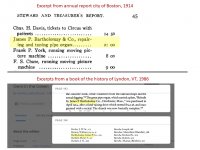
He was born in the Boston area in 1877, died in 1938. He apparently had a piano repair and tuning company for a good long while, at least a few decades. I can see how that would've contributed to his mechanical aptitude. The most important piece of information - a link between him and Will or Willey B. Lane of Philadelphia, and the Will B. Lane Unique Tool Company of Chicago, remains missing.
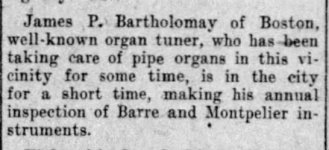
1922, Barre, VT
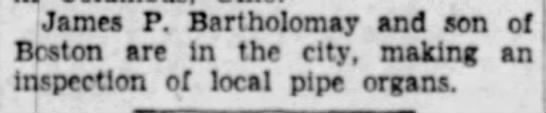
1927m Burlington, VT
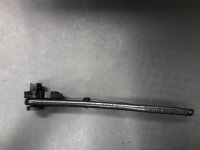
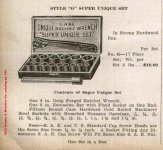
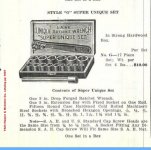
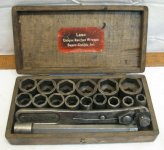
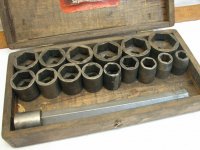
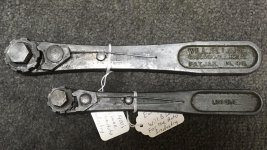
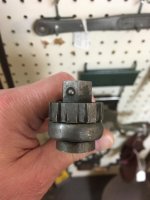
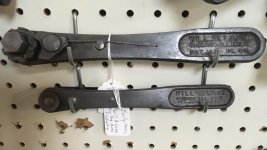
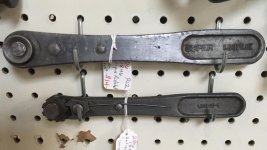
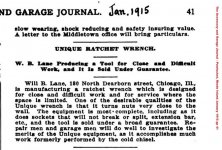
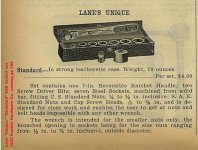
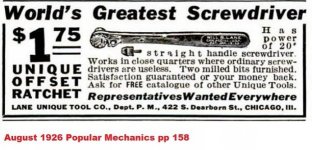
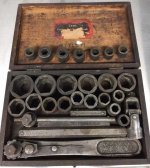
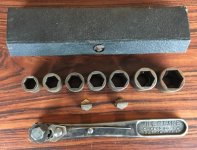
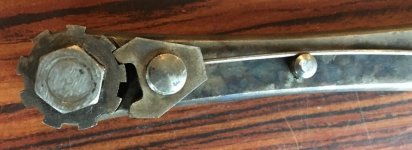
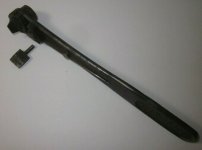
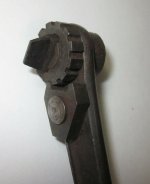
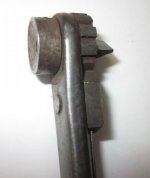
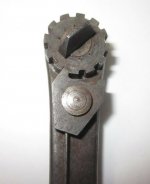
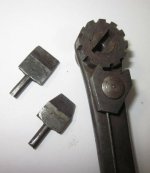
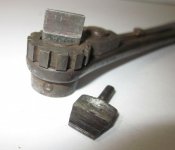
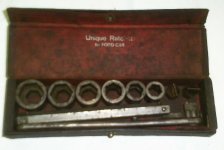
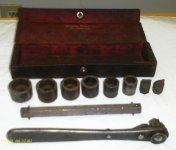
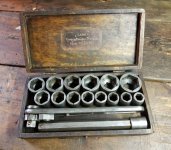
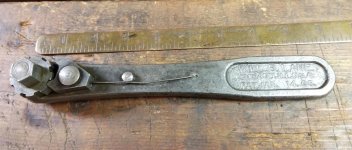
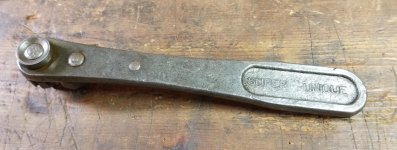
I spotted two Will.B.Lane hex head ratchets today. One is unique, but the other is super unique! The superunique one appears (by the rough peening) to be the one that was taken apart and reversed on the handle during reassembly.
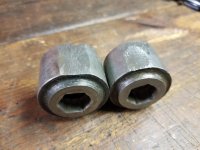
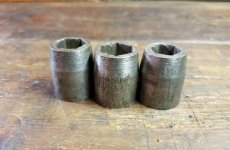
Unique is 1/2-inch hex drive. Super Unique is 5/8-inch hex drive. Other than that, they are identical. (I suppose if they had ever made a 3/4-inch hex drive it would've been Super Duper Unique?

)
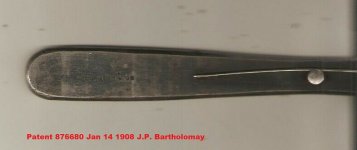
That patent was issued to James P Bartholomay, right? So maybe Lane bought it?
Maybe. Or licensed it. I have not been able to resolve that, and I am not aware of it being resolved by anyone else, either.
It looks like Willey B. Lane had four patents:
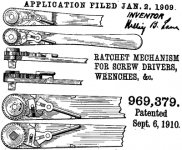
969379 September 6, 1910
979862 December 27, 1910
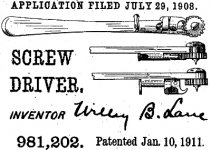
981202 January 10, 1911
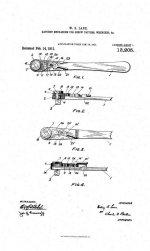
RE13205 February 14, 1911 - Reissue of 969,379 (Sep. 06, 1910)
They are all more or less "improvements" on the Bartholomay patent.
The first, with his residence listed as Philly, but assigning for the J. C. McCarty & Company, Mfgrs, in NY, replaces the Bartholomay baling wire, which acts as a tension spring for the pawl and a direction switch - by moving it to either side of that boss in the center of the ratchet, with a lever switch. DATAMP has a nice example marked with "PAT APPL'D FOR", not the Batholomay patent date, linked
here.
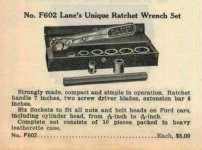
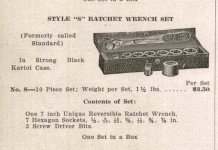
The second, with his residence listed as NY and assigning half the rights to the J. C. McCarty & Company, Mfgrs, in NY, introduces a different way to mount sockets and bits. I have never seen an example in the metal, but they were advertised like mad, as you already know.
The third, with his residence listed in Philly again, was a completely new pawl and lever. Again, I have never seen an example. May not have been made.
The fourth, as 4.c has already noted, was a re-issue of the first.
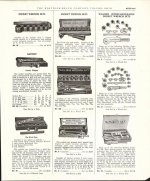
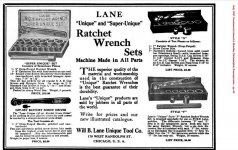
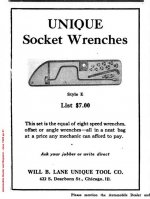
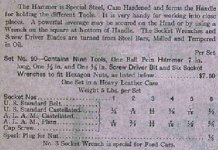
For convenience in keeping track of the sets, I did find an ad in a 1921 edition of
The Accessory and Garage Journal (no, I am not making that up!) that illustrates all of the sets in one place.