jtbinvalrico
Well-known member
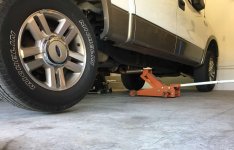
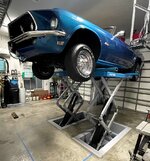
*Fast forward almost a year and a half.....Here's what it looks like done and lifting my F150 Super Crew. I look forward to updating this photo with a 66 Mustang. 
**Fast forward some more.....That hunt for a 65-66 Mustang sent me to Chicago to fetch this 69. Yeah, buddy!

************************************************************************
I've been asked to put some key details up top here so they're easier to find....good suggestion. Here's some key data, measurements, specs, and notes that you'll find referenced in the ensuing year and a half build:
- Finished depth 14"
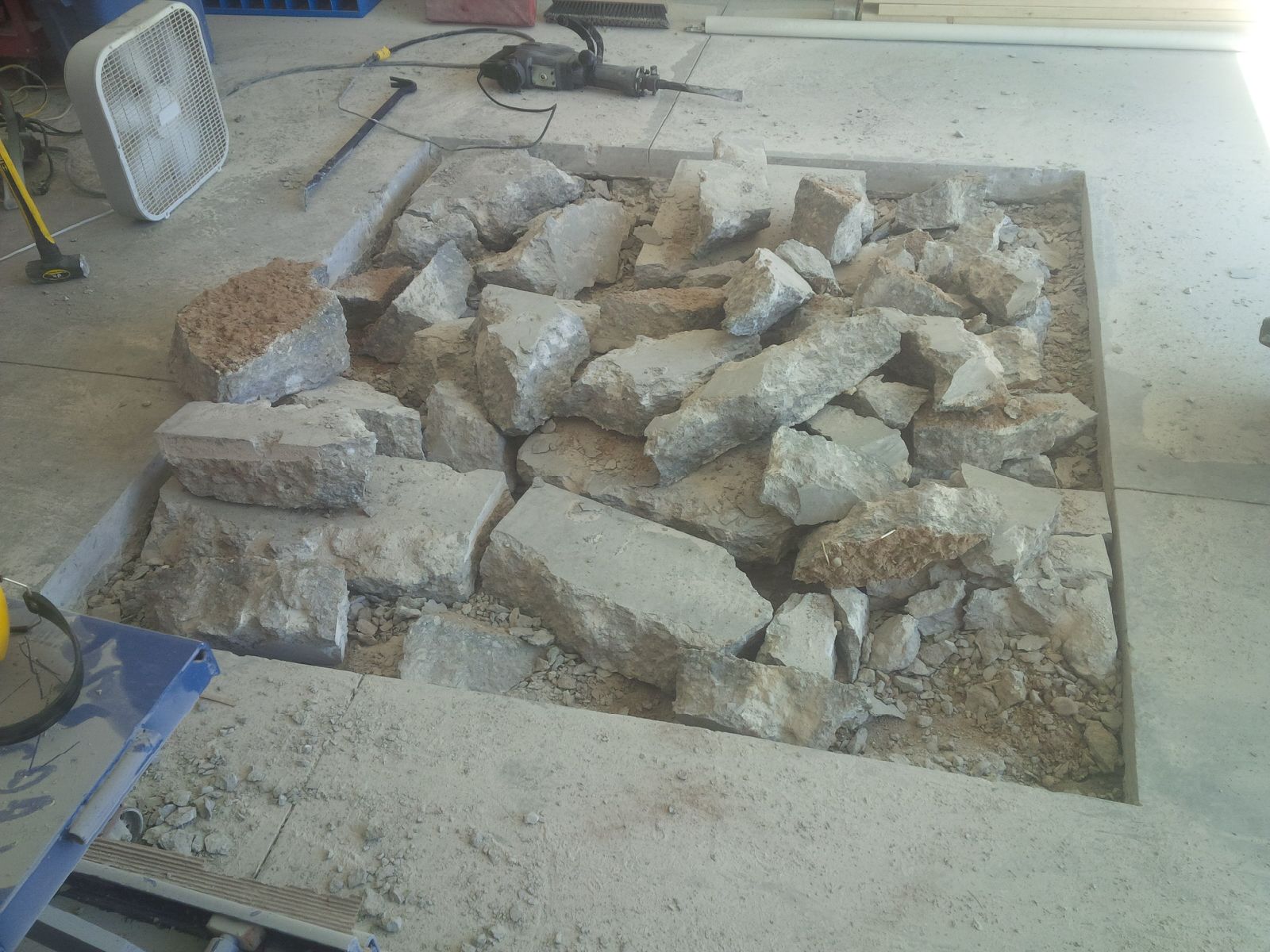
- Excavated depth 27"
- Finished length 66"
- Excavated length 76"
- Finished width 23"
- Excavated width 33"
- ALWAYS MEASURE YOUR ACTUAL PLATFORMS IF AT ALL POSSIBLE.....My platforms are
exactly 64 5/8" x 21 5/8"......not the 64 1/2" x 21 1/2" indicated in the literature. That
extra 1/8" all around got lost in form variances, concrete expanding, etc. Consider this in
your plans.
- 4" of compacted #57 stone base; I used 3/4 yard of stone.
- 9" concrete base
- 5" walls all around
- I ended up with a 1/2" to 5/8" gap between the platforms and the finished walls.
- I set my platforms at 31" apart.
- My garage is 19.5 feet deep from closed garage door to the wall at the front of the
garage.
- The front edge of the installed platform is 85.5" from the front wall of the garage.
- The rear edge of the installed platform is 84" from the closed garage door.
- I can fit and lift a 2005 F150 Lariat Super Crew high enough to walk under. The front and
rear bumpers are mere inches from the front wall and garage door. This truck is 223" in
length. My ceiling is a shade under 12 feet. With an old Mustang on the lift, I'd have about
4 feet of space to divide between the front and back to work on. I'm not pulling an
engine...but it's plenty for maintenance work.
- Forms were built with 3/4"marine grade plywood. No form release was used.
- I used a 16" Husqvarna Varicut blade on an 18" gas saw with water to cut the slab.
- 260 feet of #4 rebar was doweled 5 3/4" into the existing slab.
- 3 to 4 tubes of PC Concrete epoxy were used to set the doweled rebar in 40 total holes.
- A 10mil vapor barrier was used....1000sf for $80.00
- 3" PVC was used for the hose runs.
- 1" x 1/8" angle iron was used for the edging.
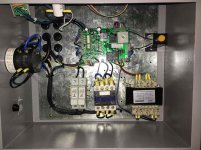
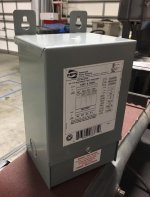
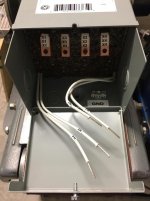
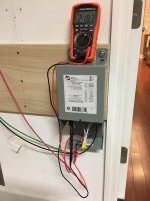
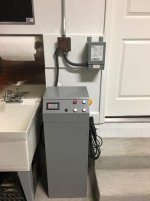
- A Hammond Q1C0ESCB transformer was used to buck my 248-250v down to the 209-
231v recommended by GSE.
- My upgraded hoses are ContiTech and are longer to allow the control panel to be set
farther away.
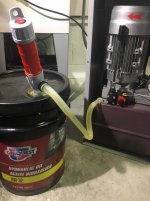
- I used AW-32 hydraulic oil.
- Vonberg velocity fuses were ordered directly from Vonberg; total cost was about $55.00.
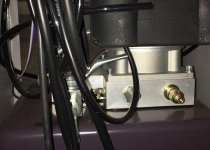
- I put a Vonberg 28001-804-3.50 velocity fuse on the master cylinder.
- I put a Vonberg 28001-804-2.75 velocity fuse on the slave cylinder.
- I used 1/4-4F40HG5S Parker port adapters to adapt the 1/4 BSPP port to the fuses.
The adapters $50.00 for both and were ordered at my local Parker-Goodyear store.
- I did not use the included anchors. I drilled all the way through the 9" base and used
galvanized 5/8" anchors.
- Make sure you are not dealing with a post-tensioned slab.
- Make sure you locate all pipes under your slab....I nearly pierced an unexpected water
line, and that was after having lines located and marked.
- Here's the locking heights. These measurements are from the garage floor to the top of
the platform, rounded to the nearest .25". You can also see a variance based on how
deep your pits are, 13-14". Remember to account for any riser blocks you'd use:
Starting from the lowest:
4"
11"
16.5"
22"
26.75"
31"
35.5"
39.75"
44"
48"
52"
55.75"
59.5"
63.5"
67"
71"......This is the highest point where you get full tooth engagement. You could go higher, but the locking teeth wouldn't be fully interconnected.
************************************************************************
If you have a few hours to spend, read on....
I watched with great interest the in-floor scissor lift install, group buys, and troubleshooting detailed in this fantastic thread: https://www.garagejournal.com/forum/showthread.php?t=35433
Unfortunately, many of the pictures were ruined in the PB debacle. It’s still a wealth of info and is a primary resource. My lucky day has come.
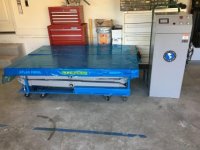
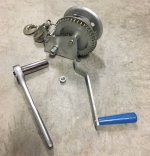
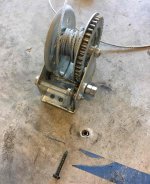
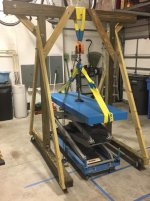
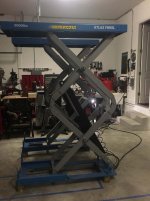
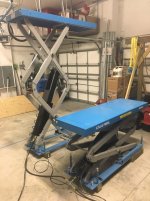
I drove over to east Tampa today and picked up my Atlas FM9SL. It’s a 9000 lb capacity scissor lift meant to be flush mounted into the floor. I’m taking a ton of photos from beginning to end, and I want to show some workarounds and problem solving that might help the average suburban shadetree like me. I want to answer a lot of the dumb questions I had/have along the way. If you don’t have a forklift, skid steer, bobcat, gantry crane, or even an engine hoist, you can do this with some floor jacks, a small hand winch, a healthy respect for the laws of physics....and mostly by yourself if necessary (except the concrete). I can turn a wrench and break things; jack (amateur) of many trades and definitely master of none....but, we’re all willing to try. I’m going to include actual costs and account for time spent on the various steps of the process.
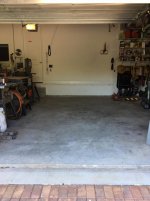
Step 1: Is this feasible? I have a standard 3 car attached garage. It’s not deep...maybe 19.5 feet. Actually, that *****. It means that when I want to lift my 05 Lariat, I’ll have to scurry under it to work with 6” clearance front and rear. Brakes and rotations are easier, but long-term?....truth is, the truck is getting on in miles and years and isn’t in my long term plans. A 1966 Mustang is, maybe a 71 Vette. Those are a fit with a few feet at the front to work. So, yes. It’s feasible and compatible with my future plans.
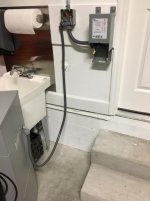
Are electrical and air in place? Recently completed my subpanel. We have power and air.
Height. Lucky me. Ceiling is a shade under 12 feet. With the mini-split keeping the shop at a comfy 76, the garage door stays closed, and lifted cars fit right between the standard lift motor and door tracks on one side of a double bay.
What’s under the garage floor? I paid about $300 to have a guy come out with some pinging radar deal to find the pipe I knew was somewhere under that floor. Good news is that it’s under the far bay the wife parks in, and my center bay is clear.
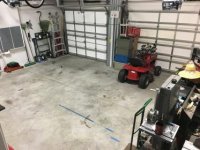
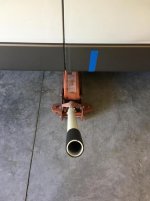
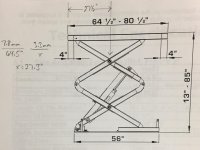
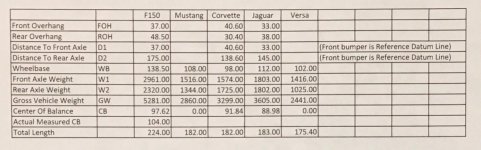
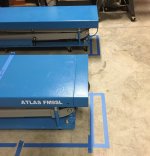
Step 2: Measuring. Blue tape...More measuring....One thing I learned in the above-referenced epic thread is this: Have the lift on site before cutting. So after all the calculations and figuring center of balance for vehicles I have and don’t yet have, I reached the point where the numbers had to get real. There’s just too much variance in some of these things to guess and hope. So they’re here now and can be measured accordingly. Then there’s width....31” seems to be the agreed upon figure.
Step 3: Ordered from Greg Smith. Lift was $3545, I got the cross bars as well (never know what you’ll end up lifting) $350....With tax, about $4000 delivered to the Estes terminal. U-Haul trailer was $40.

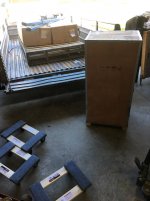
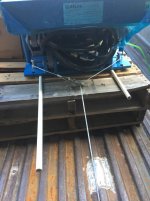
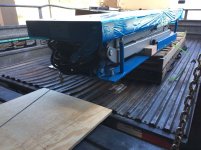
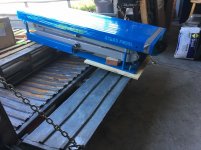
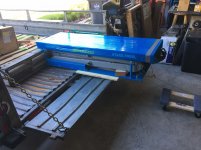
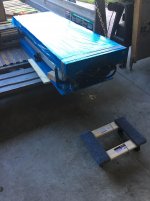
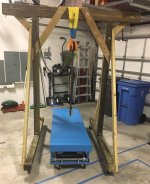
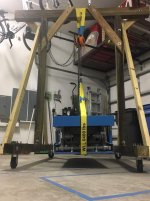
Next, unloading. Solo.
**Fast forward some more.....That hunt for a 65-66 Mustang sent me to Chicago to fetch this 69. Yeah, buddy!
************************************************************************
I've been asked to put some key details up top here so they're easier to find....good suggestion. Here's some key data, measurements, specs, and notes that you'll find referenced in the ensuing year and a half build:
- Finished depth 14"
- Excavated depth 27"
- Finished length 66"
- Excavated length 76"
- Finished width 23"
- Excavated width 33"
- ALWAYS MEASURE YOUR ACTUAL PLATFORMS IF AT ALL POSSIBLE.....My platforms are
exactly 64 5/8" x 21 5/8"......not the 64 1/2" x 21 1/2" indicated in the literature. That
extra 1/8" all around got lost in form variances, concrete expanding, etc. Consider this in
your plans.
- 4" of compacted #57 stone base; I used 3/4 yard of stone.
- 9" concrete base
- 5" walls all around
- I ended up with a 1/2" to 5/8" gap between the platforms and the finished walls.
- I set my platforms at 31" apart.
- My garage is 19.5 feet deep from closed garage door to the wall at the front of the
garage.
- The front edge of the installed platform is 85.5" from the front wall of the garage.
- The rear edge of the installed platform is 84" from the closed garage door.
- I can fit and lift a 2005 F150 Lariat Super Crew high enough to walk under. The front and
rear bumpers are mere inches from the front wall and garage door. This truck is 223" in
length. My ceiling is a shade under 12 feet. With an old Mustang on the lift, I'd have about
4 feet of space to divide between the front and back to work on. I'm not pulling an
engine...but it's plenty for maintenance work.
- Forms were built with 3/4"marine grade plywood. No form release was used.
- I used a 16" Husqvarna Varicut blade on an 18" gas saw with water to cut the slab.
- 260 feet of #4 rebar was doweled 5 3/4" into the existing slab.
- 3 to 4 tubes of PC Concrete epoxy were used to set the doweled rebar in 40 total holes.
- A 10mil vapor barrier was used....1000sf for $80.00
- 3" PVC was used for the hose runs.
- 1" x 1/8" angle iron was used for the edging.
- A Hammond Q1C0ESCB transformer was used to buck my 248-250v down to the 209-
231v recommended by GSE.
- My upgraded hoses are ContiTech and are longer to allow the control panel to be set
farther away.
- I used AW-32 hydraulic oil.
- Vonberg velocity fuses were ordered directly from Vonberg; total cost was about $55.00.
- I put a Vonberg 28001-804-3.50 velocity fuse on the master cylinder.
- I put a Vonberg 28001-804-2.75 velocity fuse on the slave cylinder.
- I used 1/4-4F40HG5S Parker port adapters to adapt the 1/4 BSPP port to the fuses.
The adapters $50.00 for both and were ordered at my local Parker-Goodyear store.
- I did not use the included anchors. I drilled all the way through the 9" base and used
galvanized 5/8" anchors.
- Make sure you are not dealing with a post-tensioned slab.
- Make sure you locate all pipes under your slab....I nearly pierced an unexpected water
line, and that was after having lines located and marked.
- Here's the locking heights. These measurements are from the garage floor to the top of
the platform, rounded to the nearest .25". You can also see a variance based on how
deep your pits are, 13-14". Remember to account for any riser blocks you'd use:
Starting from the lowest:
4"
11"
16.5"
22"
26.75"
31"
35.5"
39.75"
44"
48"
52"
55.75"
59.5"
63.5"
67"
71"......This is the highest point where you get full tooth engagement. You could go higher, but the locking teeth wouldn't be fully interconnected.
************************************************************************
If you have a few hours to spend, read on....
I watched with great interest the in-floor scissor lift install, group buys, and troubleshooting detailed in this fantastic thread: https://www.garagejournal.com/forum/showthread.php?t=35433
Unfortunately, many of the pictures were ruined in the PB debacle. It’s still a wealth of info and is a primary resource. My lucky day has come.
I drove over to east Tampa today and picked up my Atlas FM9SL. It’s a 9000 lb capacity scissor lift meant to be flush mounted into the floor. I’m taking a ton of photos from beginning to end, and I want to show some workarounds and problem solving that might help the average suburban shadetree like me. I want to answer a lot of the dumb questions I had/have along the way. If you don’t have a forklift, skid steer, bobcat, gantry crane, or even an engine hoist, you can do this with some floor jacks, a small hand winch, a healthy respect for the laws of physics....and mostly by yourself if necessary (except the concrete). I can turn a wrench and break things; jack (amateur) of many trades and definitely master of none....but, we’re all willing to try. I’m going to include actual costs and account for time spent on the various steps of the process.
Step 1: Is this feasible? I have a standard 3 car attached garage. It’s not deep...maybe 19.5 feet. Actually, that *****. It means that when I want to lift my 05 Lariat, I’ll have to scurry under it to work with 6” clearance front and rear. Brakes and rotations are easier, but long-term?....truth is, the truck is getting on in miles and years and isn’t in my long term plans. A 1966 Mustang is, maybe a 71 Vette. Those are a fit with a few feet at the front to work. So, yes. It’s feasible and compatible with my future plans.
Are electrical and air in place? Recently completed my subpanel. We have power and air.
Height. Lucky me. Ceiling is a shade under 12 feet. With the mini-split keeping the shop at a comfy 76, the garage door stays closed, and lifted cars fit right between the standard lift motor and door tracks on one side of a double bay.
What’s under the garage floor? I paid about $300 to have a guy come out with some pinging radar deal to find the pipe I knew was somewhere under that floor. Good news is that it’s under the far bay the wife parks in, and my center bay is clear.
Step 2: Measuring. Blue tape...More measuring....One thing I learned in the above-referenced epic thread is this: Have the lift on site before cutting. So after all the calculations and figuring center of balance for vehicles I have and don’t yet have, I reached the point where the numbers had to get real. There’s just too much variance in some of these things to guess and hope. So they’re here now and can be measured accordingly. Then there’s width....31” seems to be the agreed upon figure.
Step 3: Ordered from Greg Smith. Lift was $3545, I got the cross bars as well (never know what you’ll end up lifting) $350....With tax, about $4000 delivered to the Estes terminal. U-Haul trailer was $40.
Next, unloading. Solo.
Last edited: