To avoid these ads, REGISTER NOW!

Metal roof install. Is this acceptable?

DTL504

Well-known member
Joined
Jan 9, 2011
Messages
62
Location
Sandhills, North Carolina
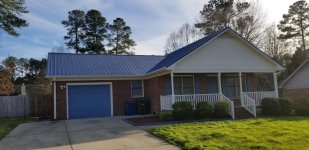
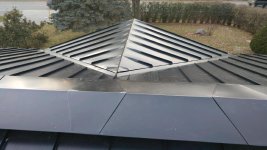
A roofing contractor is installing a metal roof on my rental house and 30 X 36 garage. It seem to me they are overtightening the screws which has dented the metal. Not only is it not pleasing to the eye to see all the dents but I am afraid it could lead to problems in the future. Should I raise the flag before they move forward with the garage? They have finish the house but suppose to start the garage next week, pending rain. In the picture you can see dent metal at every screw.
 

Attachments

  • roof.jpg
    roof.jpg
    146.2 KB · Views: 878
  • roof1.jpg
    roof1.jpg
    150.2 KB · Views: 664
To avoid these ads, REGISTER NOW!

Kaizen

Well-known member
Joined
Jan 9, 2015
Messages
6,948
Location
New England
What’s under the metal? Asphalt shingles? A solid surface is needed to not have that deflection. It’s not from overtightening it’s from the uneven surface


Sent from my iPhone using Tapatalk
 

OHMS LAW

Well-known member
Joined
Jun 8, 2012
Messages
927
Location
Houston TX
Is it a reputable company that you hired. Do they have references, and finally what is their warranty
 
OP
D

DTL504

Well-known member
Joined
Jan 9, 2011
Messages
62
Location
Sandhills, North Carolina
It's the same company that did my house five years ago and did a good job. They have expanded quite a bit and sometimes performance take a dive.
 

readhead

Well-known member
Joined
Dec 8, 2012
Messages
6,175
Location
Durango, Co.
If it is installed over shingles that is normal. Another reason not to install over shingles. At least they used the proper rake trim.
 

CombatNinja

Well-known member
Joined
Aug 24, 2013
Messages
1,456
Why did you have them install this OVER the old shingles? Ripping off the old roof is an easy DIY or a nominal expense when paying for a new roof.
 

Bretny

Well-known member
Joined
Jul 31, 2017
Messages
3,918
Location
Dutchess county NY
Roofing over another old worn out roof is s cob job no matter how good you think it is its only as good as the old possibly leaking roof.

Yes you are screwed. Why are you showing us pictures of the roof from across the street? Alot of roofs look good from a block away.
 

GoodStuff

Well-known member
Joined
Mar 24, 2018
Messages
66
Location
Versailles, KY
I am a roofing contractor by trade. We install probably 20-30 metal roofs and 60-70 shingle roofs a year. I would never suggest installing metal over shingles. For starters, the metal never lays flat - and therefore telegraphs every deviation in the home. The foundation of your home now carries the weight of another roofing system. The screws will never seal to the roof surface. The roof becomes elevated, and changes the height above gutters and accessories. The installer cannot tell where the trusses are to install. and so on... but the biggest issue of all is that ALL metal has movement via expansion and contraction, and during this process, the metal is going to rub against the shingles, wearing through the finish, and rust. Your new roof will be lucky to see 10 years.
 

NUTTSGT

Super Moderator
Staff member
Joined
Sep 14, 2009
Messages
50,870
Location
Northern Central Ohio
Why did you have them install this OVER the old shingles? Ripping off the old roof is an easy DIY or a nominal expense when paying for a new roof.

Roofing over another old worn out roof is s cob job no matter how good you think it is its only as good as the old possibly leaking roof.

Yes you are screwed. Why are you showing us pictures of the roof from across the street? Alot of roofs look good from a block away.

Because so many have said it's not a problem to install metal over shingles.
 

Slowgsr

Well-known member
Joined
Nov 14, 2014
Messages
610
Location
Southern ontario
Cheapest way to do it!

Strip to deck, re-sheet with min 5/8, high temp peel and stick the roof, 26ga double lock mechanical, full raised ridge vent, only proper way to do metal on a dwelling.

Alternatively a 2x4 double strapping system can be used which gives a full vented space from sofit to ridge under the metal panels, if roof venting is questionable. Also gives the chance to shim for dips and sags.

What you have sir I would put on sheds, storage buildings, barns, etc.

The shingle aggregates will slowly rub into the backside of those panels, with expansion & contraction.

Were you given options to strip the old roof?
 
Last edited:

K'ledgeBldr

Well-known member
Joined
Aug 22, 2011
Messages
1,925
Location
Johns Creek, GA
First mistake- metal roof over shingles.

Second mistake- exposed fasteners. If I were to have a metal roof I would definitely go with a hidden fastener type of roof. Roofs with exposed fasteners have a washer- some are just rubber, better ones have neoprene. But, regardless of the fastener the roof system goes through expansion and contraction, to include the roofing itself. All this movement leads to leaks and structural damage. With a hidden fastener that problem doesn't exist.
 

greg13

Well-known member
Joined
Aug 2, 2018
Messages
497
Location
Weedsport, NY
It looks to me like the screws were over torqued, probably the clutch was set to tight and the guys were not paying attention. I would have laid down purlins above the shingles and screwed into those.
 

Showkey

"MEMBER EMERITUS"
Joined
Aug 9, 2014
Messages
8,638
Location
Wausau WI
First mistake- metal roof over shingles.

Second mistake- exposed fasteners. If I were to have a metal roof I would definitely go with a hidden fastener type of roof. Roofs with exposed fasteners have a washer- some are just rubber, better ones have neoprene. But, regardless of the fastener the roof system goes through expansion and contraction, to include the roofing itself. All this movement leads to leaks and structural damage. With a hidden fastener that problem doesn't exist.

+2 ^^^^^^^^^^^
Second mistake is the real BIG problem and will be an on going issue for the life of the roof........:beer:
 

Norcal

Well-known member
Joined
Mar 16, 2008
Messages
13,752
A overlay roof is a bad roof in my opinion, being a cheapskate is not a good idea for a roof, as it can bite back, and in the OP's case looks bad.
 

joey1320

Well-known member
Joined
Jun 14, 2015
Messages
1,813
Location
NE Ohio
You should have removed the shingles first but if you were set on keeping them, the installer should had used purlins over the shingles. Those purlins needed to be properly screwed to the rafters and not just the decking.

With the difference in cold/heat expansion of the metal and shingles, you'll more than likely have water intrusion problems in the future. Another thing to consider, isn't there supposed to be a gap between the metal panel and the decking for proper moisture control?
 

Jackfre

Well-known member
Joined
Dec 26, 2010
Messages
4,406
Location
N CA
I am a roofing contractor by trade. We install probably 20-30 metal roofs and 60-70 shingle roofs a year. I would never suggest installing metal over shingles. For starters, the metal never lays flat - and therefore telegraphs every deviation in the home. The foundation of your home now carries the weight of another roofing system. The screws will never seal to the roof surface. The roof becomes elevated, and changes the height above gutters and accessories. The installer cannot tell where the trusses are to install. and so on... but the biggest issue of all is that ALL metal has movement via expansion and contraction, and during this process, the metal is going to rub against the shingles, wearing through the finish, and rust. Your new roof will be lucky to see 10 years.

I am curious what gauge metal you suggest for a "good" metal roof. It seems to me that most metal roofs are made on the tin-foil line. I had never done any metal until I build my shop 4 yrs ago and used the core-10 siding. This last year I re-built the well house and used core ten on the roof. It is 22 ga and handles really well. In my "fire hardening" of the property I will be re-building a storage shed with Hardi siding and metal roofing. What do you recommend?
 

tarmy

Well-known member
Joined
May 28, 2014
Messages
4,662
Location
Nor Cal
My two metal roofs on house and garage are fastened on the ridge not on the flat surface...no dimples...

Been on for 20 plus years in snow country...no leaks.

Yours looks like ****...
 

Worsedog

Well-known member
Joined
Mar 2, 2008
Messages
1,508
Location
Central FL
I am a cheap ******* and even I would not put metal directly on shingles! I also wouldn't do exposed fasteners.
 
To avoid these ads, REGISTER NOW!

GoodStuff

Well-known member
Joined
Mar 24, 2018
Messages
66
Location
Versailles, KY
The Corten siding you installed is a pretty specialized product. I have never personally installed it, but looking at their website, it looks pretty cool!


The cheapest line I install is a 29 gauge galvalume product that I typically use on barns, sheds, and a lot of garages around here. I just installed it on my personal 40x60 that I built on my property as well. It is what they call a "Premium Rib" panel, and if installed correctly, is an excellent product.

From there, I go to a 26 gauge "Hi-Rib" panel, which I have used quite a bit on homes lately as it is a deeper pattern (1-3/8" ribs) and gives a very distinctive look. I do a lot of commercial properties in this product.


The best roof is always standing seam metal. I use a 24 gauge steel panel with a hidden fastener system. The panels are 16" wide with a 1-1/2" rib. Takes 3 times as long to install, but the look is amazing, and the roof will last for generations. Requires hemming the drip lines, the ridge lines, and valleys, and custom building pieces to go around dormers, chimneys, and the like. I have done many, and they are all showpieces.

Additionally, I have done roofs in copper, slate, and every type of shingle or bitumen made - 24 years in the business.

What I would recommend is finding a product that gives the look you desire, and most importantly finding an installer that inspires you to believe in them. The cheapest materials money can buy will work if they are installed correctly... the most expensive products installed wrong will bring you nothing but headaches.

If you're anywhere around the Central Kentucky area, PM me and I would be glad to assist
 

Marctrees

Well-known member
Joined
Mar 5, 2015
Messages
6,265
Location
TX/LA border - Toledo Bend
Slowgsr - Please explain - "double strapping" layout -

"Alternatively a 2x4 double strapping system can be used which gives a full vented space from sofit to ridge under the metal panels, if roof venting is questionable. Also gives the chance to shim for dips and sags. "

Marc
 

GoodStuff

Well-known member
Joined
Mar 24, 2018
Messages
66
Location
Versailles, KY
Double Lock is a standing seam metal roof, where the rib is bent down over itself a second time to create a permanent watertight seal. Yes, I do double lock roofing, but generally they are limited to bay windows and porch areas. The process is very labor intensive. I have seen machines that bend the tabs over mechanically, but have never used one - we do all of our double-lock manually with hammer and ping.

Unless trying to restore an upscale historic home to original or for some kind of nostalgic rationale, there is little reason today to go with a double lock roof. The most popular standing seam design we use is called a "Quick-seal" and has a bend in the overlap tab that locks onto the panel below. Once on, they are nearly impossible to remove. Technology is awesome! And I can complete a Quick seam standing seam roof in one third the time of what it takes to complete a Double Lock roof.

For those wondering...
-A quality shingle roof (Duration or similar) is close in cost to Premium Rib.
-Hi-Rib is 20% (+/-) more than Premium
-Quick Seam is 50% (+/-) more than Hi-Rib
-Double Lock is double the cost of Quick Seam

For most, it is important to install a quality product for a price that won't break the budget. It is not often that I get the opportunity to work under a "no-budget, do what's best" approach to construction. I prefer to offer options and let the customer decide...
 

Jeff Ivers

Well-known member
Joined
Apr 9, 2010
Messages
2,555
Location
Oklahoma
I personally installed a metal roof over shingles on my shop years ago and it has held up fine. However, 1x4 lumber was run horizontally across the roof first so the metal rests on the wood, just like a barn, and not directly on the shingles. The screws are driven through the hills on the metal not the valleys. I can't believe anyone would install metal roofing with the screws thru the lowest part of the metal (valleys).
 

bob15

Well-known member
Joined
Dec 8, 2011
Messages
6,863
Location
Northeasten, CT
I went directly over 3 tab, but used furn strips between the asphalt (and on one roof, wood shingles) and the metal ribbed panels.

OP, can you take a couple pictures of the screws installed into the roof? There should be no dimples. I think the cam-out that is used on roof guns wasn't set to the right height.

I personally installed a metal roof over shingles on my shop years ago and it has held up fine. However, 1x4 lumber was run horizontally across the roof first so the metal rests on the wood, just like a barn, and not directly on the shingles. The screws are driven through the hills on the metal not the valleys. I can't believe anyone would install metal roofing with the screws thru the lowest part of the metal (valleys).

When screwing a roof to wood, you put them in the valley (except for the stitch screw). Nails go on the peaks. See page 7 & 8: https://www.metalsales.us.com/system/files/resources/installation-guides/classic-rib-installation-guide8-2016.pdf
 

Jeff Ivers

Well-known member
Joined
Apr 9, 2010
Messages
2,555
Location
Oklahoma
I went directly over 3 tab, but used furn strips between the asphalt (and on one roof, wood shingles) and the metal ribbed panels.

OP, can you take a couple pictures of the screws installed into the roof? There should be no dimples. I think the cam-out that is used on roof guns wasn't set to the right height.


When screwing a roof to wood, you put them in the valley (except for the stitch screw). Nails go on the peaks. See page 7 & 8: https://www.metalsales.us.com/system/files/resources/installation-guides/classic-rib-installation-guide8-2016.pdf

What I forgot to explain in my previous post, is that I had a barn with metal roofing built by professionals a number of years before I re-roofed my shop. They carefully pre-drilled all panels and placed the screws through the ribs. I followed that pattern when re-roofing my shop. I realize that there are often multiple solutions that are workable and I am well aware that many people are swearing the only proper way to do this is to put the screws in the valleys. The valley solution would certainly be cheaper as shorter screws can be used and the pre-drilling might be dispensed with. However, it is a fact that the washers under the screws will dry out with time and if the screws are in the valleys where the water runoff occurs, one is more likely to experience water leaks sooner. If the screw are on the ribs, there is no water runoff to get under the dried out washers. I am not trying to start an argument on here, just encouraging others to think about the issues before making a decision. Remember almost everyone once believed the earth was flat - only to be proved wrong. I have never seen anyone post a logical reason why the screws should be placed in the valleys. barn built 17 years ago and shop re-roofed 10 years ago with no leaks in either and no problems with high Oklahoma winds.
 

readhead

Well-known member
Joined
Dec 8, 2012
Messages
6,175
Location
Durango, Co.
When the screws are in the ribs a lever effect happens when the panel expands and contracts. It loosens the screw in the wood and enlarges the hole in the metal.
 

PugetDude

ALLIANCE MEMBER
Joined
Mar 13, 2013
Messages
22,328
Location
Superstition Mountains, AZ
What I forgot to explain in my previous post, is that I had a barn with metal roofing built by professionals a number of years before I re-roofed my shop. They carefully pre-drilled all panels and placed the screws through the ribs. I followed that pattern when re-roofing my shop. I realize that there are often multiple solutions that are workable and I am well aware that many people are swearing the only proper way to do this is to put the screws in the valleys. The valley solution would certainly be cheaper as shorter screws can be used and the pre-drilling might be dispensed with. However, it is a fact that the washers under the screws will dry out with time and if the screws are in the valleys where the water runoff occurs, one is more likely to experience water leaks sooner. If the screw are on the ribs, there is no water runoff to get under the dried out washers. I am not trying to start an argument on here, just encouraging others to think about the issues before making a decision. Remember almost everyone once believed the earth was flat - only to be proved wrong. I have never seen anyone post a logical reason why the screws should be placed in the valleys. barn built 17 years ago and shop re-roofed 10 years ago with no leaks in either and no problems with high Oklahoma winds.

When the screws are in the ribs a lever effect happens when the panel expands and contracts. It loosens the screw in the wood and enlarges the hole in the metal.
^^this^^


With a 1.25- 1.5" high panel you've got a lever arm of 5-6X the screw diameter. Doesn't take too many thermal cycles or sustained wind chatter to loosen them up.

+

You can't drive the screw in tight enough to seal properly on the peaks without distorting the ribs. You can pull everything up tight and ensure a trouble-free seal if you're screwing in a flat pan with a flat backer (plywood, purlins etc.)

Modern screws have the sealing surface completely covered by the washer head. UV degradation isn't a factor like it used to be with the big fat neoprene washers.

Most of the roof failures I've seen have been due to improper fastener installation. There are valid reasons why the panel and screw manufacturers recommend fastening in the pan.

Remember, Grandpa likely used washer head serrated nails, not screws. And his barn probably leaked- until he got up there with a bucket of tar to slather all over the nail heads.
 

Miss the Pontiacs

Well-known member
Joined
Nov 7, 2016
Messages
16,416
Location
Saskatchewan Canada
I’ve never been a fan of roofing over existing material. Then you can check the existing roof sheathing and replace where required. No different than having a good foundation for your building.
 

rburke65

Well-known member
Joined
Nov 10, 2007
Messages
12,349
Location
Canfield, Ohio
Well you get what you paid for..... I’d never put a new roof over the old roof. You’re just trying to save a buck.
 

Farmall450

Well-known member
Joined
Dec 23, 2011
Messages
13,355
Location
Marengo, Illinois
^^this^^


With a 1.25- 1.5" high panel you've got a lever arm of 5-6X the screw diameter. Doesn't take too many thermal cycles or sustained wind chatter to loosen them up.

+

You can't drive the screw in tight enough to seal properly on the peaks without distorting the ribs. You can pull everything up tight and ensure a trouble-free seal if you're screwing in a flat pan with a flat backer (plywood, purlins etc.)

Modern screws have the sealing surface completely covered by the washer head. UV degradation isn't a factor like it used to be with the big fat neoprene washers.

Most of the roof failures I've seen have been due to improper fastener installation. There are valid reasons why the panel and screw manufacturers recommend fastening in the pan.

Remember, Grandpa likely used washer head serrated nails, not screws. And his barn probably leaked- until he got up there with a bucket of tar to slather all over the nail heads.

Aren't you supposed to overdrill to avoid the pull on the metal? Or is that only when you're doing standing seam :headscrat

Around here out pole barns are all nails, in the ridge, (minus wanescoat) so it's pretty interesting to see the differences in residential metal (definitely something I'd consider in the future).
 

850xpeps

Well-known member
Joined
Aug 6, 2017
Messages
1,365
Aren't you supposed to overdrill to avoid the pull on the metal? Or is that only when you're doing standing seam :headscrat


Around here out pole barns are all nails, in the ridge, (minus wanescoat) so it's pretty interesting to see the differences in residential metal (definitely something I'd consider in the future).


Standing seam or hidden fastener systems don’t require drilling. The securing screws are usually a pan head type that are in a slotted edge. Just installed a snap lok standing seam on my new house. Like mentioned above it’s 3 times the labour of you care. And hemming the sheets and custom flashing to make it look nice. It’s not cheap but man does it look nice.

Don’t put a roof over and old one. It’s the one thing that protects your house.
 

PugetDude

ALLIANCE MEMBER
Joined
Mar 13, 2013
Messages
22,328
Location
Superstition Mountains, AZ
Aren't you supposed to overdrill to avoid the pull on the metal? Or is that only when you're doing standing seam :headscrat

Around here out pole barns are all nails, in the ridge, (minus wanescoat) so it's pretty interesting to see the differences in residential metal (definitely something I'd consider in the future).

The Amish are a dominant force in Pole buildings in the Midwest. Not surprised they are still using nails.

Screw fastening technology has come a long way in the last decade, improved coatings, better sealing compounds, head and washer designs, self-drilling/self tapping, screw gun clutches etc.

Nails are still, well...nails. Only as good as the guy pulling them out of his mouth and swinging the hammer.
 

Farmall450

Well-known member
Joined
Dec 23, 2011
Messages
13,355
Location
Marengo, Illinois
The Amish are a dominant force in Pole buildings in the Midwest. Not surprised they are still using nails.

Screw fastening technology has come a long way in the last decade, improved coatings, better sealing compounds, head and washer designs, self-drilling/self tapping, screw gun clutches etc.

Nails are still, well...nails. Only as good as the guy pulling them out of his mouth and swinging the hammer.

Morton Buildings is not ran by the Amish.

I have never seen any Amish community in the midwest; my understanding is they're several hours east.
 

CraigStu

Well-known member
Joined
May 22, 2014
Messages
4,014
Location
Blacksburg, Va
There isn't a lot you can do now. I doubt the roofer is going to remove and reinstall for free. It's a rental. Be sure to get into the attic once/year and check for leaks. Sell in 8-9 yrs to beat the life expectancy problem.
 

Honkey84

Member
Joined
Feb 20, 2011
Messages
20
Morton Buildings is not ran by the Amish.

I have never seen any Amish community in the midwest; my understanding is they're several hours east.


South Central Illinois, and western Illinois has Amish communities that are prominent. Mennonites are also running around throwing up hog confinements here around the rural Quad City area.
 

Slowgsr

Well-known member
Joined
Nov 14, 2014
Messages
610
Location
Southern ontario
Slowgsr - Please explain - "double strapping" layout -

"Alternatively a 2x4 double strapping system can be used which gives a full vented space from sofit to ridge under the metal panels, if roof venting is questionable. Also gives the chance to shim for dips and sags. "

Marc

we strip to plywood, remove all fascia, gutters, soffit.
High temp peel & stick the deck wrapping the fascia.
Strap the roof with 2x4 up each truss, screwed down every 12"

Then double strap the edge with 2x4s, down the fascia also, every 16" up after (single strap) double strap along ridge vent opening, sides of any valleys etc. We string line everything and shin between both layers of strapping. Its very very fine consuming but gives a straight flat roof for metal.

The strapping in opposite directions and down the fascia allows for an airspace up the fascia to the space between the deck and panels and up out the ridge. The sofits are cut for venting as well and gets a perforated continuous strip which vents the attic, and underside the roof.

The straight runs get seamed by hand with hand seamers twice, so 4 passes per seam. First does the single lock, second is double. The seamers have a plastic type guide to not scratch the metal.

Hand seaming entire panel lengths would be ludicrous, I suspect you've never done double lock jobs other then detail pieces, snap lock is not the same, your probably doing American style. (Do your best caulk the rest).

Hand seamed the double lock across the dormer ridge,

The fascia and sofit is also standing seam except 12" exposure and single lock.

The gutters are 6" half round and use deck mounted hangers that must be bent to slope.

My house is about 25 square (small) and there is 130ft of sofit, fascia, gutter, and a covered porch. There was 1 dormer, 1 chimney (also rebuilt) and interlocking metal siding was also done. (Hand made). There was basically no budget. Me and a friend did it. He's the pro, I learned a ton.

Some photos of the dormer all double locked, valley is an interesting setup as it uses a double hem. I wouldn't double lock a valley (no room for movement) but that's a different topic.

The 2nd photo shows the completed ridge cap also. There are no exposed fasteners on the roof and nothing relies on caulking.

I however need some snow guards, undecided to do what I've been doing, clearing substantial accumulation, or doing a rail at outside wall, maybe just over the deck, driveway and entrances.
 

Attachments

  • 20171109_155859.jpg
    20171109_155859.jpg
    158.6 KB · Views: 129
  • 20171207_161546.jpg
    20171207_161546.jpg
    148.4 KB · Views: 113
Last edited:
To avoid these ads, REGISTER NOW!
Top Bottom