Private Lugnutz
Well-known member
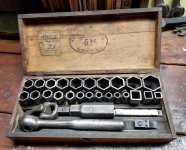
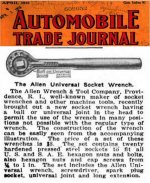
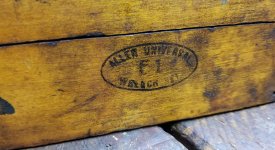
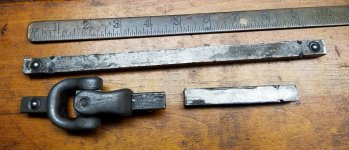
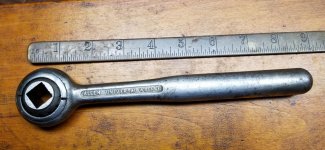
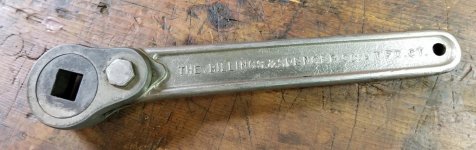
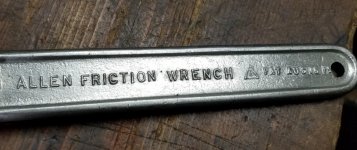
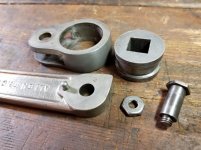
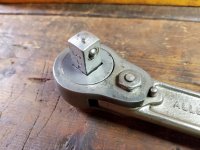
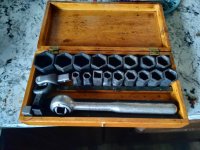
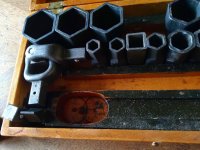
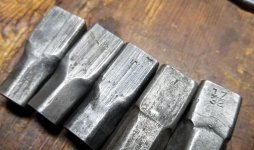
The Allen "Universal" Wrench Set No. 51 has a uniquely functioning ratchet wrench...


...which gives the wrench and the entire set…


…its name.
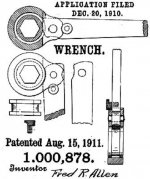
Mr. F.R. Allen (this is not the same Allen as the eponymous hex keys or wrenches), who founded the company with two partners in 1913, was one of those 'better mousetrap' type of inventors. His first patented ratchet (1,000,878, granted in 1910), called the "Friction Ratchet", was gearless, alternately catching and releasing a drive wheel with a cam.
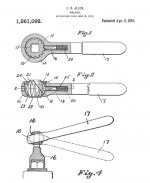
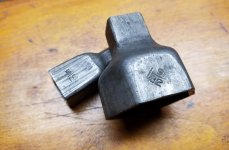
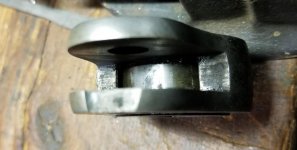
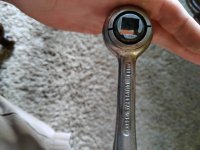
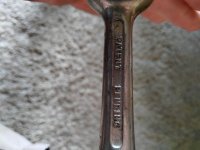
His second patent (1,261,092, granted in 1918) was the "Universal Ratchet Wrench“. This time around it had a gear. But Allen’s new twist on it, quite literally, was to have the gear head gimbaled. Appearing at first to be broken, it actually floats semi-freely inside the opening of the ratchet frame, capable of swiveling almost 45* in any direction. In order for each of the eleven (11) teeth to make contact with the pawl regardless of the orientation of the gear, the teeth are suitably whorled rather than straight.
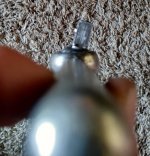
Figures 1 and 2 in the patent diagram shows the construction, and Figure 4 - along with the two photographs I led with - shows the swiveling action.

MORE TO FOLLOW
...which gives the wrench and the entire set…
…its name.
Mr. F.R. Allen (this is not the same Allen as the eponymous hex keys or wrenches), who founded the company with two partners in 1913, was one of those 'better mousetrap' type of inventors. His first patented ratchet (1,000,878, granted in 1910), called the "Friction Ratchet", was gearless, alternately catching and releasing a drive wheel with a cam.
His second patent (1,261,092, granted in 1918) was the "Universal Ratchet Wrench“. This time around it had a gear. But Allen’s new twist on it, quite literally, was to have the gear head gimbaled. Appearing at first to be broken, it actually floats semi-freely inside the opening of the ratchet frame, capable of swiveling almost 45* in any direction. In order for each of the eleven (11) teeth to make contact with the pawl regardless of the orientation of the gear, the teeth are suitably whorled rather than straight.
Figures 1 and 2 in the patent diagram shows the construction, and Figure 4 - along with the two photographs I led with - shows the swiveling action.
MORE TO FOLLOW