To avoid these ads, REGISTER NOW!

How to finished a concrete "room" under my front porch??

Citation

Well-known member
Joined
Jan 20, 2016
Messages
3,212
Location
Indy
My house, built about 90 years ago, has a small "room" under the front porch. It's about 8'x6' square with a perhaps 4.5' height. One side has what you might call cabinet doors that open into the rest of the basement. The space is cold and humid, great for storing things that like to mildew. I'm assuming this is basically the foundation walls that support the front porch, as well as the suspended concrete that is the porch and a slab under the space. I'm also assuming that, other than the ceiling and the wall that faces the basement, the rest are surrounded by dirt.

I would like to make the space more usable for storage. To that end I am considering adding insulation and a moister barrier to all sides, floor and ceiling. Then adding some vents to the bottom and top of the door to allow some air flow with the rest of the basement. However, I'm really not sure the best way to do this, hence I'm asking here.

What I was thinking was starting with a coating of drylock paint on all surfaces. Then glue blue foam panels, probably just 1" thick, to all sides. All gaps would be filled with either flexible adhesive or flexible spray foam. After that I would install a simple plywood (other material?) floor and thin walls/ceiling (plywood, melamine?) just glued to the foam insulation. The intent would be to create kind of a box within a box so we have good sealing between the concrete and the interior. After that, add some vents to the doors. Since the space would not be insulated I don't mind if it shares air with the rest of the finished basement.

I also might run a 12V line so I can add some LED lighting inside the box. 12V so I don't have to worry about trying to run higher voltage stuff in a way that may have some code requirements I'm not aware of.

Ideas and suggestions are what I'm here for!
Thanks
 
To avoid these ads, REGISTER NOW!

Blue

Well-known member
Joined
Dec 15, 2005
Messages
1,113
Location
Northern Illinois
One side has what you might call cabinet doors that open into the rest of the basement.

Having a tough time envisioning this. Is this a wall of wood cabinets that separate this room from the rest of the basement?

Also, is there a close-by floor drain? If so, first thing I'd do if you haven't already is get one of those ~200 dollar dehumidifiers from one of the big box stores, run a hose into the floor drain, and see how the conditions change in there. Might be all you need to stop the mildew.
 
OP
C

Citation

Well-known member
Joined
Jan 20, 2016
Messages
3,212
Location
Indy
This is a sketch of what I'm taking about.

No drains or power in this space. We do have a dehumidifier running in the basement. Certainly just circulating air into that space as it's would help but it gets cold in the winter and I would like to seal it up rather than just flowing a lot of air through it.
 

Attachments

  • tmp-cam-6863487094997122394.jpg
    tmp-cam-6863487094997122394.jpg
    105 KB · Views: 110
OP
C

Citation

Well-known member
Joined
Jan 20, 2016
Messages
3,212
Location
Indy
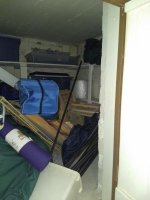
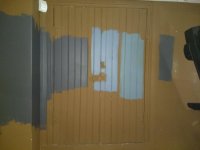
Here are two additional pictures. Please ignore the paint options and mess in the space.
 

Attachments

  • tmp-cam-694263964903739689.jpg
    tmp-cam-694263964903739689.jpg
    66.3 KB · Views: 244
  • tmp-cam-2467797901436702157.jpg
    tmp-cam-2467797901436702157.jpg
    84.3 KB · Views: 222

Kaizen

Well-known member
Joined
Jan 9, 2015
Messages
6,941
Location
New England
Where are you located? Lots of these in Canada. Designed as cold storage for roots and canned stuff. Making it part of the envelope has issues. Mike Holt has a few shows about this if you can find them. I suppose if it’s dry and sealed then it’s ok. Otherwise I’d thoroughly research it and problems it can cause.


Sent from my iPhone using Tapatalk
 
OP
C

Citation

Well-known member
Joined
Jan 20, 2016
Messages
3,212
Location
Indy
I'm in Indianapolis. Given the age of the house I don't think it was meant for food storage. Also it may have been open to the rest of the basement when the house was first built and the basement wasn't finished.
 

ItsNemo

Well-known member
Joined
Mar 5, 2016
Messages
4,805
Location
Canada
Stud it out with 2x2's or 2x3's (to minimize space loss) slightly set off the walls by a half inch or so, spray foam it all in, sheet the walls in something, get air circulation through it, good to go.
 

Old Radar

Well-known member
Joined
Apr 17, 2019
Messages
2,754
Location
San Antonio, TX
I'm in Indianapolis. Given the age of the house I don't think it was meant for food storage. Also it may have been open to the rest of the basement when the house was first built and the basement wasn't finished.

I'm not sure what you're basing this on. A house built ninety years ago (1929) in rural America had a root cellar--you can bet your bottom dollar on it. The Rural Electrification Administration (REA) was established in 1935 to build prosperity in rural areas by bringing electricity, modernization, and efficiency to rural families and American agriculture.

Now I don't know where in Indianapolis your home is located, but unless it is damn close to Market Square, it was probably in the sticks 90 years ago--which means rural--which means no electricity--which means root cellar.

Finish it off as suggested above, because what made it a good root cellar makes it a good wine cellar!

Good Luck!!
 
OP
C

Citation

Well-known member
Joined
Jan 20, 2016
Messages
3,212
Location
Indy
I'm not sure what you're basing this on. A house built ninety years ago (1929) in rural America had a root cellar--you can bet your bottom dollar on it. The Rural Electrification Administration (REA) was established in 1935 to build prosperity in rural areas by bringing electricity, modernization, and efficiency to rural families and American agriculture.

Now I don't know where in Indianapolis your home is located, but unless it is damn close to Market Square, it was probably in the sticks 90 years ago--which means rural--which means no electricity--which means root cellar.

Finish it off as suggested above, because what made it a good root cellar makes it a good wine cellar!

Good Luck!!

In my area most houses are a decade or two older and it's very unlikely people were doing root cellars in this area. I'm certain it had electricity when new. This was a well established area before the war.
 

Kaizen

Well-known member
Joined
Jan 9, 2015
Messages
6,941
Location
New England
Are the Mike Holt videos on YouTube?


Sorry mike Holmes had a show Holmes on homes. Some are.
As said it was for cold storage. Maybe ask your neighbors if they did anything that is working.


Sent from my iPhone using Tapatalk
 

Stuart in MN

Well-known member
Joined
Sep 8, 2005
Messages
23,009
Location
Minneapolis
My house has an old coal bin under one of the porches that looks similar to what you have there. There's also an old cold storage room for food but it's a separate thing.
 

Dakota00

Well-known member
Joined
Mar 9, 2008
Messages
1,078
Location
Woodbridge, Ontario
I have 2 cold storage rooms, 1 under the front porch which I use for canned and dry food storage. The second is about 1/3 under the garage, this is where I make and store my wine.
 

Brian.Rheeder

Active member
Joined
Sep 7, 2018
Messages
29
Location
Harrison Township, MI
Interesting. When we were building our new home a couple years ago, we almost gave this same space up to backfill. Luckily, my dad suggested we create a doorway from the basement to the space under our porch.

Ours is about 10’x6’. Part of the drain tile for the basement is integrated into this room, but we didn’t run any power or heat to it (my basement floor has radiant heat). I plan to use it as a wine cellar/humidor eventually. I also plan on getting power in the room, if nothing more than for a light fixture and switch.

As to what to do with yours, I’d paint the walls and not much else. I think going through the trouble of insulating such a small space is pointless, especially when it already lends itself to natural year round temperature and humidity underground.
 
To avoid these ads, REGISTER NOW!

Old Radar

Well-known member
Joined
Apr 17, 2019
Messages
2,754
Location
San Antonio, TX
In my area most houses are a decade or two older and it's very unlikely people were doing root cellars in this area. I'm certain it had electricity when new. This was a well established area before the war.

Roger. I was basing my assessment on your original post where you said your home was built about 90 years ago.
 
OP
C

Citation

Well-known member
Joined
Jan 20, 2016
Messages
3,212
Location
Indy
Roger. I was basing my assessment on your original post where you said your home was built about 90 years ago.

Well, 85 years, 1934 I think. But this was a well established area by then and mine was one of the later houses in the area.
 

Farmall450

Well-known member
Joined
Dec 23, 2011
Messages
13,355
Location
Marengo, Illinois
Interesting. When we were building our new home a couple years ago, we almost gave this same space up to backfill. Luckily, my dad suggested we create a doorway from the basement to the space under our porch.

Ours is about 10’x6’. Part of the drain tile for the basement is integrated into this room, but we didn’t run any power or heat to it (my basement floor has radiant heat). I plan to use it as a wine cellar/humidor eventually. I also plan on getting power in the room, if nothing more than for a light fixture and switch.

As to what to do with yours, I’d paint the walls and not much else. I think going through the trouble of insulating such a small space is pointless, especially when it already lends itself to natural year round temperature and humidity underground.

My dad had considered saving his, back in the day, and using it as a gun vault. Agreed that you'd need a big humidifier running often to be of much storage value.
 
OP
C

Citation

Well-known member
Joined
Jan 20, 2016
Messages
3,212
Location
Indy
My dad had considered saving his, back in the day, and using it as a gun vault. Agreed that you'd need a big humidifier running often to be of much storage value.

So this is the thing I've been wondering about. I would like to avoid running a dehumidifier for that room. I would like to control the humidity with a combination of natural venting to the rest of the basement and by sealing the space up as much as possible.

The first part of that is to use something like Drylock paint and foam gap sealer in every corner of that space. After that would be to line all walls, as well as top and bottom with rigid foam panels, glued to the existing walls/floor/ceiling. These panels would be sealed to one another with glue/sealing tape/spray foam/(open to suggestions) thus creating an air tight box inside of the concrete box. However, I don't know if that's one of those things that sounds like a good idea but actually will be a bad idea in the end. For example, if water were getting in then the tight sealing of the space would result in water collecting in place. Ultimately I'm less concerned about the mechanics of making it and more concerned that I might be overlooking a critical aspect of how proper basement systems are meant to operate.* My intent is basically to 100% seal the concrete sides of the box behind water tight panels. Is that going to be a bad idea in the end?

BTW, with only moderate effort I could add some forced ventilation to that space via a fan above the doors. However, so long as the space has a musty, "basement" smell I would rather isolate vs ventilate into the rest of the basement. I'm hoping my plan would stop the odors.

*In a previous house I went through some effort to insulate the floor above the crawl space. I later learned that this isn't a recommended practice. That is part of why I'm asking the people here.
 

Blue

Well-known member
Joined
Dec 15, 2005
Messages
1,113
Location
Northern Illinois
BTW, with only moderate effort I could add some forced ventilation to that space via a fan above the doors. However, so long as the space has a musty, "basement" smell I would rather isolate vs ventilate into the rest of the basement. I'm hoping my plan would stop the odors.

I may be exposing my ignorance here, but wondering what would happen if you would just open up that space to the rest of the finished basement? If the basement is finished, I assume it has A/C and heat, which should pull any moisture out of the air (I'd think, at least). That would hopefully cut down on any kind of musty smell.

In general, if there is any concern about water getting in there, I think your're better off attacking the source of the water before it gets in the basement. Things like: rerouting gutter downspouts, installing a french drain around the perimeter, etc. As opposed to trying to stop the water from the inside (Drylok paint, etc).
 
OP
C

Citation

Well-known member
Joined
Jan 20, 2016
Messages
3,212
Location
Indy
I may be exposing my ignorance here, but wondering what would happen if you would just open up that space to the rest of the finished basement? If the basement is finished, I assume it has A/C and heat, which should pull any moisture out of the air (I'd think, at least). That would hopefully cut down on any kind of musty smell.

In general, if there is any concern about water getting in there, I think your're better off attacking the source of the water before it gets in the basement. Things like: rerouting gutter downspouts, installing a french drain around the perimeter, etc. As opposed to trying to stop the water from the inside (Drylok paint, etc).

Water control around the outside of the house is generally good. I've never seen liquid water in this space, just humidity.

I'd rather not just open it up because it's not insulated and would add to an often cold basement. The basement is heated but not that well in the winter.
 

cderalow

Well-known member
Joined
Nov 13, 2011
Messages
1,326
Location
Potomac, MD
i grew up in a house in central MA that dated back to the 1930's that had a similar cold cellar.

most of the houses in the neighborhood did, even though they had electricity when built new.

we used to keep canned goods on shelves and xmas decorations in ours.
 

Kaizen

Well-known member
Joined
Jan 9, 2015
Messages
6,941
Location
New England
Note the non insulated door to the basement is allowing enough heat through so it does not freeze


Sent from my iPhone using Tapatalk
 
OP
C

Citation

Well-known member
Joined
Jan 20, 2016
Messages
3,212
Location
Indy
To be clear, I'm ok with things in the box getting cold, it's the humidity that's a problem for storage. However, if I'm going to share the air with the rest of the basement then I want to better isolate the space from it's cinder block walls.
 

Stuart in MN

Well-known member
Joined
Sep 8, 2005
Messages
23,009
Location
Minneapolis
One problem with trying to dehumidify a cold space is most residential dehumidifiers don't work well below some temperature, I think around 60 to 65 degrees. Using Drylok or a similar paint on the walls will help but may only be a partial solution. If the space is also insulated, then leaving it open to the rest of the basement should result in a minimal heat loss.
 

Old Radar

Well-known member
Joined
Apr 17, 2019
Messages
2,754
Location
San Antonio, TX
Citation—
Maybe we need to step back a moment, check the facts and see where they point.

So far, these are the facts as I understand them:
1. 8x6 unfinished, unheated space 4.5 feet tall
2. Concrete block walls, 2 under grade, 2 shared with heated basement
3. Non-sealing/non-insulated doors into the space
4. You've never seen liquid water in this space, just humidity.
5. Currently the space is cold and humid
6. The basement is heated but not that well in the winter
7. You currently run a dehumidifier in the basement

Desires:
1. You would like to make the space more usable for storage
2. You would like to avoid running a dehumidifier for that room
3. Your intent is basically to 100% seal the concrete sides of the box behind water tight panels
4. You could add some forced ventilation to that space via a fan above the doors
5. You'd rather not open it up because it's not insulated and would add to an often cold basement

Derivations:
1. The space is 48 sqft and 216 cubic feet. Any standard home HVAC system should take this addition in stride, and because you say the basement is not well heated in winter, you may need to have your system looked at in addition to whatever you end up doing to your storage space.
2. You are smart to be concerned over your Drylok and insulation plan. Watch any “Holmes on Homes” episode that deals with moisture in basements and they will go into detail about stopping the moisture before it gets to your home. That means membranes and moisture barriers on the OUTSIDE of your walls, below the grade—not inside. Using Drylok in a damp basement is like trying to deal with several gunmen in your bedroom using a stick. It would have been more effective to have measures in place to keep them out of your house in the first place.
3. I fear facts 4-7 above indicate that whatever exterior waterproofing/moisture barrier your 1934ish house had (if any) is failing or has failed. Moisture has infiltrated your entire basement (not just the storage area) and despite your dehumidifier, your furnace cannot keep the basement at a comfortable temperature. Another telling point is this—a tight, dry, below-grade basement has a fairly stable temperature year round. It is cooler than the rest of your house in the summer and should be warmer than the rest of the house in the winter because of the insulating properties of the earth encasing it.
4. I hope I’m wrong, because that will be expensive to have corrected or be a lot of work to fix yourself. You could check if any waterproofing was applied to the concrete blocks by digging down a couple of feet below grade outside any basement wall
5. Even if I’m wrong, your desire for a hermetically sealed box is misplaced because two sides of the box adjoin a heated space—making sealing there unnecessary.
6. If you go the Drylok way, be sure to patch any cracks with hydraulic cement beforehand and be prepared to re-apply Drylok after 2-3 years when the moisture begins to make it flake off. For that reason I would not build an inner wall. Don’t use regular Drylok on the floor. They make a special product for that. I have no experience with that.

I hope you find a workable solution. Good Luck!
 
OP
C

Citation

Well-known member
Joined
Jan 20, 2016
Messages
3,212
Location
Indy
One problem with trying to dehumidify a cold space is most residential dehumidifiers don't work well below some temperature, I think around 60 to 65 degrees. Using Drylok or a similar paint on the walls will help but may only be a partial solution. If the space is also insulated, then leaving it open to the rest of the basement should result in a minimal heat loss.

Currently not insulated. My wish to open to the rest of the basement is why I would like to insulate it. In the process I would basically like the insulation to be closed cell foam with sealant between the panels. That would effectively make an air tight barrier between the living space and the block walls/concrete. I can't think of why this isn't a decent idea but I'm also interested in hearing from others who know more about basement/foundations.
 
OP
C

Citation

Well-known member
Joined
Jan 20, 2016
Messages
3,212
Location
Indy
Citation—
Maybe we need to step back a moment, check the facts and see where they point.

So far, these are the facts as I understand them:
1. 8x6 unfinished, unheated space 4.5 feet tall
2. Concrete block walls, 2 under grade, 2 shared with heated basement
3. Non-sealing/non-insulated doors into the space
4. You've never seen liquid water in this space, just humidity.
5. Currently the space is cold and humid
6. The basement is heated but not that well in the winter
7. You currently run a dehumidifier in the basement

Desires:
1. You would like to make the space more usable for storage
2. You would like to avoid running a dehumidifier for that room
3. Your intent is basically to 100% seal the concrete sides of the box behind water tight panels
4. You could add some forced ventilation to that space via a fan above the doors
5. You'd rather not open it up because it's not insulated and would add to an often cold basement

Derivations:
1. The space is 48 sqft and 216 cubic feet. Any standard home HVAC system should take this addition in stride, and because you say the basement is not well heated in winter, you may need to have your system looked at in addition to whatever you end up doing to your storage space.
2. You are smart to be concerned over your Drylok and insulation plan. Watch any “Holmes on Homes” episode that deals with moisture in basements and they will go into detail about stopping the moisture before it gets to your home. That means membranes and moisture barriers on the OUTSIDE of your walls, below the grade—not inside. Using Drylok in a damp basement is like trying to deal with several gunmen in your bedroom using a stick. It would have been more effective to have measures in place to keep them out of your house in the first place.
3. I fear facts 4-7 above indicate that whatever exterior waterproofing/moisture barrier your 1934ish house had (if any) is failing or has failed. Moisture has infiltrated your entire basement (not just the storage area) and despite your dehumidifier, your furnace cannot keep the basement at a comfortable temperature. Another telling point is this—a tight, dry, below-grade basement has a fairly stable temperature year round. It is cooler than the rest of your house in the summer and should be warmer than the rest of the house in the winter because of the insulating properties of the earth encasing it.
4. I hope I’m wrong, because that will be expensive to have corrected or be a lot of work to fix yourself. You could check if any waterproofing was applied to the concrete blocks by digging down a couple of feet below grade outside any basement wall
5. Even if I’m wrong, your desire for a hermetically sealed box is misplaced because two sides of the box adjoin a heated space—making sealing there unnecessary.
6. If you go the Drylok way, be sure to patch any cracks with hydraulic cement beforehand and be prepared to re-apply Drylok after 2-3 years when the moisture begins to make it flake off. For that reason I would not build an inner wall. Don’t use regular Drylok on the floor. They make a special product for that. I have no experience with that.

I hope you find a workable solution. Good Luck!

I really don't want to try to tap into the existing downstairs HVAC. It's an old install with what I assume are custom constructed plenums/ ductwork. Currently the flow rate is rather low (I had an earlier thread on this) and the basement vent for that room has limited air flow. The basement was clearly not part of the original installation as evidenced by the scabbed on flex pipes. To be honest, I think the whole system was designed around a low flow rate, constantly on (or close to) furnace. The duct work has clearly been added to over the years and I wouldn't be at all surprised if it dates back to the construction of the house. Unlike many in this area this house did have forced air heat vs radiators + boiler.

The temperature in the basement is fairly constant but in the winter it suffers because we have a dog door that just doesn't keep the drafts out. I do understand that the best option would be to excavate around the house and redo all water integrity barriers and replace all foundation level drainage. That just isn't a practical option at this point.

OK, so if sealing up isn't a good idea what would be the best way to improve the insulation of this room? If this is going to share air etc with the rest of the basement I would like it to be insulated at least similarly to the rest of the basement (R10 batting behind drywall with vapor barrier I would guess). So long as it's not going to make the rest of the basement cold I'm OK opening things up to the rest of the basement. What about sealing any cracks, adding closed cell foam to the walls and ceiling but leaving the floor uncovered?
 
To avoid these ads, REGISTER NOW!
Top Bottom