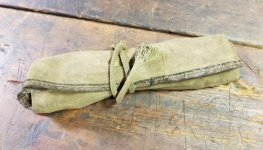
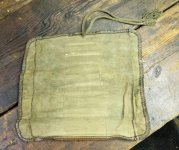
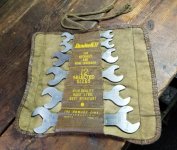
Re: c. 1938 Howard Zink Dandee Wrench Kit (or, from "Sure-Fit" to "LeBra")
POST 2 of 4
The two best histories of The Howard Zink Corporation I could find came from two unusual sources. The first was an introduction to the description of a photography collection that is archived at the
Rutherford B. Hayes Presidential Library and Museum at Spiegel Grove, in Fremont, Ohio, linked
here. And the second was a speech given by
Hon. Alvin F. Weichel, U.S. House of Reps, on June 30, 1950, published in the Congressional Record from that year, linked
here.
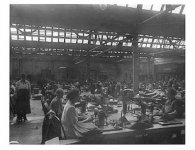
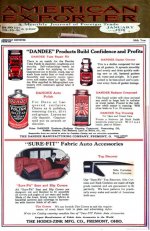
The Howard Zink Corporation started out in 1917 in Fremont, Ohio as the Hodes-Zink Manufacturing Company. The two-person operation (Mr. A.K. Hodes – the manufacturer, and Mr. Zink – the marketeer) made storm curtains for horse buggies, but soon expanded into similar items for early Brass Era automobiles, such as radiator covers, hood covers, top covers, and side curtains for roadsters and touring cars. The products were developed by creating a customized or tailored pattern for each model automobile and mass producing each item under the trademark “Sure-Fit”.
Here is their Trademark from 1923.
In 1936 they opened a second facility in Passaic, NJ, to cater to the East Coast market. In 1938, when Mr. Hodes died, his partner Mr. Zink purchased all his assets and changed the name to the Howard Zink Corporation. In 1939, they bought out a plant in Charleston, Mississippi. During WWII, in addition to their civilian products, they made bandoleers, sleeping bags, barracks bags, ponchos, and kapok-filled life jackets for the Army and Navy.
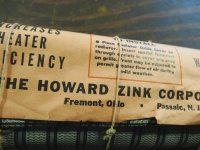
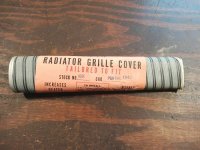
Here is a NOS radiator cover for a 1942 Pontiac.
Here are some NOS arm rest covers for 1942 DeSoto.
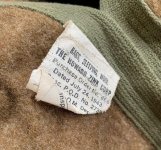
And here is a US Army sleeping bag tag from 1943.
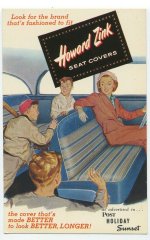
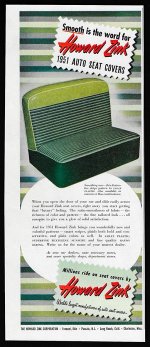
After the war they opened a West Coast plant in Long Beach, CA, and expanded into seat cushions, mother’s utility bags, and nationally famous “Baby Pals”, a product I have not been able to locate a picture or description of. But they were most famous for their seat covers, which were, according to the 1950 Congressional Record and several trade journals, the number one seat cover on the market.
Here are some advertisements from the 50’s.