Private Lugnutz
Well-known member
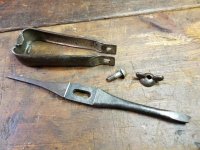
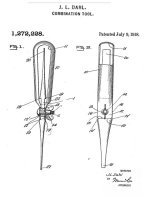
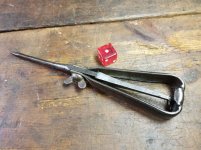
I plucked this rotating screwdriver out of an old toolbox at the flea market this morning. I couldn’t find any markings on it at the time, covered in grime, but it looked interesting, and antique, and upon cleaning and further inspection, it turns to have been patented (1,272,228) on July 9, 1918, by J.L. Dahl of Teaneck, NJ.
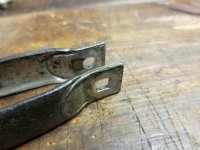
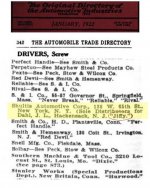
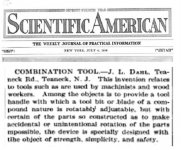
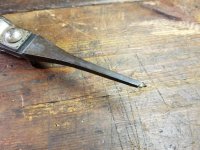
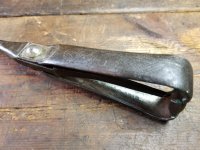
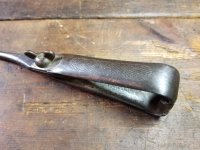
His company was making these in Hackensack, NJ through at least January 1922, the date of an Automobile Trade Journal in which it was being advertised as the “Jiffy”. Both tips are broken, but according to the patent, they were both slot tips, which is consistent with the era, of two different sizes. Note that one blade is round and the other blade is rectangular. The shank is recessed in the middle so it locks into place with the tightening of the wingnut. The patent doesn’t show those stops or guards on the bottom (see Pic 7), but a notice in the July 1918 issue of Scientific American describes them as preventing accidental rotation.
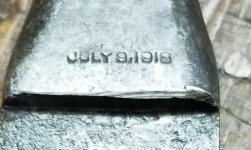
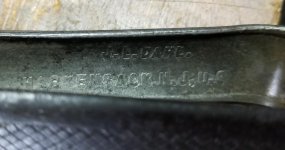
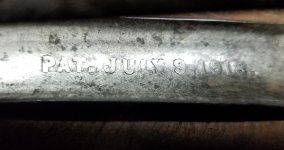
It is marked with the patent date and the mfgrs info on the inside of each handle. Because it comes apart, they also felt it necessary to mark the patent date on the shank.
The only other examples I have been able to find is one on DATAMP and one in the 2018 York, PA Auction Issue of the Wrenching News, linked here.
His company was making these in Hackensack, NJ through at least January 1922, the date of an Automobile Trade Journal in which it was being advertised as the “Jiffy”. Both tips are broken, but according to the patent, they were both slot tips, which is consistent with the era, of two different sizes. Note that one blade is round and the other blade is rectangular. The shank is recessed in the middle so it locks into place with the tightening of the wingnut. The patent doesn’t show those stops or guards on the bottom (see Pic 7), but a notice in the July 1918 issue of Scientific American describes them as preventing accidental rotation.
It is marked with the patent date and the mfgrs info on the inside of each handle. Because it comes apart, they also felt it necessary to mark the patent date on the shank.
The only other examples I have been able to find is one on DATAMP and one in the 2018 York, PA Auction Issue of the Wrenching News, linked here.
Attachments



Last edited: