Love my in floor radiant in my garage. I do get some noise from the zone pumps, but not enough to write home about. I wonder if anyone makes a db meter app? That would be interesting if we had some real world data from different systems.
Phil
There are apps but calibration and consistency is a concern. If you were making measurements back to back comparison the app would be valid. But app compared to published spec is a problem. Just as the published specs are different because distance, height, environment and equipment used.......DIY sound measurement would be challenging.
Simple things like sound levels in front vs back of the heater might make for huge variation. Measurements in 10-12’ tall ceiling vs 8’ the variables are endless and with sound it make a huge difference. Other things like metal walls vs drywall play a part.
Same for App light meters........they work on back to back comparison measurements if done carefully.
Similar discussions come up in the GJ with volt meters. Not many are concern with a .1 or .01 of volt resolution when working on your garden tractor. So the meter quality and user techniques are not critical in making a troubleshooting decision.
I have an old Realistic sound meter we used in measuring customer complaints on road noise in the field. Crude yes. Measuring 15’ in front of my Beacon Morris 45k heater measure about 66 db. 4’ in the back near a metal wall measures 82 db. No not very scientific.........in just about every way. But if a heater manufacturer wanted to publish good db rating it would not be too hard to get a better measurement by changing the technique slightly.


Free Apple App measure 59 db 15’ in front of the heater.
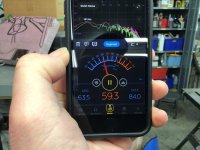
The phone app in the back was much more quiet at 68db. Which plays directly to the tool and technique. Not to mention the heater changes volume with run time.
The app gives frequency so you can see the two different motors running and the noise each makes.
Back to reality...........the heater noise is not a BIG concern to me. More fun facts and interesting.

