Just to add to the overload of information -
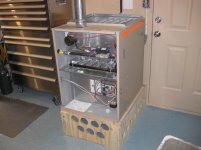
Rickairmedic is correct about the casing opening. You also probably have an alternate opening on the side that is not visible. I had assumed (silly me, again!) that you were aware of that.
Many of these units are "multi-poise", being able to be mounted in several configurations; upflow, downflow, or horizontal. I can't tell, from looking at your unit, if yours is able to be mounted in several different ways, but that information would be available from the manufacturer's website. If this is the case with your unit, you may want to reconsider the placement of your unit. A horizontal location, suspended from the ceiling, might be the most space conscious for you.
Going back to the basics again:
Follow the manufacturer's recommendations regarding venting, even with a powered vent, for items such as elbows, vent length, outlet, sealing, etc. CO kills people every year.
The gas train must be in accordance with manufacturer and local requirements. Check with your Authority having Jurisdiction for confirmation of what is acceptable.
Observe minimum installation clearances, remembering that you will have future service requirements that may require such things as fan removal.
If you didn't get an installation manual, obtain one before proceeding further. The manual will have a "Test, Check and Startup" checklist which should be followed.
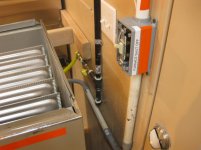
You should have an emergency shut-down switch located next to the exit from the garage. Provide a red face plate for the switch and label "Emergency furnace shut-off".
It doesn't appear that you will require a condensate drain but confirm that prior to installation.
In another thread, someone had asked about drip legs for gas piping. Technically these are dirt legs and should extend 6" below the tee fitting at the unit.
Post pics as you proceed and we will help to keep you on the straight and narrow path.
As always, offered only as opinion


 Great pics. Snap a few after you've done your new install. I'd love to see it.