mjozefow
Well-known member
Alright, this is meant to be a thread about the general procedures for restoring vises. It is not the only way it is done, but it is the way I feel is most efficient. Perhaps more importantly though, is that people will be able to see how they come apart, so that there will be fewer specific questions in the "General Tool Discussion" forum. A vise can be a great restoration project, due to their relative simplicity. The end result is a beautiful, functional, and rugged tool. This thread is designed to lessen the number of head-scratching moments.
I will organize this into "Types" of vises as I see them. These include the exposed screw vises, the rectangular slide vises, the stamped steel slide vises, and the Wilton's. These are not universal, it is just how they seem to fit into my head.
"Exposed screw" Vises:
I will be using Selkirk's Littlestown vise for this. He has asked me to restore it for him, so I hope he doesn't mind it being used for demonstration purposes.

1. Unscrew the dynamic jaw all the way.

2. There will be either an E-clip, a crimped on ring, or a cotter-pinned washer in a groove on the leadscrew. Remove it. Try to bend things as little as possible, and remove the crimped rings over the rest of the screw, don't pull them straight off.

3. Remove the leadscrew.
4. Remove the swivel base if so equipped.

5. The main nut will either slide right out now, or it may be pinned in. Drive out the pin from below if it is pinned.
6. Remove the jaw inserts. I use an old screwdriver sharpened to a chisel-like point. If they use two screw and a pin like the Shop King pictured, then work the jaws of slowly, concentrating in the center.

7. Blast
8. Polish slide 9. Prime/paint/lube/ reassemble/enjoy!
"Rectangular Slide" Vises:
Perhaps the most common we see in the vise category. These are the workhorses of the industry.
I'll be demonstrating between a Prentiss and a Rock Island. I'll need good Reed pics, so Banjo can bring in some of those.


1. Remove the dynamic jaw assembly. This often is the most difficult step.
1a. Check the rear of the slide for deformation, and file as needed.

Once you are sure it is not binding, you can spread the jaws apart:

Or you can hold the static side static, and hammer the dynamic slide out with a lead/brass/deadblow hammer. A vise helps when restoring vises. So everyone needs at least two. Again, they should separate fairly easily, otherwise, refer to 1a.

Or you can pry/wedge the two apart with 2x material.
If you need more force than this, refer to step 1a. Sometimes they will simply slide apart and none of this is needed.
2. Remove the leadscrew. Some prefer to do this before removing the dynamic jaw. It is your call, sometimes it is nice to be able to pull on the handle A BIT (keep in mind, pulling too hard on the leadscrew is bad, as you will be pulling opposite the direction of greater strength.
The anti-reversal machanisms are usually one of these three.
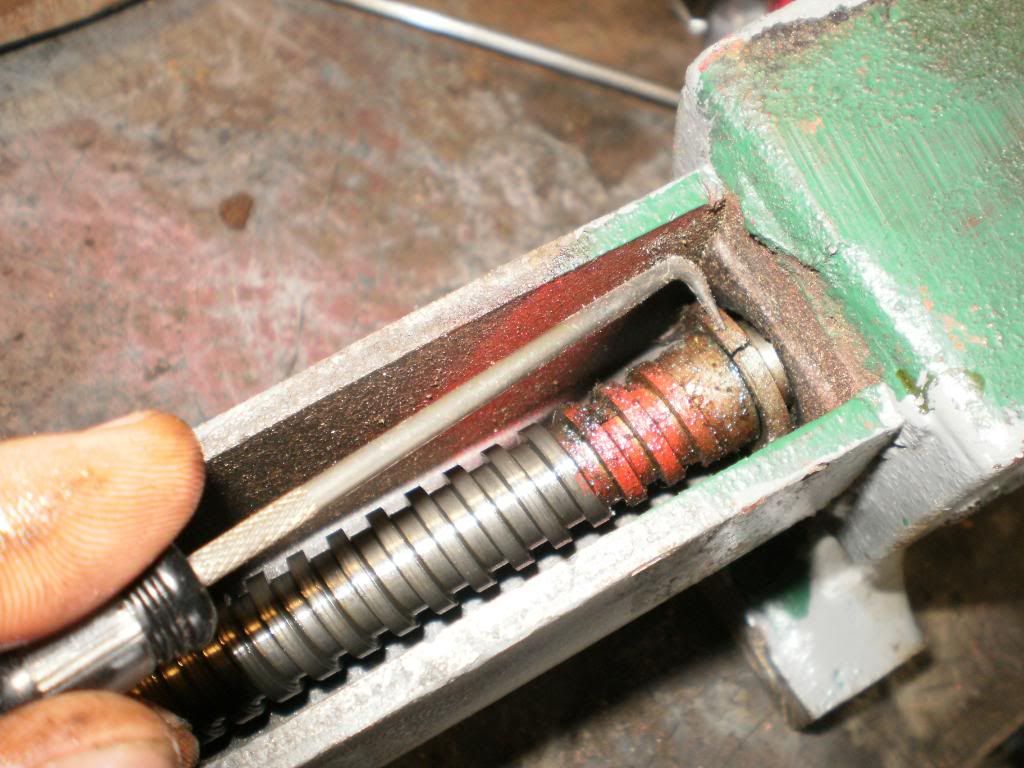
A front collar, this is an older style favored in most (maybe all?) Parkers and Wiltons. Others too I would imagine. This is A_Pmech's Ridgid 4" swivel vise.

A shaft collar, as this Rock Island has:


A split nut found in most Reeds.
Whatever the mechanism, remove/loosen it and take the leadscrew out.
3. Take the swivel base off if it has one.
This is pretty straight forward. Unscrew everything connected to the swivel base and it should all come right off.


4. Remove the pin holding the main nut by driving it out from the bottom. This pin can be replaced with a roll pin you can get at virtually any hardware store.
(will get pic)
5. Slide the main nut out of it's dovetail.
6. Remove any jaw inserts if they are removable.
7. Blast/prime/paint/reassemble/enjoy
I will organize this into "Types" of vises as I see them. These include the exposed screw vises, the rectangular slide vises, the stamped steel slide vises, and the Wilton's. These are not universal, it is just how they seem to fit into my head.
"Exposed screw" Vises:
I will be using Selkirk's Littlestown vise for this. He has asked me to restore it for him, so I hope he doesn't mind it being used for demonstration purposes.
1. Unscrew the dynamic jaw all the way.

2. There will be either an E-clip, a crimped on ring, or a cotter-pinned washer in a groove on the leadscrew. Remove it. Try to bend things as little as possible, and remove the crimped rings over the rest of the screw, don't pull them straight off.

3. Remove the leadscrew.
4. Remove the swivel base if so equipped.

5. The main nut will either slide right out now, or it may be pinned in. Drive out the pin from below if it is pinned.
6. Remove the jaw inserts. I use an old screwdriver sharpened to a chisel-like point. If they use two screw and a pin like the Shop King pictured, then work the jaws of slowly, concentrating in the center.

7. Blast
8. Polish slide 9. Prime/paint/lube/ reassemble/enjoy!
"Rectangular Slide" Vises:
Perhaps the most common we see in the vise category. These are the workhorses of the industry.
I'll be demonstrating between a Prentiss and a Rock Island. I'll need good Reed pics, so Banjo can bring in some of those.
1. Remove the dynamic jaw assembly. This often is the most difficult step.
1a. Check the rear of the slide for deformation, and file as needed.

Once you are sure it is not binding, you can spread the jaws apart:

Or you can hold the static side static, and hammer the dynamic slide out with a lead/brass/deadblow hammer. A vise helps when restoring vises. So everyone needs at least two. Again, they should separate fairly easily, otherwise, refer to 1a.
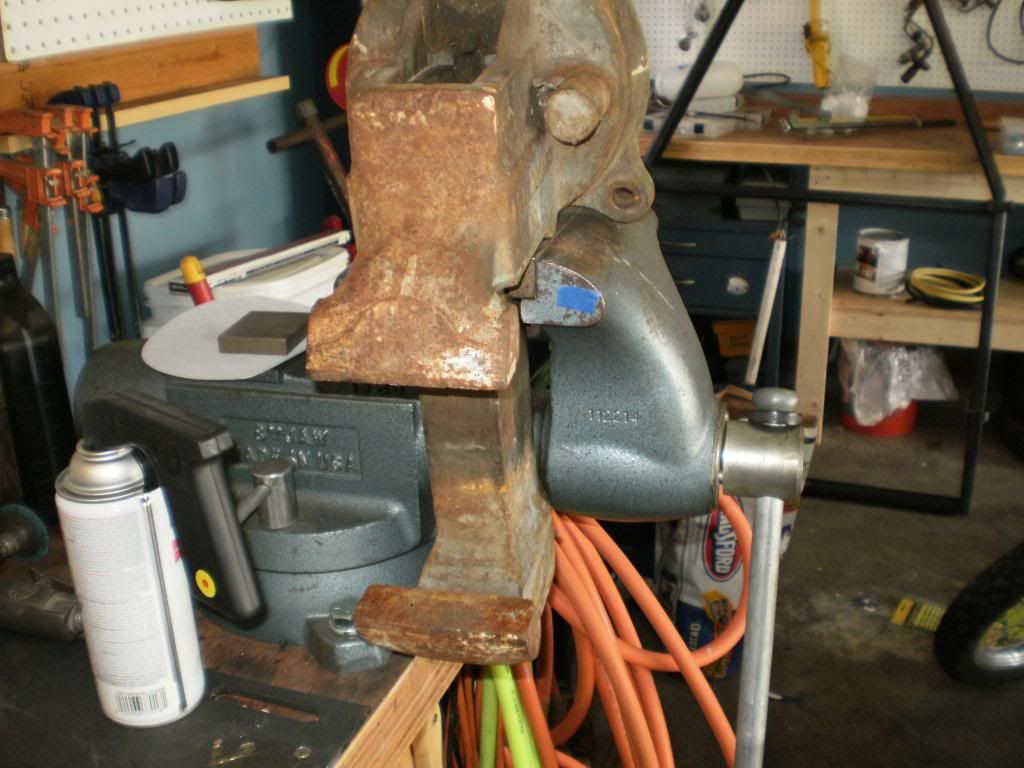
Or you can pry/wedge the two apart with 2x material.
If you need more force than this, refer to step 1a. Sometimes they will simply slide apart and none of this is needed.
2. Remove the leadscrew. Some prefer to do this before removing the dynamic jaw. It is your call, sometimes it is nice to be able to pull on the handle A BIT (keep in mind, pulling too hard on the leadscrew is bad, as you will be pulling opposite the direction of greater strength.
The anti-reversal machanisms are usually one of these three.
A front collar, this is an older style favored in most (maybe all?) Parkers and Wiltons. Others too I would imagine. This is A_Pmech's Ridgid 4" swivel vise.
A shaft collar, as this Rock Island has:


A split nut found in most Reeds.
Whatever the mechanism, remove/loosen it and take the leadscrew out.
3. Take the swivel base off if it has one.
This is pretty straight forward. Unscrew everything connected to the swivel base and it should all come right off.


4. Remove the pin holding the main nut by driving it out from the bottom. This pin can be replaced with a roll pin you can get at virtually any hardware store.
(will get pic)
5. Slide the main nut out of it's dovetail.
6. Remove any jaw inserts if they are removable.
7. Blast/prime/paint/reassemble/enjoy
Last edited: